
Most conversations around safety, especially for women, tend to focus on what to avoid. Where not to go, what not to do, how to stay out of risk. But this approach is rather limiting and incomplete.
In this episode of the Solo Female Travelers Podcast, we sit down with Nicole Snell, CEO of Girls Fight Back and founder of Outdoor Defense, to rethink what safety actually means.
With over 20 years of solo travel experience and a background in empowerment-based, trauma-informed self-defense, Nicole shares a perspective that goes far beyond tips and checklists.
We talk about how traditional safety advice can create more fear than confidence, why awareness and mindset matter more than memorizing rules, and how learning self-defense can actually expand your world instead of limiting it.
From solo hiking to everyday situations to solo travel, this conversation explores what it really looks like to feel capable, prepared, and confident in yourself and your abilities.
This isn’t about being fearless. It’s about being prepared in body and mind.
About Nicole
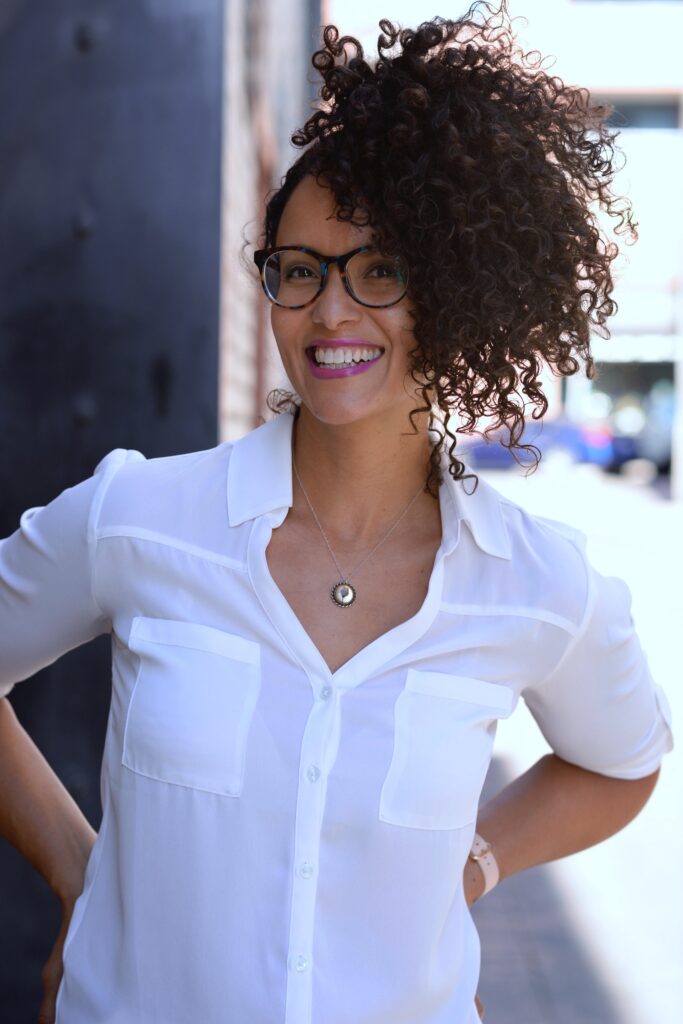
Nicole Snell is an award-winning International Speaker, TEDx Speaker, trainer, and self-defense expert.
She’s the CEO of Girls Fight Back, Founder of Outdoor Defense, and is a Certified Victim Advocate. She is a globally sought after subject matter expert on gender-based violence prevention, boundaries, empowerment, and outdoor safety. Nicole and her companies have trained millions of people at hundreds of communities worldwide including every branch of the US Military, colleges, corporations, healthcare providers, conferences, retreats, and more.
Nicole’s dynamic and compassionate approach to her keynotes, trainings and workshops creates a safe environment to learn life-saving skills while building confidence.
Nicole has been featured for her expertise in global publications including: KTLA5, Spectrum 1 News, Dateline NBC, Women’s Health Magazine, and National Geographic. She has appeared as a guest on over 50 podcasts. Her TEDx Talk, What Would You Do If You Felt Safe was selected as an Editor’s Pick.
Nicole is an expert solo traveler and outdoor enthusiast who has visited 35 countries and all 50 US States. She is passionate about helping others open up their access to the outdoors and the world. She emphasizes that self-defense education is about more than physical resistance and provides audiences with a range of applicable strategies that can be used in the outdoors, the workplace, and beyond.
Connect with Nicole:
Websites: www.nicolesnell.com and www.girlsfightback.com
TEDx Talk: https://youtu.be/_UETjFX0ErU
LinkedIn: https://www.linkedin.com/in/nicolesnell/
IG: @adventuresofnik and @girlsfightback
FB: https://www.facebook.com/girlsfightback
Outdoor Defense: https://www.youtube.com/c/NicoleSnellOutdoorDefense
YIHS Online Course: www.nicolesnell.com/yesimhikingsoloonlinecourse
Transcript:
Anastasia: Hello, everyone. Today’s conversation is one we’ve been really excited about because it challenges so many of the messages women are taught about safety, especially when it comes to traveling solo or being outdoors alone. When prepping for this interview and listening to Nicole: I honestly couldn’t be more excited to introduce our guest today. Nicole: We hope it’s the beginning of a mindset shift and a conversation that will inspire you to learn more about self-defense and remember that you are worth fighting for in any situation in life.
Nicole: Yeah, so thank you so much for having me. I’m so thrilled to be a guest on this podcast. And what an amazing intro. Like, seriously, thank you very much. I got started in this work in self-defense work a little over 10 years ago, but I’ve always been passionate about safety.
I’ve always been athletic. I always loved moving my body and found you know grounding and regulation and joy through moving my body. Whether that was sports or hiking outdoors, you know things like that. And I got into self-defense specifically, when I was dating a guy, several years ago, like 15 years ago something like that. And we were play fighting in my apartment, and he pinned me to the ground. Like we were play wrestling and he pinned me to the ground and he’s laughing. Haha. And in that moment, even though I know it wasn’t for real, I had this thought in the back of my head, what if this was real? What if he was really angry? What if somebody else did this and I don’t know what I would do? Like, what are my options? How would I get out of this? I didn’t like that feeling of not knowing what my options were. And so I took my very first self-defense class and thought that was great that I had learned some of these skills. And then I kind of didn’t think about it too much until…
You know, later on when I got involved with Girls Fight Back. And then through Girls Fight Back, I got trained as a speaker, which included taking a 20 hour full contact class with Impact Personal Safety, which was unlike any self-defense class I’d ever taken. It didn’t just talk about the physical. It talked about the mental. It wasn’t overwhelming you with 50 different moves you had to learn and was instead keeping things really simple. And it just changed my perspective. I mean, I was already a confident person, but I felt like that shot the confidence up even higher. And I’d always loved wanting to help people. And this was just the avenue. Like, I wish I had known about this when I was in college that I would have been doing this since then. But now that I know that this is, you know, something that I can do, I love that I get to, you know, help people help women feel safer. And on a personal note,
You know, I didn’t really put things together about how my previous history of trauma and the abuse I experienced as a child played into what I do now. You know, you don’t always necessarily think about it, but after becoming a victim advocate and doing this work, I started putting the pieces together of why am I so passionate? Why do I want to help? Why do I want to help protect people and give them the skills to protect themselves? Why is it so important to have boundaries?
Why am I so passionate about people not feeling restricted? Why do I want people to be able to tell people, No, I don’t want to hug you. No, I don’t want to have a conversation with you. And it’s because of what I experienced as a child. in a roundabout way, I mean, I guess in a very direct way, it had an effect, but not in something that was conscious. It was very subconscious. And that is what kind of drives me. And the reason why I picked the topic that I did for my TEDx talk was because, you know, OK, so
Nicole: I started my Outdoor Defense series in 2019, but for years people had been telling me to put together my love of the outdoors and my love of safety and self-defense, but I just never thought anybody would want to know about it. I really was having imposter syndrome and thinking that nobody would care about this topic and, you know, I’m going to put myself out there and people are going to say, so what?
And then I finally just put it out there and then just the response has been so overwhelmingly positive. This is something that women and not just women, like I have men that reach out and say, hey, I’m a solo guide in Europe and we have weird people that interact with us and we need to know what we can do if we’re out guiding. And so it has just resonated, especially with the outdoor community. And I decided to do my TEDx about it because I actually have a friend of mine, she’s now a friend
She had listened to one of my podcast episodes years ago and she was on the volunteer board at TEDx Jacksonville where they invite people to apply. People who they think have a good idea, they invite them to apply. And she invited me to apply because she said like, Hey, this really resonated with me and I think people need to talk about it. And so that’s, that’s why I was like, okay, well, I guess if people are interested in this, this is something that I do. And then I passionate about let’s talk about how self-defense can open up your access to the outdoors.
Anastasia: That’s wonderful. I actually just listened to it for the second time this morning just because I love it so much. Your TEDx talk. you know, yeah. And you know, one thing that stands out to me is how you challenge how we traditionally define safety. know, so much of what we think about and talk about is like trying to control the outcome or needing gadgets or maybe, you know, potentially guns or whatever it is. And it just doesn’t feel realistic. You’re not always going to be
Nicole: thank you.
Anastasia: you’re not always going to have gadgets or have things on you. And then, you know, we still want to be able to explore the world confidently. So when people hear self-defense, think a lot of people, like you said, picture physical fighting, right? So can you talk about a little bit about what does self-defense actually mean to you?
Nicole: Yeah, self-defense to me, and really, mean, I think just the general definition of self-defense is anything you do for self-protection, anything you do that keeps you safe. That’s a very wide and broad definition. And it absolutely does include the physical skills. It’s just that we are not using the physical skills every day. And so like in my TED talk, when I said, you know, 80 % of self-defense is non-physical and 20 % is physical, it doesn’t mean that 20 % of the time we’re using physical skills.
But what I meant is that that 20 % includes when you have learned those physical skills, how that positively impacts your confidence, how that can help reduce your anxiety, just those mental benefits of knowing how I can use my body, unlearning a lot of the harmful and incorrect stereotypes telling women that we’re weak and we’re helpless and there’s nothing we can do. When we learn that that’s not true, then learning those physical skills adds to that positivity and that confidence bucket that we have. And then if we ever need those skills, we have them, right? We deserve to know what we can do if it is a worst case scenario. Is a worst case scenario something that we are experiencing every day?
Most of us, no. But it’s nice that we have it. It’s important that we have it. But we also need something for that, you know, 90 % of what we’re facing every day, which happens to be, you know, boundary violations, uncomfortable conversations, you know, things that might not necessarily be unsafe, but they’re uncomfortable. And that still means that we deserve to have the skills to set our boundaries, reclaim our space and our time, and tell people what we want and have strategies for enforcing them.
And that is what I mean by self-defense. It’s not just physical, it’s verbal. It is mindset, it’s emotional, it’s mental. It is this whole range of skills that is holistic for the betterment and the empowerment of you as a whole person..
Anastasia: Yes, thank you. That makes perfect sense. And I remember in one of your interviews, you actually said, you know, the best fight is the one that was never fought or something like that. Don’t quote me too much. yeah. Yeah. And just generally, how do you feel like where does de-escalation fit into definition of definition of self-defense? And how do you how do you approach and how do you teach these ideas in your classes, like especially for people who maybe don’t see themselves as physically intimidating or physically strong.
Nicole: Yes. No, that was right.
Nicole: I teach de-escalation and it’s a very big part of self-defense because it’s a verbal strategy and like you said and like I said, the best fight is the one you never have to fight. Learning self-defense, know, all the skills, know, colloquially the physical and the mental and the verbal, it doesn’t mean that now that I have these skills, I’m going to purposely try to get into a fight or a confrontation where I can try to use the skills. That’s not what it’s about. It’s about I have these skills so that I can avoid a fight altogether. Like that’s always the goal. And so deescalation is, it can be difficult when you’re in a situation where someone maybe is calling you names, they’re insulting you, they’re insulting your family, know, insulting people you’re with because you know, human nature is we want to defend ourselves. We want to, you know, prove that person wrong. You know, there’s ego involved and that’s a normal reaction. When it comes to our safety though, deescalation means like our goal is just to disengage..
Nicole: That means we might have to let this person say what they’re saying, but if all they’re doing is saying it and we can walk away safely, that’s still a win for us. And then we get to a safe place and then we can talk to somebody about what was said, right? Like if we need to talk to a trusted person or talk to a therapist or whatever to deal with all those emotions that comes up from a verbal attack. But the goal is to get to safety. And I do work with all different ages. I remember.
Nicole: I remember teaching at a park. were doing, with Impact, were doing a Parks After Dark series here in LA and we would go to a different park for like eight weeks. And it was open to the public and it was like a two hour window and whoever showed up, showed up from the community. And we had this one group of folks where a mom brought her daughter and this daughter was, I mean, I’m bad with ages with kids. She had to been like four.
Like she was walking and talking, but she was little. She’s tiny. So like four or five. And you know, we teach kids differently than we teach adults. So when it came to her part, you know, when we, for this, was like, okay, you’re going to do this, do the strike and then you’re going to run over here to your trusted adult and you’re going to yell, I need help. And when it was her turn, she just stood there so assertive and she did the strike and she ran, I need help. It was so cute and just, just so fierce at that age. It’s.
It’s so nice to see that, you know? And so it doesn’t matter your size. There’s actually a study that I quoted in a recent episode of my Outdoor Defense series where there’s a study showing that, and it’s in the context of like a martial arts fight, like on the mat, but it was, the findings were basically that the size of the opponents was not what was a predictor of the outcome, and that it was not about who was taller, who was bigger, who was more muscular. It came down to skill and also like unpredictability in just the fight itself. And that is something that’s helpful, especially for a lot of women who say, but I feel like I’m short or I’m petite or I’m not very strong or I don’t think I could do that. And what I usually say to those women who say that is twofold. One is that you don’t have to overpower somebody in order to get away..
Nicole: That’s not what I’m teaching people how to do. I’m not teaching you how to overpower someone. I’m teaching empowerment based self-defense and the physical skills are such that I’m teaching you what can you strike? What vulnerable part on another human’s body can you strike that can cause pain or disable them so you can run away? Because again, the best fight’s the one we never have to fight. Also, the best fight’s the one we can get out of as quickly as possible. This isn’t a combat fight. This isn’t trading blows. This isn’t, you know a class with women and if it’s a woman saying this to me, I’ll ask, you know, do you have kids? And if you don’t have kids, do have younger siblings, cousins, nieces, nephews, friends, kids, younger folks, pets, even people in your life that are, you know, younger than you, someone that you feel protective of. And they’re like, yes, yes. And I will ask, well, what would happen if somebody came after them and their eyes harden laser focus and they say, that wouldn’t happen. Like that protective energy comes out for someone else..
Nicole: And I remind them that you can have that protective energy for yourself too. You do, you already have it. You just need to give yourself permission. are every bit of as deserving of that protective energy as you would give to someone who you felt needed your protection. You need your protection too. And you can do it if you needed to.
Anastasia: Yes, that’s so true. And I think that kind of also reminds me of when you talk about intuition. And I feel like we do oftentimes have that feeling of maybe this is dangerous or maybe something, but we start talking ourselves out of it. And it’s interesting to me that we do that as humans. Could you talk a little bit about intuition and how it ties into just self-defense and what your thoughts on that are?
Nicole: Yeah, there is a great book that I recommend called The Gift of Fear by Gavin De Becker and he talks about intuition so eloquently and so in depth. And a lot of my work on intuition is based on all of his work and his teachings. He’s been doing this for many, many, many years. And so intuition is our gut feeling letting us know that there’s a problem. And it’s so important that we trust that feeling. And as a society,.
Nicole: We have taught people, especially women, you’re just overreacting. you’re being paranoid. it’s probably nothing. And we’re encouraged to stop listening to that part of ourselves. And what I always telling people in my classes and in my keynotes is you can trust yourself. Your body knows, trust it. I don’t need to give you permission to trust it, but I’m here to reinforce that you can trust it.
And to disregard those messages that tell you that you can’t. it’s interesting though, the more I’ve done this work and I love to dig into research. I am such a nerd. I like to understand where things come from. I’m reading the recent research because I want to make sure everything I’m teaching is relevant and is staying up to date with new information that’s coming out. Information is always changing. There’s always new studies. We’re always learning. And I’ve done some work on like the brain and neuroscience and I am not a neuroscientist, but I’ve read studies on this and talked to colleagues who they specialize in this. And the brain basically, right, the brain is wired for survival. That’s really why our brain exists. It’s trying to keep us alive. And intuition is part of that, right? There are more parts of our brain that process fear than that process any other emotion because it’s tied to survival. And so your brain, it’s all about pattern recognition and your intuition is part of that.
And by learning to trust that feeling is a way that we can trust our brain and work towards our safety, right? Because our brain is trying to keep us safe. Trust that feeling. Even if it doesn’t make sense, it doesn’t have to make sense. It often doesn’t. I was on a trail one time here locally in LA, a trail I’ve done before, and it was at sunset. I love doing sunset hikes in the summer. I mean, anytime really, but summer is nice because it’s later.
Anastasia: Yes.
Nicole: And I come to the part of the trail where it hugs the side of the mountain and I can still see the trail. I can see it as it’s hugging the mountain. And I just got this feeling that said, don’t continue. I sat there for, I want to say 30 seconds, trying to talk myself out of it, telling myself that I was being ridiculous, that I’ve done this trail before, that I can see the trail with my eyes, that it’s probably nothing. And then I just stopped and I realized what I was doing. And I said, okay, I’m just going to turn around and go home.
And I did to this day. I don’t know why I had that feeling, but I went to that trail a few days later and guess what? No weird feeling completed it. Trust that. Trust it. Like your intuition is probably one of your most powerful self-defense tools.
Anastasia: I think that’s very important to remember, same as on the trail and similarly as if you’re traveling solo, be it locally or in a foreign country. I think a lot of the skills just generally transfer from navigating a trail alone to navigating a new city or a culture on your own. You actually talked about something that happened to you in Madrid and I was curious if you would mind talking about that and also maybe touch on why, if you think…
Nicole: Yes.
Anastasia: that like muscle memory is important and maybe if it helped you in that moment as well in your experience.
Nicole: Yeah, I’d be happy to talk about that. And so what happened? And first of all, I wanted to reiterate what you said, which is true, that the skills that I’m teaching aren’t just for the outdoors, right? Like I didn’t start teaching self-defense for the outdoors first. I started first teaching to colleges and then corporations. And then I added in the outdoor stuff because it’s it’s a area where people feel especially vulnerable because you’re by yourself. You’re away from help, quote unquote help..
Nicole: you might not have a cell signal. And so it just seems more vulnerable that, if someone has bad intentions, now I’m helpless. And it’s really important that we unpack those myths and, and give people realistic information and confidence to be able to go out and do it. And that’s why I really do it. And everything that I teach for the outdoors, a hundred percent applies to anything else, right? The context changes and certain things may be different, but the strategies remain the same. In Madrid,
I wasn’t even traveling solo. I was there with a friend for the holiday. It was during COVID, it was 2021, and it was the holidays. And we were out on Christmas Eve eating at a restaurant. And we walked from our hotel, because our hotel recommended this restaurant. So we walked to the restaurant. The earliest reservation you can get in Madrid is eight o’clock. So we got the eight o’clock reservation. By 10 o’clock, we were done.
Anastasia: Yep.
Nicole: And instead of walking back to our hotel, even though there’s people out, people are still coming into the restaurant, people on the street, lights are on. We decided it’s probably smarter to take a car, ride share, ride share. We called the ride share from inside the restaurant and then we waited until it was close. And then we left the restaurant to walk, you had to walk down this little cobblestone path to get to where the actual traffic is and where cars are. And I had my friend’s phone in my hand and I was looking to see where the car was.
And we stepped out of the restaurant and started walking to the left. And the moment I left the restaurant, I had this feeling, this gut feeling that something wasn’t right. And I couldn’t explain why. It was just like head to toe chills and goosebumps. And I remember looking around and I didn’t see anything out of the, or I didn’t see anybody out of the ordinary. We started walking, the feeling still wouldn’t go away. And I turned to my friend and I said, something feels off.
We really need to get out of here.” And she said, well, we’re waiting for our car right now. We’re going to be out of here soon. And I said, okay, I’m just letting you know how I feel. We were at the stop waiting for the car. I don’t think we were waiting more than three minutes. And then we see the headlights for the car coming. The car comes, we check the license plate. We were doing all the things they tell you to do, right? To be safe. And the car comes, we check the license plate. And then I opened the backseat..
Nicole: the back door so my friend could get into the car first. So she starts getting into the car and as she’s climbing in, I noticed movement over to the right and I turned my head to look and there was a man just running at me. And to this day, I could pick his face out of pictures, right? Like it’s just burned into my memory of what his face looked like as he was running at me. And this thing, something happens to your brain, when traumatic things happen, stress happens, things simultaneously speed up and slow down, like how your memories encode. And I remember having all these thoughts in probably, you know, a split second, one second. I was thinking, he’s not running at me. He’s running at somebody else. There’s somebody on the other side of the car that he’s running towards and, you know, denial. And then the other thing was, okay, well, my friend is still getting in the car. There’s not time for me to get in the car too. Even if I pushed her really hard across the seat..
Nicole: There’s not enough time to do that and then climb in and then pull the door closed and then lock the door. And he was already running at me so fast. He was already really close. And so I thought, okay, I’m just going to do, I’m going to do the power stance. And then another part of my brain is saying, Nicole: I still had those thoughts, right? It’s really hard sometimes to get rid of all of those antagonistic voices from society and from other people and from the media and things like that. And so I just told myself, I’m going to do this and who cares? Who cares if I look silly? This man’s running at me and I feel threatened. I felt threatened. So I turned around and I faced him in my power stance. And the first thing that came out of my mouth was what’s going on? Hey, what’s going on? Is what I said.
I didn’t even try to say it in Spanish, even though I speak a little Spanish, it’s just, you know, my brain just English. Hey, what’s going on? And he stopped. He stopped running. He stopped right in front of me. And he just looked at me, just glared at me. And at this point I had my friend’s phone, like, you know, phones have that little ring on the back of the phone. So I had it on my finger and was holding it like this. So I didn’t have to like grip it. And I just turned in my power stance. And if I, you if it hadn’t been on my finger, the phone would have dropped because I just turned..
Nicole: And so this phone is facing out and my hand is facing out. He didn’t reach for the phone to try to grab the phone to steal the phone. He never answered my question. He didn’t say he wanted anything. He just looked at me. And then the car door is still open. I’m kind of standing by the edge of the car door. My back is to the open car. He’s in front of me and my friend’s in the car and she’s saying, why aren’t you getting in the car?
And I said, Hey, there’s, there’s a problem. Cause she couldn’t see my body was blocking her view. And then when she kind of looked around and she saw, she goes, well, what do we do? And I said, we just wait. It’s like, I’m talking to her. Like, I’m not facing her, but like, I’m talking over my shoulder to her while looking at him. And he tried to walk around me I just, I just kept him in front of me. And again, I said, Hey, what’s going on? And then, I mean, it felt like this was a five minute standoff. I’m sure it was only seconds. And then he leaned back and tried to kick me in the face..
Anastasia: Right.
Nicole: He just kind of leaned back and just threw his leg up and my hands were still up. And because my hands were up, he kicked my open palm and it hurt, but there was no injury, right? There was no scrape, you know, no bruise, nothing like that, but he kicked my hand really hard. And in that moment I thought, okay, this is when the fight starts because I don’t know what else to do. There’s nowhere for me to run to. I still can’t get in the car because the moment I turn around, he can attack me from behind, but he’s not going away and I need him to go away so I can get to safety. It’s one of those instances where sure safety is two feet away, but you can’t safely get there.
And as soon as he made contact with my hand, these two bystanders, these two guys were just walking by and they saw him kick me and they ran over and they started yelling at him. And then the driver of the car gets out and starts yelling up until then no one was doing anything, and so then they all come out to yell at him. Now his distracted, all this commotion.
So I ran around the other side of the car, my friend closed the door. I got in on the other side, closed the door, locked it. And then my friend grabs my face in her hands and she was like, your face, your face, because she heard the hit, but she couldn’t tell that it was just my hand. She thought he had hit me in the face. And I said, no, no, no, I’m okay. It was just my hand. It’s okay. And the driver comes back and then we drive to safety.
And I just remember thinking after, and then of course, afterwards I’m in the car and like all the adrenaline hits, like my eyes start tearing up. I’m like shaking, even though I wasn’t injured. It’s just like, you can’t control how your body responds to something stressful like that. And, you know, I just remember thinking, I am so grateful that I have these skills. I’m so grateful that I had an option, right? The only option in that moment was to turn and face the threat in my power stance. Right? Imagine if somebody didn’t have that, just that one piece..
Anastasia: Of course.
Nicole: And maybe it would have turned out the same. Maybe it would have turned out differently. can’t extrapolate, but I’m just grateful that I did something that stopped him from continuing to attack, right? We, for a moment. And then when he did try to kick me, it was really like a kick of frustration. Like just like, it’s not going the way I wanted kind of thing. But it was still like, was still able to protect myself from that. And it just, it really re invigorated me to, to,.
Anastasia: Haha.
Nicole: my why, why I do this work and why I feel like it’s so important. Because who would have ever thought on Christmas Eve that that would happen? Like it’s not something with when you’re with somebody and you do all the things that you’re, you violence can happen anywhere and it’s unfortunate. It’s not as likely to have a stranger attack like that. It’s 86 % of the time attacks against women are by people they know, friends, family, partners, people in their life that they’ve met before, not perfect strangers. So this was a very weird circumstance, but it still happens, right? It still does happen. And the skills that I teach are useful in so many different situations, and it allows you to think through what you can do so you can pick what might work for you in the situation.
I just felt so grateful that I had something to pull from it. And I just want to make sure I can get this information to as many women as possible. Hoping that you’ll never need it. But if you do need it, it’s there. And at the very least, it’s just going to add to your confidence. mean, this is win-win.
Anastasia: Yes.
Anastasia: 100%. I mean, my hands are just sweating listening to you tell the story I can only imagine in those split seconds where you have to make that decision and having that like confidence in yourself, whatever, be it muscle memory, confidence, you know, I’m sure it helps a lot. And you know, that’s, you know, we hear this all the time from women who want to travel solo that, you know, I’m trying to be safe, but I feel anxious being alone out in the city that I don’t know anything.
There’s definitely a fine line between being aware and maybe becoming a little too hypervigilant and letting that anxiety kind of take over. But do you have any more suggestions for how someone can stay prepared but also without tipping into this anxiety and fear-based thinking?
Nicole: Yeah, it can be hard because there’s so much fear based information out there, right? So many things are fear based and none of my work is. I make a very conscious effort to make sure that my messaging is not based on fear. It’s not based on scaring people into you need this, you have to do this. It’s very much reality based and wanting to empower people, right? Knowledge is powerful..
Nicole: And when I use statistics, it’s not done to scare people. It’s just to give people a baseline. And usually on the other side of it, like trying to, you know, encourage people here, here’s what the stats say. Here’s what you’re afraid of, but here’s what the stats actually say. And that’s really not the thing that is most common. So let’s reevaluate these other fear-based messages you’ve heard. So I’ve been solo traveling for over 20 years. I would say I took my first international solo trip.
When I was in my early 20s, I forget how old I was, but I was in TV production and we were filming in Germany and I was looking at the map and looking at our travel plans and I thought, my gosh, we’re so close to Rome. And I have never been to Rome. I really want to go. I am just going to go. After we’re done filming in, where were we? Nuremberg and Wiesbaden and we’re flying in and out of Frankfurt, I was like, I’m just going to go to Rome. And I said goodbye to my crew at the airport.
They headed on their plane and I walked over and caught my plane to Rome and it was just this, feeling of freedom and just like, mean, I just felt like this is going to sound weird, but just felt like space. Like it just felt so expansive that everyone that I knew was thousands of miles away at this point. And now I’m going to be in another country in another city by myself navigating the world and it was just like, nobody knows who I am. I’m just, I just get to interact in my, in my own way. And it’s just, just so freeing and just, I loved that feeling. And I got addicted like after I was done with that trip, I said, yeah, I need to do more. I need to do more. So I would say it’s like getting a tattoo, right? You get one and then you just, you want to keep getting more. Well, I would say how to.
Anastasia: It’s truly, yeah, right? It’s addicting. Yes. Once you start, yes.
Anastasia: Yeah.
Nicole: how to shift your mindset to being situationally aware versus being hypervigilant or trending more towards anxiety is information, right? I love that the Solo Female Travelers Club has that safety checklist, not the checklist, but the safety, the online where you can look up different destinations and see how other women have rated it based on a, yes, I think that’s so valuable. Like look and see, know, every major city,
Anastasia: Yes. The index.
Nicole: has petty theft and crime and pickpockets and things like that. So don’t let that discourage you from going to another country. But there might be other things that are really, you know, maybe at this time, and things are in such political turmoil around the world right now, including here in the US. So there might be times when you say, okay, maybe this time isn’t the time that I want to go based on these risk factors.
And maybe I’ll go another time. So it’s okay to shift your goals, you know, just because you want to do this. maybe now there’s, and there’s something happening that is going to make that area unsafe. It doesn’t mean it’s going to make it unsafe forever. And unsafe is such a, like it’s such a nuanced word. Like what does unsafe mean? It’s not the same for every person and everything in life is about risk assessment. So look at, look at what’s there. look at other people’s experiences. I look at blogs and I read other people’s travel reports. I use the index and I just remind myself, I have skills. I’m able to think through. I can problem solve and that confidence is such a big part. Okay, well, what if I take the wrong cab? What if I this? What if I that? Knowing that you can think through when situations go awry is….
Nicole: a way that you can help quell some of that hypervigilance and just say, okay, well, if some, if such and such happens, I can deal with it. Here are ways that I can deal with it and have those things in mind, whether that’s, you know, self-defense strategies, whether that’s, you know, where the embassy is, whether it’s a cheat sheet of phrases in the local language, you know, just having those things in mind. And sometimes hypervigilance isn’t something we can control, especially if someone has experienced trauma in their life, that might just be a natural response to situations.
I have a colleague, name is Dr. Chris Wilson. He does a lot of work on the brain and neurobiology. Dr. Hopper, believe, is another neuroscientist that does this work. It’s like the brain should be mapping to safety, but because of something that’s happened, the brain is now mapping that thing to threat. Maybe red cars aren’t necessarily threatening, but something happened and now instead of you seeing a red car as safety, now your brain is seeing it as threat..
Nicole: So hypervigilance isn’t something you can consciously control, but something that can help with that is mindfulness, is situational awareness, is taking in information that’s all around to help you to assess those things. And I think those are some things that we can really keep in mind as we’re moving through the world when we’re solo traveling. Not everyone you meet is going to have bad intentions. You don’t have to be nice to everybody. And if you’re getting a weird feeling, trust it. Trust it no matter where you are..
Anastasia: Yes, that’s wonderful. I think you hit it on the head with knowledge, just having knowledge about be it doing research, like you said, having knowing where the embassy is, whatever it is that makes you feel a bit more prepared and better. And another thing I wanted to ask. So one part of your background that resonated with me is that you are also a certified victim advocate. So I spent 20 years in the US Navy and I was deeply involved with the sexual assault and prevention response program,probably called something else now because the Navy changes everything every five days.
But anyway, and I know you helped the Navy rework and you taught at several military installations and I myself was a victim advocate as well. So I’d like to see if you could touch on something for our listeners that may not know. If you’re traveling abroad, what options exist if they do need support if something happens or is there anything, the listeners should know before they go about accessing help overseas.
Nicole: So I will first thank you for your service and being a victim advocate in the military is a very difficult job day in day out. So thank you for that. I in the work that I do, I’m invited to an installation for a short period, you know, a few days, maybe a week. So I’m only there for a little bit, but y’all y’all victim advocates are there all the time every day working with survivors and working through the system and you just don’t get enough credit for all you do. So thank you for what you do and for everyone you’ve helped.
Anastasia: Thank you.
Anastasia: Thank you. Of course. Thank you.
Nicole: You’re welcome. I would say that when you’re traveling abroad, know, when I when what happened?
When I experienced that attack in Madrid, I didn’t report it because I thought, well, I’m not hurt. I don’t know if that guy is still there. And I don’t know like the laws in Spain. I don’t know what that would entail if I needed to come back to report. I just didn’t even want to start the process. And so I didn’t. And that was a personal choice to, to not report it because I didn’t know what I would do if it was something where I had been injured or you know, there was damage to property or something, you know, he did rob me something like that. Then that would be a different story. So I would say that’s really going to depend on where you go because the options are going to different. Like the laws are different in every country and even they’re different state to state and city to city when you’re here in the U S and I’m sure other places abroad as well. I would have those things ready to go that information just so you have it..put it in your notes app on your phone, write it down on a piece of paper in case your phone loses its juice and you need it or something. Just have it written down somewhere to where you know, not only where the embassy is.
If you have travel insurance having their number available, because sometimes they offer assistance if something like that happens, especially if it’s medical, and have any local police numbers if there is a domestic violence or sexual assault prevention or victim advocacy organization, nonprofit, NGO in the area where you’re going, maybe jot their number down too, just in case something does happen and you need to have it. doesn’t hurt to have those resources available that way in, if there was something that you needed, it’s now going to be at your fingertips instead of now you have to research that stuff at a time when you’re already in a stressful situation.
Anastasia: Yeah, that makes sense. think oftentimes, well, generally, as you know, victims oftentimes choose not to report, which is OK as well. But having the resources immediately there, I think really helps with making that decision that much easier. I just know myself, if I had to look it up, I probably wouldn’t. I would just find other ways to deal. And yeah, so one thing I wanted to ask you, because I think
Nicole: Yeah.
Anastasia: a lot of the times on social media and in our community, we see people really wanting to take their first trip, first solo trip, and they’re always hesitant, anxious. They’re worried that it’s not safe. They’re worried because maybe their family members or friends are saying, you want to go where? my gosh, I heard this. I heard that. know, well, if you’re up for it, I would love to take a moment to have you speak directly to the listener, someone who wants to take their first trip.
What would you say to her or maybe something you wish you had known when you started traveling solo or maybe one small step that they could take to give them that confidence to get going?
Nicole: would say to them that you can do this, that you’ve done hard things in your life. I don’t know you, but I’m sure you’ve done hard things in your life and you can do this too. And with preparation, with research, with planning, there’s nothing in your life that is ever gonna be without risk. Getting up in the morning, driving your car, I how risky is driving a car, like statistically? Getting on a plane, right?
There’s nothing that we can do to make ourselves 100 % free from all risk. And life is about figuring out what risks you’re willing to take, what things you think are worth it. And for me, the benefits from solo travel far outweigh the risks because you are learning new perspectives. You’re learning so much about yourself. You’re learning how to navigate challenges. You’re building resilience. You’re seeing how other people live.
You’re meeting people that you might not have interacted with any other time where they are. You’re having amazing experiences. You’re having things not go as planned, which sometimes honestly leads to the best adventure when something doesn’t go as planned. You’re learning how to shift. Yeah, you’re learning how to shift in the moment. You are deepening your own understanding of yourself and how you’re connected to the world and having these experiences that you’re going to have with you for the rest of your life.
Anastasia: Yes, 100%.
Nicole: Like nobody can take them from you. Your memories and your experiences are something that you are going to have forever and are going to affect how you move forward and interact in other experiences with other people in your life. And so I would say that there are people that might be fearful for themselves. And so they project that onto you.
You know, like family members or friends or people saw this story online and they say, my gosh, did you hear that? And that place isn’t safe because they have fear. And it’s important not to let other people’s fear make you fearful. It’s okay that they have fear. It’s okay that they are looking out for you. And it’s often done in a very loving way, right? They, they love you. They, they care for you. They want you to be safe. They want to protect you at the end of the day, though, you have to make your own decisions. And one way to combat the fear is to get informed.
As much as you can. And if you need to shift your objective, like I said, the example earlier, say you’re planning on visiting one country, but now all of a sudden there’s a civil war there. Maybe that’s not the country you want to visit then maybe you switch to a different country. And then a couple of years later, when things are safer, then you can return. so shifting your plan is not a failure. It’s adjustment. It’s, it’s you making a decision based on information. It’s you exercising your power and just
Remember that you have that ability and don’t let anyone talk you out of doing something that you know you really want to do. You are the ultimate decision maker in your life.
Anastasia: Absolutely. Very well said. Thank you very much. I wanted to shift gears a little bit and head into a few rapid fire and just a few questions that we like to ask all of our interviewees on the podcast. So for our rapid fire, early flight or red eye?
Nicole: Thank you.
Nicole: early flight.
Anastasia: Early flight, okay. Sure. No, go ahead. Let’s hear.
Nicole: Do you want me to give you a reason why, or is it just rapid?
Nicole: prefer early because there’s less likelihood that that flight’s going to be delayed. Red eyes are usually late at night. So if there’s some delay from earlier in the day, that might be delayed and you never know who’s going to be on your red eye. There could be smelly folks, loud folks, you know, know, so you might not be able to sleep on that red eye. So I would rather sleep well and wake up early and then take an early flight.
Anastasia: Agreed. Okay, plan ahead or last minute.
Nicole: I’m a plan ahead person. I’m really type A. I like to have everything planned out. But also I leave space for last minute stuff because sometimes that’s the fun. Right? Like might have a general plan, but then all of a sudden something else comes up or someone says, hey, you want to do this? And then I say, yeah, I do actually want to do that. And I’ve done that before in trips. I’ve had a plan and then found out about something new. I’m like, well, guess I’m doing that now.
Anastasia: Yes.
Anastasia: Yep, plan ahead, but also leave room for spontaneity. Love it. OK. Hiking, hiking. So this one is from me. Hiking to a lake or to a waterfall?
Nicole: 100%.
Nicole: why do you have to do this to me? I would say hiking to a lake.
Anastasia: haha
Anastasia: Okay, okay, me too.
Nicole: I love my waterfalls, but yeah, a lake you can often swim in them, which is fun. You can’t always swim at a waterfall unless there’s, you know, a lake or a pool underneath the waterfall. But I feel like there’s more you can do at a lake. You know, you could bring an inflatable, you could swim. If it’s a lake where you could like Lake Tahoe is so clear, like you could snorkel. And if there’s trees, you could hammock. I mean, you can hammock next to a.
Anastasia: Yes.
Nicole: next to a waterfall too. But I would say, lake.
Anastasia: I 100 % agree too. See, we way have too much in common. Okay, I think we will. Okay, another question. One thing you can’t travel without.
Nicole: Yes, we gotta go hiking together.
Nicole: chapstick.
Anastasia: okay. Simple, but yes.
Nicole: I would never go anywhere. yeah, chapstick. If I was stuck on a deserted island and I could only have like two things, chapstick’s gonna be one of them. I hate having dry lips, just gosh. So yeah, chapstick.
Anastasia: Hahaha
Anastasia: Okay, first word that comes to mind when I say packing.
Nicole: Hate it. Hate.
Anastasia: Yes.
Nicole: I don’t like packing.
Anastasia: I think we’re going to have an episode about packing soon. Maybe you can get some tips from that because I also hate packing.
Nicole: You know, it doesn’t matter how many trips I take a year, how often I pack, like I have a system, but I think, and I’ll just be very personal with you, I tend to get overwhelmed when there’s too many choices. Like I am not someone who can color because if there’s too many color choices from the crayons or the markers and you know the coloring books are usually really elaborate, I just get overwhelmed. Like what am I gonna color? What am I gonna do? So I just don’t like it.
And the same thing with packing. I’m looking in my closet thinking, And you can only bring a few things, right? I try to carry everything in a carry-on. I don’t check bags anymore unless I absolutely have to. But you’re trying to fit everything into a carry-on and a personal item. And I’m looking in my closet and there’s all these things I want to bring. And I can’t. And then I have to think ahead. And I have to kind of make a list..
Nicole: What activities am I doing and what do I really need to have? And well, I don’t really need that extra outfit. I can just wash this. So I hate having to choose. I think I hate the decision making process more than the packing itself.
Anastasia: I get it. I am an overpacker still. still am. It’s just the what ifs. What if I need this? Well, what if I need that? OK, so yeah. Yeah, yeah. .
Nicole: Same. And you, I was going to, I was going to add one more thing if I can. I, so I backpack and I car camp and I just finished a backpacking trip four days and three nights on the Trans Catalina Trail. And you have, when you backpack, you know, you have to be light, light-ish, right? Like everyone has their own threshold for how much they can carry. I like to keep my pack as close to 30 pounds as possible. Try not to go too much farther over than 30 pounds. And I have everything I need. I had everything I needed. It was great.
but you should see my car when I car camp. It is packed full like I am moving. You would think I was going away for three months. I’m like, should I bring that? Yes, I’m just adding things because I have the space and I can. So I am the ultimate overpacker when I’m allowed to be.
Anastasia: Yeah, yes, yes, totally. OK, one more about hiking or a trip, I guess. Best sleep or maybe most memorable sleep you got on a trip or a hike.
Nicole: I would say… Oh, that’s a good one. The most memorable sleep.
Anastasia: Yeah, I feel like as a backpacker, you probably woke up some gorgeous places. I’ve done it a few times and there’s nothing like a sunrise over some mountains or a lake or having that coffee and it’s cold and you’re like bundled up. Anyway, I’ll let you answer.
Nicole: Yeah.
Nicole: Yeah, it’s so hard to pick because there’s so many. I would say probably one of the best. I was on the Inca Trail and I woke up and our tents were set up. It was the third night and we were right over the, I forget the name of the river, but it was like the sacred river and we’re in the Andes and it’s green and mountains.
And where we were situated, when you opened the tent and looked out, you were looking out into this canyon, into these beautiful mountains, and the sacred river was just running right there. And it’s just like, is this real? Is this real? How am I here? It was so incredibly beautiful. I would say that was, and it was comfy because the porters bring all your tent stuff. So it was a
Anastasia: Yes.
Nicole: It was more like a yurt and it wasn’t just like a really thin camping pad. It was a nice mattress. So it was a good sleep.
Anastasia: Yes, that’s wonderful. Sounds great. I’m really overdue for a backpacking trip. So thank you for that. I know. Please. OK, and let’s have one more question. So who do you who would you recommend based on what you know about us, solo female travelers, who would you recommend we interview next for the podcast?
Nicole: Let’s go.
Nicole: I would recommend…
Nicole: Why are doing this to me? I’m trying to think. There’s so many amazing people out there that also solo travel. I would say you should interview Courtney and gosh, she’s gonna kill me. I know how to spell her last name, but it’s a pronunciation that I haven’t quite mastered. But her Instagram handle is the unpopular black. And she does a lot with diversity, inclusion and equity in the outdoors and helping the black community learn about.
Anastasia: It’s OK. Take your time.
Nicole: hiking and adventuring and places that we can go since especially here in the US. So many activities have been we’ve been closed off to because legally we weren’t allowed to go there or it wasn’t safe for us because of know racism and things. And so she is doing so much work at trying to help the black community reconnect to the outdoors, reconnect to adventure, reconnect to traveling..
Nicole: things like that. So I think she would be wonderful because she solo travels all over the US and she’s phenomenal and she’s doing amazing work. So I would recommend Courtney.
Anastasia: That sounds wonderful. Thank you so much. So before we start saying our goodbyes, is there anything that I haven’t asked you that I should have or if there’s anything you want to share with our audience?
Nicole: You’ve asked me such great questions. think we’ve covered so much. would say, you know, I would say, I’d like to say this to anyone out there who’s been told that solo traveling isn’t safe, or they’re afraid to solo travel because of personal safety reasons. I would remind you that you are powerful. Your entire body is a weapon. You don’t have to have a gadget or anything, you know, a self-defense tool, et cetera, like that for you to be safe.
that your brain, your voice and your body are such powerful tools. Your voice is your first weapon and learning how to use all of those, all those parts of you that you walk through the world with every day adds to your confidence. can reduce your anxiety. And I’m speaking not just from experience, but there’s a lot of research on this as well that shows that these, these skills have so much benefit to us on a, on a personal level.
not just the fact that they do have the ability to prevent violence, but I would say since the fear of running into somebody dangerous, the personal safety fear tends to be the one that stands out the most, not just for solo travelers, but also for solo hikers. That’s one of the things that I like to address specifically. And I think it’s just reminding people that you can learn skills that can help you if there is a worst case scenario and you can learn skills to help you talk your way out of situations and recognize things before they become dangerous that
The sheer fact of you being solo does not necessarily put you more at risk. It doesn’t necessarily make you vulnerable and learning skills can help you push past those fears. to know that there are a lot of things in the world that are, that can be unsafe and people might have their own personal experiences and this is not meant to discount what anyone has experienced or survived through.
This is just meant to say that you can’t just categorize something. that’s just generally unsafe. Usually there’s a lot of nuance to it. And so if you are afraid, I would just encourage you to talk to people, do your research, learn as much as you can, build up your skills, do things locally, do some solo, like do a solo road trip a couple hours from your city just to kind of start building that confidence..
Nicole: Right? Maybe your first trip isn’t, you know, on a 12 hour flight somewhere. Maybe your first trip is, you know, a two hour road trip or, you know, a two hour flight somewhere and just start slow. Right? It still counts as solo travel. If you, if you do that, just build it up slowly, build up the confidence and your problem solving skills and your ability to deal with adversity that you might encounter because you might, right?.
Anastasia: Absolutely.
Nicole: someone’s late when they’re not supposed to be, you know, something gets canceled. Your hotel loses your reservation. Like things happen. But the more you’re able to deal with those things means you’re better able to adapt when it happens again. And it just makes you better equipped. So you, you can do it. Let’s get out there and solo travel. Like let’s not put restrictions on our lives. Let’s do it.
Anastasia: Yes, let’s do it.
Yes, thank you so much, Nicole: Nicole: It did, yes, I’m on season four right now. New episodes are coming out every Monday through March.
Anastasia: Wonderful. And if today’s conversation inspired you to explore the world with more confidence and intention, you can find and join one of our women only tours around the world. All the details at tours.solofemaletravelers.club Thank you very much and see you next time. Thank you, Nicole: Nicole: Thank you. Thank you.