
Ecuador received 1.4 million visitors in 2025. In comparison to the almost 100 million people who visit Spain, the world’s most visited country, every year, this is only a small fraction.
Those who venture to the country find more than they could have ever expected. A magic that is hard to describe but easy to feel.
Mountains that stretch as far as the eye can see and that are topped by year-round glaciers; rainforests that teem with vegetation and protect the highest concentration of animal species in the Amazon basin; islands that inspired Darwin and are home to endemic species so friendly you’ll have to back out not to touch; and indigenous culture that is very much alive and thriving.
In this episode of the Solo Female Travelers Podcast, we sit down with Ana Santa Cruz, our Ecuador tour host, certified national guide, and wildlife photographer, to talk about what it’s like to travel through the country.
In a single trip, you can go from high-altitude cities in the Andes to the Amazon rainforest, with completely different landscapes, cultures, food, and climates along the way. And it all changes fast.
Ana shares what that really feels like on the ground, not just the facts, but the experience of traveling through these places, what surprises people most, and what they often get wrong before they arrive.
We will move through colors, smells, tastes and feelings.
We talk about the Amazon, what it is is and what it’s not, the role of local guides and indigenous communities, and how to approach travel in a way that feels respectful without overthinking it.
You’ll also hear about the wildlife, the food, and the small details most people miss, especially when you’re traveling with someone who knows exactly what to look for.
We know this episode will make you want to visit Ecuador for yourself, and we have the perfect tour to do so.
Our Ecuador and Galapagos tour will take you to the heart of the indigenous culture, the Amazon rainforest and the Galapagos islands on a women-only and women-focused expedition, with luxury accommodation and many thoughtful experiences behind closed doors. All the way, while supporting women-owned business. Every night but one, we will stay at hotels owned by women, we will eat at restaurants with female chefs and we will learn about Ecuador through the female gaze.
About Ana
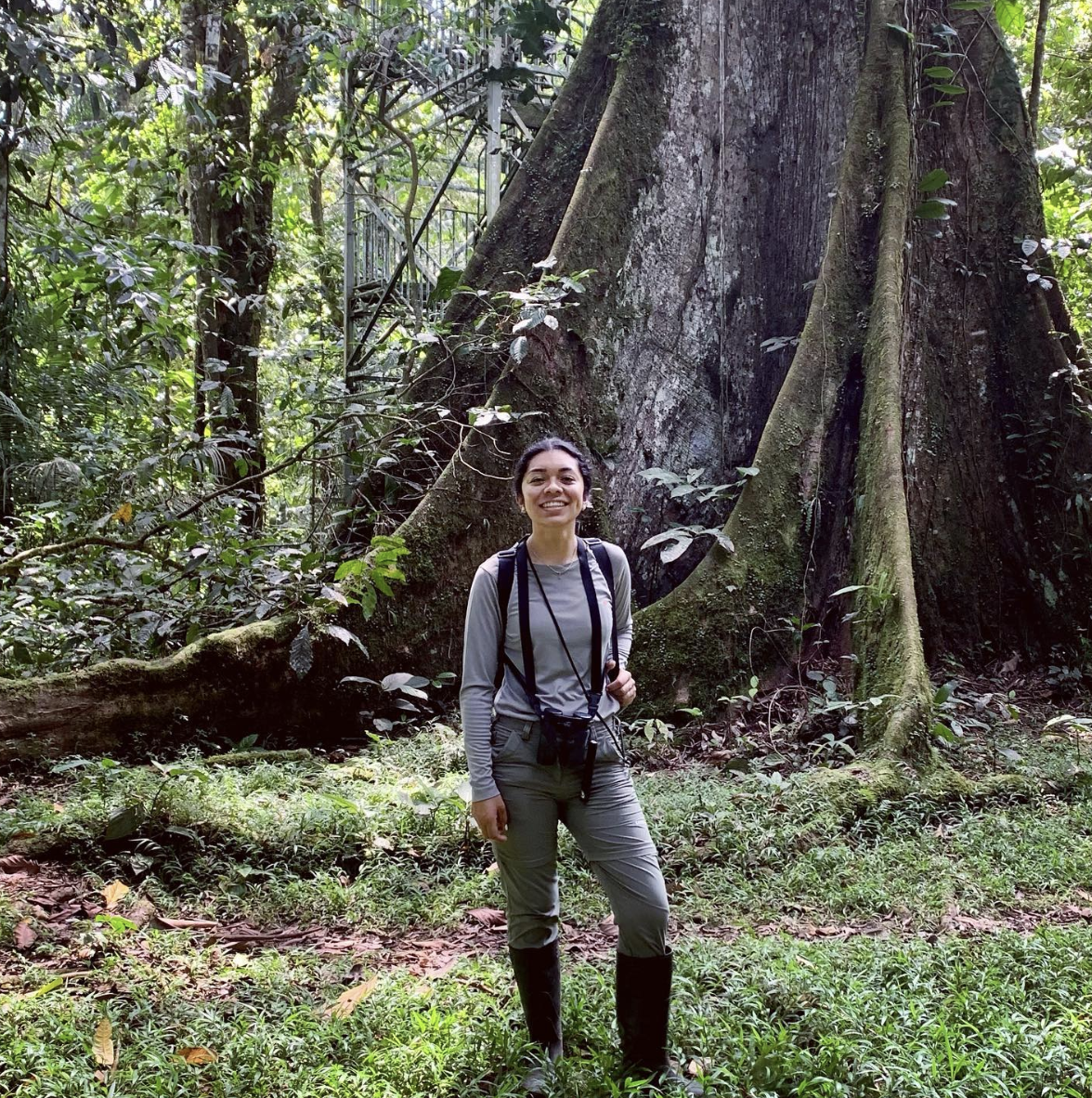
Ana is a licensed National Tour Guide, and a graduate in Ecotourism Engineering.
She has been guiding across Ecuador since 2016, working with lodges in the Amazon and travel agencies throughout the country. Her experience spans both the natural and cultural sides of Ecuador, from remote rainforest ecosystems to Indigenous communities in the Andes.
Ana’s work is deeply rooted in conservation. Since her university years, she has been involved in environmental programs focused on protecting biodiversity and promoting responsible tourism, shaping the way she approaches every trip she leads.
She is also a wildlife photographer, using her work to capture and share the landscapes, animals, and ecosystems that make Ecuador so unique. Through her guiding, she brings these environments to life, helping travelers not just see Ecuador, but understand it.
Connect with Ana:
Instagram: https://www.instagram.com/ana_tourguide where you can also reach out to book her private guiding services.
Brought to you by…
The Solo Female Travelers Podcast is sponsored by Solo Female Travelers Tours, our small, luxury, women-only tours that support female owned businesses around the world. Join us on a trip of a lifetime that helps make the travel industry more equitable.







Transcript:
Mar: Welcome to the Solo Female Travelers Show. Today’s episode is all about understanding a place and not just visiting it. And I am joined by Ana Santa Cruz, a certified national tour guide and naturalist who co-hosts our Ecuador tour and whom I met in 2025 when I was doing our trip scouting.
Ana works across some of the most biodiverse and complex ecosystems in the world, from the Andes to the Amazon. And she’s really passionate about both the natural environment and the people who live in it. And this shows when she tells you all about the funky monkeys or the colorful birds that she has the patience to photograph. Our conversation today isn’t going to be about bucket list or highlights, although I hope that this will make you want to visit Ecuador. But it’s more about curiosity, preparation, and what it really means to experience nature and culture with respect.
Mar: We will focus on Ecuador’s mainland portion and leave the Galapagos Islands for another episode when we will talk with a local naturalist, as all the guides in the Galapagos must be born or married to a local. But before we jump right in, Ana, could you tell me a little bit more about yourself and why you became a tour guide?
Ana: This is actually the question I like the most. It’s something I think I feel like since I’m very little. I was always interested in first on the green color. which I didn’t know it’s because of the plants, of the trees and that would keep me into nature. So I was always interested in whatever is surrounded by green, so mountains and forest. Since the very beginning, I started to get more in touch with it. My family used to live in areas like that.
My grandmothers, my grandparents, they used to live in remote areas. So I was slowly getting in contact with nature. So I knew I always wanted to be in areas like that. Then I discovered when I was in high school about ecotourism, that it’s an area or a way to preserve by sharing with people and also to be immersed in nature and remote areas. So that’s how a little bit on how I started to get more into this type of job.
Mar: It’s amazing, I never heard anybody say that it was the color that brought them into the job. But Ecuador is extremely green. Everything is so green everywhere you look around. Even in Quito, you’re surrounded by green.
Ana: It was a color. Yeah. Yeah, so as you know now, is as you know now, green is my favorite color. And when you’re also studying science and all these things in school, part of learning is to draw things so you get to to understand. And I really enjoyed painting things from the forest, things from nature, because it always had something green. So it’s very interesting how it started.
Mar: Hahaha And you know Ecuador is often described as one of the most natural diverse countries on earth despite its tiny size and I learned this from you and when I visited the Amazon I loved that the introduction or arrival at the lodge includes lots of information on the ecosystem and its diversity before you even get started doing any activity. So as someone who is also involved in research projects and who spends weeks at a time in remote Amazon ecologists can you share some of that info with visitors, the same one that they receive with us.
Ana: Yes, well, Ecuador, as you mentioned, it is when you see in the map, it’s a very small country. We have about 283,000 square kilometers of territory, which is very small. But if we talk about ecosystem and ecology, it’s huge. The reason of this is because we are a country that is just on the equator and it is also crossed by the Andes, which creates changes in small areas. So we have different elevations. This gives different climates and also forms different ecosystems. Yeah, because of this Ecuador, it’s one of the top mega diverse countries in the world. And it’s also a country that has the highest, one of the highest diverse diversity per square kilometer. Right.
So for example, we have neighbor countries like Peru and Colombia. which are basically the same, they very close to us. So they also have influence from the Andes and they are not very far from the equator. But bigger countries have almost the same that we have here. So in Ecuador, we have about 1,600 different species of birds, to give you an example. While in Colombia, which is almost four times bigger than Ecuador, they have about 1,900 species of birds. which is still a lot, but in comparison by size, makes Ecuador more special in that way. Yeah.
Mar: Right, and even the Amazon, know, the Amazon basin and the Amazon rainforest is very large, but Equator only has a tiny piece of it.
Ana: Yes, yeah, Ecuador has only 2 % of what is the Amazon basin, which is almost nothing. And that’s actually something that when people think about the Amazon probably comes to your mind other places like Brazil or Peru, we don’t think about Ecuador. But Ecuador is a has almost half of our territory. It’s Amazon. And being closer to the Andes, which is an important part from being here, gives also in the Amazon, a small different changes. there so it makes that part of Amazon a little bit more special.
Mar: And you know, a lot of people when they think of Ecuador, even me before I came, I had a very small notion about the country, right? I knew there were the Andes, I knew you were in the equator, you know, the name kind of gives it away. I knew that, you know, there was the sea, so I knew a little bit about it, but I didn’t quite understand that when you hear mountains or Amazon rainforests, for me, it was a little bit of an abstract concept, you know?
Ana: Yes.
Mar: Can you make this a little bit more tangible for us? Like how high are the mountains? And you you said there are 1,600 birds. Can you give me some more numbers if you want to make this a little bit more tangible for people?
Ana: Yes. Well, for example, what is interesting because you arrive to these areas and calls your attention the numbers of mountains that you see around. And when you’re driving, you also get to see changes very quick, like few minutes, and you start to see small changes. Right. What I like is that you don’t only see it from a distance, you actually live in it. You kind of move through it. And for example, on numbers here in Ecuador, in this part of the Andes that crosses our country has one of the highest mountains measured from the center of the world. have Chimborazo Volcano, which is about 6,000 meters from sea level. And we also have Cotopaxi, which is the highest active volcano in the world with about 5,900 meters from sea level. So you can be… or even in Quito, the city where I’m from.
This is one of the, it’s the highest capital in the world. We are in 2,800 meters from sea level. So you arrive to Quito, you feel the air, the cold air. If you go on a walk, you will feel going up and down, different feelings in your body. But then if you start traveling in Ecuador and you go by car, it will feel like you’re going in a slow cruise, because you’re… moving and every 20-30 minutes you start seeing small changes on the plants, how the houses look, how the people dress. It starts to change that way. But you know, for me, what is the most interesting about that more than just seeing different landscapes and feeling different ecosystems that makes Ecuador so diverse, together with that goes the food, people dress, it starts to change that way. But you know, for me, what is the most interesting about that more than just seeing different landscapes and feeling different in different places that make the quarter so diverse, together with that goes the food.
Ana: When you travel in Ecuador, you don’t only see or feel, you actually taste it. As you go to different places, there is different offers of foods. Each region, because of this elevation and climate changes, produces its own ingredients. So the food will change as the weather and climate changes. So the food, think, is the most way, the easiest way to feel how it is being in the Amazon, how it is being in the Andes. and all that in the Andes you feel you see a lot of tubers potatoes quinoa which is a very popular thing now you start going down to a warmer ecosystem and you find out big diversity of fruits and all of them very sweet with nice tastes and if you go to the Amazon you start to see more exotic things right now like the very fresh fish maybe cool things like not on your head
Mar: The little bugs.
Ana: Yes, insects that are also part of the diet of people. So I think the food is the most easy way to actually feel the Andes and the Amazon and all the climates that we have here.
Mar: And then of course you have the coastline where there’s you know tropical heat.
Ana: The coastline, a lot of seafood, plantains, food based on peanuts and coconuts. Food on the coast I think is the best in Ecuador. But travel in Ecuador, I think that where people lives, when they leave one of the things that they like the most is the food. If you’re vegetarian, for example, I have heard…
Mar: Right.
Ana: People saying the best vegetarian options they have tried when traveling have been here in Ecuador. And that’s because of the diversity we have in products to plant.
Mar: Yeah, I remember the food was amazing, especially when we were in the Amazon Lodge, but also in Quito, wonderful restaurants, lots of diversity, lots of foods and ingredients that I never heard before. To me, like you say, the altitude was the first immediate thing because the airport is much lower than Quito, city. And so when you land immediately within the one hour drive, you’re a thousand meters higher. So all of a sudden it’s hot when you land and you come out of the airport. Suddenly it’s like, it’s kind of warm because you’re a thousand five hundred meters or something like that.
And then suddenly you arrive in Quito city and it’s really cold, well really cold, it’s much colder and it’s usually very humid and there’s all these like clouds around and it’s very green and it’s quite rainy all the time and windy. And so suddenly it’s colder and you feel it, right? The moment you walk up a few steps, you’re like, you’re out of breath.
Ana: Yes. It’s windy. Yeah.
Mar: And also the country would also surprise me a little bit or it was unexpected for me because of my lack of knowledge, not anything else. It was all the different tribes and all the different cultures and all the indigenous groups that inhabit the country, right? So when you move around, you also meet, you know, lots of different kinds of indigenous groups that live in different parts of Ecuador. Tell me about that.
Ana: Yeah.
Ana: Yes, as I was mentioning before, like when you drive Ecuador, you also see different colors and the way people lives, people dresses, and also the houses start to look different. So the cultural part in Ecuador is actually something also important and very diverse. Ecuador recognizes 14 different nationalities of indigenous groups. They are called nationalities because all of them have their own traditions, their own clothing, their own food. Some of them even have their own languages. People in the Andes, for example, they speak all the same language after we had the influence from Incas coming from the South. So they all learn how to communicate in one same language. But if we go to different spots, in the Amazon, each tribe speaks their own language.
So that makes it’s a very important part of the country. It is about a million, 1.3 million people that recognizes themselves as indigenous. So represents almost 8% of the population in Ecuador. Yeah, so as you said, it’s a very important part of the country. So talking about the food and the indigenous people. Why we have this diversity of food and things is also because of them, because they learned how to live with their environment, how to use the resources that their environment were given, and they discover all these ingredients with what they could make food. So then that’s what gives Ecuador this high diversity, not only with plants, animals, weather, but also the traditions and the gastronomy we have in the country.
Mar: right
Mar: Yeah, and during my time in Amazon and when we will be during our tour at the Amazon Lodge, we’ll also spend the morning visiting a local community, the local indigenous group that’s nearest. And they’ll also show us what they eat. And tell me what they eat, because I remember that very vividly. Yes.
Ana: In the Amazon? Yeah, well, the Amazon has nine different tribes, right? They are all located in different spots of the forest. The one that we got to visit is a tribe that lives by the river shore. So I would say that’s the easiest tribe where to get used to the food. So they eat a lot of fish first since they are close to the river. They are very good farmers. So you will find things like plantains, cassava, which are probably things you have tried outside. But then when it’s… things like that. But when we start exploring more with them, then it gets more traditional. There is an interesting way to find protein source for this tribe and they find it from a larva of a beetle that grows inside of a palm tree. And it’s actually considered a delicacy for them.
Mar: And cacao, right? I remember they had cacao trees.
Ana: Because it’s not only food that tastes good. I’m a person that is very picky with the food and I like the larva. It’s a taste that people find it similar to sausages or in Spanish we say chicharrón which is also like rich in fat and that it tastes good. But if you are more adventurous you can even try it raw which is I think a…
Mar: wow.
Ana: Yeah, you can even try it raw. Doesn’t have a bad taste. It’s very plain and that becomes medicine. They also use it as medicine for bronchitis, asthma, things like that. Yeah, so yeah, the food in the Amazon can be very interesting and for adventurous people. Yeah.
Mar: Yeah, I remember they also show us their gardens and the herbs that they use in their medicinal plants, including ayahuasca, right, the ayahuasca tree.
Ana: Mm-hmm.
Ana: Including the ayahuasca. Yes. In the Amazon, they have their farming plots, especially this tribe, which is known as Chakra for them. And this is an area where kind of the forest, the wilderness gets in combination with what is people and their traditions. So it’s like the mix. So in their farming plots, you find similar or the same things that you find in the forest and other things that they have domesticated through the years and you only find in their farming plots. But it’s like a supermarket. It’s not only the food that they get, but also medicine and tools that they find. And ayahuasca is one of those. Yeah, very famous. Maybe a lot of people have heard about the ayahuasca. It is a hallucinogenic vine, but it’s not used for recreational purposes.
Mar: Right.
Ana: It’s more a medicine. It’s not just medicine for physical things of your body, but spiritual things. Yeah, the people is very connected with the energies of the forest and their beliefs go with spirits of the forest. Not only in the Amazon, but also in the Andes, there is still this strong belief of a life ecosystem, spiritually talking. They are not only the plants and the animals that move around. So the ayahuasca plays that role of helping people with the spiritual things and it has to be planted in each family’s farming plot. So the plant learns or knows about what is going on with the family. So if you go into ceremony, cleansing ceremony to use the ayahuasca, the shaman or the leader of the ceremony has to use the plant that is in owned by the family.
Mar: Right and then many of the tribes and the indigenous groups that I got to meet when I was visiting Kichwa, isn’t it?
Ana: Kichwa is the language. Kichwa not Quechua which is the most popular word we have heard. Quechua is the language spoken in Peru by indigenous groups. I don’t know if it’s all of them, but maybe most. It’s the Inca language and it got introduced in Ecuador and combined with where the local languages in the Andes. So this new language formed, which is Kichwa.
Mar: Right.
Ana: That is the difference there.
Mar: Right, and that’s sort of like the lingua franca, the one that most people will speak in addition to Spanish probably and their local language, is it?
Ana: Yes, Kichwa is the second official language of the country. She since is spoken in all the indigenous tribes in the Andes and one tribe in the Amazon.
Mar: Okay, now going back to the Amazon, one of the things that I came with as kind of like a preconception, something that I knew, but that was wrong, was the amount of bugs that I would find. And I remember you and I had this conversation when we were in Quito before we went to the Amazon, that I was slightly concerned about it because I don’t particularly love insects. And you know, we’re staying at an ecologe where you’re in the middle of the rainforest, of course the animals are there. So I knew that they were going to be like, you know, I wasn’t living in…
Ana: Yes.
Mar: Wonderland, right? I knew that they are there and therefore they would be in my room. But I was expecting for the experience to be much more similar to what I was tracking gorillas in Uganda and Rwanda where you are in the impenetrable forest, which gets its names for a reason. And when you stand still, you can literally see the insects crawling and like…
Ana: Coming to you.
Mar: If you stand still for long enough, they’ll crawl up your shoes, right? That’s why you wear gaiters. And I was expecting the same in the Amazon, just because you assume that it’s a place that’s teeming with animals of all kinds and of sorts and all sizes. However, that was not the case, right?
Ana: Nope. The Amazon, this part of the Amazon, because it can be different in other areas of the Amazon. And that’s what I was telling you. As we’re closer to the Andes, some things change. And personally, it’s one of the best parts of the Amazon that you can visit. I personally think that. And the insects is one of those things. Yeah, when you arrive to the Amazon, even for me, when I was little and I started to go to…
Mar: And the image is one of those things, yeah, when you arrive to the Amazon, even for me, when I was able to…areas like that I was very afraid of the insects I used to cry without even seeing anything I used to cry because I used to imagine the animals just crawling on me and there was nothing so I understand completely the feeling when people comes but it is definitely a place where you see way less insects especially mosquitoes than what you probably were expecting some of the reasons are natural where we were in the area where we were visiting the animal is just calling on me and there was nothing. So I understand completely. It’s definitely a place where you see way less insects, especially mosquitoes, than what you probably were expecting. Some of the reasons are natural. Where we were in the area, where we were visiting, we have the presence of legumes that are just born.
Ana: we have the presence of lagoons that are just formed by local rain. So they wash the forest floor, carry tannins from leaves. And that gives an interesting composition to the water with a has a pH level very low, acidity very high. these acidic waters are not good for mosquito larvae to develop. So that’s the main reason why you are not completely covered by bugs. But it also has to be a little bit with how lucky you are and how the weather is during those days because inside of the forest after the rain there are little ponds of water that get formed and the pH and acidity is medium which is perfect for mosquito larva so they are inside of the forest still not a lot because it’s a small ponds of water that you find in the forest as you walk but there is where you can feel it but as you said in generally feels you’re like safe from mosquitoes, not a problem at all there. In terms of bugs, general bugs that we can find, it is also that has to be with the influence of the temperature as we’re closer to the Andes. The temperature in this part, it’s a little lower than in other parts of the Amazon. So insects move.
Mar: Right.
Ana: and do better with higher temperatures so that is also what helps having a little less of bugs where we visit. It’s also cool to see them, they are interesting things.
Mar: It’s not a surprise if I remember a really particularly weird one that you showed us one evening that it was almost cool and I almost wanted to touch it but you know like someone subconscious thing in me made me not want to do that but I don’t remember the name of it do you know which one I mean it was like a very fun I wish that we had a picture to to show that people would see it but it was sort of like rounded very rounded quite large very rounded on the head and then green and green-grey, know, greyish.
Ana: Maybe a katydid like a grasshopper thing. don’t remember Yeah, it can be that Katydid Uh-huh Yes
Mar: It was similar to a grasshopper, yeah, in the look. And there were also like lots of millipedes and you know, these kind of things.
Ana: The insects I have to accept they don’t always look like the most beautiful creature so that’s also why some people feel like they are ugly things that look dangerous but that’s something very important and that’s where I’m gonna help with people to feel more comfortable with the bugs it’s because we have the fear of what we don’t know right
Mar: Hahaha!
Ana: But when you know why this thing looks like that, sometimes it’s just mimicking or pretending to be ugly and dangerous, but they are the sweetest thing that you can find in the forest. yeah, yeah, yeah, we can find weird looking things, not dangerous at all and actually very friendly. So when you are in the company of a person that knows about it, it’s more interesting to to maybe love them in a point, in a way, to understand also that these bugs are part of
Mar: Correct.
Ana: In our benefit because of the pollination and all these things that maybe you have heard from school classes, science, primary school classes, they have a role. Yes. And when we start to understand that, that makes it all different and changes. Yeah. So then we start actually looking for them. Cause as you mentioned, we don’t have, we don’t get to see a lot, but when we start to understand that maybe it’s like, I want to see more. This is interesting, right? I want to see what that other things looks like and what it does for the ecosystem.
Mar: Right. Yeah, they have a role, right? They play a role in the pyramid.
Ana: it becomes interesting at the end.
Mar: Yeah, indeed. And you were mentioning just now that when you go with somebody, who knows, right? Like all the exploration and the daily excursions that we do, that anybody does in the lodge is actually done with a naturalist like yourself, but also a person from the local community. So it’s two guides that come with every group of six guests. I think it is.
Ana: Six, eight guests depending on the group, if it’s a family or friends. But yes, we always go in the company of a local person because they know their forest in a different way. I have been sitting in a classroom learning, understanding, reading books, but it’s not the same as it is for them because they were born in the area, they grew up there, and they were learning from their ancestors. Not only from a scientific way but also feelings because they don’t just live in nature, they actually live with it, they are part of it and they live in a way that they respect it spiritually talking and in a practical way. So the way they see the forest is completely different to the way I see, even though I love the Amazon, I love the animals, I respect the nature. the way that they feel the forest is different. So to be in the company of them, it’s a key, I think. Yeah, it makes a perfect team there to understand both ways. And they are very good at spotting things. So that’s also a good point.
Mar: Yeah, was, I was in, I mean, it’s amazing, right? Like all of a sudden he’d say, there up in the tree there is, I don’t know what. And I was like, and I, with the binoculars, I couldn’t even see it. Right. And he was like, yeah, up there there is a, you know, a sloth. And I was like, a sloth? Like where?
Ana: And we see nothing.
Ana: Yes.
Mar: It was really fun and he could tell or yeah, the birds or the monkeys. It’s unbelievable what they can hear. Exactly. They can hear it from far away. They can track the animals because they can smell and see the footprints on the ground. It’s truly quite incredible where somebody who lives there and who was born there and who was born into the tribe that lives in the area can learn from a place. Even you having been there, I don’t know how many times have you been to the Amazon now? How many days have you spent there? I don’t know if you have an idea.
Ana: or the sounds.
Ana: I don’t know, it’s a lot. I’ve been going to the Amazon since 2016. Yeah, working like this in different places. Yeah, two or three weeks at a time. month. It’s a lot.
Mar: and you go for three weeks at a time, right?
Mar: And then you come back to, let’s say, the urban parts of the country. Tell me about the other fun and cool and nice animals that we can see because we’ve only talked about the bugs, but really the fun part of the show for those of us who maybe are not so keen on the bugs are the bigger animals, the birds, the monkeys, lots of monkeys, the caimans, the piranhas. Piranhas are a lot of fun.
Ana: Yes. Yes.
Ana: To me, I really love to see monkeys. think those are the funniest things to see the monkeys because you know, somehow they look similar to us, the hands, the feet and that and to see them jumping around the trees above our heads sometimes if we’re very lucky or hanging down upside down from their tails. That is something very cool to see. They are fun to watch. There are some monkeys that they don’t feel fear about us, but they just don’t want to be too close to people. They find a way to make you move away. either throwing things or like using the bathroom above your heads. That’s something that can happen. So it is always an interesting experience. It feels fun. It’s a good memory to bring back home something that you will remember. So I personally think monkeys are some of the funniest animals to see. Yeah. But as you said, we have a lot of stuff. I don’t want to say like, when you arrive to the Amazon, you will see things from every corner because what is the most interesting from this is that it’s a preserved area and we really get to see the real rhythm of the forest. Yeah. And you got to experiment a lot of things. We even got to see a tapir. I remember the very last day, the morning we were leaving. And when you leave out watching all these things,
Mar: Yes.
Ana: you actually understand how cool it is to live in this harmony with nature to actually see what is the real rhythm and you know it’s not something planned it’s just how it had to be those days.
Mar: Yeah, we saw, I mean, we saw the tapir, we saw the otters, we saw a sloth, although the sloth was quite far, the caimans on the night tour. I mean, I did swim into the swimming pool that’s basically, yeah, it’s basically like a fenced off area in the lake. So basically there’s just a net, right, that prevents the piranhas and the caimans from entering into the pool area so that you can jump into that water. I have to say that I did it, but I was terrified.
Mar: with every step because I was thinking, well, I thought like, what if a piranha is small enough that comes through the hole in the net and then somebody, something bites my foot off. I don’t know, like, because the lodge has this area, right? Instead of building a swimming pool, they just put a net inside the lake and the lake has piranhas because just earlier, before I got into the water, we were fishing for piranhas. So I did see the piranhas and then the caimans at night. And then I was like, I will be brave enough.
Ana: Were you feeling weird? Yeah.
Mar: I will trust the process and I will get into the water and nothing will eat my foot And you know, I still have both foots so it’s okay. I’m sure nothing has ever happened, but it’s quite interesting that the Lodge decided to do that rather than building a pool, right? I believe it’s also a recent project, right? The fact that they decided to build this pool.
Ana: Yes, I think it’s just a year old or something like that. At least a year because you came here about a year ago. So let’s say a year and a half. Yeah, and it’s funny because of what you just mentioned. The piranhas, for example, is one of other things that we have this fear out of movies we have seen. So the pool there, this cage that keep us away from the animals. It is something just
Mar: Yeah.
Ana: to help us with what is in our heads. Because even it happens to me because the water is dark and you know you have seen all these animals and you know they live there. So you kind of imagine them swimming around you. But they don’t they don’t want to be close to us. If we jump in that lagoon without any cage they will swim away as fast as they can because they don’t want to be around us. We are their predators. Yeah so it’s funny because the piranhas for example they are not interested in live things.
Mar: Yes, pretty much.
Mar: Yes.
Ana: They are like the vultures outside of the water. They clean the water. So they are just in charge of eating dead things. So unless we’re dead, they won’t be interested in us. So it’s more like to make you feel you are away from that. So you feel more safe and you get to enjoy swimming in the middle of the Amazon, not in a made up pool, but in their waters. So you actually were able to swim in between all these animals. waters from the Amazon, from the rainfall produced by the Amazon. So it’s a very cool experience as well. But our brains plays with us a lot because it even happens to me, even now that I know, yeah, you imagine things in there.
Mar: Absolutely.
Mar: Imagine, of course, because I just 10 minutes earlier, I was fishing for piranhas the night before I’ve seen the caimans and now I’m getting in the water and I’m like, yeah, your body says, what are you doing? You know, what are you doing? Go out, go out, go out. And I’m like, no, no, I’m going to get in. So, you know, it was quite interesting. It was interesting. Yeah.
Ana: You just saw them. You know they are around. Yes. But it was a nice experience, right? It is a cool, refreshing experience.
Mar: Yes, absolutely. Absolutely. And then you’re also on the, you know, we’re on the small canoes when we’re going around and there’s animals that are bigger than us, right? Like the tapir, where of course it was so like it ran so fast when it saw us, right? It didn’t like it. But the monkeys were very nice. Tell me some of the monkeys that we see there, because we saw a lot of different kinds.
Ana: Yes, well, as we have say like all these influence from Andes and that produce creates in micro or small ecosystems. It also happens in the in the Amazon with just a small changes. It can be different from one corner to the other. So at the place where we were, we could see we could have spot six different types of monkeys. Yeah, if we’re lucky, we get to see the six of them with most of our groups we get to spot. the six different species. I don’t remember how many we saw with you, but I think at least four different types. For sure, we got to see the squirrel monkeys, which are the funniest of them. The tamest that come very close to us. Some others that are around are the howler monkeys. The red howler monkeys, are, you can hear. Yeah, they are the biggest ones around, but they are not tame at all. They are shy.
Mar: Yes.
Mar: Yeah, which you can hear. You can hear them at breakfast.
Ana: But you can hear them. When you see, most of the time when you see them, it’s a blob somewhere on the tree. But the sound they make, that’s something that if they are close to your room, you can definitely hear them and that will wake you up. They are the loudest land mammal on earth. Yeah, it’s not only there, but in other places of the Amazon. But yeah, for sure, those two types of monkeys is something that I’m sure everybody will get to. to experience, to see or to hear. There are other ones like the capuchinos a name that you will remember when you see them. Capuchin monkeys, titi monkeys as well that sometimes come around when the trees by the cabins are on fruit, they come there to eat. Yeah, we saw the titis, yeah. And I don’t know if we got to see the pocket monkeys, they are nicknamed pocket monkeys. The smallest monkey of the world is something.
Mar: Yeah.
Mar: We saw the titis
Ana: this big. They are very very small. No no no that’s another one maybe we didn’t get to see that’s the hardest to spot because of its size. Yeah but things like that and the nocturnal monkey yes uh-huh we yeah we get to see six different types of monkeys there it’s a good variety.
Mar: I think, was this the nocturnal one that we went to look for at night? Okay.
Mar: Right.
Mar: And then the howler monkeys are very loud, so there’s no way you cannot not see them. In the morning, at the lodge, at the breakfast, it’s all open. They’re just there. And then there were also lots of different colorful birds, right?
Ana: Yeah, that’s definitely you can.
Ana: Yes. Colorful birds, toucans, if we’re lucky, toucans, we get to see parrots. Also, their sounds, just like everything. The very interesting and coolest sound for me from the oropendola which is when you see the bird is like, it’s brown. But when you hear the call, it’s a very cool thing. It’s like a drop of water sound on the distance that produces an echo and the whole forest is very cool. Small things that move very fast, but are very colorful. Red. blue, yellow, yeah, it’s very interesting on all these things that you get to spot. I think the favorite of people would be the toucans. We have another one, which is very common, we see it all the time. You get to identify yourself and it’s funny nickname, stinky turkey. I’m pretty sure you remember that one from where we were in the Amazon, the stinky turkeys, yeah, something interesting to see.
Mar: Yes, I remember the stinky turkeys.
Ana: looking like a turkey, smelling very bad, that’s why it gets the name. So from the most colorful bird to the most stinky one to the other one that makes the coolest sound, yeah, we find all of this in the Amazon.
Mar: you
Mar: Yeah, yeah, I remember the stinky turkey because I mean, how can you not right? First of all, because it looks like a turkey, but also, yeah, the smell it was quite interesting. Now, we’ve we’ve talked about pretty much all the birds and animals and insects that we can find. But let’s talk about the people because the Amazon is often on the news. was recently last year there were news that in Brazil, the destruction of the Amazon has has actually stabilized. So it has not degraded further last year, which is great news.
Mar: Ecuador only has a very small percentage of the Amazon, but there are lots of indigenous communities both in the Amazon and in other parts of Ecuador that in the case of Ecuador, their rights are included in the constitution and like in other places, if I’m not mistaken, right? So can you tell me a little bit about this and also the challenges that the various indigenous communities face in Ecuador?
Ana: Yes.
Ana: So we talk about the tribes that we have, as I mentioned, 14 different nationalities, but something I didn’t mention that is very interesting to know, and it’s also something that surprises people when they visit, is that Ecuador is one of these few countries that has a tribe which is still in volunteer isolation. And that one is located in the deepest part of Yasuni National Park, which is an important part.
Mar: Right.
Ana: the second most important and biggest in the country and they are located placed in that area. But sadly in numbers, we don’t really know much about them, but it’s expected that their group is just 150 150 to 300 people, which makes them a very small group. And what I notice is that this is a tribe that is not only isolated or away from the Western world, they are more like restricted to an area. And this doesn’t happen only to them, but also to all the different tribes in the Amazon and even tribes or indigenous groups here in the Andes, where they are closer to big cities or to towns and that. So some of the impacts I’ve noticed that these tribes have is pressure in their territories, which also affects and they start to lose the language, for example. Also,
Mar: and even tribes or indigenous groups here in the United States, when they are closer to the cities or towns. But some of the impacts I’ve noticed that these tribes have pressure in their territories, which also affect and they start to lose the language, for example.
Ana: change in, as you see in the generations, some of some, they are extractive companies also taking parts of their territories, things like that, that are giving a lot of impacts into into these tribes, talking about, let’s say like the bad things. But what I have noticed is that this doesn’t end on a story of loss, it actually becomes something of resilience. from the indigenous peoples. And that’s we still have, that’s why in Ecuador we still have a big number of indigenous people. They start to prepare or to have more local leaderships, local leaders from their tribes. They start to have more youth involved into these projects to also like encourage the traditions, to keep the traditions and that. And part of this is also having indigenous owned projects like the tourism, for example, the tourism that will, if it’s managed well, if it’s done with responsibility, it can help to protect their territories to provide or to help them having an income, like to make money out of tourism. And that also helps to preserve their traditions, their language to give more value to to what they are in their tribes. So yeah, I’ve noticed these things for the indigenous groups over there.
Mar: Right in the Amazon, this is the project that we visit, right? We go and visit the local community and they share their their way of life and their food and their farming and their medicinal plants and their culture and their village. They give you a small tour of the village. The women, right? This is a project that was started, I believe, by
Mar: USAID, right? And in the training and like the the capacitation, the creation of the the tools and the the training that the the Indigenous group uses to now show tourists, invite tourists over, the tourists pay a fee and then they visit the local community and the local community shares their culture with you. And I’m sure this happens in other parts of the country as well, probably in the Andes.
Ana: Yes, yes in the Andes as well. We have visited, we visited a project similar to that, yeah, where as they show their traditions and we show the interest of that, they also start to be, to show more respect and the need to preserve that. What is most, more important is not that the people that knows shares it, but the young generations that probably think it’s better to change
Mar: Right.
Ana: to what we see outside, they start to notice it’s important to keep and to learn what they know from their ancestors. Yeah, these type of projects are actually something that it’s definitely helping to preserve environment and the tribes. It’s something that has to be done with a lot of respect and carefully because there can be a very fine line that tourism can cross. Because tourism is definitely something that helps, but if we don’t do it correctly, it can then bring something not very nice. For example, in a point, if tourism crosses this fine line, then we end up seeing the indigenous people just as folklore or just as a performance there to attract people. Instead of living an experience.
Mar: Right.
Ana: It can become an activity where you just go to collect more photos, for example. So it is something that it’s definitely working, but it has to be managed in a way that we take care of, in a very careful way. In a very careful way that it has to be managed like that.
Mar: in a way that leads to mutation. I’m very careful. Right. It’s about giving the voice to the local communities so that they explain their culture and not just for the tourists, not just as a performative experience, not just in a way that it’s just to consume, but rather to learn and not just adapting everything so that the tourist feels more comfortable, but doing it in a way that it’s comfortable. maybe there’s like, you know, to put it in a very basic way, they’re not going to build.
Mar: you know, super fancy toilet when, you know, the local community would use a different one, right? So it’s about, yeah, it’s about sharing at the same level rather than just consuming a culture or an experience that has been put up only for tourism purposes. I felt that that was not the case in the Amazon experience.
Ana: Yes. huh.
Ana: Yes, yes, yeah. And that is what is being trying to be done in general in the country. It is very, very few places where I’ve been in my life in Ecuador where I have noticed it has transformed into a performance and not something authentical. But in most places I visited is you see this respect where people shares. with the visitors and the visitors feel that respect that they have for their environment that they also get into it and it ends being an experience of sharing not an experience where a guest demands something it becomes an experience where the guest understands that is not everything has to be shared not everything can be just put out there to be seen or photographed for example yeah it becomes a very like an an interaction where both sides learn. At the same level. the same level. Yeah.
Mar: Yeah, at the same level. It’s balanced and everything, both parties are at the same level. I noticed this is also in Otavalo, the city that’s in the north of Quito that we also visit during our tour and it’s kind of like the heart of the indigenous population in Ecuador and also home to the largest indigenous market. And in there you see a lot of indigenous groups, each with their own hats and the women with the different skirts. And this is how I was explained you would recognize which each person which indigenous group they belong to by the hats and the skirts.
Ana: Yes.
Ana: Yeah, even and not even just the shape of their clothing but also the colors because sometimes the colors the the shape will look very similar the skirt will look very similar but if it changes color or the order of the colors then it might be a person that belongs to a different tribe and also the way they use their hair in Otavalo for example men they keep their long hair braided
Mar: Right.
Ana: And even if they are not using a traditional clothes, but they are using Western dress, they will be recognized and identified, let’s say like that, by their hair, the way they do their hair. So a lot of single details, the way that they use jewelry, the colors of the necklace, the earrings, covers for their bags, all these type of things that makes a difference. Also,
Mar: Also, when a person is married or not, or single or not, is lot of different details in their clothes.
Ana: When a person is married or not, when they are single or not, there is a lot of different details in their clothes that have a meaning and we can identify which tribe they belong to or what type of area in the country. So that makes it a very, very, when you see their clothings are very colorful with a lot of ornaments, but it’s not just to look nice. Everything has a meaning. there.
Mar: Yeah, Otavalo has this large market where you can see all of this clothing being sold.
Ana: Where you see all of that? Yeah, because a little hard to go to every corner of the country and see all these different colors and traditions. But when we visit the Otavalo market, it’s not only people from Otavalo, which are the ones that started all this, but people that joins from different places of the country, from the Amazon, from the coast and all the Andes. So we can see all of this. different clothing, different… even they bring their own food and stuff like that. So you get a little taste of the general things that we can find in the country.
Mar: Yeah, and I remember it was also colorful and so diverse and there were people obviously from all the different indigenous groups and I was not there on a Saturday which I believe is the big day, right, for the market. Yeah.
Ana: is the biggest, the biggest. We see every street around become a market.
Mar: Yeah, even in Otavalo there were a lot of these kinds of community projects, right? I I met and as part of our tour we will meet with the local curandera and we’ll do like a, you know, what is the word for this? The ritual with the smoke and the… Yeah, it has a name in Spanish, right? a limpia yes, a limpia That’s the thing, like a cleanse, right? With the chanting.
Ana: Mm-hmm.
Ana: Ceremony. Yeah.
Ana: limpia. Yeah, cleans and ceremony, yes.
Mar: Yeah, and with the smoke from Palo Santo. And also we meet with a local lady that leads a community project too, like as a midwife. And so she explains to us all the, you know, all the traditions and all the culture around giving birth and the medicine, around medicine in general, right? Like the approach to healthcare that the communities use and how that co-exists with a modern approach to healthcare. Right? So I thought that that was also very interesting. And again, I think it’s all about giving the voice.
Ana: Mm-hmm.
Ana: Yes.
Mar: to the local community to let them explain however they want and as an exchange and as learning from that and participating into it in the way that they see fit and that they want to share it with us. This, I guess, is one of the aspects of being a responsible traveler. And we’ve talked about some other ones as well. And sometimes this comes across as a bit of a buzzword People use this in marketing. Companies use this in marketing as a way to sell a product or to sell something because there is a general conscience on the traveler that they want to be a
Ana: Yeah.
Mar: a better traveler and they want to be more conscious, more responsible, more ethical. How do you, as somebody who is also very much into like ecotourism and responsible travel, how do you prepare your guests when they arrive in Quito and when you meet them for the first time, if you’re going to spend a few days with them, how do you prepare them mentally but also logistically to kind of enter all these sensitive spaces, all these environments that are delicate and that are in balance, but that can also… be very susceptible to anything that a traveler can do. How do you prepare them and what do you wish they knew before they come to Ecuador?
Ana: In general in the country what is interesting is that For example, I like to say it’s better to get surprised than disappointed so when you come with high expectations of something that you don’t necessarily Know how it is probably at the moment when you arrive to the place there is pressure or demanding on this is what I wanted to see, this is what I wanted to do, this is what I was expecting, right? But when you come with a little bit more relaxed and just following the rhythm of what you have around, that will make you actually get surprised and will make you learn of what you have around. What I like to do with my guests is to prepare them.
Mar: Right.
Ana: in a way that I don’t necessarily have to tell them exactly what to do. The best way to prepare your guests is by example. So I like to enjoy myself in the tour, to enjoy what we’re having around and this becomes the energy that you have, it becomes contagious to your guests. Of course, I also teach them a little bit on, again, together with all these climates and that Ecuador is…
Mar: Right. would like to enjoy myself and the tour, to enjoy what we are having around. And this becomes the energy that you have to become convinced to your guests. Of course, I’ll also be teaching them a little bit on food, again, together with all the climate, that Ecuador is a place with comfort.
Ana: a place with constant change in every single thing. The tribes that we’re going to visit, the traditions that they have, the way that they live. So of course, telling them what to expect in this area. Otavalo, for example, the place that we visited, it is inside of or is between big cities in a very Western area. They are not remote in the mountains. They are not deep in the forest like it is in the Amazon. But when we give them this voice, to tell what they actually are and the way that they live, then we start to see what is their real belief and the way to live with nature. So for example, to let you know how they practice these cleansing ceremonies, not only with plants, but with the guinea pigs that they have around and that helps to understand what is the… what the people, what the person needs to be cleansed of. This is something that sometimes when they share it, people don’t receive it in a respectful way. It’s like, that’s funny. That’s not something that can happen. Right. So to prepare the guest with this, like just receive what they tell you and respect what they say, even if you don’t believe on it, just understand that they believe on it and they, they live out of that.
Mar: with this, like, just respect what they tell you, respect what they say, even if you don’t believe on it, just understand that they believe on it, and they believe out of that, it makes it easier because that changes the whole thing. see, they see right. And then they understand and it becomes also.
Ana: It makes it easier because that changed the whole thing. They see things different. And then they understand and becomes also part of the experience. And you end up feeling like you want a cleansing ceremony. You want to experience that and to get like just rid of those probably stress and things that you were having when arriving to an area. Yeah. So I like to prepare the guests like that, telling them…
Mar: and you end up feeling like you want, I mean it’s a ceremony, you want to experience that and to get like, just rid of those probably stress and things that you were having when arriving to an area. Yeah, so I like to prepare the guests, my thought telling them what is their feelings, what do they feel about.
Ana: What is their beliefs? What do they feel about what they have around? Just listen and don’t necessarily change your beliefs, but understand what they believe. It’s something that is practiced every day. It’s something practiced daily. And as I said with the example, because when you go enjoying all these things that they have to share with you, also the weather that can change, the elevations that can change, the food and all that.
Mar: Yeah. Yeah.
Ana: people get contagious and they also enjoy themselves when visiting these sensitive areas. And then also very, let’s say obvious, easy things like asking people if they want to take a photo, if they can take a photo or to respect sacred areas, not to walk too far in this part or that. That is normally all the guests ask that even if we don’t tell them. But then the other part is what I like to add to this experience.
Mar: Now that you mentioned the guinea pigs, I remembered, right? Just for people who probably have not heard about this, me, explain what the local indigenous group in Atavalo do with the guinea pigs. Because I remember we saw them, we met them, the lady that was the midwife, she had them and she used the guinea pigs for something very important.
Ana: Thank
Ana: Yeah.
Ana: Yes. So sometimes when we arrive and see that, probably the first thought that comes to your mind is like, my God, these animals are in a cage and they are being used to help people, but probably they are going to get sick. The animal is going to get sick or probably died. But what happens here is that through the guinea pig, which is a sensitive animal, spiritually talking, when the ladies do a cleansing ceremony, the the guinea pig has to be in different areas of the person that is getting clean. So the animal feels what is the problem with the person. It can be like energy thing or it can be something physical, like you have problems with your heart, your heart problems with your lungs or anything like that. So when they are practicing the cleansing ceremony.
Mar: that is getting clean. So the animal feels what is the problem. It can be…
Ana: this little guinea pig becomes weak and eventually dies but they say it’s because the animal is absorbing all the wrong things that are in your body so after that they check in the animal they literally open the animal once it’s dead and they analyze which is what it looks wrong in the body so if it’s the heart then they know that the problem with the person is the heart or if it is something just energetic or spiritual, they will also be able to identify that. And then after that, the treatment continues with natural medicine, with products that they will tell you to drink or to eat that will help the person. So it’s an interesting ceremony. They’re a combination of not only physical things, but also spiritual problems that the person might be dealing with. So that’s why it has to be done in a ceremony, not just like going to the doctor and having tests, but it has to be done in a ceremony.
Mar: Right. And this is something that the local curandera would do. They would care of the guinea pigs. They would have the guinea pig When you have an ailment, whatever ailment it may be, you go and see them and then they will literally get the guinea pig and they will put it all over your body. like, so that the guinea pig absorbs whichever illness you have. So that then if it ends up dying because of the disease, of the illness or the ailment, then they can carry out an autopsy and figure out what it is that’s wrong with you.
Ana: But what is the most important thing that is the whole process of having the guinea pigs, taking care of them is all done with respect because she even mentioned like, this is my little guinea pig, which is named like that. And like give them a good life before they use it for that, because they have to be very respectful with the help that the guinea pig is going to do over there.
Mar: through the guinea pig.
Ana: So yeah, they still, they have to do it like that. Even with the plants, they name the plants, they talk to the plants. These plants will become the food for the guinea pig, the droppings of the guinea pigs that will be used as fertilize for the same plants that she’s using. So it is all a cycle with a lot of respect where she takes care of these animals and the plants that eventually will help her to do these cleansing ceremonies, helping other people with their illness or the problems that they have.
Mar: Right. well, I always love to end a little bit with a reflection because travel doesn’t really end when you get on a plane and go home. What do you hope that people take home with them after they visit Ecuador and that they share with other people whom they want to visit?
Ana: I really hope that when people leave they go first with a different perspective of what they probably imagined from Ecuador. Sometimes as we talked at the beginning it’s a very small country that our guests come with the idea of like what has Ecuador to offer? Like there might be nothing to see. So I hope that when they leave they actually go with an impression. of how much you can find over here. Also with a little less of stereotypes because when we see these things that probably for the people that will be hearing this blow their minds the way that they do it when we see how it is actually practiced I expect that people lives without the stereotypes of like what people does over here.
Mar: and see how it is actually practiced. expect that people will see that the aesthetic of what people does over here. And also hopefully in love with Ecuador, with the food, with the landscape, the experience that they have.
Ana: And also hopefully in love with Ecuador, with the food, with the landscapes, with the experience that they have over here.
Mar: And the truth is that even though it’s a tiny place, you can come to Ecuador and have a very different trip. Two people can go to Ecuador and have very completely different trips. It was very hard for me to decide on an itinerary because even though it’s small country, there’s a lot to offer and there’s many different things you can do. So on our tour, we visit Quito and we visit Otavalo and then we fly to Coca to go to the Amazon, to go to Yasuni. And then we fly back to Quito to then fly to the Galapagos and spend a few days. And already this trip is very diverse.
Ana: Yeah.
Mar: part of the indigenous population and the mountains. have Quito, which is a high altitude colonial city. We have the Amazon rainforest, and we go to the Galapagos Island, which is a completely different ecosystem. But then there’s so much more to see in the country, right? And you could have come up with a completely different itinerary to spend 10 days just doing, for example, the Avenue of Volcanoes and visiting Quito and going to the rainforest, to the cloud forest up in the north, which I also visited, but then we decided not to add it to our itinerary because it was getting very long.
Ana: Yes. Yes.
Mar: Or you could do all the avenue volcanoes like you’ve mentioned, Cotopaxi, Chimborazo, all of these super high volcanoes where you can go hiking, where you can see nature. So you can go, two people can go to Ecuador and have a completely different experience because they visited completely different places. So for such a small place, can have two people could come home and have different expectations and different experiences because of how their trip went as well, right?
So there are a lot of things that because it’s a small country that is not as popular. as some other destinations, guests or tourists may not have a preconceived image in their head, a bit like me when I came. But then when they go home, they’re probably coming home with so much more and so many more surprises. Like you say, I like what you said, surprises rather than disappointments. It’s better not to come with preconceived notions or with judgment to pass, but rather than in general, not just with Ecuador, but to come with an open mind and just wanting to learn something new and wanting to meet people and connect and just learn about a different way of seeing the world.
Mar: And I have a very final rapid fire questions for you. You travel a lot because internally in the country you travel a lot. You’re moving all the time around, going flying to the Amazon, going to Quito, going to other places. So you’re constantly living out of a suitcase probably like me. What is one random item that you cannot travel without?
Ana: Okay.
Ana: Mm-hmm Oof! Rain protection!
Mar: Rain protection, okay, yes, absolutely.
Ana: Rain protection, yes. Yes, because in Ecuador, in every single place, we can really not predict the weather. So even if you are in a hot area or in a cold area, if the forecast is telling you something different, you always expect rain. You never know when it’s going to rain and what time. So I always carry with me. Well, an umbrella can not be used in every single place, but you can bring either an umbrella or a
Mar: Yeah.
Ana: rain jacket, something like that is something very important. And sun and sun protection. It’s very funny because it’s like both. As we are also on the equator, high in the Andes, there are some spots that if it gets sunny, sun hits directly on us. So always, always with us. Rain protection and at the same time, sun protection. Yeah, with us. This is something we always make fun.
Mar: Yeah.
Ana: about when we are young, when we’re little, your mom, it is always gonna send you with those things. And it’s not like you enjoy carrying those things all the time, but you always say, you better listen to your mom. Because if you don’t take one of those, then you get it. If you don’t take the rain protection, you get the rain. If you don’t take the sun protection because it looks like a rainy day, then it quickly changed to sunny. Yeah, so rain protection and…
Mar: Yeah.
Ana: sun protection at the same time always with you
Mar: Yes, I can testify to that. The rain is all the time there. Plus, I remember when you were doing the introduction in the Amazon that you mentioned something that I didn’t realize, which is that in the Amazon it rains a lot, but also 80 % of the rain comes from the trees or the humidity comes from the trees.
Ana: huh. Yes.
Mar: it’s wet all the time, but also in Quito it can rain all the time. It’s a little bit like when I was living in Singapore in tropical countries. You better expect that it will rain and it will probably stop in 20 minutes. So you just wait it out and then that’s okay. And then you can go somewhere else. And if you don’t have an umbrella, then you can just wait it out.
Ana: huh. Yeah.
Ana: Yeah, you have to be protected for both. You have to be ready for both all the time. Always.
Mar: Yeah. Tell me what is the best sleep that you ever got?
Ana: The best is sleep.
Mar: Yeah, best night that you had. Well, it could be outside of Ecuador.
Ana: We’re in the country.
Ana: I don’t know. That’s a hard question. You know, I was going to say that as I am a person that is always moving in different places, I have always been able to sleep well wherever I go, which is, I think, like a superpower. Yes, because it’s not easy to, for a lot of people, it’s not easy to sleep well outside of their houses. But for me,
Mar: Do you sleep very well in the Amazon?
Mar: A superpower.
Ana: I always have good sleep wherever I go. I, in the Amazon, I don’t see, I don’t feel any or hear any sound because the forest gets alive at night. I don’t feel anything. I just sleep good everywhere. So I think it’s a good superpower as you just said,
Mar: It just… It’s the best superpower if you’re a guide or if you’re a traveler. Definitely. Being able to sleep anywhere, planes, buses, trains, cars, anywhere, it’s fantastic. And then last one, what is your favorite breakfast food?
Ana: Yes.
Ana: Uy! Breakfast for me is always the biggest and if people comes here I will suggest to try plantains in any way because we have different preparations of plantains for breakfast it can be combined with cheese or with eggs or even with like sausages for me is the best breakfast plantains and a cup of coffee yeah If you get to remember my favorite dish with plantains for breakfast is majado, which is a mix of like this plantain smashed with cheese on it, a little bit of butter, eggs mixed. It’s very good. It’s very good. Plantains in any way for breakfast.
Mar: sounds very good. Okay, I’m agreeing with you. I love plantain. It’s one of the things that I love the most about going to Latin America is that there’s plantain everywhere, which we don’t really eat in Spain. fantastic. And then right now, what are you most excited about?
Ana: That is good.
Ana: right now in life or like from today?
Mar: Yeah, in life and in work. know you do a lot of projects with NGOs that do research in the various ecosystems of Ecuador. Do you have some project that you’re looking forward to?
Ana: I’m very excited right now of making my life a little bit more diverse. I definitely love tourism but the part I love more from it is conservation, conservation of nature and people. So I’m very open right now and in the beginning of starting with new ways to do it, not leaving tourism behind but doing it through art. painting and photography. That’s something I’m trying to use for a conservation to share of what we have in not just talking but also in a way that you see it. So through art, photography and painting because I like to do painting as well. And that goes together with the very beginning of our interview, the color, the green.
Mar: The green.
Ana: painting natural things and that’s something I still like and I want to kind of do that, practice that more. So I’m very excited of starting with it. I’m just in the very beginning of that, which I’m already working on.
Mar: Fantastic. Well, Ana, thank you so much for sharing your perspective and your experience so generously and for taking me around when I was in Ecuador last year. I look forward to seeing you soon. Conversations like these are exactly why we wanted to start the podcast to help people travel with more understanding, more care and more curiosity, just like you do. And I feel very lucky that you’re going to be our host and naturalist for the Ecuador tour. And I can’t wait to return again and see all these places and some other ones. For those of you who are interested in seeing Ana’s work and her beautiful photos of
Ana: Of course.
Mar: birds and other animals. You can find Ana on Instagram at Ana with one a underscore tour guide. And then if you’d like to learn more about our tour to Ecuador and the Galapagos, you can go and check it out on our website where we’re visiting some of the places that we talked about today at W, sorry, not W, tours.solofemaletravelers.club. You’ll see the Ecuador and Galapagos tour. And Ana, I look forward to seeing you soon again.
Ana: Yes, it was really a pleasure to meet you when you came the first time. It was very nice to get you around. You’re a very fun person. And of course, I’m really happy to now be part of the job that you do being your guide here in Ecuador. Looking forward to meet the group and to take them around all these places and the experiences we have just talked about.
Mar: Fantastic. See you soon.
Ana: See you.