
In this episode of the Solo Female Travelers Podcast, Mar is joined by Dr. Karla Boluk, professor at the University of Waterloo, to explore the complicated ethics of Last Chance Tourism: traveling to see places, ecosystems, wildlife, or communities before they disappear or change irreversibly.
They discuss the paradox at the heart of this kind of travel. Visiting a threatened destination can create awareness, emotional connection, and even inspire conservation, but tourism itself can also contribute to the very pressures putting that place at risk. From melting glaciers and polar bears to gentrifying neighborhoods and fragile communities, Karla explains why simply witnessing environmental or cultural change does not automatically turn travelers into advocates.
Mar and Karla also explore what travelers can do before, during, and after a trip to make more responsible choices, including supporting local businesses, listening to communities, traveling more slowly, considering where tourism dollars go, and sharing experiences thoughtfully. Ultimately, the conversation asks a difficult question with no simple yes-or-no answer: Should we visit disappearing places at all, and if we do, how can we move from being spectators to becoming stewards?
Links mentioned during this episode:
- University of Waterloo – Karla Boluk
- LinkedIn Profile
- Google Scholar (list of publications/citations Index)
About Karla Boluk:
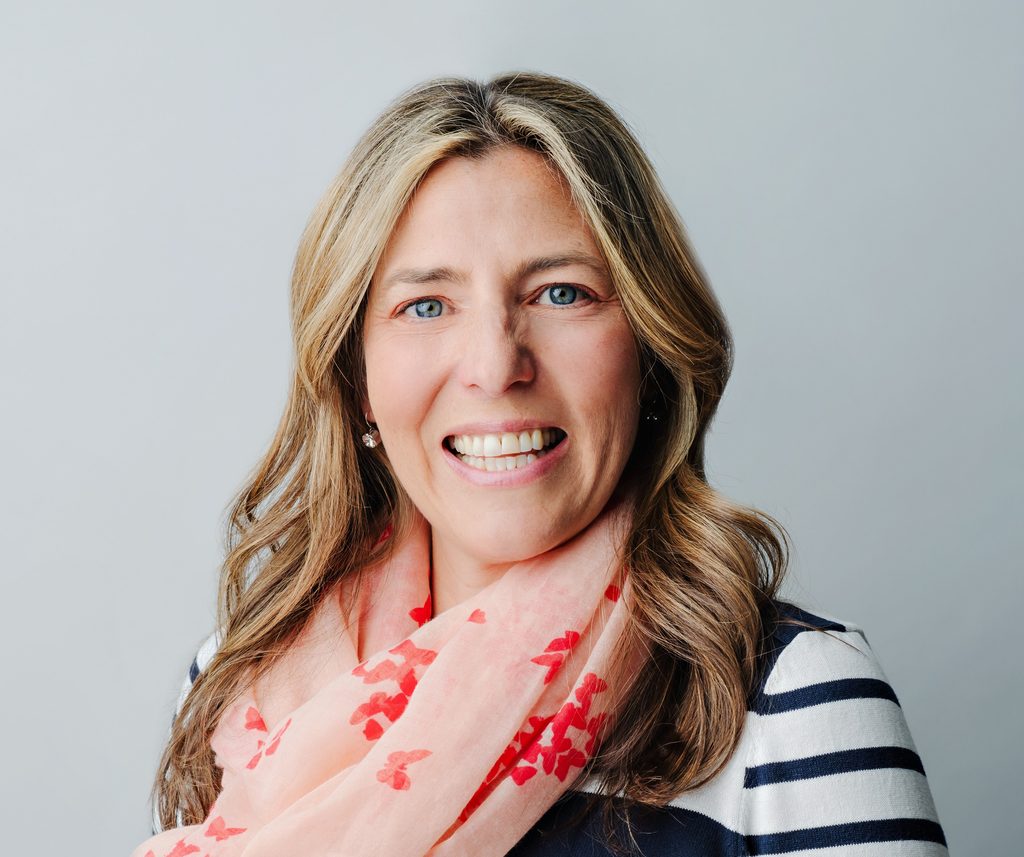
Dr. Karla Boluk is a tourism scholar, educator, and sustainability researcher at the University of Waterloo. Her work explores how travel can move beyond minimizing harm to actively contributing to the flourishing of people, places, and the natural world.
Working alongside Indigenous partners, she studies how Indigenous ways of knowing may help shape more responsible and regenerative tourism futures.
She is also interested in the phenomenon of last chance tourism, where travelers visit destinations at risk from climate change or environmental degradation, and what these experiences reveal about our relationship with the planet. Her research invites us to think more deeply about care, responsibility, reciprocity and the legacy we leave for future generations.
Brought to you by…
The Solo Female Travelers Podcast is sponsored by Solo Female Travelers Tours, our small, luxury, women-only tours that support female owned businesses around the world. Join us on a trip of a lifetime that helps make the travel industry more equitable.






Transcript:
Mar: Hello everyone, I’m Mar Pages, one of the hosts of the Solo Female Travelers podcast. Welcome to the show.
Have you ever read an article claiming a place is a must see before it’s gone? These are media pieces that try to create a sense of urgency to see a neighborhood or a natural phenomenon, a place, an island, or a wild animal before it is too late and it disappears or ceases to be in its most pristine form. So you book the flight, you drive the closest you can get to the place that is disappearing, you book a tour to get up and close and see for yourself. You’re filled with a sense of wonder and also a feel good about your visit. You support the local business and the community at large with your tour, and you live with a better understanding and care about the place or the animal or the community. But as you reflect on the experience or tell others about it, you’re also filled with questions, many of them around the ethics of travel to that very place.
Has your visit also helped accelerate the disappearance of what you were trying to see? And was it right to go in the first place? The flight, the drive, your literal footprint, and your consumption of the place added pressure to a fragile ecosystem and probably helped speed up its demise. This could be the case with a visit to a melting glacier or a low lying island that is disappearing under the rising seas, an endangered wild animal whose ecosystem is shrinking thanks to the tourism pressure, or a neighborhood that is fast gentrifying. There are so many examples, and this rush to see a place before it’s gone even has a name. It’s called Last Chance Tourism.
Our guest today, Dr. Karla Boluk, an associate professor and associate chair for graduate studies at the University of Waterloo in Canada. Her work sits at the intersection of sustainable tourism, social justice, ethical consumption, and the role tourism can play in creating positive change. She has co-written several research papers on Last Chance Tourism and looked at topics such as who benefits from tourism, who carries its cost, and how communities have a stronger voice.
I came across Karla’s work through a paper titled Place stewardship among last chance tourists, which looked at visitors traveling to see polar bears in Churchill and the glacier in Jasper National Park, both in Canada, and as whether feeling connected to threatened places actually makes visitors more willing to protect them, especially when it requires financial investment, or the impact of more tourism only accelerates its disappearance.
So today we’re going to talk about just that. Why see it before it’s gone could be both a way to create real advocates for a species, a place, or a community, and a way to speed up its disappearance to the benefit. Of the traveler only. Karla welcome to the Solo Female Travelers Podcast.
Karla: Thank you. Thanks so much for having me.
Mar: And before we get into this very complex and sometimes a little bit saddening topic, could you give us a little bit of an introduction about yourself and your work and how you ended up studying this complex topic?
Karla: For sure. My name’s Karla Boluk, and I am a professor in recreation and leisure studies at the University of Waterloo. We’re situated in the Faculty of Health, which is kind of interesting as well because a lot of tourism programs are situated in business schools. Much of my research explores the relationship between tourism, sustainability, and human flourishing. And so what has always interested me isn’t just simply where people travel, but why travel matters and what responsibilities come with actually going to places, so our mobility. And my interest in Last Chance Tourism emerged from a tension I kept encountering. Tourism is also oftentimes framed as a force for appreciation or conservation or cross-cultural understanding. But at the same time, many of the places people are most eager to see. And some of the examples that we give in this paper are melting glaciers or polar bears, or visiting coral reefs, for example, they’re being threatened by the environmental changes that tourism contributes to through global mobility, through our movement, basically from place to place. So this paradox has always fascinated me. Why are people drawn to places that are disappearing? What happens when we know a landscape, a species, or a way of life is vulnerable? Does that knowledge inspire care and action, or does it simply become another item on someone’s bucket list? So those are the questions that have shaped most of my work over the last decade or two, probably two decades.
Mar: Yeah, and this is a conundrum that many of us are feeling, right? Especially when you get there. You get there and you’re like, is my presence here actually making things worse? Right.
And if you look around, you kind of wonder. I was reading a piece, a news piece that you probably have also read yesterday, that said that urine of people climbing Everest is melting the glacier faster. And that’s just of course, this is an attention-grabbing headline. But it’s also true, right? It’s the ultimate example of precisely this, right? You by going there. And you have nowhere else to do your necessities than yeah, in the glacier. And that’s obviously fast accelerating the melting of the ice itself. So this is a complicated topic, right? But at the same time, like you say, tourism is a huge industry. For many of these communities is a main source of income because many of these places are remote. So maybe we can start by understanding how we got here because tourism is, I think we don’t all realize that tourism is a relatively young industry as industries go, right? Even in Spain, which is now like such a widely visited place, its tourism is something from the seventies, right? So how big really is the industry? How many people does it employ and how important is it? And how did we go from zero to a hundred and now thinking about how we can tame it?
Karla: So yeah, this is an interesting point as you mentioned. Tourism has become an organized industry. It’s only about 180 years old. So people have traveled for centuries, whether for trade or pilgrimage or education or just general exploring, right? And so what we recognize as modern tourism really emerged in the mid-19th century. Around 1841 when Thomas Cook organized travel and commercial group excursions by rail in England. And later that was developed into packaged tours that included transportation or accommodation and itineraries and so though that kind of laid the foundation for the tourism industry as we know it now. And so now the tourism industry contributes over eleven trillion dollars to the global economy. That’s in American dollars, and it supports over three hundred and forty-eight million jobs worldwide. So that’s like one in ten dollars, one in every ten dollars to the global economy, and one in every ten jobs. We’ve seen rapid growth, and it’s one reason, we’re now grappling with some of these questions around sustainability, overtourism, and environmental responsibility.
Mar: Right, this is the equivalent of the United States population, all of them working in tourism, basically, or almost all of Europe working in tourism, right? It’s a huge percentage of the world.
Karla: Yeah, one in ten jobs. Exactly. Significant.
Mar: And now let’s look at the Last Chance Tourism concept, right? Because I’m sure that many of our listeners will probably have never heard of this concept before, but they have seen the message, right? Because this is a very eye-catching headline for most travel publications. See this before it’s gone, or go there before it changes, or the places that have made change, or this place will change next year, go and see it now. So what does it actually mean? Where does the concept come from and how would you describe it?
Karla: Yeah, at its simplest, Last Chance Tourism refers to travel motivated, at least in some part, by the perception that a place, a species or experience is going to disappear or be changed irrevocably. So people think about glaciers or coral reefs or polar bears, and those certainly fit, but I think the concept is much broader than that. So it can include destinations threatened by environmental change, but it can also involve the communities, cultural practices, and landscapes undergoing rapid transformation. And so what matters is the perception of impermanence. If people are motivated by the idea that I need to see this place before it’s gone, then we’re entering the realm of Last Chance Tourism.
Mar: Right. And I’ve been traveling alone for a very long time, twenty-five years or so, and I’ve returned to some places ten, fifteen years later. Like I was just in Vietnam earlier this year and I had not been there for more than ten years. And I saw the place so changed, right? So a lot of people will talk about places that didn’t used to have a lot of tourism that all of a sudden become popular destinations. And so by definition, they end up changing a lot because suddenly there is this new industry that caters to tourists and places change, shops get replaced.
Even in Barcelona, I’ve seen it from when I was a kid, right? I was born in 1980, so in the 90s is when Barcelona truly changed. But when I was a kid, Barcelona was a very different place from today. Now you go to the city center and you have businesses catering to tourists rather than locals, right? There’s lots of places changing, so, like you say, it’s not just landscapes of animals, and those are probably the most obvious ones because you know and a species goes extinct. But it’s also a community, it’s also, I guess, even ethnic groups changing for good and modernizing, right? Some tribes that people may want to go and see. And what about neighborhoods that are gentrifying? This is tourism and the places are no longer what they used to be. Does that also qualify?
Karla: Yeah, absolutely. This is an increasingly important conversation. Places don’t disappear only because of climate change. They also change because of development pressures, housing affordability. There’s lots and lots of examples of communities that have changed as a consequence of short-term rentals coming in, and it really kind of drives up the price of rent. And so that kind of pushes locals further and further away.
Overtourism, and we’ve seen pictures of this in the media, gentrification, as you mentioned, or also shifting cultural economies. And so the risk is that tourism can sometimes turn these changes into attractions. And travelers may arrive hoping to experience authenticity or traditional culture without examining how tourism itself is shaping what they’re consuming. So this raises an important question that we’ve been exploring in the literature in terms of are we witnessing change or are we participating in it? And the answer is both.
Mar: Right. So I would like to make today’s conversation quite tangible for people who are listening and who are travelers obviously by looking at some of your research pieces and in particular the one that I’m most familiar with, which is the one that I actually found first, and that’s how I came across your work because I wanted to talk about this topic, and then I Googled and I researched experts that were talking about this, and this is how I found your paper. And that’s the one that you mentioned with the polar bears in Churchill and the Glacier National Park in Jasper as well. And in your Research and correct me if I’m wrong, you did not find that there was one typical last chance tourist, but that there were six types, depending on their motivations and levels of connections to the place and the willingness to act. Can you talk us through the research and for those who haven’t read the paper, what are those visitor types and what that research revealed about what draws people to threatened places?
Karla: Yeah, for sure. So I think one of the key findings of our research was recognizing that visitors often see tourism as leisure and residents experience it as housing, employment, transportation, access to public space, community identity, and just rhythms of daily life. And so people arrive assuming that tourism is universally welcomed because it generates economic benefits. Yet the communities navigate really complicated trade-offs. So one of the most interesting findings from our research was that there isn’t a single unified definition of Last Chance Tourism. So people arrived at places like Churchill and the Athabasca Glacier with very different motivations, emotional connections, and understandings of climate change. So some Visitors were highly concerned about climate change before arriving, and others were just seeking a memorable experience, with wildlife or nature. And some left feeling transformed while others saw the experience as largely observational.
So we created six descriptive labels to these visitor segments, including those who were extremely concerned. And willing to purchase carbon offsets. Those who were extremely concerned but unwilling, so they were concerned about environmental change, but unwilling to purchase carbon offsets. Those who were concerned and willing, so they were concerned about climate change and willing to purchase the carbon offsets, concerned but unwilling, so concerned about climate change, but unwilling to purchase the carbon offsets, unconcerned but willing and unconcerned and unwilling. So we were just kind of segmenting visitors in terms of their level of concern, and also their willingness to purchase carbon offsets to kind of demonstrate that they were actively kind of responding to the climate change that was happening in the destinations.
So the bigger lesson, I think, is around stewardship. It shouldn’t be reviewed as something that happens automatically, but simply because someone has visited a Glacier or seen a polar bear. Those experiences can be really powerful, but they’re only the beginning. So the real question is how destinations can intentionally design experiences that help visitors move from just spectators of environmental change to participating in care for the places that they’ve encountered.
Mar: Yes, indeed. Like I’ve been to Iceland several times and I’ve seen the main glacier there getting further and further away. So every time that we’ve been running tours there for six years. So every time the boat needs to sail or drive faster and like longer to get to the end and to see the glacier because it’s retreating. And you see this quite obviously when you have even in the last six years I’ve seen it retreat quite fast, right? So it’s visible. It’s visible to somebody who has been there. So I guess the idea is from your research, what you were trying to see is like, are people concerned enough that they’re willing to take action financially? Right. I guess motivation is the motivation strong enough that you’re willing to pay for the impact that you’re having.
Karla: And what our research reveals is that awareness alone is not enough. So simply bringing people to a threatened place does not automatically create stewardship. So different visitors connect with places in different ways and meaningful engagement requires recognizing those differences rather than assuming everyone will respond identically.
Mar: And what would make that difference? What makes somebody take a step forward and say, like, I can see that this is negatively impacted and I want to do something about it? Were they already coming with that knowledge? Was it the fact that they were already aware once they got there they really saw it and they were already willing? Or was it something that can be done when on the ground by the tour operators, by the local communities, by the people taking care of the place that can create that awareness and that willingness to act?
Karla: I think that a lot of our work critically reflects on authenticity, authentic experiences, relationality, so building connections with locals, and education. A lot of last chance tourists are going intentionally to a destination, because whatever it is they’re going to experience is at risk of being irrevocably changed. Yeah, if you wait, you won’t see it. Yeah.
Mar: So if you wait you won’t see it, right? You need to go now because it’s not gonna be there.
Karla: Right. Exactly. Part of the experience in terms of if somebody is going to feel as though they are going to be empowered to take action and respond in some way, shape or form, like purchasing carbon offsets is really down to whether or not they’re listening. To the locals, basically, to the locals about the change that is occurring. And so education is critically important.
Mar: And so somebody needs to tell you that it has changed, because if you go and see it now, you’re seeing a snapshot in time. You don’t see how it was ten years ago. Somebody needs to explain to you the evolution and you need to see it.
Karla: The change that’s occurring and how it’s affecting locals, right? The change will obviously have an impact on locals’ quality of life and well being. And so that’s critically important.
Mar: So if you go there and just see it for yourself, then you’re not really interacting with anybody, so you don’t get that education.
Karla: So for example in the cases that we research, like a polar bear safari, for example, you’ll likely be listening to a local guide, and they will likely reflect on the change that has happened over time and what needs to be done about it. And education and stewardship are what’s needed in order to preserve places.
Mar: I guess with the glacier though, you can go and see it for yourself, so nobody’s giving you any commentary.
Karla: Yeah. And that’s an example of how we can read about that online. We can read about places being affected by climate change and see the pictures over time, the change that’s happened. But we have to think about what our motivation is. Is it just to take a selfie and show your social media friends that this is where you’ve been and what you’ve done and that’s super problematic and we need to reflect on that.
Mar: I know that you mentioned in one of your papers there’s also a concept called the apocalyptic gaze, the willingness for people to go to just witness damage as if it was a spectacle, as if you’re t completely disconnected from what’s happening. I guess this would be an example of the worst case scenario, right? People going there obviously have a negative impact, but being completely disconnected from the fact that they are the cause of that impact ultimately, even if indirectly and even if it’s a small grain for each person, jointly together as a community, that’s the effect that it’s having.
Karla: So this is a tourism concept. And simply put, it’s the tendency to treat environmental change like a spectacle. So we travel to witness something that’s disappearing, just as observers standing on the outside. And so what interests us is how we move beyond simply just looking at loss and instead ask what are our responsibilities? What responsibilities do we have to the place we’re visiting? This apocalyptic gaze positions the traveler just as an observer standing outside the crisis. So a glacier’s melting, species is declining, a landscape is changing, and the visitor comes to see that spectacle of loss. So the challenge is that it creates this emotional distance and we leave with these like dramatic photographs and powerful memories, but not necessarily reflecting on our relationship to those systems and maybe how we’re contributing to the demise of whatever it is we’re looking at. What interests me in our research is how we can move from witnessing the loss to recognizing our responsibility.
Mar: And how do we do that? I feel like an article like the Urine on Everest clearly creates an immediate response and everybody can understand that, everybody can see the connection, it’s a very obvious one to one connection. Unlike perhaps climate change, which for most people is much more disconnected, you feel like there’s not much you can do about it. Because even if you minimize your footprint to the zero, you still have no impact on the global change and you feel like you’re so disconnected and so far away from the decision makers that can make a difference. However, something like if you go to Everest, you’re gonna need to pee and you’re going to accelerate. Besides the other obvious reasons why you are accelerating, just walking on it, obviously it’s another effect. But this one is so vivid and so clear and so attention grabbing for everybody. The media clearly plays a very important role in this. And it’s a very good way to explain the things and show photos next to it and for people to see, even if you haven’t been there, but I feel like sometimes they are not particularly responsible because the spectacle is much more selling and much more attention grabbing and much more clickbait and much more successfully carrying eyeballs into a piece.
Karla: Right. Yeah. And I will say of all the interviews I’ve done, the one topic that I get approached to talk about the most is Last Chance Tourism. It’s an example of my broader work that looks at carelessness and I use feminist care theory to talk about relationality and relationships and stewardship, reciprocity. So it’s interesting because this is a vivid example, I think, of just how the media portrays and markets a place on the brink of extinction. It’s also been picked up a lot for interviews that I’ve done. It’s problematic the way in which the media markets these destinations. And I think all interest holders have a responsibility. So it’s not just tour companies, but it’s also travel agencies booking the trips and visitors making the decision to go. The host community is kind of capitalizing or exploiting these areas that are on the brink of collapse. But really, I think it creates awareness and encourages learning and reflection and then stewardship and action. It becomes problematic when environmental decline itself becomes an attraction. But if disappearing places are marketed primarily through urgency and scarcity, tourism can unintentionally transform loss into a commodity, right? And that’s exactly what we talk about in our paper. We talk about Karl Marx’s notion of commodity fetishism, when we just become obsessed with accumulation and acquiring more and more and more.
Mar: Yeah, being the one amongst our friends who has been to this place and you know, before maybe all of your friends don’t have the chance to see it because they haven’t been fast enough.
Karla: Right, they haven’t been fast enough or they don’t have the discretionary time or the discretionary income. I guess as places become more and more threatened, they can also become more and more expensive and it can just line the pockets of the wealthy without necessarily contributing to sustainability efforts or regenerative practices I’ll say, enhancing the attraction. So disappearance can become like a consumer activity really rather than participants engaged in some kind of solution which is a problem.
So the question that we ask in our research is about this message. What is the visitor being invited to do? The answer is book now, right? The clickbait, as you mentioned, it’s just like obviously we have to be cautious about what we’re responding to. So if the answer involves education or stewardship or advocacy or supporting community-led conservation efforts, then the message may serve more as a constructive and kind of purposeful impact.
Mar: Right. If you’re coming and then the money that you’re truly spending is used to preserve the place, to improve it, to I guess extend their life and to conserve it in a way that benefits the local communities, rather than just repatriating profits to another company that is not even in the community. I guess it would be the worst case scenario. So you have all the negative impact and none of the benefits for the local community. This is something that as a traveller you can think about.
What else could the traveler do for the trip, for the experience to have a positive impact and not a negative one before they book the trip, while they are there and after they come back? So that stewardship offsets the negative impact that their visit had.
Karla: So there’s circumstances where choosing not to travel might be the most responsible decision. The better questions not simply whether they should go, but how and why and under whose terms, right? So I think responsible tourism is not always just a yes or no question, but it involves or invites understanding community priorities, environmental realities and the broader consequences of our choices really. So the more ethical decision is one that’s informed by listening to who’s going to be affected in the destination community.
Mar: And sometimes the decision is not to go and not to do it.
Karla: Yeah, that’s right. I kind of feel like the goal of some of this marketing is, yeah, to recognize that these places are gonna disappear soon, right? And so the goal shouldn’t be to create panic, but it should be to cultivate care. Places don’t need to be spectacles and they don’t need spectators, they need stewards, they need people to demonstrate care. We need to think about building relationships, like relationality. We need to consider reciprocity, and also what our responsibility is. Rather than saying, let’s see it before it’s gone, maybe we should think like, let’s visit thoughtfully, let’s learn why this place matters and we should leave the place thinking about how we can contribute more. And that’s really like the essence of regenerative practices. How can we enhance where tourism takes place?
Mar: Yes, indeed. I was last year in Antarctica and we will be returning at the end of this year. And at one moment one of the penguins jumped on the boat on the zodiacs. When none of us were on the boat. It was only the guide who was on the boat. We were all on land. And the penguin just jumped on top of the boat. And so the guide was recording because she was recording regardless. She had an underwater camera and when the penguin jumped, it captured the penguin jumping and then it was a three sixty camera. So it kept recording as she was for quite a while, like three, four, five minutes, trying to shush the penguin back into the water. But you know, the penguin didn’t want to get off the boat. He was quite happy there. So you know, at the end, when we all came back to the boat, we didn’t know this happened because it was only the guide on the boat at that time. And so they explained it to us and they showed us the video so that we could see it. It was quite cute. And it was the type of content that would absolutely have gone viral.
And apparently it was not the first time. It wasn’t the first time that this happened. The guides said that they had seen this happen in another time and that video had been shared. So if you Google, you can probably find a video like this. And they thought about it in between the guides for like a couple of days. They thought about what to do with this. Because of course we all wanted the footage. Even for ourselves or to share it with friends, because this is really adorable. It’s a very adorable situation.
In the end, the guides decided not to share it with us or to post it publicly or to share it anywhere because they thought you I guess it’s that kind of feeling, right? First of all, Antarctica is a fragile ecosystem, the penguins are at risk of extinction, their ecosystem is being more and more affected by climate change and by excessive tourism. And so they decided that it was better, it was the responsible thing to do, not to share that content so that it wouldn’t spread out without context around the fact that. This is something pretty rare. It was something that the penguin did out of its own will, not prompted in any way, and that it’s not good for them because of course you need to shush them out. And how do you shush it out? You cannot talk to it. You cannot just rationalize, right, penguin. It’s time for you to go back into the water. And you also don’t want to touch it. So you kind of need to encourage it in a way that you’re not interacting with it in any way. So anyway, without the contact, they feared that this could go viral without the understanding that this was not something that would be repeatable, that you should seek out or that you should promote. So I guess this would be an example of it’s better not to do something, right?
Karla: Yeah, for sure. And what I love about that is the critical reflexivity of this is a great example of what behaviors sharing that content might encourage. Right. There’s tons of examples of people risking their lives taking selfies on the side of mountains or scaling buildings or whatever. And what behavior might encourage other people to engage in risky behavior? But what I love about that example so much is that. It demonstrates our responsibility to nature and to wildlife. It’s a great example of responsibility. We have to consider what viewers might learn from that image, what it could promote. Does it reinforce appropriate behavior? Does it tell a fuller story? About conservation and stewardship I think sometimes context is enough. Sometimes restraint is the more responsible choice. And not every meaningful experience needs to become content, right?
Mar: Yes, also because once the video starts to go viral and it starts to be re-shared, you don’t know where it’s gonna go. And you don’t know where it will be shared and whether people will read the context around it, right? They’re just gonna focus on the image and the video. Nobody will read even the caption. And so you don’t know where it may end up and it could be reused for something else. Nowadays it could be remixed with other content and so the decision was not to share. Of course, I would have liked to see the video and show it to my friends, but I was happy that that’s the decision that they made because in the end that was in alignment with the company’s values and with also what we stand for.
But do you have other examples like that where I don’t know maybe I’m putting you on the spot but other things that you’ve seen had that have really worked in creating this stewardship and making people more caring for a place and how conservation, how education has made a place that was maybe going to disappear, for that disappearance to maybe decelerate or maybe be reversed.
Karla: Yeah, the example that comes to mind right away is work that I’ve done with Indigenous partners. I’ve been overseas for 10 years. I did my PhD and my postdoc overseas, and then I worked for four years between the UK and Sweden. And when I came back to Canada, I was really intentional about building relationships with some Indigenous partners on Six Nations, which is the largest reserve by population. In southern Ontario. And through our relationship building, I’ve learned a lot about the Grand River, which is a waterway that runs a hundred forty kilometers or so through a number of communities and cities and towns. So I’ve learned a lot about the Grand River. It used to be a dumping site until conservation efforts were taken up and I’ve learned about the oldest treaty signed between the Dutch and the Haudenosaunee called Two Row Wampum Covenant Chain Treaty and paddled with our Indigenous partners along the Grand River. And I’ve learned a lot from them. I think that’s probably the best example. Two rows are focused on paddling side by side. So you’re close enough. One row is indigenous partners, the other settlers. You’re close enough to lend support and far enough away to not interfere. And they have actualized the treaty and do a 10-day paddle every summer. And last summer I paddled with them for five days. And that’s like, yeah, actualizing the treaty and encouraging people to take responsibility as settlers and indigenous peoples to work towards reconciliation. And because the Grand River was once a dumping site and now conservation efforts are employed, I think that’s probably the best example that I have.
Mar: Yes, and I’m sure that many people listening are starting to wonder about all the places that they have booked and all the trips that they have booked, and wondering for some, for some of them, and I’ve heard this in the group of when conversations l about responsible travel and ethical travel come up, people saying, you know what? I’ve spend my whole year or the last five years saving for this trip. I work really hard, I don’t want to worry about the ethics of tourism, I really want to do this. I’ve dreamed all my life to go and see X, Y, Z, whatever that is in a place that may be fragile and threatened. And I don’t have time to worry about this. This is my vacation. I work really hard and I don’t want to think about this. And I deserve What do we say to them?
Karla: I understand that perspective. Also work hard, nine to five, three sixty-five. Most people want to travel to rest, connect with loved ones, experience something new or fulfill some kind of lifelong dream, right? If it’s something like you mentioned Mount Everest, people can train their whole lives to carry out a challenge like that, a personal challenge. And there’s nothing wrong with joy, right? But the good news is that ethical reflection and enjoyment aren’t opposites. In many cases they can deepen one another. So thinking about where your money goes, learning about local histories, respecting community norms, and understanding your environmental impact doesn’t diminish the experience. It can make it richer or more meaningful. And so a lot of our work is community embedded scholarship is focused on relationality and authenticity really emerges through connection and relationships. You could have a richer, fulfilling experience if you build a connection with someone, if you open up opportunities for dialogue, if you stay in touch with them, if you return. People are more likely to care for a place when they feel connected to them.
Mar: This is proven, right? With studies and I mean, logically to me it sounds like absolutely you would care more about something that you know. Hundred percent, right? You will care about a person or it’s very easy to let’s look about the opposite, right? It’s very easy to not to care about something that you don’t know about and that you have no connection to, and so logically, but I assume that scientifically this is also proven that you care about something that you know more than if you didn’t.
Karla: Yeah, so a lot of our work is focused on those relationships and what relationships relationality, stewardship and care. And so what can emerge when people talk to one another? Because I think the pandemic really had an impact on all of us. And so connectivity I can’t stress enough. And relationality I can’t stress enough, the importance of that. It requires curiosity, humility, and an openness. It asks travelers to arrive not merely as consumers but as learners, and I think that’s really that’s probably the red thread through what I’ve offered today.
Mar: Yes, and in the end, like you say, I very much agree with you. We have lots of difficult conversations on this podcast. We like to challenge conceptions and make travel something a little bit more reflective and I guess a little bit less just passive and I’m just gonna have a vacation and I don’t care about the impact of that vacation and I don’t want to think about and I also understand that perspective, right? For most people a holiday is a time to relax, to disconnect, to not have to worry about the hundred things that you worry about when you’re not on holiday, and so I understand that part. But I also very much agree with what you set and what many other speakers have said in in this podcast before, which is that when you know a place, when you get to know them, when you talk to them, when you connect to them when you understand their problems, their challenges, also their joy and their culture, you’re having a much more rich and rewarding experience, 100%, right? So definitely worth it to understand what the challenges of a place are, even if sometimes they are saddening. I’ve also been to places where once you learn the reality that maybe you were not aware of before, then you feel maybe a bit bad for your visit or wanting to minimize from that point onwards the negative impact that you may be having, and it’s also making you a little bit sad to realize that this is what they’re going through, whether or not it’s related to your trip or not.
But there’s lots of things that people can do when they are there, starting with, like you mentioned, this example, community-based, rather than going to a place and paying money to an international company that will not even reinvest the proceeds or the profits into the local community. Therefore, for sure it’s not regenerating or helping preserve the place because the profits are going somewhere else. What are some other things that the traveler can do once they are there? If they realise that I want to minimize my impact or even after they come back, right? Buying carbon offsets is one, but I assume there’s other things that they can do in the way they share their trip, in the way they talk to others about it. What else can they do if they want to if they really want to visit a place but they want to make sure that their impact is the least possible?
Karla: Yeah, I often encourage individuals to do some research. And you can start that before you travel. You can do some research to determine how you can support some local businesses. You can consider staying with local vendors, in a home stay, for example, rather than staying at a five star resort where you know, as you say, there’s leakages and that also impacts, where you eat as well, eating at local restaurants rather than chain restaurants, and seeking out community led and responsible operators whenever possible. All circle back to an example with my Indigenous partners once again. When you’re there, it’s really important to operate with curiosity and humility and listen more than you speak if you want to engage in a deep relationship with locals, for example.
So when I was at the beginning of relationship building in 2021 with some Indigenous partners, I was invited to a sharing circle at one of my partner’s houses, and we were sitting in her canoe hut. She organized, she’s one of the co-founders of Two Row on the Grand, this paddling journey that I mentioned before. So there were maybe five or six of us in that sharing circle, and later, subsequently, I was writing some grants for us to continue our relationship and my community embedded research is basically listening to my partners to understand what kind of interests they have and how we can mobilize that, how we can respond to it together. And so I was kind of tracking our trajectory and when we started our relationship development, and I said to my partner, our relationship really started kind of I think in this sharing circle. And my partner said to me, I don’t remember you being there, and initially it was a little bit shocking. I’m like, you don’t remember me being there? And what I realized subsequently reflecting on that is I was being quiet and I was listening. And that’s what I’m supposed to do as a settler and just as a visitor in general. I think it’s a great example. Being there, although I was initially surprised that she didn’t remember I was there, I was doing what I was supposed to be doing. And it’s an example of deep listening. And just kind of being humble, I think. And when you’re traveling, you’re visiting somebody else’s home, it’s not just about consuming a destination, but listening and trying to engage and build those relationships.
Mar: Yes, you were listening so much that she didn’t even see you.
Karla: Yeah. That’s right. And you mentioned, after you return as well. I mean, there’s lots of opportunities to share thoughtfully about your experience, continue learning. I think you know, there’s a lot of a lot of philosophers like Foucault, Paulo Freire, who teach us we’re all constantly on a journey of education, we’re all constantly learning, we’re all constantly developing, we’re all unfinished beings, right? So there’s lots of learning that can continue to happen when you get home. There’s opportunities to support conservation efforts and initiatives and reflect on how the experiences that you had may affect your future decisions and your future choices.
Mar: Absolutely, because even if you perhaps regret the choices that you had made in the previous trip for lack of understanding or education or understanding of your impact, you can still correct the next time and you can tell others about it.
So instead of instead of the headlines of see this before it’s gone or this is going to disappear, go now, what other are other headlines that the media or people with an audience in a reach of any kind, because we talk about the media but sometimes even with your twenty friends, you still have an audience that are listening to your trip. What are other headlines that we could use instead?
Karla: Instead of seeing it before it’s gone.
Mar: Yeah. Instead of like that sense of urgency, which it is a sense of urgency, but in a way that’s more responsible.
Karla: Travel thoughtfully. Think about reciprocity. Think about future relationships. I mean, I love the indigenous, indigenous principle of the Seven Generations Principle. Think about seven generations to come. Live like it matters. Live like you care about seven generations to come. You want to behave and act in a responsible way so that future generations can also benefit from what resources we have on the planet.
Mar: And then as tour operators, because I know that quite a few people in our audience are people who work in travel. They may be guides or they may be hosts or they may be tour operators or they may be activity providers. They are working in tourism. So there’s also something that they can do as well, right? So besides thinking about how they talk about the place or how they promote the place, what other things can they do or what can they change in their tours or in their activities to make sure that that stewardship is sort of built into the process? Do they have to do something to communicate with people beforehand? Is it education during the tour? If you have helped some of these businesses build that sort of connection, strengthen it so that they see a positive, maybe more people willing to pay for their carbon offsets or anything, what are some of the checklists that you’re like, hey, these are the five things that you should be doing? I don’t know if it’s that sort of simple, but what are some things that are like, hey, these are the checklist things that you should be thinking about?
Karla: I would say broadly, plant the seed. So plant the seed in terms of how visitors can benefit other local businesses. So what can they do after they leave you? How can they further contribute? Because sometimes people won’t have done the research before they arrive. So plant a seed and share how visitors might extend their benefits. To the local community and learn further opportunities to learn and then I would also consider ways in which visitors could make an impact following their trip so identify if there’s conservation efforts so it’s like planting the seed and extend thinking and education so that people can make a broader impact. Sometimes people just need to be nudged. There’s this theory, the nudge theory, that Thaler and Sunstein, they talk about, sometimes you have to nudge people to choose the healthier option by putting the fruit options before the chocolate bars. So you need to nudge people on how they can make a regenerative impact, how they can continue to make positive benefits to a community.
Mar: Yes, absolutely. So before the trip, obviously the traveler needs to research. And perhaps the tour operator needs to communicate and talk about the challenges or the negative impact of tourism in perhaps a way that’s not I guess it’s a balance, right? Because you want to talk about, hey, the glacier is disappearing, but you also don’t want to make people come in a way that they feel like they’re having a negative impact, right? So you have to educate without making people feel guilty. And so beforehand, I’m sure the operators can do a lot more about talking. If I think about activities in places like glaciers, being an obvious one. There’s not necessarily a lot of communication or education on the tour operator’s page about what’s happening to the glacier itself. Then there may be education during the trip, right? When you’re there, then they may show you photos, they may explain to you the impact, they may, if they have been a guide for a while, they can talk to you about what happened 10 years ago ago or five years ago, the same way that I return to a place and I see the change myself. If you’re a guide, you see it every year, you see it very clearly. And then, like you say, plant the seed. Maybe that education during the tour is the seed in itself. And then you give them opportunities to continue to offset their past impact because I guess you could do things a posteriori to help with like the carbon offsets or other ways, or helping community projects, or helping educate others. And for those of us who have an audience and who have people who read our travels. I think about it. I don’t always get it right, but I think about things that I will talk about and things that I will not talk And for example, I just returned from French Polynesia and I was thinking that we were going to include in our tour, assuming with the whales, with the humpback whales, who come to French Polynesia every year, but particularly Moorea. They have very strong rules in place. So now the boats stay very far away from the whales. However, when I was there talking to people, I realized that even if you stay very far away, even if very few people are in the water with the whales, you are still disturbing their ecosystem, you’re disturbing their patterns. These are whales that in Antarctica, they are the same whales as in Antarctica, who come in the summer to breed and to have their babies In the tropical waters. So these are the same ones I saw in Antarctica, just at different times of the year. And so it made me realize that it’s not the best idea to bring people to do this. And so we decided not to include this activity, right? And I’m sure that many people with audiences, like sometimes influencers, will not share the location of a place. Not maybe necessarily always because they don’t want to further promote its disappearance, but also I’m sure in many cases because of that, you don’t want to bring more people to a place that you’ve seen is fragile. But maybe you shouldn’t even talk about it in the first place.
Karla: I know. I know that’s a tension. As I said at the outset, this is a topic that I’m interviewed the most about. I’m often asked for examples, but I don’t give them. I’ve written about them and you can see in our published work, the destinations that are on the brink of collapse, but I don’t usually mention the examples in interviews because I don’t want it to encourage more people to go.
Mar: Right. It’s a bit of a conundrum. This is the conundrum that anybody who does this has to face, right? Like, is my work making things worse? Are people going to listen or to read to all of the context or will they just stay with the headline? Because attention spans are very short nowadays. And if I publish something with an image, the image is what people will stay with. They will not even read the caption, even if the caption contradicts what the image may show, so unless you have the right format to do this, like I have a newsletter. We write a newsletter every week where we touch upon some of these topics. That’s a long form of content, but people read that. It’s not attention grabbing with an image and you don’t just stay with that. You read about that. So this is a topic that I wanted to talk about. This was all the reflection. This is why we reached out to you because it was a topic that I see all the time, that I face myself all the time that even though I work in the industry, I still arrive at a place thinking, dang, I should not be here. I should not be doing this. And so I assume that it happens to a lot of people. And so I think everybody has a responsibility. The traveler too. But if you’re in the industry, I think even more than ever. If you’re the media, if you’re an influencer, if you’re the tour operator, if you’re the guide. It’s your responsibility ultimately to educate others and to share the reality so that people can become more caring. The way with animals, I feel like it’s easier. Do you also feel that with animals it’s easier? People tend to care more about an animal than an innate landscape or a place. They elude emotions.
Karla: I’m not sure about that. I think that there’s probably quite a lot of similarities between emotional attachment to animals. So for example, elephants, the whole process of elephants are basically beaten down until their spirit leaves their body in order to be able to use them in a touristic way. So whether or not they’re used in circuses or if people ride them, I’m not sure. In the scholarship there’s a lot of work on animal ethics and yet people don’t always read around how animals are treated before they are used for touristic purposes. I’m not sure that’s quite the case,
Mar: Mean I don’t want to end on a sad note, maybe you have another positive, regenerative experience where education has also helped a community or a place or a landscape or an animal be preserved. Are there other examples that you can mention? I’m sure there’s many, hopefully.
Karla: Yeah, one of the lines of my research focuses on the impacts of social entrepreneurs. So entrepreneurs who are interested in making some kind of contribution to their community.
Mar: And women, right? You also focus quite a lot on women.
Karla: Yeah, and women as well. And so we’ve interviewed women and other social entrepreneurs across Canada and recognized some of their regenerative impacts. So they engage in educating their consumers about what they’re purchasing, the process of production and ethical business practice, their focus on procurement, supporting other local businesses, and their contributions to the sustainable development goals. I’ve critiqued the SDGs quite a lot, recognizing the absence of feminist and indigenous perspectives, but we also know that this is the only kind of international framework that really kind of encourages governments and businesses and individuals to work towards sustainability and regenerative practices in our communities. And so yeah, a lot of our entrepreneurs who we’ve interviewed have demonstrated regenerative impacts within their communities.
So for example, during the pandemic, we heard from social entrepreneurs and how they’re creating meals for children and families in need within their community. So that’s regenerative, it gives back to the communities. And particularly during the pandemic, there’s a feminist philosopher who defines care as ensuring that you need leave no one behind. And so that really resonated during the pandemic because we were seeing some communities across the globe being left behind or the pandemic was ripping through retirement homes, for example, here in Canada and Sweden and beyond. And so recognizing these moments of care, recognizing care deficits and then seeing these entrepreneurs kind of give back was amazing.
There’s another entrepreneur who was really intentional about building relationships with local farms and the farming practices, recognizing paying attention to the farming practices to ensure that the pigs, for example, that the meat that they were getting from the pigs, the pigs were having the best quality of life because they could go in and out. They weren’t fed any GMO products, genetically modified products or corn and they could graze freely. So that was kind of neat as well as an example, but yeah, there are a lot of inspirational stories that we’ve heard over the last few years.
Mar: Maybe we can include some of those in the show notes so that we can also showcase some people who are doing who are having a positive impact and are implementing the right practices.
Karla: Yeah, for sure.
Mar: And I have some very rapid fire questions to end. What would be one word or phrase that you would very happily retire?
Karla: I have two. One is untouched paradise and the other one is probably sustainability. I think we need to move beyond the status quo and just kind of toeing the line. And we really ought to consider our responsibility and give back to future generations as I mentioned before.
Mar: So what would you use instead of sustainability?
Karla: Regenerative practices, enhancing where tourism takes place. That’s what I think we need to focus on.
Mar: Enhancing where tourism takes place.
Karla: Yeah. What some of the critiques of the United Nations sustainable development goals recognize is that it reinforces neoliberal capitalism. So really kind of reinforces and trains us to just produce and consume. And I think that that needs to be interrogated.
Mar: Right. And then what is the travel habit that you wish everybody would adopt?
Karla: Slowing down, spending money where it will benefit local communities, learning from locals, engaging in a dialogue, and probably spending time, more time in fewer places.
Mar: You’ve worked and traveled to many places, so what is one place that permanently changed you or the way you travel?
Karla: I think based on what I’ve offered so far, my travels to South Africa. I visited there for some field work during my PhD, and I think it’s permanently changed the way that I travel, particularly thinking about slowness.
I remember visiting one community and traveling in a four by four, and because some of the communities, as a consequence of colonialism and the apartheid, were cut off from municipal resources. So there was no road to get into this community. And I was in a four by four climbing up boulders basically to get to the community. So it required slowness. It took a long time to get there. And I learned subsequently about some trusts that were set up for communities to ensure that you know benefits would. This is an example of how visitors could give back to the community and engage in regenerative practices because these trusts were set up to reinvest in programs that would support the locals. So education, providing uniforms, building a school that was demolished because of a landslide, ensuring that they’ve got healthy food, education around HIV and AIDS. Support, in after school programming and that kind of idea. So that place has permanently changed me.
Mar: Even the infrastructure just to get there, right? Once tourism starts to arrive, then maybe the governments start to think or the communities start to think about better infrastructure so that more people can come and that ultimately benefits the community that was maybe previously isolated.
Karla: And it can also, yeah, change it as well if more tourists do visit. But I think what was neat is recognizing how entrepreneurship can spread if one enterprise is set up. I observed how entrepreneurs were inspiring others within a community who had never had currency past their hands before to think about their entrepreneurial capability. And so we saw a number of enterprises emerge. And it obviously created economic benefits for community members, which was cool to see.
Mar: I think that this last comment of mine is probably the example of why tourism is so complicated, right? Because sometimes the obvious is, we have better roads because there’s tourism, we want more tourists to come, but at the same time that those tourisms in the greater numbers, because now it’s easier and more accessible, will also change the place indefinitely and forever and irrevocably, like we are saying, and perhaps for the good. Perhaps sort of bad, perhaps good at the beginning, and then at some point there’s a tipping point where the impact is no longer positive.
This is the problem in all of these topics, right? That it’s never black and white. And sometimes it’s very difficult to find the information to understand if it’s black or white until you are there, until you have already had the negative impact. Do you not realize that you’re having a negative impact? I think this is the problem that I have a lot. That I have to go in there and see that It is not good to be there and go and see the whales. And I have to do it even sometimes before I realize that, that’s not right. And maybe I can cut the trip short and go back or not get in the water with the whales and just stay on the boat. There’s some things that you can still do if you realize that you’re having a negative impact. And you can also talk to others and try to educate others about things that are not maybe not being said, because there’s a confrontation between the local tourist businesses wanting more people to come and therefore not talking about the negative impact. And you know, people want to promote the place and show it on social media because it’s cool and it looks nice versus the reality. So sometimes this is the problem, right? That you don’t know until you’re there and you’ve already had the negative impact.
So anyway, very difficult and complex conversations. I guess this is why there are scholars like you who study this, because it’s not so black and white. If it was so obvious there wouldn’t be so many people researching it.
Karla: That’s right.
Mar: So anyway, Karla, thank you so much for joining us and for helping me talk about this complicated topic that’s definitely never yes or no. Education, researching, always trying to learn about the place, talking to the people is always the right way to go. I find it probably in every circumstance. And we know for sure though that caring about the place matters and that this connection is what makes people become stewards and wanting to protect the place, telling others about it, maybe even taking action, financial action, reinvesting, donating, participating in local projects, buying carbon offsets. Ultimately, money can have an impact in the positive or the negative way. We will add the links to the paper that we talked about and other papers that you have written about this and this entrepreneurial project that you mentioned that can maybe inspire. And for those of you who are in Canada, maybe you can check them out. And as always, you can find our small group tours for women on our website.
Thank you for listening. And if you enjoyed this conversation, please go and leave a review on Apple Podcasts. On Spotify, you can comment so that you can share your thoughts. I know many of you are leaving comments on many episodes, and that’s awesome. And we read them all and we reply to them all. This is the beauty of Spotify and YouTube that people can go and ask questions and share their experiences. Maybe there are projects that you know that you’ve seen that have been great, or a place that was a Last Chance Tourism destination and that you want to share with us.
So thank you so much and I hope to see you next week.
–
It’s time for this week’s embarrassing travel story. We’ll call this one Water Tap. This one is from Anonymous, and here’s her story.
This is truly one of those things that are so simple but so infuriating. I was traveling solo in Italy, and one night after a lovely dinner I had to use the bathroom at a restaurant. When I went to wash my hands, I couldn’t figure out how to turn the sink on. There were no handles, so I assumed it had one of those motion sensors. I started to wave my hands underneath it and nothing. I moved them closer and further away, waved them around and every possible part of the sink. Still nothing.
I started to look for a button, I touched the faucet, I tapped the sink. At this point it’s been a few minutes that I’ve been trying to find this imaginary button. And another woman walked up to the bathroom. She watched me for a few seconds, then pointed toward the floor, where I saw there was a little petal underneath the sink. Yep, the petal made the water come out. It wasn’t the most embarrassing thing that has ever happened to me, but I felt pretty silly after it. I was a pro after this night though.
Thank you so much for sharing your story with us, Miss Anonymous. If you have an embarrassing travel story of your own, we’d love to hear it. You can submit yours on our website at www.solofemaletravelers.club.