
In this episode of the Solo Female Travelers Podcast, Meg and Mar dive into six years of data from the annual Solo Female Travel Trends Survey to uncover what women really want when they travel alone. They challenge some of the most persistent stereotypes around solo female travel, including the idea that women travel alone because they have no one to go with, or that shopping, spas and Instagram-worthy destinations drive their travel decisions.
Using insights gathered from thousands of women around the world, they explore why women choose to travel solo, the biggest barriers they face, how safety concerns change with experience, and the destinations women recommend for a first solo trip. They also look at what actually influences destination and purchasing decisions, from culture, food and nature to price, sustainability, local ownership and supporting female-owned businesses.
Meg and Mar also discuss how women can use their purchasing power to influence the travel industry and why better data and greater representation matter. Ultimately, the episode shows that solo female travelers are not one type of woman, and that understanding what women actually want starts with listening to them.
Brought to you by…
The Solo Female Travelers Podcast is sponsored by Solo Female Travelers Tours, our small, luxury, women-only tours that support female owned businesses around the world. Join us on a trip of a lifetime that helps make the travel industry more equitable.







Transcript:
Meg: Hello and welcome back to the Solo Female Travelers Podcast. My name is Meg, and I’m joined today by Mar.
We’ll be recording today together. We don’t have any special guests. It’s the two of us because we’d love to talk to you about something that is very near and dear to our heart, and that is drum roll please, solo female travel.
And would like to start by thanking everyone for their feedback about the pace of the speed of the way we speak. We will attempt to slow our speaking down so that we’re more understandable. I know with Mar’s Spanish accent and my Australian accent, it can be a little hard to follow sometimes. We’ve also both been told our whole lives that we do speak fast. So we will try and speak at a slower pace.
Mar: Yeah, and this way you can speed us up instead of slowing us down, which is what I thought you could always do. But apparently if you slow us down, it sounds a bit strange. So we will try to speak slower so that you can speed us up if you would like to hear us speak faster.
Meg: We have had meetings before where I’ve received WhatsApp messages from Mar and it’s been a meeting with people from different parts of the world. I’ll receive a message from Mar saying, Slow down. They can’t understand a word you’re saying I’m like, Okay, I’m sorry.
Mar: I can see the question mark in their faces and I can read
Meg: In their faces.
Mar: between the lines of like, what is Meg saying?
Meg: But yes, so we would love to talk to you today about solo female travel and essentially what women want.
So Mar you are our head statistician a word? I just made it up. Is it a word? Statistician? At Solo Female Travelers
Mar: Yeah, a statistician. I think being a statistician is a profession.
Meg: Statistician. So for anybody who doesn’t know, every year since 2020, we’ve been running the Solo Female Travel Trends Survey because essentially we realized in 2019 that there was no tangible research about solo female travel out there in the world. So we figured who better placed to start a survey and start some long-running research than ourselves, having the community at our disposal with people who are just as passionate as us about empowering women and moving the travel industry forward.
So we started a survey in 2020. It’s since become the largest global annual survey, which does a deep dive into solo female travel trends, motivations, challenges, wants, needs. And Mar you deep dive into the stats every single year. So I’ll pass over to you to tell us a bit more about it.
Mar: Yeah, that’s right. So we realized that we didn’t know much about solo female travelers’ wants and needs and challenges. We could hear them talk about this every single day in the Facebook community, but we didn’t know the numbers, like and me being somebody who studied business and you know and economics and Meg being a journalist, we kind of want the data to know like do people really worry about safety and how much do they worry about safety? Why are women traveling solo? We had lots of hypotheses and the industry had a lot of hypotheses, but nobody really had the data.
To back this up and to really see what the reality was. And so we decided to launch this survey. The first one was December 2020, like Meg says, and we collected 5,000 responses. We have since run it six times every year at the end of the year. And we collect between two and five thousand responses from women all around the world from ages 18 to 88. I believe it is the oldest respondent that we ever had. The survey has 29 questions, it’s quite extensive. And then there is an open-ended question at the end that
asks participants, what would you like the travel industry to do to help you in your solo travels? And here we get usually a thousand responses at least of women just typing in what they would like. And so with all this information, I get down to like crunching numbers, which I love. And then we draw some conclusions and fun fact and spoiler alert, that numbers and the statistics have not changed in the last six years. It is pretty stable what women told us in twenty twenty is what they told us in twenty twenty-five.
Meg: And we do publish the results every year, typically on International Women’s Day, because we wanted this data to be publicly available. What we realized was that there was no research, there was no data. So people were making, and when I say people, namely usually the decision makers in travel are men. So typically as a generalization, but typically men in powerful decision-making positions in travel were making decisions about what women want based on what they assumed we wanted, thought we wanted, maybe made up in their head that we wanted. There was no actual data behind decisions that were being made on women’s behalf. And really there was not a very large amount of female input into that either. We do make the data publicly available every year. We update the page. You can access past years’ worth of data and the past reports because we did genuinely want this to make a difference in as much of a corner of the world as we possibly could and possibly influence decisions in a way which had a bit more female input and a bit more data behind the actual decisions that were being made. We have found over the years of continually publishing this that people have started taking notice. It has started being taken seriously. We’ve had journalists, companies, and very large scale companies reach out to access the data. It’s been featured in the press. So we are really pleased that people are starting to take notice and that other surveys from other brands have started popping up over the years as well. So we’re very, very proud that we can maybe have started a tiny domino effect, which will lead the travel industry to be a little more equitable towards women by taking actual data and feedback on what women want.
Mar: Yeah, it’s definitely exploded. I mean, everybody knows, right? and since we started doing the survey, more and more brands have started launching their own surveys, looking for their own data. Like there’s right now, if you Google any reports on solo female travel, you’ll find a lot of other people that have run surveys, a lot of data to back this up. But bottom line, women are the ones purchasing travel. They are the ones deciding where the money on travel is being spent. However, on the supply side, in the hospitality industry, in the travel industry, in the tourism industry, they are not the ones in the travel industry making the decisions but they are the ones in the purchasing side making the decisions on what to book, where to go, how to spend that money.
And so there is a little bit of disconnect in this. And you know hopefully this will change with time and more and more women will take on roles in boards of directors, as directors, as VPs, as C-level positions, as owners of travel businesses. But in the meantime, we hold the power. And what we want to do today is dismantle some of those myths, and talk about the real numbers. Let’s talk about the statistics so that you are also aware of that. Maybe you will hear those statistics and feel identified with it and you’ll be like, yeah, that’s me. Or yeah, I agree with this. Or I also think about that. And maybe you’ve participated in our survey through the years. I mean, we’ve had lots of women who participate every year, but also new women who participate in one year and the next, or not the previous one. And so probably I haven’t calculated how many unique women have participated in the survey, but it’s probably at least 10,000, right? So perhaps some of you in the audience have participated. Very likely you have participated in the survey before.
So you will now see the data which has been made available on the website. You can always go back to the website and see all of the years and see some of the graphs and like some of the representation of that data. But today we just wanted to go run down some of these statistics and discuss some of these talking points that we get past these stereotypes, the myth, you know, like all women traveling solo travel because they have no friends to go with. No, that is not true.
Meg: No. So if you would like to check any of these stats, there is a really sexy pink button on our website called stats. It’s a very sexy stats button. Feel free to click on that and you’ll have all of these fabulous statistics on your fingerprints.
But let’s jump into them. So I would love to discuss this because solo female travel is a travel style, not a lifestyle. So we found year after year that only 20% of respondents are exclusively solo travelers. The majority, which is 80%, also traveled in other ways in the last 12 months. And essentially what that means is that I might love taking a solo trip, but that doesn’t box me in as just a solo traveler. I might go traveling with my partner on the next trip. I might take my mother on the next trip. I might take my child. I might go on a small group tour. Just because you’re a solo traveler doesn’t mean you’re exclusively a solo traveler. And I think that’s one of the biggest myths about solo travel for me that really annoys and frustrates me because someone will turn around and they’re like, you just went with your partner, but you’re a solo traveler or they think that it discounts part of your personality if you take a family trip or a trip as a couple. So no, you’re not just a solo traveller because you take that trip one time.
Mar: Yeah, it’s not a person. It’s not like, these are the solo travelers and this is how they look. No. Like women who travel solo also travel with other people. You Meg are a perfect example of that. Me too, right? Like I’ve just been back from a long trip with my partner. I am now going with the group to Armenia. And then I will spend a few days absolutely solo somewhere else. And then I will again take another solo trip. And then I’ll take a work one. And then I’ll take a trip with friends, and then I’ll take a trip with my mother, and then I’ll take a trip with my mother and my sister. Like solo female travelers are not an identity. It’s a type of travel style that we take. And like Meg said, only one in five respondents told us that they only exclusively travel solo. And yes, there it’s true. There are women who prefer to travel solo and only travel solo because they just prefer to travel solo or because, you know, like their friends don’t have the time or the money to travel. Maybe they are single. Maybe their parents also don’t like to travel. And so they only do it like that, but otherwise, the majority of us travel solo on some occasions for some trips in some circumstances and travel with others in other circumstances.
And this is very much the type of solo travel that I’ve done all my life. I may go on a work trip and then tag along like a few other trips, or I may travel with a friend and then arrive a few days earlier like some solo trip, or like decide that some vacation I would rather do on my own. And that’s just much more me time for myself and some other trip I’d like to share because it’s a beautiful place, or it’s an experience that I want to share with somebody, or I’d like somebody to talk about that experience with. And so, yes, this is not an identity, it’s a travel style. And that was quite insightful for us to see because I didn’t expect to see that data. The assumption from everybody and the stereotypes and the marketing campaigns showcase a woman, as I said, young, westerner, often blonde and often carefree and like backpacker, etc. And that’s her identity. That’s the only travel that she does when the reality is a very different one.
Meg: And I’m gonna say this next one very slowly. And it’s not just because I’m trying to slow my speaking down, which I am, but I really want it to sink in. Women travel solo because they want to. And I’m gonna say that again. Women travel solo because we want to. I think there’s this myth in the travel industry, which again really frustrates me that we travel solo because it’s really sad. It’s really sad she doesn’t have any friends. it’s so sad she travels solo, poor you. No. We want to travel solo. We’re actually embracing this. So our survey has actually backed that up with real data. It’s not just me having a bit of a rant. The main reasons women travel solo are freedom and flexibility, 85%, escape from routine and responsibilities, 81%, relaxing, self-care, enjoying some me time, 76%, to challenge themselves. And this ranking holds for all age groups. It’s remained pretty much stable since 2020.
Mar: Yeah, it hasn’t changed at all.
Meg: Yes. We travel solo because we want to. I’ve had the pity all my life and I find it so interesting because it’s been completely displaced. And I’m sure that says something more about the person who’s making the assumption than it does the woman who’s actually chosen. She’s made an active choice to travel because she wants to.
Mar: But don’t you think that I, like when I’ve when I thought about it, I also realized that this has evolved quite a bit in the last few years. Like a few years ago, when solo travel wasn’t really a thing at all. And you know, you and I have been traveling solo for 25 years, right? This is not a new thing for us. Twenty-five years ago, I have the feeling that I was looked at as wow, you’re traveling solo. Wow, like how brave of you, how exciting of you, how wow.
But then somehow a few years ago it started to come with this perception of like, you must be traveling solo because you have nobody else. Like that’s your last choice. Like you don’t want to, but you have no other choice and therefore you go solo. And then recently this has switched again and now it’s again like, I want to travel solo. There’s a lot more visibility now than there was twenty five years ago or even ten years ago about women travelling solo, a wider range of types of women traveling solo, and therefore it again starts to be again of an act of rebellion or like a retaking ownership of our lives and our decisions and our wants and needs, and just saying, No, I’m traveling solo because I want to. And a lot more visibility around this has also meant that there’s a bit less pity party around, you’re traveling solo, poor you, you didn’t have anybody to go with. shame.
I don’t know how you feel about this.
Meg: That’s actually a pretty good and accurate description of my experience too. And I have always believed that visualization really helps people overcome their preconceived concepts in their mind because I did realize with the people around me, it did start as that same thing you’ve described of, wow, she’s traveling solo. And over time then the questions started shifting to because I started traveling solo when I was very young, when I was 18.
The questions when I started were also: when are you coming home? When are you starting university? When are you settling down? Those questions shifted finally after people I think realised that this was something that I did to where are you going next? And I think that that visualization, visualizing and seeing a woman traveling solo, then changes, does change people’s perspectives and it does change what they believe A, what women are capable of; B, the role of a woman; C, the hobbies that are available and normal and okay for us. And there’s a slow cultural shift because it does start slowly changing people’s perceptions. I’ve always thought that was the power of a Facebook group, a Facebook community like ours where you might not, as a woman, personally have anyone in your direct environment who you can visualize as traveling solo. So if somebody in your physical environment says women don’t do that, you believe them. But a Facebook group or a community then the internet and social media then instantly connects you.
Two women who are doing it, who are just like you, who you can see similarities in, and you can actually see them doing it, then you have a physical tangible proof that no, actually, women do go out and travel alone. So I can too. So I’ve found that that has been a very powerful thing within my experience. But regardless of whether you want to travel solo and regardless of whether you are happy to be the rebel.
Who is the first person within your environment to do that, or whether you’re following in the footsteps of others, there are still a lot of barriers. And we really wanted to dig into the barriers that women face when traveling solo as part of this survey data. And we wanted to see how that changes over the years. So, Mar, do you want to guide us through some of the barriers to traveling solo and how that has changed over the years, what’s stayed the same, what’s changed, new barriers that might have emerged, consistencies.
Mar: Yeah, absolutely. And just to reiterate what you just said, right? Like visibility and like having role models and having examples of things. Your world can be very small, if it’s just your friends and your family and nobody else does this, then you feel like, okay, this must not be something that women do or that is being done. And then suddenly your world expands and it can be expanded on social media and it can be expanded in online communities to people that are not as close to you. Then suddenly you’re like, wow, there’s so many of us. And so many of us in completely different shapes and forms, right? Somebody who could be eighteen or eighty-eight, as I said, any background, any religion, any ethnic group, any education level, any passports, any languages, right? And suddenly you see so many other role models and so many other types of women traveling solo, and so you think like, no, like everybody around me is wrong. There’s a whole world out there of women doing this. And I belong more to that world than to the one around me. And so I’m going to start doing it. And here are a hundred different ways to do this.
And I think that this is the power of a community, right?
Meg: And I have found too that you then become, and certainly when I started traveling for the immediate community in my physical environment, my family, my friends, in the small environment that I grow up in, you then become the person that people around you talk about to the next person and say, I know a girl who does that. Yeah, exactly.
Mar: Yeah, you’re the role model.
Meg: So you then pass on that role model legacy, I guess. For other people to say, Well, you can do that because I know someone who does that, or I know a person who knows a friend, friend of a friend who does that. You start changing, there is a cultural shift that does come from that. And it might be a small act of a rebellion, it might be a large act of a rebellion, depending on where you come from, depending on what your family situation is, what your social situation is, what your cultural situation is. It could be a huge act of rebellion to do that, but that does make very big waves in ways that you could never have possibly imagined.
Mar: Yeah, and sometimes it’s involuntary, right? Like there’s no rebellion being done. There’s nothing like active thing. It’s just like I want to go to this place and you just go alone. Just like you do many other things in your life alone, right? If you work, you already probably have lunch on your own on many work days. If you travel for work, you already take flights and taxis and stay in hotels on your own. So it’s just a natural extension and it’s not something that you even think about. You just do it because you never consider the opposite, is what I mean, right? Like you just never consider that this is not something that is being done. Like, no, this is something that I do because why not? Right. So I think in my case it was never even like an act of rebellion. It was more like, I want to go to this place and I just go to this place.
So anyway, let’s look at the barriers because you and I, the reason why we started the survey is also because we realized that you and I are not very representative of the average solo female traveler out there, right? So this was also at the beginning when we started managing the group and we started to also our world being expanded into the world of solo female travelers from all parts of the world and all sorts of backgrounds and ethnicities and passports and sizes and shapes and forms. And that’s when we realized that you and I are a very small sub-segment of that group because we’re both very lucky, very fortunate, very privileged. We both have pretty strong passports, we have education, we speak languages, we are in families that are very happy and supportive for us to do that. It’s more like, where are you going next than you shouldn’t go there. So we both were in very privileged backgrounds and very privileged experiences in that world. And so we realized that we were not representative at all.
I remember when we started managing the group, and you and I were like, wow, people are really worried about safety, something that had actually never occurred to me before. And this has been mentioned by other members in the group: like, wow, I actually never even thought about safety before. Because it’s just not something that you ever wondered. And if you live in Europe or if you live in Australia, safety is not something that you worry about so much because we don’t have high crime, violent crime here. And so it’s not something you are exposed to on your day to day basis. So it’s not something that you think about so much. You don’t think about it in your day-to-day life. You don’t think about it when you travel either. Right, so we realized that we were not very representative and we wanted to learn about the greater segment as a whole, right? Other women.
Who were not like us.
Meg: And God, if if I had been exposed to the level of realization of concerns about safety, some of the travel decisions looking back that I made when I was 18, like the extent of alcohol that I consumed in Europe, waking up in different places that I shouldn’t have been, and just some of the sketchy travel decisions that I made as an 18-year-old woman. So jumping to the barriers, it has been very eye-opening because as Mar said, we were encouraged to travel. It was very normal for me coming from Australia, that this is something that you did, so it was a real eye opener.
Mar: Yeah, Australians are very well known for taking a gap year, right? And going overseas. And overseas meaning overseas is basically anything that’s really far from Australia. And so the closest you will get is like at least nine hours. And so most Australians go to Europe, right?
Meg: Everything is very far from Australia.
Mar: I just came back from forty eight hours of travel, trying to come back from a little bit further from Australia. Australia is so far away. But anyway, yeah, it’s very common for Australians to do that, right?
Meg: But yeah, safety. I think we’ve just buzzworded safety like four or five times.
Mar: And we heard it so much in the group, right? And we were like, I mean, how let’s talk about this. How much do women worry about safety? Is it only because it’s visible and it’s what people talk about, or is it just a small percentage, or is it really the majority? And then we found out that consistently, every year, between 65 and 75 percent of women worry about safety. 65 to 75. It’s kind of like a couple percent up or down every year since 2020. Bear in mind that 2020 was pandemic years, and so there were additional safety concerns attached to traveling at that time that had to do with health and you know and like welfare and other things. So there was also a slightly heightened risk of safety or fear of safety at that time that there had been in following years. But it’s always been consistently 65 to 75 percent of women who travel solo worry about safety, and then my next question was okay, does experience improve that percentage? Do you worry less because you have more experience? Because that’s typical, right? Like in general, the more you do something, the more confident you feel about it. So if you have taken more than 10 trips, do you feel more confident about this? And so we ask women, we ask them how many times they traveled solo before, and then we ask them, do you worry about safety? And so we could correlate the two things. And we know that even for women who have traveled solo more than 10 times, like that’s quite a lot of solo travel experience. That percentage doesn’t go down that much. It will go down to like 65%.
So still, two-thirds of women worry about safety when traveling solo. And this is consistent across geographies. In Europe, it’s a little bit lower, but not that much lower than say in the US. But it is still consistently every year the number one fear of women traveling solo. And the number one reason for women who have never traveled solo before to not do that to not travel solo is because they’re concerned about safety.
Meg: And those safety concerns are warranted because 16% of solo female travelers also said within the survey that they have actually feared for their safety in the last 12 months during a solo trip. We did also ask follow-up questions and one percent of respondents said they didn’t actually manage to keep themselves safe this includes like your phone being stolen or being harassed in the street, because we ask exactly what happened and like theft was one of the main consequences, like one was one of the main reasons why they said they did not manage to keep themselves safe. So that’s about one percent. But sixty-five to seventy five percent worry about it and then before a trip. And then the reality is that one percent doesn’t manage to keep herself safe during a solo trip.
Meg: And we don’t just like to throw stats, right? Like we don’t just like to do this type of research, throw stats up there and then kind of don’t know, talk about the statistics, but then not offer solutions. So one of the real takeaways within safety as a barrier for solo female travelers is then putting this in front of the travel industry to say, well, what kind of products can you create and make and put out there to help women feel safe? Because ultimately women do protect themselves with safety devices. We ask them that too, eighteen percent of women travel self defense items when they travel. So whether that’s keyrings, pepper sprays, door locks, alarms, whistles, there are obviously geographical considerations in where you travel and what type of devices you’re allowed to have with you legally. Like in the US, there are a lot of safety devices that aren’t legal in other countries around the world. And I would not suggest traveling in many other countries. I would suggest checking the legislation and the laws of each country
Mar: And you know, alarm alarms are actually the ones that’s most being used. And this is something that you can take everywhere. You can also take it when you’re going hiking, for bears, and for any other animal. So alarms would be the number one tool that most women mentioned. And in terms of safety devices, there’s also two things that are super important for women and that more and more every year are using it. And one is an anti-theft pack, because like again, back to the one percent.
Meg: I was just looking around to see if I had mine because I actually was using it tonight. I used my anti-theft bag that I bought for Europe. I actually use it everyday. It’s fantastic.
Mar: Yeah, it does. I like that anti-theft bags are not something that you can only use in anti-theft situations. Like nowadays they make very fancy, very fashionable, very pretty ones. And on top of that, they have added benefits like, having materials that are anti-slash or like the extra little locks that you can use to make sure that nobody can unzip your bag, etc. Right. So they have little nifty things, anti-RFID reading technology so that nobody can steal your credit card details, etc. So, you know, half of the respondents say that they use anti-theft bags.
These are extremely popular on European trips. And our guests on our European trips, many of them use anti-theft packs. And then there’s always insurance, right? Like insurance when you’re on your own, you want to be protected, with something that will be there, somebody who will be there for you should anything happen. And travel insurance, medical travel insurance is super important. So that if something was to happen to you, let’s say you have an accident, not necessarily something as a result of violence or harassment or any of those things, but more like let’s say you’re slipping in the cobblestones and you twist an ankle, unfortunately, or have traveler’s diarrhea, or you have an allergic reaction to something. You can go to a hospital and you are covered and somebody will take care of you. So anti-theft bags and travel insurance, about half of the respondents said that they do that. And that’s great, but also on the flip side, somebody like me and like you, Meg, we both are very like conservative people. We’re big fans of insurance. So to me it was quite shocking to see that half of them do not travel with travel insurance. This is quite shocking.
Meg: I mean, this one of the questionable travel decisions that I used to make as a young solo female traveller. So, you know, you have this feeling that
Mar: You feel invincible
Meg: Yeah, you do. You feel invincible. I didn’t need travel insurance until I did. I think I had an asthma attack like in Budapest while I was on a Contiki tour at eighteen and I’m in the middle of this like asthma attack begging them not to take me to hospital because I don’t have insurance to cover it. And I have no idea if that’s gonna bankrupt me as a poor eighteen year old who’s living off noodles and I’ve spent all of my money on this Contiki tour. And then I was in the Solomon Islands. This was a group trip. So fortunately I wasn’t stranded because if I was by myself I would have been stranded. But I was in the Solomon Islands with Scouts Australia on a volunteer trip and we were there with the group, the volcano in Europe, in Iceland went off, I think it was Ash went through the air The Solomon Islands at that time, not sure if it’s the same, only had two return flights to Australia each week. It was like a Tuesday and a Thursday.
Mar: Yeah. Not a lot. I mean now I think maybe like a couple more, but yeah, it still is as remote as it was back then.
Meg: So the flights are on Thursday. If you’re on the flights on Thursday and a volcano goes off that grounds travel, you ground it until Tuesday. I didn’t have travel insurance. Fortunately, I was traveling with a group, so I managed to bunk in on the floor with someone else whose travel insurance did pay for her five days in the Solomon Islands. But if I was traveling solo, I would have been screwed. Well, not screwed up for the cost, obviously. But if you don’t have those costs, if it’s something medical.
I know Mar, you broke your arm, right, in South Africa?
Mar: I broke my arm in South Africa. I was during a work team building thing, so I had insurance from work. Like I had travel insurance, annual travel insurance from work that I’ve had for many, many years. And yeah, thank God for that because they wouldn’t even take me to private healthcare in South Africa. It’s pretty expensive, that’s the only thing you have access to as a foreigner. And they wouldn’t even accept me in the hospital until either the insurance promised them that they would cover it or I left my American Express. And thankfully I had an American Express, so I could leave it, and because it is technically unlimited, it’s not really unlimited, but it was a high, a high limit. They accepted us to take me in and then the insurance approved taking care of the rest of the expenses. But this ended up being a twenty thousand dollar bill, you know. So it was good that they paid for it. I mean I had to get through an operation and I have some plates on my shoulder and on my arm, and then I had five days in the hospital, but just that part alone was, yeah, twenty thousand.
So at that point I was quite glad. Then I’ve had smaller things happen in other places that were not significantly getting dehydrated in some place and needing an IV. But of course, if you’re in the US or in some places where healthcare is really expensive, this could end up being in the thousands, right? So I’m quite surprised that there’s fifty percent of them that like you, take a gamble and just like to gamble with this. I would never do that. I’ve always had travel insurance, a very comprehensive one.
Meg: And we advocate for that. And obviously if you join any of our small group tours, we do make it mandatory to take out travel insurance. I will put it down for the record that I now travel with very comprehensive travel insurance every single time.
Mar: Meg has grown up. Adulting. We’re adulting.
Meg: Is it adulting? I’m adulting hard.
So we don’t just ask about the sexy topics of insurance and stats and safety. We also ask questions so that we can gauge where the best place for a first solo female travel trip is. So we ask people where they recommend traveling for your first solo trip. We ask people where they recommend traveling for a solo trip full stop, and your own country. I guess should we have done a drum roll?
Drum roll. We’ll do a drum roll. Pretend you didn’t hear that. Drum roll, please, your own country is the best place for a first solo trip.
Mar: The suggestion is always take a weekend trip somewhere nearby, even go and like to spend the night in the nearby city, take the train, take the car, go somewhere nearby where you are removing a lot of the uncertainty. So you’re somewhere where you know the culture, you speak the language, not very far from home, and start there. Start small. That’s always the recommendation. Therefore, starting with your own country is the number one recommendation. And then we know that plenty of people dive right in and they go for their first trip to India and they spend three weeks in India on their first solo trip. And you know, that’s great. And go you.
However, if you prefer to start small, that’s always a good thing because maybe you don’t even know if you like traveling solo. Right? Like we’ve had a lot of members in the community will say, like, you know, I never even dine on my own. So like, let alone go to another country where I don’t speak the language, I don’t understand the culture, and suddenly I’m having breakfast, lunch, and dinner on my own. And I’m like, walking around on my own and I’m taking taxis on my own and I’m taking public transportation on my own and I’m going to museums alone and I’m joining tours alone. So start small if you feel like it. If you’re like me when I was in the corporate world, you are already eating breakfast, lunch, and dinner on your own, taking flights on your own, sleeping in hotels on your own. Maybe you don’t need to start small. You already started small with your corporate travel. But if you feel like you want to start small, your own country is the best option.
Meg: If you don’t like that advice, if you like Meg and Mar no, I want to go overseas. If you don’t like that advice, then we did find consistently since 2020 that Europe remains the best international destination for a first solo trip.
Mar: Yeah, definitely the number one destination.
Meg: The reason why we wanted to put data behind this just for some context is there are so many blogs that are just thrown up on the internet that you see, and it’s so easy for people just to say, yep, go to Australia, that’s the best.
Yep, go to Europe. That’s the best place for a first solo trip. Yeah, stay in your own country. That’s the best place for a first solo trip. Why? That’s what I always ask, why? then no one can really say they’re like, well, I just needed a blog post to put Like, well, okay, but I would actually like to know where the best place for a first solo trip is backed by data. So backed by 5,000 women who all agree. Please tell me why. And I guess Mar you can dive a little bit more into it because we did ask people why. We didn’t just say, please tell us where your preferred or your recommendation is. We said why, because it’s really important to understand that. Over to you, Mar.
Mar: Yeah, to be honest, like every single week there is some news piece that pops into our email on the best destination for solo female travelers is X. And literally every week it’s a different place. Literally. And so it very much depends, right? Like if you are asking somebody is in Asia and you’re asking them what’s the best destination for a first solo trip, very likely they’re gonna tell you Thailand or Singapore? Because they’re accessible, they are nearby, they are like, you know, famously known for good infrastructure, good tourism, safety, etc. So that’s why we wanted to ask the majority. But then again, there are also geographical differentiations, right? Like I just said. So in general, the number one recommendation outside of your own country is Europe. Why? Great infrastructure, lots of other solo female travelers, therefore lots of offer, lots of awareness, lots of visibility.
A sense of camaraderie, the opportunity to meet others. This is also one of the main reasons why women and suspected men travel solo to meet other people, other travelers, but also other locals. So if you’re going somewhere where you have lots of activities and things to do, think of Spain. Spain, UK, Italy, Iceland, and Ireland, these are the top countries. Every year, consistently, Spain, UK, and Italy have been in the top three. This happens every year. Every single year since we started the survey, these three always come up.
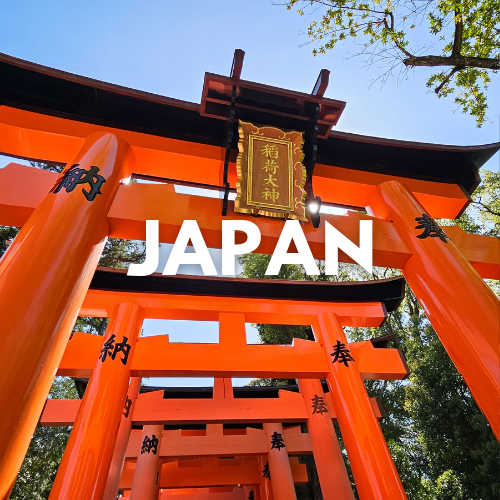
And then the other three change a little bit year by year, right? Like it could be Iceland, it could be Ireland, it could be Portugal, it could be Japan. So like those ones have been swapping year by year. So let’s say out of the last six years that we’ve been running the surveys, top destinations UK, Italy, Spain, and then also consider Iceland, Ireland, Portugal, and Japan as number one destinations. Why? This you can imagine, right? Italy, UK, and Spain. These are very touristy destinations.
Spain is the second world’s most visited country. Almost 100 million people visit Spain every year. That is insane, right? That’s a lot of other tourists like you. And so there’s everything you can think of. The same for the UK. You want culture, you want food, you want museums, you want landscapes. There’s so much to see and do in the UK. And the same for Italy. You could go back to Italy 50 times and every time have a completely different experience. So these are places where there’s something for everyone. So no matter who you are and what you like, you will find something you like in these places. And then they are relatively safe, like violent crime is relatively low. Yes, pickpocketing and petty theft is an issue in most of Europe and in most of the big cities, but you can do something about it. Like you can pay attention and you can buy an anti-theft bag, and you’re pretty safe in that case.
And then because there are so many tourists, there’s tourism infrastructure. Things are in English, even though English is not the most spoken language. Signage is in English. There are so many tours that you can join and like books that will take you places. There are so many different food alternatives. You will find vegan restaurants, you will find gluten-free restaurants, you will find anything you can think of. There’s public transportation that’s easily accessible, that’s affordable, that will take you anywhere. So these are like easy choices, right? People will always say, like, they are easy and there’s other travelers around and I can meet other people. So this is why these are the main ones, right? It’s sort of like, yeah, it’s easy, you’ll be welcomed and you’ll find lots of other people like you.
Meg: And city wise too. London, Paris, New York, Rome, Barcelona, Tokyo, they all top the list year after year, for a solo trip, thanks to like Mar just said, cultural offers, many things to do, relative safety, ease of getting around. I would love for you to give us a quick overview of the bucket list destinations, because we’ve also asked for that for the last six years, what are women’s bucket list destinations?
Mar: Yeah, and this list, surprisingly also in the last six years, is pretty unchanged. I mean, there has been a variation of like one or two countries year after year, but we’ve always seen Japan, Iceland, Australia, Italy, Greece, New Zealand. This ranking is pretty much it was the same in twenty twenty five, in twenty twenty four, but also like from twenty twenty, twenty one, twenty two, twenty three. These countries are pretty much the same. In some years, maybe instead of Greece we had Portugal, or maybe instead of New Zealand we had Canada.
But pretty much it has been the same ever since. So Japan has been a longstanding you know dream destination for many, especially in the last five years. Now that the yen has weakened quite a lot, it has become a more affordable destination for most people, Japan being one of the most expensive countries in the world, suddenly it’s thirty-five percent cheaper, which is why even we are able to offer like a beautiful, amazing 10-day luxury trip for something that’s 30% cheaper than what it would have been five years ago.
Iceland has been massively popular in the last five to ten years since the Northern Lights became a thing and since the last crisis that pretty much bankrupted the country. Iceland came back really strong and really better on tourism. And it has changed dramatically. This was the first tour that we launched in 2021, so this will be the seven. Twenty-one, twenty-two, twenty-three, twenty-four, twenty-five, twenty-six. This is the sixth year that we have run it. and we just announced 2027, which would be the seventh year. And in these seven years, the country has changed quite a lot. There’s so many more activities now, so many more things that you can do. Now you can float among icebergs, which is something that we are offering on our tours. It’s not just the blue lagoon. You have many other wellness experiences, you have many other luxury hotels, you even like winter lodges in the middle of the snowed area that you can go and stay in the winter and like it’s all about snow and like the darkness and the northern lights, etc.
So the northern lights have really put Iceland on the spot for many people. And then they had relatively low cost airlines linking it to the US and the country became quite a lot of a stopover in between the US and Europe. And so Iceland has become massively popular. I feel like everybody has been to Iceland. And you can go to Iceland many times because in winter, in fall, and in the summer, it’s completely different. So you can return. I’ve been five times now. And you know, I always think I want to return to Iceland in the summer. So definitely a different place.
Australia, I mean, Australia is so far away from everybody, right? So we know that for most people, Australia and New Zealand are like that dream place. You know, it’s like a concept. It’s like this amazing landscape, this amazing wildlife. I mean, I was just in Australia last month, right? I saw so many koalas and kangaroos fighting each other and wallabies and like all sorts of animals, right? It’s just an amazing country. What can I tell you?
Meg: Which is funny because most Australians, myself included, could tell you anything you need to know about Europe, but very little about traveling in Australia itself.
Mar: To be honest, Australia is so big.
Meg: It’s very true. I would love to jump into why women choose destinations though, because this is something that we really wanted to understand. Because I have taken so many trips where I’ll tell somebody that I’m about to go overseas and they’ll make really hilarious jokes like, ha ha ha, you’re a woman, pack an extra suitcase for all that shopping you’re about to do.
Mar: Oh my God, this reminds me of that reel of you and your seventeen unworthy outfits.
Meg: Yeah, okay, fine. If anybody, fine. I do, yes, fine. I overpack, but it’s not because I shop, it’s because I have anxiety that I’m gonna need 20 pairs of underwear in a day, regardless. I’m sure there are many like me. If you’re like me and you overpack, leave a message in the comments. But yeah, we actually wanted to understand the motivations of women who travel alone and why they choose to travel alone.
Mar: I mean, there’s the stereotype, right? Like I think that if people think about solo female travelers, they are imagining the young backpacker or they’re imagining the shopping and the spa, right? This is like the conception that the travel industry has been pushing. You’re a woman. shopping
Meg: To shop.
Mar: Surely you’re just wanting a spa, and I don’t know, shopping and spa, I guess these are the two things.
Meg: Yeah, so spoiler alert, good shopping opportunities were ten percent. Only ten percent of women make travel decisions based on shopping opportunities, and only seven percent of women, because I feel like this the next stereotype and myth, only seven percent of solo female travelers choose a destination because of the Instagram-worthy opportunities. Mar can you tell us about why women do choose solo female travel destinations instead?
Mar: And I think that this has probably evolved with time as well, right? But this is definitely one of the reasons why we wanted to do the survey, right? Because the marketing campaigns, the publicity, the ads from companies will promote a solo trip based on the one wants massages and shopping and
Meg: I mean I will take massages if they’re off on offer.
Mar: Yeah, and I will try to get a massage. I will definitely look at the prices of the spa and everywhere I go, right? Like I just came back from French Polynesia and two hundred and fifty dollars for a one-hour massage. I realize I will wait until the airport in Singapore to do that instead, which will cost one third of the price.
So yes, definitely I will try to do that. And many of our guests do that on our tours, and we try to include that as part of the program or as an optional in many of our tours. So definitely this something that we kind of associate solo travel or travel in general with like a little bit of me time, maybe an extra cocktail that you don’t take on your normal Monday to Friday or Monday to Sunday week, but now you take it on holidays and you enjoy your sunset with a nice drink with an umbrella and you go to do the spa and all of these things. But that’s not the main reason. Now that being said, there are plenty of trips that women will take to go on a retreat. And this is mentioned in the group a lot, right? Like I want to take some me time and go and join a retreat somewhere and just take care of myself and do massages and yoga and other wellness-related things, right? It’s a type of trip that lots of women take, but it’s not the main reason why women travel solo. And the Instagram-worthy parts and traveling for places that look beautiful on Instagram or to take photos or to take videos or do all of these things. These are small niche reasons for women to decide where to travel, right?
So how do women decide where to go? Culture. Culture is the number one. Almost 80%, four out of every five women traveling solo will decide on a destination based on the cultural offer, on what’s available from the cultural side, or how beautiful a place is. This 70%. Or the food. Food is definitely a worthy reason to travel places. I love traveling for food. I love eating. Food is such an important part of all of our tours. No.
Meg: Eat the pizza. no, I’ll quote eat pray love and say eat the pizza in Italy. In Italy. Like eating pizza. What do you mean? What do you mean no? No. I mean like
Mar: Eat the pizza in Italy. I thought you meant everywhere to eat pizza. I’m like, no, this is not like going to McDonald’s.
Meg: No, I mean like proverbially. Is that a word? Proverbial, proverbially? I can’t, I can’t speak. But proverbially, eat the pizza. You’re in Italy, eat the pizza.
Mar: Eat the pizza, eat the gelato, have one gelato every day, have maybe two, like you need to try them all to make sure.
Meg: I was about to say one? Only one? You’re not gonna get through all the gelato flavours in Italy if you’re only eating one a day.
Mar: Yeah, like just to like no, you need to test them. You need to see which one is the best so that you can tell your friends about it. You know, this is the most important part. You need to tell your friends where the best pizza and the best ice cream is in Italy. And if you come to Spain, please have a paella at some point. Find a good one and have a paella and have some tapas and you know and have the best Mexican food, depending on which part of Mexico you’re going to.
So absolutely. Traveling for food, yes, we give it a thumbs up. We approve. 64% of respondents travel for food. Then safety again is one of the main reasons or one of the main considerations for women when deciding where to go. So 62% will say that they consider safety before going on a trip.
Nature, I feel like nature is also increasingly becoming more and more important and more and more valuable as more and more women take on adventure trips and go hiking, and like there’s more and more visibility again. In the outdoor space. So almost 60% of women said that they choose a destination based on their access to nature and nature activities. Good weather. For me, when I start planning a trip, the most important thing, the first number one decision factor is when am I going? And then based on the when, I know where, right? Because for me, I want to go to a place when the weather is good. And so depending on what time of year I’m traveling, I already discard certain parts of the world because the weather is not good, it’s too hot.
Or it’s rainy or it’s too snowy or it’s too windy or whatever it is, right? So the weather is again almost 60% of the decision for many women traveling solo. The locals, the friendliness of the locals, 56% say that this is important. Nobody wants to go to a place and feel like the local people are not friendly or you’re not being welcomed. I don’t know that there are places like that. I cannot think I’ve been to more than 140 countries.
And I cannot think of many where I felt like people are not friendly. It’s true that some places are more extroverted, more open to foreigners, and more talkative. Australians are friendly, right?
Meg: I mean we like to think we’re friendly. I think we’re friendly. Yes, we’re friendly. We’re very friendly.
Mar: I think you definitely are friendly, yes. You’re very friendly, yes. We were in Australia with my partner and he was like, people are saying good day mate And I’m like, Yeah, that’s how Australians speak. He’s like, I thought this was just in the movies
Meg: I mean it’s also usually ’cause we’ve forgotten your name. So if I call you mate, it’s pretty much because I’ve forgotten your name and then I’m up if you think I’m upgrading you to friend status, but I’ve just really I’ve just forgotten your name.
Mar: It’s a very smart thing.
Value for money, another reason.
Meg: I was going to say if you’re traveling for food, Australia might well I’m not gonna say that I’m not gonna say that Australia might disappoint you on the food front because I might offend Australians. But like typically I’ve served kangaroo burgers before and people haven’t been suitably impressed.
Mar: No, it’s not that it would disappoint, but it’s also not that you travel to Australia for the food. You travel to Australia for nature, you know?
Meg: This is true. On the snack front, we got Tim Tams, we’ve got Lamingtons, though there is a yeah,
Mar: Oh my god, I bought Tim tams
Meg: though there is a hot debate between whether Lamingtons and Pavlova belong to New Zealand or Australia, so we’re just gonna claim them.
I would love to jump though to the last point. And these I will say for everyone listening that these are just the key overview of the stats. You can jump onto the statistics page of the website.
Mar: Yeah, there’s a lot more.
Meg: It’s a lot. It’s a big page. Mar loves her data. She loves her stats.
Mar: I love data.
Meg: We also break down the difference with all of these points, we’ve covered the differences in age, how age and generational factors change these statistics and change these perspectives and change these drivers. So please do jump onto the website.
But I would love to jump into the last kind of key stat that we ask about, and that is money, money, money, money. Money. I thought I’d just give you a little song rendition there.
Mar: Why not?
Meg: But purchase decision factors. Because the price does drive the decision as well.
So we do also ask about purchase decision factors because like we said at the beginning of the podcast, women do make the purchase decision factors for not only their own solo trips, but also for their family trips, for trips as a couple. So we really wanted to dive into what drives those decision factors.
Mar take it away.
Mar: Yeah. I mean in the end when you’re about to decide, not necessarily where to go, although yes, some destinations are in general more expensive and therefore maybe something that you want to save for. For example, French Polynesia, extremely expensive, very difficult to have a budget trip there. But once you’re deciding what hotel to stay at, where to eat at, what activities to participate in, when you’re deciding all of those purchases beyond the flight, but also the flight, price is the number one decision factor. This is the thing that you consider the most.
Price, around 50% of women think about price when they are deciding what to book, what flight to take, what hotel to stay at, where to eat, what activity to participate in. But then besides price, there are other things that women care about. And here this important because we sometimes feel that we don’t have a say or that we cannot change things when you see things out there that frustrate you, or you see companies taking advantage of certain situations, or you see companies that are not aligned with your values and you feel like you cannot do anything about it because you’re just one small person and this company is huge. However, we can all jointly make decisions with our money, right? So the first thing that women think about when deciding where to book and who to book with is eco-friendliness and care for the environment, besides price. Eco-friendliness and care for the environment of a specific brand, a specific hotel, a specific tour, a specific company.
And then whether the business is locally owned. Local ownership is also increasingly becoming important. So again, that’s about a third of you. Think about that. You investigate and you go and check, okay, is this a local business? Is this an international chain? And a little more than a third of you will try to look for a locally owned company instead of a Hilton, a Sheraton, a Marriott, and so on, for example, in the hotel side. And then 25% values the social responsibility of the business. So is this a socially responsible business? Does it do something to help the community? Is it linked to the local community? Does it have local projects? Is it aligned with the values of the community? Is it giving and generous and linked to the community? Does it benefit the local community or is it just an extractive business? So these three things are beyond price. Eco friendliness and care for the environment, whether the business is locally owned and whether it is socially responsible.
And we also ask about how much you care about whether a business is female owned. And about one in five, twenty percent, and this has also been consistent in the last six years. About one in five, twenty percent of you say that you also look for businesses that are female owned. Now, this is something that we based our entire business on. We try to make this 100% of the people that we work with: all the hotels, the drivers, the restaurants, the activities, the guides, everything we try to participate in, we try to make it female-owned. That’s not always possible. So I know how hard it is because that’s my main job every single day.
But one in five, twenty percent of you also try to look for that. And I hope that this number will increase more with time because you can make a decision with your money. Where you put your money can actually start to shift things for brands, shift interest. And going back to the beginning, a little bit to close the loop, we said women are the ones making the decisions. Around eighty percent of the purchase decisions in travel are being made by women, be it for their families, for their couple, for their bosses, for their colleagues, for everything, 80%, 82% specifically, that’s the data that has been quoted by numerous organizations. 82% of the travel decisions are made by women. So if we all of us started to put more emphasis in these things and in these values, we could change things around. And so now that there’s more and more solo female travelers out there, more and more visibility, and we have moved from a small niche group to a major force, more brands are starting to pay attention to this. And so they pay attention to the fact that we care about safety, that we care about social responsibility, that we care about sustainability, that we care about other women being in positions of power, or women working at that company, or female guides being available. And so they are hiring more and more women, in particular in the case of guides, they’re hiring more women to be guides because the customers are asking for it. So never think that you cannot change things just by asking about this. So if you want more women to work in the travel industry, start asking for a female driver when you’re working for a company. Start asking for who owns the company.
Start looking for locally owned and female owned businesses. Start asking for a female guide for your tour. And then more companies will take note, whether it’s for the right reasons or whether it’s for the wrong reasons. Ultimately at this point, I don’t care. I want more women to be working in tourism and to be in decisions of power. And we can collectively do that by asking for it. Right. So we’ve seen so many companies offering female guides because they saw the opportunity.
Meg: And this ultimately why we ran the survey in 2020, and why we continue to run the survey to this day or to this year. because we wanted the decisions to be made based on what women actually want and based on what we actually think about, what we actually need. So we will be running the survey again this year, every November. It’s not something that changes. We run it every November without fail.
Please do jump onto the Solo Female Travelers website. Please do jump into our community please do take part because we do actually believe that this is making a slow change for good. It’s a slow process, but it’s a long term process and something that we’re both very committed to, something that we’re both very passionate about. And we do genuinely believe that people are taking notice that it is slowly having a cultural impact and a cultural shift based on how decisions are made for women in the travel industry.
One thing that I would love to end the podcast on is how we end the survey. Whenever you’re creating a survey, it’s very important to have everything reasonably streamlined so that you can draw conclusions. However, we end the survey with an open-ended question, which is very difficult for Mar to compile because it doesn’t all fit nicely into a box. It’s not all very nicely arranged, I guess, into boxes, but we do ask an open-ended question with 5,000 different responses, but surprisingly, even though there are 5,000 open-ended responses, they do all fit relatively within the same theme. So I would love to end the podcast by reading some of those women’s wish lists and requests. So essentially, this is an opportunity for women and for you each November to tell us exactly what you’re thinking. So one of the main things that pops up is don’t use the phrase just one pretty much.
Mar: Oh my god, I hate that.
Meg: Also, the theme that comes up time and time again is to feel and be safer. So one of the comments this past year was common sense stuff that still happens at hotels. For instance, don’t say hotel room numbers out loud, don’t put solo female travellers at the very end of long hallways in hotels, don’t act shocked when a woman requests a table for one at a restaurant.
Mar: Yeah, ultimately that the data was also very useful for us. And we didn’t say this at the beginning, but it’s not just women’s role to protect themselves to stay safe. It’s also the industry’s responsibility to train their staff to provide the information required and to be trained to not do things that would put women traveling solo or solo travelers also in danger, right? So these are things that hopefully the travel industry can take home and like start training their staff on. And we know that they have. We know that a lot of measures and a lot of programs have been put in place in lots of organizations and hotels in particular to make sure that women can feel safer by having these rules. And for example, these days, when you go to a reception, most hotels will not say your room number out loud. They’ll point at your card and they’ll say, This is your room number here.
Meg: So definitely jump onto the webpage because we do list real genuine quotes from this open-ended question and you can read through some of them. That website is https://www.solofemaletravelers.club/solo-female-travel-stats/ , but there is also a menu button on our website that’s called stats. Click through to that and you’ll access the full set of data, all of the results that Mar has compiled and each year. So we have the stats back from 2020 to today.
This November, please do go and complete the survey yourself and share it with others, other women who you’re connected with, other women within your community, because it does make a genuine difference. And we do want the results to be representative, not just of one set stereotype of a solo female traveler, but representative of women from all over the world, from 195 different countries, from different ethnicities, backgrounds, religions, beliefs. We want this to be truly representative and not present data based on one version of a solo female traveller.
Mar: Yeah, especially us. And you know, you haven’t mentioned one of the main quotes that’s being repeated every year, which is probably the thing that annoys solo female travelers the most. I think that even if I don’t tell you, you know what I’m talking about.
Meg: It’s the single supplement. I feel like we can yeah, it’s the single supplement.
Mar: Yes. The single supplement is what everybody hates unanimously. It’s like unanimous no matter who you are or where you come from, everybody hates the single supplement.
Meg: I mean, I feel like we’re at an hour already, and if we go down that rabbit hole and open Pandora’s box, that could be a whole other podcast. And in fact, it has been. But yes, do feel free to jump onto the website because it is very, very comprehensive. It’s a very long page. We’ve covered the high-level key stats and key takeaways, but we do publish the data every year because we do genuinely want to make a difference. And now we would like to genuinely thank everybody too who has left us a review on the podcast so far because the podcast is new for us. We’re very excited and very committed to keeping it going. So please do leave us a review because they do make a world of difference to extending our reach. I think Mar you were trying to convince me to sing some elevator music.
Mar: Oh my god, yes. I think that this is a great opportunity. It is a great opportunity for you to open your app wherever you’re listening right now. And if you’re on Apple, I know it’s very cumbersome to leave a review because the other day my mother wanted to leave me a review and she had a very hard time doing this. And you know, on Apple, you have to go to the podcast page and then scroll all the way to the bottom. And when you see a rating in the review, there is where you can leave a review. On Spotify, many of you have left us comments on the episodes, and that’s great.
Because on Spotify you can leave actual comments on each episode and it’s super cool and we are reading them and it’s really nice. And I wanted to read a couple of them because it’s really cool. So I wanted to specifically thank the people who left them and read a couple of comments on one of the last episodes that we had, you and I together, Meg. It was the last episode we did together, which is called Is Group Travel Right for You? And we had the founder of another group travel company who commented and said, as a tour operator myself, this episode is gold Capital letters. I like the capital letters. So many truths and great things for travelers to think about when making travel decisions. Thank you.
And then another person commented and said, I wish I had heard this prior to my last tour group, though I’m not sure it would have changed things. I’d only done group tours with my girlfriend previously. I’m a pretty laid back person and I get along with most people, but on this trip I was with a roomie who talked loudly on the phone until twelve and then again at six. Even after I’d said it was impacting me. I barely slept for six weeks. For six weeks. I cannot afford a single supplement. There you go, Meg. But I’m scared to book another group trip or travel alone.
So we have plenty of comments on lots of episodes, and we have just a few reviews on Apple Podcasts. And like Meg said, they really make a difference. It’s quite impressive to see that the more reviews we get, the more people are finding us out. So please do take the time to do that. I will read one of them out loud today from Milana. I always look forward to new episodes because Mar and Meg feel like friends you could talk to for hours. That’s very nice, thank you. They are not afraid to be silly and never make the topics feel too serious or polished. I like that they share their own stories and are honest about still figuring things out. Yes, we definitely do. I haven’t gotten to travel much yet, but the more I listen, the more I want to see everywhere. I learned something new every episode, not just about travel, but about life.
Thank you, Milana.
Meg: Thank you.
Mar: We don’t know you, but we thank you very much. That’s very kind of you. And please do go and while Meg sings some elevator music, you can open your app and go and leave a review or a comment or a like on Spotify. It’s just like you just press the heart button. So it’s very straightforward.
Meg: Okay, fine. Well, since she said that she likes that we can be silly, then this elevator music is brought to you by Solo Female Travelers Podcast as you leave us a review.
If you watch it on YouTube, we’re also dancing. I don’t know if what you’d call us doing right now is dancing, but we’re waving our arms in the air. Thank you for leaving us a podcast review. Woo. Thank you genuinely for tuning in this week. We will be back next week.
Mar: Yes, thank you so much. And go and check out the stats if you want on our website, tours.solofemale travelers.club, and then you will see it on the main menu above stats.
–
And it’s time for this week’s embarrassing travel story. We’ll call this one the wrong way. This one is from Anonymous and here is her story.
I was staying at the Zion Lodge and had managed to get a permit to hike Angel’s Landing the next morning. I’d been trying to get one for a while, so I was very excited. My permit was for before 9 a.m. so I got up early, packed my bag, and headed out to catch the shuttle to the grotto where the hike starts.
The grotto is literally the next shuttle stop after Zion Lodge, so this should have been very simple. I got on the shuttle, sat down, and started mentally preparing myself for the hike. A few minutes later, we pulled up to another stop and I got ready to get off the shuttle, but it was not the grotto. So I thought, okay, maybe I misunderstood the order and sat back down. The next stop came and still not the grotto.
So I finally get up and I ask the driver, sorry, but when do we get to the grotto? And he said, you guessed it. You’re going the wrong direction. The best part is that you can’t just hop off the bus and go across the road and immediately catch one going back. You have to ride all the way back to the visitor center, get off, and get on the shuttle all over again. I was so worried about missing my start time, but thankfully I made it and the hike was spectacular. I highly recommend it.
Thank you so much for sharing your story with us, Miss Anonymous. If you have an embarrassing travel story of your own, we’d love to hear it. You can submit yours on our website at www.solofemaletravelers.club.