Planning your first trip to Scotland? In this episode of the Solo Female Travelers Podcast, Anastasia is joined by Scotland tour host Naomi to share practical advice for making the most of your visit. From choosing the best time of year to exploring the Highlands, Edinburgh, and the Isle of Skye, Naomi explains what travelers should expect, how to get around, and why slowing down and connecting with local communities leads to a much richer experience.
The conversation covers everything from driving versus public transportation, how many days to spend in Scotland, and what to pack for the country’s famously unpredictable weather, to avoiding common tourist mistakes and discovering authentic local businesses, artisans, and hidden gems beyond the most popular attractions. Naomi also shares recommendations for visiting whisky distilleries, shopping for meaningful souvenirs, supporting women-owned businesses, and embracing Scotland’s welcoming culture.
Whether you’re planning an independent trip or considering a guided group tour, this episode is packed with practical Scotland travel tips that will help you travel more confidently and experience the country beyond the typical tourist itinerary.
About Naomi:
Naomi is a Scottish tour guide with a deep love for sharing her country’s stories. She studied art history and languages, then spent years guiding in Spain and France before returning home to Scotland. Naomi now leads visitors through immersive experiences that weave together our heritage, nature, people’s history, food, and music.She is also currently training with the Scottish Tour Guide Association, continuing to grow her craft and highlighting the richness of Scotland and its communities.
Links to things mentioned in the episode:
Brought to you by…
The Solo Female Travelers Podcast is sponsored by Solo Female Travelers Tours, our small, luxury, women-only tours that support female owned businesses around the world. Join us on a trip of a lifetime that helps make the travel industry more equitable.


















Transcript:
Anastasia: Hello and welcome to the Solo Female Travelers Podcast. Today I’m excited to be joined by Naomi, our wonderful Scotland tour host and someone I’ve had the pleasure of meeting in person on our May 2024 Scotland tour.
Naomi is one of those people who makes Scotland feel immediately more layered and more interesting and more alive. She has many stories and I love listening to your playlist on our drive to the Isle of Skye. In this episode, we will be talking about how to actually plan a trip to Scotland, what people underestimate, what to pack, what to skip, what’s worth the effort, and just in general, how to think about the Isle of Skye why learning about local artisans and communities matters so much when you travel here.
Naomi, before we get into all the practical planning advice, could you introduce yourself a little bit and tell us how you started taking visitors around Scotland?
Naomi: Well, hello. And that was a fabulous introduction. I wish all introductions could be like that. A little bit about myself. Well, I am from Scotland and I studied art history and languages. So tour guiding was a way of sort of travelling around Europe and living and traveling around Europe. And I moved back to Scotland, retrained and started giving, started doing tours in my own home country and found that you sort of fall back in love with the place that you’re from when you come back to it, when you get to know how lucky you were without realising it.
Anastasia: Where did you study?
Naomi: I studied at Glasgow University.
Anastasia: And so Scotland in general, it seems like it’s still a pretty popular destination. Has it changed at all over the last few years? I know it’s been popular since like the series and the movies like Outlander, they showcase the landscapes and all the handsome men and women and so do you think it’s still Scotland’s still having a moment right now, it’s as popular as before?
Naomi: I think, absolutely, think this is Scotland’s moment. We’re having a bit of a renaissance. Things like Outlander have really helped and the filming of Harry Potter, absolutely. But there’s a lot of, I guess we are solidly put on the map with the Scottish diaspora, with a lot of people coming to find out about heritage and people seeking nature, landscapes and Yeah, it’s whiskey and the magic of folklore.
Anastasia: And whiskey. I don’t play golf myself, but I definitely heard someone trying to go to Scotland specifically to go play golf in the beautiful golf courses that are around there. I don’t know if you know anything about that, but I’m sure there’s plenty of lovely places with views, I assume.
Naomi: Absolutely, if you are a golf fan, Scotland is the home of golf, of course, but because of its landscapes and the links courses, you’re seeing the countryside, you’re getting to do a bit of the culture at the same time. And it’s also a very interesting game of golf because the weather is always against you.
Anastasia: Yeah, that’s true. I wonder how that works out for people, but anyways. I’m sure.
Naomi: It’s never boring.
Anastasia: So as you know, we wanted to focus this episode on planning a trip to Scotland. So we’ll be talking about the practicalities and starting with expectations and things travelers have about Scotland.
Like the best time to visit, how to get around, and how long to spend and what are the places to visit and maybe to skip and just generally what to pack. So maybe we can start a bit broader and for someone who’s never been to Scotland before, how would you describe the country in a way that goes beyond, you know, the castles and the whiskey and what people just see on the internet, I guess, or in the shows?
Naomi: I guess it’s a very proud country of its heritage and it has a very deep and steeped heritage. So you have to be going when you’re coming to this country, it’s not necessarily for the, there is of course a lot of luxury, but it’s not, you’re not going for the luxury of the beaches and what you might find in other European countries. You’re going for something wild and for something that is steeped in history and culture and that wants to share that with you. So it’s a very community-oriented place where people want to talk and they want to show you about.
But I think it’s very good to come with that expectation that it’s going to be fully immersive
Anastasia: You think when people imagine Scotland, do you think when they arrive that it’s pretty accurate to what they imagine? Or do you think people are surprised and if there’s anything that they’re surprised by when they come?
Naomi: I think there’s, yeah, of course there will be around every corner. I think there’s a lot of people coming, not only for that reason, but a lot of people coming to hide from the heat.
And the expectation, of course, is that it’s going to be a certain time to come to Scotland and you will have a little bit of a summer, the perfect type of summer. And what is always going to be misleading is you can just never expect what each day is going to be.
Anastasia: Yeah, that’s what I was wondering. So is it true that you can get four seasons in one day? I mean, is this really what it’s like?
Naomi: I mean, we’re living it right now. But it’s absolutely, you need to have your sunscreen, you need to have your umbrella, you need to be remembering that you’re never gonna use your umbrella also possibly. And it might be, winter weather where you’re from in the morning and you will get a sunburn by the afternoon. This is very common.
Anastasia: So, but generally throughout the year, is there a better time to visit? Is it spring, summer, fall, winter? what do you think?
Naomi: I think because we’re an island, because of the Gulf Stream, we don’t actually have temperatures that go particularly low or high. So you always kind of imagine quite temperate, not freezing cold of Canada in winter, for example, and not very, very hot either of, 100 degrees Fahrenheit, nothing like that. However, because we are so far up north, gets very dark where we are in the wintertime, we will have, in Edinburgh, in the south of the country, it will get dark at 3.30 on a bad day. So, it does mean that in the winter, it’s not that you’re going to freeze and that you have to buy special outdoor clothing, but it means that you’re going to have a lot less to be able to pack into your day with daylight hours. And what you’re coming to see is landscapes and beautiful cities as well. So I would, even though you’re not going to sleep very much in the summer, because it’s never dark, the spring, the summer, the autumn, the fall, sorry, is definitely the best times to come, I would say.
Anastasia: So what is the busiest what is the the season when the crowds are the most, I guess, if you’re trying to avoid the crowds or
Naomi: August. August is the Edinburgh Festival and it is the biggest arts festival in the biggest English-speaking arts festival in the world. And every single arts that you can possibly think of has a little festival within Edinburgh under the umbrella term the Edinburgh Festival. The population at least doubles, and it is an amazing thing to come and see but you are going to find there’s massive price hikes of course but also you will see less of the country and more of the festival so yeah that’s definitely the busiest time.
Anastasia: So I guess it just depends on whether or not you really want to see the festival or if you want to avoid the crowds, so you kind of choose. So if other than the month of August for when it’s busy and when the festival is happening, do you have a favorite month if you were trying to come not for the festival to visit?
Naomi: Yes, but only because of folkloric legendary reasons that are completely made up in my head that are reminded from childhood with rose-tinted glasses. But in my head, May and September are the sunniest weather.
But we always wonder whether that is because that May is when you have your exams and September is when you’re back at school. So obviously you only remember that it was sunny and you were stuck indoors.
Anastasia: Interesting.
Naomi: And I really love Halloween. I love October. I love the fall. Beautiful, beautiful colours.
Anastasia: Yeah, I’m a little bit sad that I visited in May and then I know as I was helping plan the tours for October and we’re doing the Mary King’s Close Underground and I was thinking, I was like, and you were talking about how you’re gonna make it extra witchy and I was like, oh my gosh, I wish I came in October. And did you dress up at all for any of the tours? Not to spoil it for anyone coming in October as a surprise, but I’m curious.
Naomi: I didn’t dress up for any of the tours, I definitely planned a Halloween playlist, got all my Halloween books out, looked up and brushed up on all my witch knowledge. And we definitely themed it as much as we possibly could because it is here. It’s a very big festival because it’s when the light’s leaving.
So it’s our last big hurrah with all the different colours before winter is coming. So it’s a really nice, it’s an atmospheric time to be here.
Anastasia: That sounds so fun. Yes, that’s awesome.
Okay, well let’s pivot a little bit. So we know Scotland is a pretty safe place to visit solo but the logistics probably can be a bit difficult.
And we see many posts in our Facebook community where members are asking about how do you get around? You know, driving on the left and the tiny narrow roads of the highlands kind of maybe freaks people out a little bit and the distances can seem a bit iffy. You think it’s gonna be faster and then it takes you a lot longer. Do you think in general is it easy to travel Scotland solo?
Naomi: I think it’s incredibly safe. I think it’s pretty safe and it does have a very good reputation of being safe. Especially as a female traveller. A solo female traveller. Things like pickpocketing for example, doesn’t really exist, mean it exists, but very, very rarely. You can walk around the streets yourself and that’s not a problem.
But driving is it’s a little bit different to how people would expect it to be because when you look at a map, especially when you come from somewhere as big as the States, where of course you’re so used to doing such long distances and we are not, we are very pathetic with long distances here. But the roads of the Highlands are very, very different from what you might expect the rest of Europe or even where you are in Edinburgh and Glasgow. They’re very winding little roads, they’re single track roads. As long as you have time and you measure out enough time to do it and you take your time to do it, can be very very, it’s absolutely lovely. Driving on the left is not so bad.
Anastasia: An experience in New Zealand driving on the left and it’s the turns it’s the right turn I think or whichever one that trips you up I’ve definitely definitely turned into the wrong lane so I don’t know I’m still traumatized.
Naomi: Well, it does help to have a co-pilot to every now and then remind you in this country, we drive on the left just as you’re leaving car parks, et cetera. But when you’re behind someone on a motorway, you just follow the car in front.
But it is true, the roads of the Highlands are and can be a little bit. You’ve got to be careful. You’ve got to be careful, you’ve got to take your time and you’ve got to not be in a rush.
Anastasia: So if someone doesn’t really wanna drive or can’t drive, how is generally the public transportation would you say?
Naomi: Public transportation in the central belt, which is the lowlands and it’s between the big cities, so that’s Glasgow and Edinburgh, is absolutely phenomenal. It’s fantastic. So you don’t need to hire a car between these two places. In fact, you’d be wasted near time doing so. However, when you are going up north, there are trains that will take you to certain locations and destinations. And buses also from the main transport hubs in Edinburgh and Glasgow, but it depends when you’re going, of course, and it depends where you’re going.
Anastasia: So are there parts of Scotland that are better to do maybe as a group or some parts that better do it independently?
Naomi: I would say so. when we refer to Scotland geographically, we’ll speak, we’ll talk about the Highlands and we’ll talk about the Lowlands to simplify everything. And the Lowlands are for when you see Edinburgh and Glasgow, it’s everything down from that.
When you’re going to the Highlands, you’re referring to a humongous expanse of land. So it’s often said, I’m going to go, yeah, we’re going to do a day trip to the Highlands. We’re going to do the Highlands in a day. Impossible to do. It’s a huge expanse of land. So it depends where you’re heading to. I would say if you’re going to the Highlands, would be definitely easier to do a group tour.
Anastasia: Okay. Yeah, I think that makes sense. I cannot imagine ’cause I remember, how long it took us to get I forget where we stayed the name of the actual hotel, but it was on the way to the highlands and taking the ferry back. You don’t realize how long it’s actually going to take, until you’re driving and you’re like, okay.
I do remember that whole ferry situation too. So is it better to drive or try to take the ferry or a mix?
Naomi: That’s the illegal question in this country at the moment. To get to Skye, you should be taking, you can’t either drive or take the ferry. So the ferry to Skye has been cancelled a lot this year because you can’t drive there. But that’s part of the problem of public transportation. If you’re going to the islands, you have to rely on the ferry system and the ferry system isn’t always as reliable as you’d like it to be and it could be because of the weather and there’s not much you can do about that. So sky is a fantastic destination because you can always get to sky using the bridge.
Anastasia: Okay. Generally about driving, how can visitors be more mindful? Is there local etiquette or any unwritten driving rules at all?
Naomi: Scotland’s made a huge effort or the local councils have made a massive effort in the last five years, maybe 10 years to put parking bays in places for coaches that are separate from cars. And so when you’re taking photos, for example, or even parking up because a lot of people will come in camper vans, use the parking zones because it’s incredibly dangerous when you just have people parking on the side of the road taking a picture. Obviously you’re on holiday, you’re not thinking about it, you step out onto dangerous busy roads and there are now fantastic places for people to stop and it’s much safer and it’s just yeah to look out for them.
Anastasia: That’s wonderful. That’s great that the government actually did that. We have an issue here where I live, a quick detour in the Scotland planning, but we call we have this famous bridge called this Speed Bridge that people love to take photos, but there is no parking. And so not only does it create the traffic, but people park on the side of the road and like try to cross. It’s to the point where I think they’re trying to ban visitors from parking for several months. I don’t know how that’s gonna fix anything in the long run, but it’s gotten so bad over the summer.
Naomi: Yeah, well, no, it needed to be done. There were some very sketchy situations that you were looking at and thinking, but the big beauty spots, yeah, they’ve done a really good job, especially in Skye and Glencoe, of putting safe stopping areas.
Anastasia: Okay, well, let’s get more into the nitty-gritty of planning. We’ve been chit chatting about so many things, but there’s just a lot to talk about when trying to plan a trip to Scotland, I think.
So for someone planning their first trip to Scotland, how much time do you think they really need to be able to see? I know it’s kind of a hard question to answer, but I guess both the lowlands are and the highlands or you choose how you wanna answer this one.
Naomi: You have to decide what it is that you, whether you’re going for a city to see the city or to see the Highlands and Islands or because it is hard.
I think it’s really hard to know that. I think that you always want to spend a little bit of time in the cities and a little bit of time in the Highlands getting around. I think you need to pick what it is, which route that you want to go in the Highlands. And that route could be based on a particular interest, whether it is whiskey or outlander or golf or trekking because I’ve not done the whole of Scotland so I think a week at the very minimum.
Anastasia: Okay, so if you have a week, how would you organize your time? Or maybe if you had two weeks, if you can give me a contrast on how much you can see in one week and in two weeks.
Naomi: Gosh, that would be great fun to do.
So I think you want to come to Edinburgh. Edinburgh is an absolutely stunning city. No one’s ever disappointed by Edinburgh. There’s lots and lots of things to do. You need to account for a little bit of jet lag and rest. So call one day just your enjoyment day and then at least three days in Edinburgh, sort of getting to know the city and wandering around at your own pace.
Then I would start, it depends whether you want to go to other towns or cities, but I would spend, like whether you’re picking the West Coast or you’re picking the East Coast or whether you’re going on an island or not, because an island is gonna take you a lot longer to get to.
I would go up the West Coast and see the beautiful mountains of the West Coast, making my way through Glencoe. And then I would try and sort of head to one of the islands. Skye is absolutely beautiful, but so is Mull and Barra. The Hebridean islands are stunning. And then I would head up north, come back and head back down, back down the East Coast, having a little look at either the central highlands and trying to stop off at somewhere like St. Andrews on my way back, maybe you arrive in Glasgow and you come back and you fly out of Edinburgh. That would be delightful.
Anastasia: Yeah, I feel like that would make sense. I like to do that when I travel. So I don’t have to go back to where I started, you know, kinda can can see more that way. So do you think if someone came for their first time and skipped the Highlands entirely, do you think they would be missing a huge part of seeing Scotland? Like could you even say I’ve been to Scotland without visiting the Highlands?
Naomi: Of course, absolutely. I would just say come back.
But you’ve definitely, you can definitely experience, in the cities in Edinburgh and Glasgow, which are right next to each other, you can definitely experience some fantastic things as well and still the culture and identity there.
Anastasia: Do you have a favorite island? I feel it bad even asking this question.
Naomi: Mull. Mull is beautiful. It’s like pink granite, the white sand, beautiful clear waters, dolphins, puffins, Iona right next door. It’s amazing.
Anastasia: Okay, well maybe clearly I missed out and I guess I’ll have to come back to Scotland.
So do you think there’s any places that really deserve the hype? sometimes you have this place built up in your head and then you visit and you’re like, okay. Is there any place like that where it’s like, Yes, this is actually amazing? Or maybe some places that you’re kinda like,
Naomi: It just depends on what your expectations are. If your expectations are, as I said, not like of a city break and of the luxury that you will find in some places in Europe and you’re going to be disappointed by the Highlands of Scotland because it is very, very rural and is very untouched. It’s very community driven. You’ll know, you arrive in Inverness and you say goodbye to the last McDonald’s and Starbucks you’re going to see. So if you’re if you’re if you have that as a sort of European city break destination, Edinburgh is not going to disappoint you, neither will Glasgow, but the Highlands will.
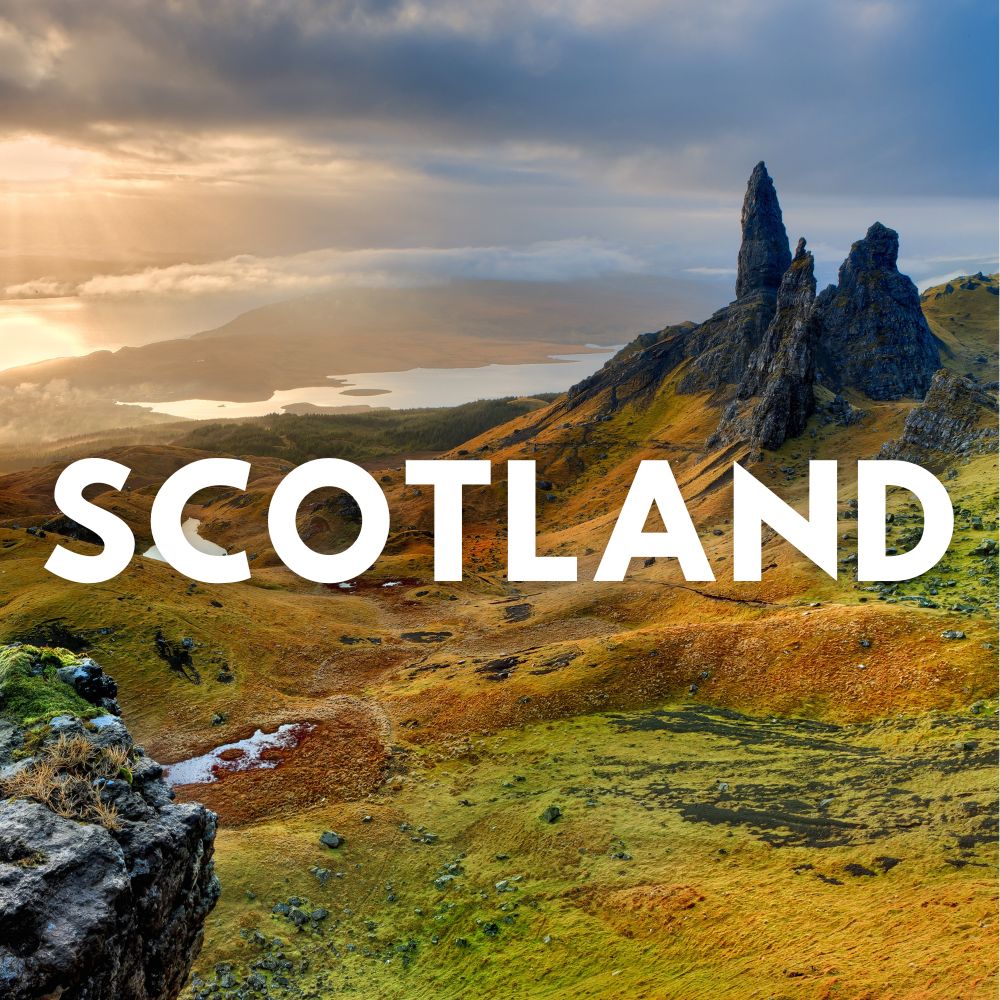
However, there’s some places, so when you take people, when I go to places like Glencoe, for example, or Skye, and you go for the walk that we do up the Old Manistore, there’s something very special there. There’s something very special that’s going on in the air and the majestic landscape, and it makes you feel so small.
Anastasia: Absolutely. That was my favorite part of our trip.
Naomi: That’s my favourite part also.
Anastasia: Okay, so what about if you want to see more local experiences and you wanna visit local artisans, makers, shops, cafes, galleries, like what you were talking about as far as the heritage, and the culture of Scotland. Where do you find most of that? Or can you find it everywhere, I guess?
Naomi: You can absolutely find it everywhere, but just like everywhere also, to be careful. There’s so many artisans and people working in independent businesses trying to promote products that come from this country and bring the work back to these really, really rural areas that need people to invest in them and they need the local artisans to stay where they are and utilise the landscape and the products from the area.
But it can be quite difficult sometimes to know the difference between who is giving you something authentic or what’s sold or bought from Amazon and sold as authentic.
Anastasia: Yeah, that was definitely one of my questions because it’s hard to do that most places you visit. So is there a way to tell at all, you would say?
Naomi: I would say chat. I know that that’s such a cop out answer, but the power of conversation in this country as in when you start talking to people, they will talk back and they will give you the chat. They will. And you can feel the passion behind what people are making and doing and their livelihood. And you know it.
Unfortunately, it is still legal to have, for example, cashmere, which seems to be sold everywhere in Edinburgh. You can buy cashmere scarves for £10 because they have no need on the label to say it’s a cashmere blend. So it could be 1 % from cashmere. Very frustrating.
Anastasia: I had no idea.
Naomi: Talk to the people in the shops, talk to the people in the pubs and the hotels, everyone wants to, people are proud here, they want to give the very best of the country and everyone’s got the best advice, the best conversations. Most people, visitors come and say is the taxi ride from the airport to the center of town that’s where you get all the good gossip.
Anastasia: That’s a really good tip actually, so on that note also, what like are some of the experiences that most visitors maybe skip but that are a lot of fun? Like for example, I’m a bit sad that I didn’t get to see the Clansman show. That’s another one. So it’s a well known activity. Do you think that’s like worth doing? Is it, you know, are you missing out if you don’t do it? What are your thoughts on that one?
Naomi: Yeah, The Clansmen, I love it. I think it’s fantastic because, with humour, it gives you a little bit of an idea and, because we’re not in school, we’re on holiday. The idea is to have an immersive, fun experience. But I do think that what’s great about the two brothers at The Clansmen is they’re giving you a very good idea of what actually, this beautiful landscape that you’re going past all the time and all these things that you’re hearing about of the clans and the tartans of what’s the reality behind that and how did these sturdy people manage to survive in this rugged landscape? So it’s a fantastic thing.
Anastasia: It sounds fun.
Naomi: My favourite has been, now that we go to the Bracken Hyde, is that there is I don’t know if this will either make you jealous or it will scare you. Like people hate the idea of it, but there is a cold water, there’s a natural pool that comes off the hills. So we go glamping pods and they’re very glamorous. It’s delightful.
Anastasia: I know. Every time I see the photos, I’m like.
Naomi: And you’ve got the outdoor sauna looking out onto the rest of Portree and then you dip in this pool, it’s freezing cold, there’s little tadpoles going around and it’s amazing, that I love.
Anastasia: I’m super jealous and I just feel like I need to go back to Scotland. So there’s that.
Naomi: Yeah, it’s like a really nice torture method.
Anastasia: But it feels good. Your body feels so good after. I don’t know why, but it just does.
Naomi: So good. So good. And there’s so many people who’ve never done it before and who try it and then become completely obsessed with it, you know, are like, yes, why, why am I enjoying this?
Anastasia: Yeah why does this feel so good?
So also what about for example, whiskey? I know a lot of people visit the big distilleries, and get a tour, but you know, I really loved sitting down. I don’t remember where you guys do it now, but sitting down upstairs we were in the restaurant that your sister had and you spoke about whiskey and you had this whole story and it was just so engaging and interesting. Is there a way to find those places or are the bigger distilleries don’t really do that kind of thing or is there somewhere else that people can find that kind of thing?
Naomi: I think the whisky distilleries are absolutely fantastic and there’s lots and lots of, not only the world famous ones, because some people come here simply to do a tour of Speyside or to do the whisky region. And that’s pretty magical as well. And the distilleries will give, the big traditional distilleries are beautiful and worth it. You have then the independent distilleries that because because Scotland is going for a renaissance and whiskey is our biggest export, you’ve got fantastic business enterprises that are happening all over the place, all over the country that take you to places that maybe you wouldn’t have got or, you know, tourism wasn’t so popular there, but the whiskey is bringing people in.
So that’s fantastic. Because whiskey, of course, it’s a drink and the distilleries will tell you how it’s made and their folklore behind it with their story behind their distillery. But it’s a cultural thing as well. It’s a way of getting together and talking or playing instruments or whatever. So it’s got so much steeped in legend and folklore. And my favorite whiskey comes from this childhood, maybe not childhood memory, probably a little bit more than I would like to admit.
Anastasia: Yeah, teenage.
Naomi: And so there will be, yeah, there’s lots of whiskey and folklore tours. Even if you go to a very good whiskey pub and you ask for the malt of the month, which is the favorite whiskey of the pub, or your bartender.
What’s your favourite? Or the taxi driver on the way in? What’s yours and why?
Anastasia: It all goes back to just talking to people. I think that’s so far one of the big takeaways. I mean, it’s like that anywhere, but it sounds like in Scotland people will tell you, and you’ll probably get a lot of information that way. That’s great.
Okay, so let’s get a little bit back into the more practical stuff, maybe l less fun, more boring, but as we already mentioned, Scotland, Edinburgh in particular are quite busy. So is there anything specifically that you would say has to be booked ahead? Some people like to travel and book everything and others kind of go and feel out where they wanna spend more time. Is there stuff that you can still decide on the spot or is it better to book everything ahead, just generally or specific things that should be booked ahead?
Naomi: If you’re for Edinburgh, if you are for restaurants, if you have a particular restaurant in mind, specifically if you’re booking in the old town, I would book beforehand. It doesn’t mean that every restaurant you have to book for, but it does help. Distilleries, it helps to book as well.
Accommodation, especially in places like Skye and Edinburgh, you have to have booked. It’s just too tricky just turning up in those areas. And then also seasonal events, because remember, just like everywhere, there’s festivals and there’s good times for specific reasons to be here for what’s coming to mind is the fact that you have the puffins who will nest on the the volcanic rocks like the the cliff edges around and it’s one of the most amazing thing to see and they’re here from like April to July usually and you want to get a good boat trip to go and see the puffins and so book that before.
Anastasia: So book that. What about Edinburgh Castle? Is that a must see? Is it a book ahead? Is there any other castles or places like that that should be booked and must see?
Naomi: Very good, very good point. Of course Edinburgh Castle, yes you need to book Edinburgh Castle ahead. And from April to basically September, maybe even October, I would be booking Edinburgh Castle ahead. You don’t need to book months in ahead, but you certainly need to book weeks in ahead. I think it’s very difficult to say anything other than yes you kind of do need to see the inside of Edinburgh Castle, it is the iconic focal point of the city and the city only exists because of that fortification. So it’s perhaps not again what people think it’s going to be, a big royal palace with bougieness on the indoors, but no it’s 3 000 years of history built up and excellent views.
Anastasia: It is quite impressive. Okay, what about if people are staying around the Royal Mile? Do you think they’re gonna miss out on more of Edinburgh if they just kinda stay around that area?
Naomi: So I live in Edinburgh, so hands up and show my bias right here. I think it’s an absolutely fabulous place to live and it’s a fabulous place to visit. But people do, as people always do, we all follow each other. And so there’s a big congestion at the top of what is called the Royal Mile. So that’s the main street of the old town. Everyone’s there. It can be quite suffocating if you’re not into big crowds and my advice there is just turn the corners, go down the little alleyways that are absolutely everywhere. There’s no trespassing laws here. You can go and investigate and be curious. It’s not a dangerous place so go and have a look. That’s where you’re going to find your best restaurants, that’s where you’re going to find your best cafes.
If you’re looking for green, the city is one of the greenest cities in the whole of the UK. So just turn, turn, go down, go over, get lost and just be careful at the top of the Royal.
Anastasia: And it is definitely, I think, the best way. I always plan a day where I’m like, I have nothing booked. I’m just gonna walk around, get lost somewhere, find my way back. It’s just such a great way to see the city and talk to people. So completely one hundred percent agree.
Speaking more about Edinburgh, as you know, solo female travelers, we do our best to support women owned and women led spaces and we definitely try to include as much of that on our tours. But is there any specific places that you would like to highlight, maybe for some people that are coming on their own that they can visit in Edinburgh or elsewhere in Scotland?
Naomi: Yeah, definitely. When you’re in Edinburgh, oddly, we had a moment where all the tourist information offices had been closed down and they’re reopening one at the moment, but it was two local ladies who opened basically a tourist information office. Where you can go and you can get maps and you can get advice and they’re lovely. But they’ve also put a little shop within their tourist information that is trying to mitigate against the fact that a lot of the places on the Royal Mile are owned by the same people. So they’re trying to get local artisans things that you would buy, smaller things like necklaces or postcards or tote bags, sort of thing. But they’re done by local artists.
Whilst you can also find that there, you can also get the advice there of where else is a nice place to go to, which will give you where the independent retailers are. They’ll send you down to the Tron Kirk and you’ll see the arts collective doing their little stalls. They might send you to the textile showcase where you’ve got textile showcasing from all over Scotland, there’s lots and lots of places that are doing a really, really good job of highlighting independent businesses. It’s a nice port of call to go in, drop in and ask them.
Anastasia: Where is that located
Naomi: The French Institute, right opposite St Giles Cathedral, so it’s right smack in the middle, it’s called The Source. It’s a fab, it’s, mean, thank goodness we have those two women who’ve set that up for us.
Anastasia: That’s wonderful.
Naomi: And every time I go to Inverness, I am always, I actually met this lady doing a solo female travelers tour. She had a pop-up shop in Skye, but her weaving mill is in Inverness and her shop is called rebel row. She’s a fantastic woman, absolutely full of Power and energy, it would seem like, and basically she creates beautiful handmade and clothing tartan and woven as well of course and it’s all green and environmentally friendly and trying to reutilize as much as possible instead of bringing it down to London or Edinburgh she’s kept it in Inverness to bring jobs back to her hometown and she does a lot a lot a lot of things in society so she’s also campaigning to the government to get tartan as a protected material she worked with the two fantastic women who wrote the witch index to find out about the witch trials and all the women who were tortured and killed during this time and she made the witches tartan. She’s been in the traitors if you’ve heard of the traitors and so she’s fantastic. She’s fantastic and so I would really recommend if you’re in Inverness go to rebel row and at least just go and see the shop. It’s fantastic.
Anastasia: That’s great. Yeah, thank you for sharing that. I think we can always link this in the show notes as well. so people can actually visit.
So speaking of, we sort of touched on this already, but if you are trying to buy something meaningful in Edinburgh and it’s hard to tell, like you said, the cashmere can be labeled as cashmere, but you don’t really know if it’s one percent or a hundred percent. Is there specific souvenirs that you think are easier to spot or anything that’s more meaningful to buy, I guess?
Naomi: That’s a good question. Obviously, whiskey, but that’s too obvious. I think because I want to promote the natural products that are coming from the Highlands specifically, because it brings so much work and money back to a place that, of course, deserves to have it there.
The textiles, very important textiles, have always been part of our history. Before whiskey was our biggest export, wool was our biggest export. So anybody actually working in textiles is very highly important. But also you’ll see a lot of sort of natural products, which I think is a very nice gift or a souvenir to keep because it’s not wasted. It reminds you of your trip in a very sort of I don’t know, holistic way. Candles. There’s like this guy making candles, but there’s lots of people making candles with the natural plants and fauna from Scotland. Soaps. And that’s really nice.
And then obviously, but this is just because it’s books.
Anastasia: Is there a big book culture? Is there a lot of small like bookshops that you can find,
Naomi: Lots of cracking bookshops, independent wonderful bookshops all around the lots of fantastic female authors coming out, whether you like crime fiction or similarly, historical fiction. There’s just absolutely at the moment, there’s some fantastic stuff coming out and I just feel like when you’re reading a book to go with the environment around you, it just sticks in your head a bit more, makes that experience last longer.
Anastasia: That’s very true. Maybe I won’t put you on the spot here, but if you have any books that you would like to recommend, because you know it can be really great to read ahead too, and then seeing it in person, I love doing that. You’re reading a book about a place and then you go and you just like, I read about even this street or this place or this island or whatever it is. I won’t put you on the spot, one
Naomi: I mean, obviously it depends what you prefer, the book that I just read that really stuck in my head and it’s based in Edinburgh, but there’s lots not based in Edinburgh as well. I don’t want to seem too Edinburgh focused, but it was very good. It’s called The Specimens by Mary Kidd. And it is about the first recorded serial murderers in British history who were Burke and Hare, who were murdering in the Old town of Edinburgh, they did exist and they were during the time the medical department was exploding at the time. So they were pretending they were grave digging when they were in fact, which is a whole different story. And then it’s told from the point of view of the wife of one of the murderers who lives in the old town, who at this point in the 1800s, it’s a complete slum. And then the wife of the doctor who’s buying the bodies and she will live a much more upper-class privileged lifestyle also in Edinburgh, but it gives the stories of the different women who were killed, the different women in their perspectives, and it retells the city of Edinburgh and the juxtaposition of the rich and the poor in that timeframe perfectly. It’s so good.
Anastasia: Sounds really serious right up my alley. So I’m gonna have to hopefully it exists on audiobook because I truly half the time don’t have time to read an actual book, but audiobooks all the way. Thank you for sharing that and we’ll pivot one more time to something boring again.
Let’s talk a little bit about packing. What kind of shoes do you recommend people pack? Do you really need waterproof jackets, umbrellas? just kind of give me your thoughts on packing in general.
Naomi: Chuck out any sort of high heel that you have from your bag. There is no point at any point will you need to wear them or will you be able to wear them? No stilettos, even in the city, it’s cobbled everywhere. What’s fashionable in this city, in this country is being comfortable and warm. I would bring your rain jacket, because that’s going to be the most important thing you have. Layers, walking boots, really you need comfortable and by walking boots it can be trainers as well but it has sneakers sorry but it has to be with a good tread and that you’re okay getting a wee bit muddy. Possibly. I’d bring the umbrella because I think if you don’t bring the umbrella, then it’s a certitude that it will rain. But because it’s so windy, you’ll never get to use it.
Prepare for this and then what will happen is you’ll arrive and you’ll be like, well, it’s not that bad. What was she on about? But that’s the best way to be.
Anastasia: That’s the key. That’s true. Is there anything that you think people wish they packed that every time they come, they’re like, I should have packed this.
Naomi: Always, you know, it’ll be one day, one week, I’ll say, I’ve just brought my winter things and it’s boiling hot here. Four seasons in one day, four seasons and
Anastasia: So four seasons in a day. You literally planned for that.
Naomi: Bring your sunglasses and bring your hat, but bring your jumper as well. You don’t need a massive suitcase, but you just need to have a layered approach.
Anastasia: So one more weather kind of related question. What about midges? I know some people have heard of it, some people have not. So what are your thoughts? Is it super common? Are people overthinking it? Is it as bad as some people think?
Naomi: for our trips in May and October you should be midgy free. Maybe. You might feel them in May.
Anastasia: What about generally people visiting, you know, whatever month? What is it like?
Naomi: Okay, so generally if you’re coming and you’re coming camping, for example, and you’re going trekking, then you will need to know about midges forecast And so the midges forecast. I believe it’s done by Dundee University, but it’s basically a map of Scotland, like a weather forecast, but it will tell you a score out of five how many midges are in a specific area. So midges, by the way, are not mosquitoes, they’re tiny wee bugs that are just highly irritating and they can think of the most irritating thing you can think of and then times it by a hundred, but they are very, very small.
And so if there’s a bit of wind, they’re not really there. If it starts raining heavily, for example, they start disappearing. It’s when it is dry, still weather, but there is water. So if it’s rained and there’s water in the heather or you’re by a loch, a lake, then yeah, you got to be careful for the midges and I would check the weather if you’ve got some sort of freedom about where it is that you go and the trek that you go on. You can check the midgie forecast and you can say, all right, one out of five or two out of five, that’s fine, even three out of five possible. But if it says five out of five, avoid. And then everything that you need to deal with midges, you can find when you’re here. You do not need to pack in your bag beforehand. And it’s not as bad as people think. Until it is.
Anastasia: Okay, so look at the forecast. Got it. And you can buy whatever you need when you’re there.
Naomi: It’s very possible that you spend a week in or two weeks or a month in Scotland and never experience a midgie.
Anastasia: Okay. I don’t think I experienced midges when I was there in May. So I guess May is just a g or at least where we were we were lucky. So Okay.
Naomi: Just completely dependent. I think it took me being 35 years old to understand what people meant by this is the worst thing that could possibly happen. It always been a wee bit annoying and then suddenly they’re in your eyeballs, they’re in your eye. But it doesn’t happen often.
Anastasia: I could see why people will read about it and probably think, my god, this is gonna be horrific. So I get it.
Naomi: No, it’s usually, it’s really for the campers and trekkers
Anastasia: Okay. Well, as we get to start to wrap up our conversation, is there anything that you think I should have asked you or anything, that I think people should know and we haven’t really talked about at all
Naomi: I liked the question of what about Glasgow? Because I’m gonna say the places that are maybe less well known.
Well, Glasgow is not one of the places that are less well known. We talk so much about Edinburgh and we talk a lot about the Highlands and the Hebridean Islands. There’s also the Northern Islands, which are amazing, Shetland and Orkney for anything to do with archaeology. Fantastic.
The south of Scotland, which is completely left behind in the sort of tourist publications, but it’s beautiful as well, the borders and Galloway. And then as a city, which is absolutely fantastic and absolutely full of culture, is Glasgow. Glasgow is just an incredible, incredible place. And what I would recommend, should anyone have time to go, there’s lots of things to see that are constantly on site in Glasgow, but it’s everything to do with culture. So it’s the best restaurants in the country, it’s the best theatres, it’s music festivals, the best art museums.
Anastasia: I mean it just sounds like you have to go to Scotland several times or you have to go for like a month. is what it comes down to. Or two months. I don’t know. Just move there for a few months and then you’ll see everything, maybe. All right. I’m coming to visit Naomi.
Finally let’s get to just a couple of rapid fire questions as we do with everyone on the podcast. So sunny Scotland or Moody Scotland?
Naomi: Sunny Scotland or moody Scotland? I can’t. Is that Halloween or sunshine? I can’t decide between that.
Anastasia: You can’t pick one. How about whiskey tasting or afternoon tea? Maybe you can’t decide that either.
Naomi: Whiskey tasting.
Anastasia: Whiskey tasting, Cozy pub or fine dining?
Naomi: Can we do, can’t they be both?
Anastasia: I mean they can, but I guess for the purpose of this, can you pick one?
Naomi: Cozy pub, cozy pub.
Anastasia: I knew it. As I wrote that question, I was like, she’s gonna say cozy pub. I think it’s because the first time I met you was in a cozy pub. It was right before the tour, and one more just for fun window seat or aisle seat?
Naomi: On the bus.
Anastasia: On the plane, train, I guess, bus. I was thinking plane.
Naomi: I mean, definitely it should be the window seat, but because obviously you’ve got quicker access to the bathrooms.
Anastasia: That’s true.
Naomi: The window.
Anastasia: So, Naomi, thank you so much for joining us today and for sharing your perspective on Scotland, its stories and its landscapes, and of course sharing some lovely practical tips on how to visit this beautiful place. Our conversation was such a beautiful reminder that travel is not just about seeing the highlights or ticking the places off a list. And I’d say the biggest takeaway might be just to talk to people, visit the small shops and support local artists, read some books, buy some books, and if possible, take more time or visit more than once.
I know so many of our listeners will walk away dreaming about Scotland and hopefully this helps them a little bit to plan their trip. Finally if you’re listening and feeling inspired to experience Scotland for yourself, especially with Naomi, you can join us on our women only Scotland adventure at www.tours.solofemaletravelers.club
We will explore the country through history, landscapes, stories, food, and local women who help bring it all to life. And as always, thank you for being here, for listening, and for being part of the Solo female travelers community. And we will see you next episode. Thank you so much, Naomi. Hopefully I’ll see you in person on another tour.
Naomi: Thank you very much.
–
And it’s time for this week’s embarrassing travel story. We’ll call this one Trapped. This is from Anonymous and here’s her story.
I was in a pretty full flight and a few hours in, I got up to use the bathroom. Nothing unusual. I went in, locked the door, did my business, and then I went to leave. Except the door wouldn’t open. I tried to unlock it again and again. I pulled the handle and nothing. I locked and unlocked it a few more times. The lights came on and off, but the door wouldn’t budge.
I pushed on the door, pulled on the handle, I tried to lock it again, still nothing. Before I went to the bathroom, there was a small line forming, and I think the people waiting quickly figured out that I was stuck. The flight attendant came over and started trying to open it from the other side. At this point I could hear people outside asking what was happening, which is exactly what I did not want.
The flight attendant told me she’s going to push really hard and to back up as far as I can. So, yes, I climbed up onto the toilet seat because we all know how tiny those bathrooms are. It didn’t take too long and something in the door finally gave and the door just flew open. By now quite a few people were watching and then someone slow clapped. Thankfully, it wasn’t a whole plane clapping situation, but enough people joined in that I was mortified. I definitely used a different bathroom later on during this flight.
Thank you so much for sharing your story with us, Miss Anonymous. If you have an embarrassing travel story of your own, we’d love to hear it. You can submit yours on our website at www.solofemaletravelers.club.