
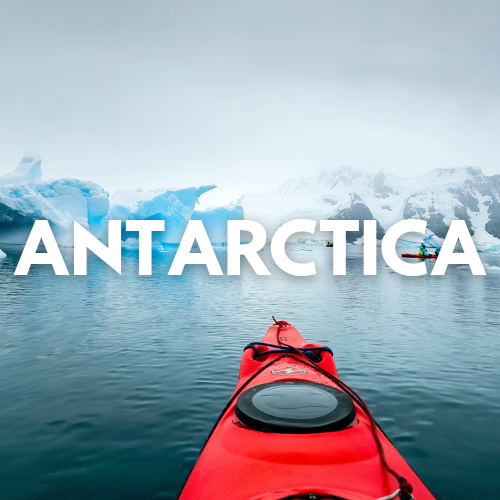
Antarctica is one of the most remote places on Earth, but visiting it isn’t as simple as booking a cruise. From choosing the right expedition to understanding the rules that protect this fragile environment, there’s a lot to know before you go.
In this episode of the Solo Female Travelers Podcast, Mar sits down with expedition guide and Antarctica expert Lori Gross, who has spent nearly 20 years guiding travelers across the White Continent.
Together, they talk about what it’s really like to visit Antarctica, how to choose the right expedition, the differences between ships and itineraries, what to expect throughout the season, and why flexibility is one of the most important things you can pack.
They also discuss responsible tourism, wildlife etiquette, IAATO, biosecurity, social media, and how every traveler can help protect one of the last truly wild places on the planet.
If Antarctica is on your bucket list, this episode is packed with practical advice, insider tips, and everything you wish you knew before planning the trip of a lifetime.
About Lori:
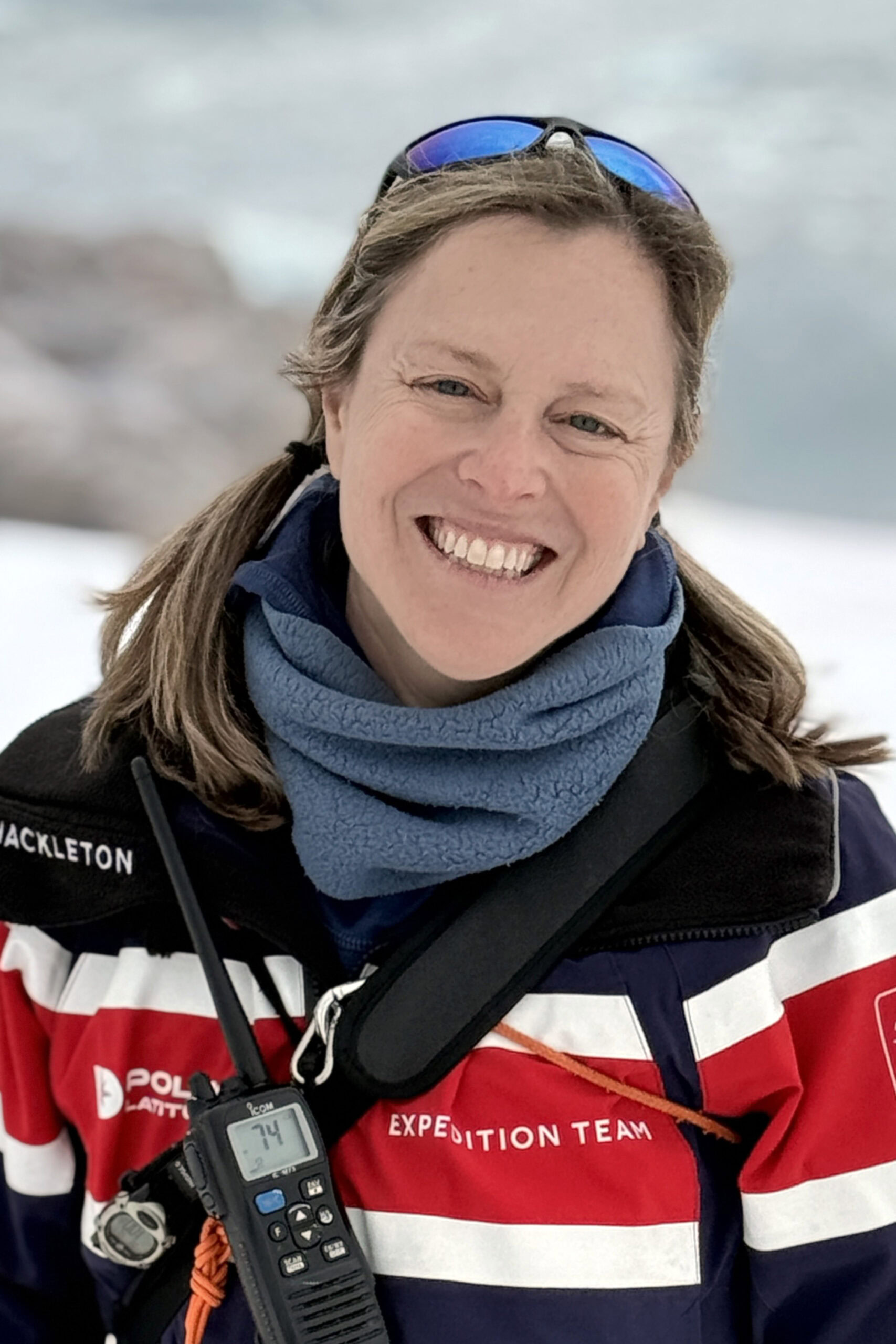
Lori Gross has been an Expedition Guide and Assistant Expedition Leader in Antarctica since 2006, guiding thousands of travelers and educating them about one of the world’s most remote and fragile environments. She has earned Senior Polar Guide status with the Polar Tourism Guides Association and serves as Vice-Chair of the International Association for Antarctica Tour Operators (IAATO) Antarctic Ambassadorship Committee.
In 2017, she founded The Antarctic Experience for thoughtful and curious adventurers. Her Facebook communities bring together over 36,000 people who enthusiastically share news and personal experiences, educate each other about Antarctica, and support those dreaming of traveling to this extraordinary place.
Lori believes that wild places like Antarctica can change you, even if you’ve never been. But if you do decide to explore this life-changing continent, her mission is to help you experience Antarctica consciously: mindfully, aware of what to expect, and in the most responsible way possible.
Connect with Lori:
Website: The Antartic Experience
Facebook Page: The Antarctic Experience
Facebook Group: The Antartic Experience
YouTube: @theantarcticexperience
Instagram: @theantarcticexperience
Brought to you by…
The Solo Female Travelers Podcast is sponsored by Solo Female Travelers Tours, our small, luxury, women-only tours that support female owned businesses around the world. Join us on a trip of a lifetime that helps make the travel industry more equitable.








Transcript:
Mar: Welcome to the Solo Female Travelers Podcast. Today’s episode is all about understanding a place that very few people will ever visit and what it means to approach it with responsibility, humility and curiosity. We’re joined by Lori Gross, an expedition guide and assistant expedition leader in Antarctica since 2006, who has guided thousands of travelers and educated them about one of the world’s most remote and fragile ecosystems.
She has earned senior polar guide status with the Polar Tourism Guides Association and serves as the vice chair of the International Association for Antarctica Tour Operators, IAATO, Antarctic Ambassadorship Committee. In 2017, she founded the Antarctic Experience for Thoughtful and Curious Adventures. Her online communities bring together over 36,000 people who enthusiastically share news and personal experiences, educate each other about Antarctica, and support those dreaming of traveling to this extraordinary place.
Lori believes that wild places like Antarctica can change you even if you’ve never been there. But if you do decide to explore this life-changing continent, her mission is to help you experience Antarctica consciously, mindfully, aware of what to expect, and in the most responsible way possible. Thank you so much for being here with me, Lori, today.
Lori: Thank you so much for having me. I’m super excited.
Mar: And could you share to start with, could you share a little bit more about how you first started going to Antarctica? What brought you there the first time and what keeps you coming back every year?
Lori: Yeah, so I started working in Antarctica, like you said, in 2006, so 20 years now. And before that, I was working as an expedition guide on ships in other parts of the world, in Central America, in the Caribbean, actually. And I started working in Alaska. And I just fell in love with the ice in Alaska. mean, there’s the colors of the ice.
Just everything about it. And my expedition leader at the time, she said, well, if you love ice, you have to come to Antarctica. And I was like, I hate being cold. I was like, I don’t want to go to Antarctica. It’s going to be so cold. And she was like, it’s just not cold. It’s just an inappropriate dress. We always laugh. So she called me up a few months later and said she had an opportunity to bring me on the team.
And would I come and it was such a great opportunity. I couldn’t pass it up. And so I went down and I mean, I can’t tell you exactly what it is. Antarctica is one of those life-changing places. It is magical. And the minute I got there, I just knew that I had to go back and it’s now been a non-negotiable on my calendar ever since that first year. It’s one of the only places I guide now and I focus all my time and energy into Antarctica.
Mar: And have you counted how many times you have been there? How many expeditions you’ve led?
Lori: No, I have not counted, but I have a friend who’s worked a bit longer than me and she did count once and figured out that she had spent a whole year of her life in the Drake passage.
Mar: Oh my God! That’s 170 expeditions, 180 expeditions.
Lori: Yeah, I stopped counting. But yeah, when I heard that I was like, yeah, I don’t want to know.
Mar: I would like to know her statistics of how many of them were drake lakes and drake shakes.
Lori: Yeah, I don’t think, I don’t know if she kept that. Those detailed.
Mar: And what do you, at the beginning, what made you realize that Antarctica is not like other places, especially in comparison with Alaska? What made you feel like, okay, this place is like nothing else?
Lori: People who’ve been there, you’ve been there. People describe it like going to the moon. Like it is so unlike anywhere else I’ve ever been. It’s actually really hard to describe to people. People ask me to describe it it’s kind of awe-inspiring. It’s intense. It’s very overwhelming in a lot of ways. You know, I was trying to remember like that first feeling, you know, the first time I saw it and it’s like I expected it to be, you know, like all white and desolate and super cold and it was cold and there was a lot of snow and ice but I didn’t expect on the peninsula all that the mountains and one of the things that surprised me was how kind of alive it is, how loud it is, the penguins, the ice.
But yet at the same time, it’s totally quiet because it’s like nowhere else on earth. So I don’t know how to describe it to people. How would you describe it to people?
Mar: Like you, I also was very surprised about the landscapes. I don’t know why. It never occurred to me to think that there would be mountains and there are lots of mountains. And so I was expecting the landscapes to be flat. And so the mountains part surprised me quite a bit. Like you say, the fact that it’s quite noisy, especially when you are on land, the penguins are very noisy. They’re also quite smelly. I didn’t know they were going to be smelly. And so you can always tell when you’re near a penguin colony because they smell quite bad, especially if you go later in the season, I’m told, right? Because of course more time for them to poop.
Their poop is pink though, so that’s cute. But they do smell very badly and they are very loud. Especially in February when I went there and there were all the chicks running around and like chasing each other and whatever, like they were quite loud. But the mountains was something that I didn’t expect at all. I didn’t expect to be mesmerized by the landscapes. I thought I was going to see eyes and snow and animals. But I didn’t expect the landscapes part and at the beginning when we arrived and sometimes when we were going through some passages and we were surrounded by mountains, like high mountains on both sides, that was really quite impressive for me.
Lori: It’s a really powerful place, and especially when you kind of take it all in. And one of the things I love about it is that because of the way that things are run in Antarctica and all of the ships, we all work cooperatively to figure out where we’re all going. And we follow a really strict wilderness etiquette.
So that we try and not see each other. And so you really do feel like you’re the only person there. And I think it’s one of the few places in the world still that you can feel like you’re the only one there. And Antarctica, one of the things I think makes it so special is how untouched and pristine it still is and how few people actually do visit.
It’s you know, 0.000, I don’t remember the exact statistic, you 1 % of the world’s population actually gets to go. So a really, really special place and it is hard to describe though.
Mar: Yeah, I was reading some statistics and last year, the season 24-25, there were 100,000 people that went to Antarctica on the various, formats. So not all of them stepped foot on Antarctica. Some of them were in cruise ships that didn’t actually disembark. And so about 100,000, which is less than the previous year. So there was a small decrease in number of passengers in 24-25 versus 23-24. And so I guess that it’s not like this skyrocketing trend of like, you know, just more people are going there. Last year there was a small correction, which is probably good. And we will talk about, you know, conservation and all the rules that are in place to keep this as pristine as it is. But having spoken with so many different travelers, what are some of the expectations that people have that then when they go there, like, I did not expect this to be like this. What else have you heard?
Lori: Well, it’s hard. I think people expect when they’re planning an Antarctic trip that you can plan where you’re going to go. And I think when a lot of people are looking at trips and they’re looking at itineraries, they are looking at it through the same lens as they would any other vacation. And I think that that’s really hard because the more expectations people come with, the harder it is, I think, for them to kind of have this Antarctic experience. Because you cannot know where you’re going to go in Antarctica. You go where the weather is the best, where the ice is, where the animals allow you to go.
We have very strict rules, as you said. And we have to keep distances from wildlife. Get somewhere and the wildlife density is too high, we have to kind of shift our plans. If the weather is a certain way, you know, too windy, we’re gonna have to shift our plans. And so I think what happens with people who are expecting to visit certain places or go to certain areas is it can be a little challenging, I think, to get there and realize that you have very little control over what what you do and in some ways that that’s kind of the best part is is embracing that like I call it the adventure mindset you know this
Mar: Right. So this is interesting because I had no idea what we were going to stop. Of course it’s on the itinerary and there are a list of stops that are like expected or like, you know, it’s like a goal if you’re one of the places that usually the ship will stop at in the itinerary. However, I actually didn’t research at all like where these stops were and how they were going to differ one from the other because they all look similar in general terms. So when you read the description online, it’s hard to really understand what that means.
And the photos sometimes also look pretty much the same and a photo really has a very hard time conveying the sense of place of Antarctica. So I felt like photos did not do justice at all and did not express, at least to me, what I would feel like when I was there. So it’s curious, it’s interesting that some people go there with a list of expectations of where they think they’re gonna land. I had none of those things.
Lori: Yeah, and that comes from websites. Operators are actively encouraged not to name places. But as people are researching, The typical traveler wants to see that. And I’ll share a little bit of insider information here on how when you figure out where you’re going is so every year in July, all the operators get together for what’s called Derby Day and they open up the schedule for the following year and people are like frantic on their computers to try to like book the places that they, you know, want to go. And so that’s like plan A, but as you can imagine, they completely get sort of thrown out the window as, as life happens.
No matter when you’re booking, but especially if you’re booking before the July of that season, they don’t even know. They don’t even have like anything scheduled. You can’t. It’s just not possible. So and even what they do have scheduled typically does not stay. I don’t think I’ve been on. I’ve probably been on one or two trips where we actually have done what was chosen at that Derby Day.
Mar: And I remember the expedition leader saying this and like every day, like recalibrating and rethinking. And like you say, there are a of ships around and everybody tries to be the only one. And there are like, you know, like quotas of how many people can be in certain spots. So it’s truly like a daily Tetris. I was trying to imagine in my head, the coordination that goes on every single day as the time shifts and the weather shifts and like everything happens. And I remember comparing the trip that I did with a friend of mine who did the same trip three months prior, so it was the same season, but she did it in December and I did it in February. And even though the itinerary was the same, it was the exact same expedition, the same one that we will do, the base camp one, it was the same team even, because it was only two months apart. She did, we did like 80 % of the same stops. So even then, it wasn’t even the exact same trip, even in the same season where hopefully, well, I guess that the plan A was the same for both trips, right? And then a lot of things happen, other shifts happen, and then everybody recalibrates everything.
Lori: Yeah, I think that’s one of the things that keeps me coming back is that Antarctica is totally different every single time. And even if you go back to the exact same spot, it’s going to be different the next time. The weather might be different. The ice might be different. The penguins are a little more grown up the next time. And as expedition team, we do try to give our guests a good variety of different types of of landings, different penguins, different activities on land, maybe a hike or a zodiac cruise, just a good variety of things.
And we don’t go to the same spot on one itinerary. Although there was one trip that I did a couple seasons ago where we did a zodiac cruise in a bay that I just love, Fournier Bay, it’s called. And it was blue sky and there were you know, big icebergs everywhere. And it was just, it was one of the first landings for the guests. And we were just out there and, and then near the end of the trip, the weather really turned and we were looking for a place to go that didn’t have any wind. were kind of, we were juggling things and we saw that Fournier Bay was going to be not windy. And so we kind of thought, well, maybe we’ll go to the bay next to it. We’ll do something. And we got to Fournier Bay, and it was snowing and foggy and totally calm. And we were like, let’s do it. And we launched the Zodiacs again. And then we told the guests, you know you’re in the exact same spot as you were? No. And this time, we had humpback whales everywhere. So it was like a totally different experience, even though it was the exact same spot.
Mar: And nobody recognized it.
Lori: And I think that’s one of the things I love about Antarctica is you can go and you might find this, you might go to the exact same place and it’s going to be completely different. And it is week to week, day to day. And I think that’s what makes it so exciting. There’s not a bad place. You know, that’s the thing. If people come with expectations, I want to do this and I want to go here. And I saw this picture. You just have to remember there’s not a bad spot in Antarctica.
Everywhere is amazing. you know, it doesn’t matter.
Mar: None of the stops that we did were ever bad. All the land excursions were always great. They were always slightly different. So it was always exciting. as I said, 100,000 people more or less visit every year. Not all of them will step on the land. And this is an expensive trip. This isn’t a trip that, on average, let’s say 10,000 is sort of like an average price tag for a trip like this of just visiting the Antarctic Peninsula. Your standard 10 days on your standard Antarctic Peninsula trip plus flights and whatever.
So it’s an expensive trip that for most people, it will be a once in a lifetime one. It’s the typical trip that historically has been something people do in their retirement. And so the moment you decide, okay, I want to go to Antarctica, then the challenge starts really, even for us when we were choosing what company to do and what trip to do and when and so on. There’s just so many variables that is very difficult and it’s extremely overwhelming to know how to choose and what questions to ask because you don’t know what you don’t know. And you don’t know even what questions to ask or where to find that information.
So let’s tackle this question first. What would you say are the various criteria and decision factors that people need to bear in mind when they’re choosing a trip to Antarctica?
Lori: Yeah, this is, I mean, you hit the nail on the head. It’s where to start. It’s overwhelming. You know, all the websites look the same. They all say the same thing. Everybody says, you go online and you’re like, who should I go with? Everybody says a different company because people tend to love the company that they traveled with. You think to yourself, well, everyone’s got penguins, so what’s the difference?
Mar: Everybody says the same.
Lori: Like, I’m going to see penguins no matter what I do. I’m going to see ice. Where do I start? And most people start with price. And I don’t think that’s the best place to start, I will say. I tell people when they come and ask me my opinion, the first thing I talk to them about are their priorities. I tell them a little bit about what traveling to Antarctica is like and kind of set some expectations there, but looking at your priorities.
Antarctica is all about the experience. Just like we said, you’re putting your trust in your operator, in your expedition team, because you can’t choose where you’re going. And because the weather is the factor, the wind and the weather, and you’re always going to be shifting, you can choose kind of your general area that you’re going to go to. But even then, sometimes that will shift and change depending on the weather. Because my job as you know, expedition guide, assistant expedition leader is to make sure that you have the best experience possible. And no matter what your itinerary says, we’re going to take you to the best places possible for the weather so that you can have the best experience. So priorities wise.
What do you, what do I tell people to think about? Well, first thing is, is there something specific that you want to see? Because Antarctica is great all times of the season. There isn’t a best time of the season to go. They’re all just a little different. So if you want to see big fluffy chicks, you’re going to be going in say February, end of January, February, even in into March.
If you want to see little itty bitty chicks, you’re going to be going a little bit earlier. So are seeing penguin chicks important to you? Is that something that’s on your priority list? Is seeing the landscape as pristine as possible? As much of the sea ice you talked about, the penguin poop and things like that early in the season is when you’re going to get these like super pristine landscapes. The penguins are just starting to come back to build their nests. Not a lot of poo around yet. Still some snow around the landings. And you’re going to get potentially even sea ice and things like that. So that’s very, very pristine. So you think about the kind of time of year. Do you think about any activities you might want to do that are important to you. The main ones that most people offer are kayaking, maybe camping. Kayaking tends to be offered all throughout the year. Camping is something that is generally done near the beginning of the season, because near the end of the season, we can’t really find good spots to camp.
There’s lots of rules and regulations and things like that. And then where we can go on land, what people expect versus reality. People do expect everything to be covered in snow and ice. And the reality is, is that the penguins, they need rocks to build their nests. So they’re looking for areas that become snow free. And 98 % of the continent is covered in ice. And so the places that we do our landings for the most part are on little islands, places that do where the snow does, does melt. So when it comes to places like camping, you know, we need snow in order to camp.
So yeah, I I tell people to start there, think about their priorities, the type of experience that they want to have, and then start to look at operators and what might fit in there. And you also mentioned about sometimes some ships you can’t get off the ship. So one thing to consider are things like if your ship has over 500 guests, you won’t be getting off the ship. It’s just a scenic sail by. And that there’s different rules for the different categories of ship. So if you’re 200 and under versus, well, 199 and under versus 200 to 499, there’s a little bit of differences there. So yeah, it’s very overwhelming. I like to tell people, go in the groups like your group asking questions, look to people who have been there more than once and things like that, but start with your priorities. That’s the, not price, start there and work back.
Mar: Right, because your priority, so like you know if we think about it in binary terms right, your priority is do you want to get off the ship or do you not want to get off the ship? If you don’t care to get off the ship and you just want to look from the balcony of your ship then you can look at the larger and also way cheaper alternatives right, we’re talking about a regular cruise ship that like also stops in Antarctica, they don’t go that further south right, if I’m not mistaken, because these are larger ships right, so they cannot go to certain places and you’re going to see Antarctica from your window, it’s going to be much more affordable.
Then if you want to step online, then on land, then what do you want to see? Because earlier in the season, you’ll see more penguins, less whales. If I’m not mistaken, the whales come later in the season. The later you come, the more whales you’re likely to see.
Lori: So later you come the more whales, humpback whales, you are likely to see, but whale populations are increasing and so we’re seeing a lot more whales at all times of the season. There’s always a chance to see the orcas, although they’re hard to spot, but they’re always there. There’s fin whales, minke whales, people are even spotting blue whales and beaked whales.
Anything is possible, but yes, the big whale soup season is at the end of the season is sort of like February, March. You know, there’s a reason why kind of January, February, mid December, January, February are the height of the season. It’s because it’s where everything kind of converges. You get, you know, the whales and the penguins and, everything and you’ve got, you know, you can still do some of the, you know, camping activities you can start to get further south if you want to cross the Antarctic Circle. So that tends to be why it’s the most popular, because there’s all the things kind of overlap.
Mar: Right, and then if you come in earlier December, November, then you don’t really see the penguin chicks, but you see the penguins making nests with the little pebbles and they also steal each other’s pebbles? Is that only in reels and memes or do they actually steal each other’s pebbles in real life? This is amazing. I love it. I love it.
Lori: Yes. No, no, no. They actually steal each other’s pebbles. You can watch it any time of the season. It’s so fun to watch.
Actually, it’s, you know, one of things I would say to people and most people do this anyway, but if you’re thinking about going to Antarctica, you’re really slowing down and watching because watching a penguin colony, know, some people are like, I saw a penguin. It’s like, no, now stop and watch.
Mar: No, no, it’s amazing, it’s amazing,
Lori: Watch, watch them steal the stones, watch them build up their nests. And they do that all year round. they’re stealing stones all the time, making their little nests. But yeah, it’s great.
Mar: I love it. And then in January, you’re more likely to see the little chicks. When I went there in February, they were a bit older. They were more like naughty teenagers, right? They were like chasing each other around, like literally chasing each other. And the parents getting really angry at them and just like telling them off. The whole thing was quite hilarious. It was like watching a soap opera. But then at that time, the snow wasn’t as pristine because of course, three months of penguin poop.
Also later in the season, we saw more of the Gentoo penguins and less of the other two types that you see in Antarctica, the Adélie and the Chinstrap. We didn’t really see too many of those in February. And I’m told that earlier in the season, you’re more likely to see the three main ones that you see in the Antarctic peninsula, right?
Lori: It depends on where you go because they do have, you know, there are colonies in certain places. The Adelies and the Chin Straps, because of the warming of the Antarctic Peninsula, their populations have declined. And the Adelies are actually, most of them are a little bit farther south. They’re colonies. They’re sort of true Antarctic penguins them and emperor penguins, really rely on the ice. They stay on the ice or the edge of the ice all year round. And so the Adélie colonies are a little bit farther south or in the Weddell Sea. So you can kind of see them in those places. Chin straps again, there are certain places where they are, but the gentus, they are kind of really taking over because they are not as impacted by the warming. Their diet is bit more varied. You do see a lot more Gentoo penguins than any of the other species for sure.
Mar: And it’s interesting, something that I did not expect, talking about expectations, is that I did not expect penguins to be so loud and so stinky. You always know when you’re approaching a penguin colony because you can smell it. And if you’re a kayak, you can really smell it. I also, and this is my personal ignorance, I also didn’t know that they swim and jump in the water. That’s probably because I didn’t watch enough videos in advance, but I didn’t expect them to jump like fish. And I thought that was hilarious.
Lori: Yeah, yeah, so, you they’re air breathers, so that’s what they do, that behavior called porpoising, just like marine mammals, and so they jump and they take a little breath as they swim fast. But yeah, penguins are so odd, it’s like, yeah, they’re birds, but they don’t fly, and they spend all their time in the water, but they’re not marine mammals, and you know, so it’s like wrapping your head around, what a penguin is, is when you see them in real life, it’s exactly, you don’t necessarily expect, they are so fun. They are so fun. I could just watch them for hours.
Mar: They are hilarious. The night that we camped and we did it next to a penguin colony, and I thought, I bet in the middle of the night the penguins will come and just look at us while we’re asleep. And the expedition leader said that they do that, actually, that it’s possible that they do that. And I thought that sounded so creepy, but at the same time, I was trying in my mind to imagine the image of like a penguin just looking over me like. And I thought the whole thing was so, and of course they like lulled us to sleep, you know, because they were like doing their noises all night. So you kind of like hear them and of course you can smell them.
They were, they were my absolute favorite of the whole trip. I knew that I would like them, but I didn’t know how much I would like them. I could talk about penguins all night and I could look at them all night, you know, we talked about getting off the ship or not getting off the ship. We talked about what time of year you want to go depending on the things you want to see. You also mentioned that the size of the ship is very important. This was something that I knew from the beginning and so it was a very clear decision factor for us. You said obviously more than 500 you don’t get off the ship. But what is the difference between the 200 plus and the less than 200?
Lori: So because of the rules and regulations, only 100 guests can go ashore at one time. So being on land at one time, not off the ship. So you can have more than 100 guests off the ship, but only 100 of them can actually be on land at a time. So if you’re potentially. So that is a good question to ask is how many staff are there and how many zodiacs do you carry?
Mar: And rest are on a zodiac.
Lori: If you have over 100 guests the ship, so you have, let’s say, you’re under 200, and only 100 can go ashore. If the weather is favorable and you have a team to support it and the equipment to support it, what will happen is some of the people will be on shore and the other people will either be on a Zodiac cruise or they might be kayaking or doing something else then you’ll switch. So oftentimes under 200 guests maximize their time off the ship because you can get everyone off the ship at once.
Again, this is all weather dependent. Sometimes if you have over 100 and the weather isn’t favorable to go kayaking or be on a zodiac cruise, you’ll do it in shifts. You’ll put 100 on shore and then you’ll swap.
When you’re over 200 guests, you’re pretty much guaranteed that you will have some of that time on the ship. then you’re going to be in a rotation around. So I would say that if you’re under 200 and being off the ship for as much time as possible is something that’s important to you, that’s kind of the place you want to stay. If you’re over 200, there’ll be lectures, say, on board the ship while other people are off, there’ll be a lot of things to do on the ship. But you’ll have less time. Traditionally, you’ll have less time off of the ship. And then if you get even closer to 500, sometimes that means that you go to one place for the whole day because it takes that much time to get everybody to experience everything.
Whereas the smaller the amount of passengers, the fewer passengers on board, then that allows you to maybe visit one place in the morning and then reposition the ship and visit another place in the afternoon, which is what you did, which is what your group will be doing with your trip.
Mar: Yeah, correct. For us, this was one of the main decision factors. The first thing was, okay, what type of trip do we want to do? For us, was a priority to spend as much time off the ship as possible. so, ocean-wide on our trip allows us to do that because it’s only 108 passengers maximum. And usually there’s fewer because that would mean that all the berths are taken and that nobody’s single rooms and so on. So I suspect that in our group we’re probably closer to 100, which is where it was when I did it. And that means that everybody’s of the ship and on the land for the duration of the time. And so we did one outing in the morning, one outing in the afternoon for two to three hours each.
So basically we spent the entire time on the land or on the zodiacs. In some cases, the activity was a zodiac trip or kayaking or mountaineering or all the other activities that they offer. So we spent between five and six hours a day outside. So basically we’d have breakfast, we’d go out at 9.30, come back at around noon, noon 30, and then come back out again at 2.30 until like 5.30 or so on, shower, have dinner.
Repeat the next day. So if that’s your priority, a trip like this maximizes that versus a larger trip, a larger ship that, you know, where you, like you said, you don’t spend so much. And like for us, this was a priority. However, it’s also true that the larger ships have more facilities, right? So like you say, if you have more than 200, there’ll be things to do.
Lori: Yeah, they tend to have more amenities on board. And you know, not everybody’s priority, I’m gonna go all the way back to the first thing, is to spend maximum time off the ship. some people don’t want two to three hours on shore.
Mar: Correct. It is exhausting, I will say this, know, five to six hours at sub-zero degrees, it’s exhausting.
Lori: Some people don’t want that. And so that’s why you get clear on what you are looking for. And some people really like that balance between the amenities on board the ship and the time off the ship. And that’s their travel style. And that’s how they want to experience it. Some people are like, I don’t care about anything except being off the ship as long as possible.
And then, like you said, there’s some that maybe want to go on a bigger ship, where Antarctica is just part of a longer itinerary, where they’re visiting a lot of different cities in South America, and maybe making it into the Falklands. And it’s not a priority for them. So that’s, again, where you go back to what’s important to you. What’s going to make your trip, not what your best friend did or some online, like what’s important to you and that will really help you kind of at least narrow the pool.
Mar: And then there are things like the specific ship itself, right? Some operators, some companies will offer single berths to people to share with somebody from the same gender, which is something that’s very relevant for our audience since they are solo travelers. Some companies, typically you were telling me the more luxury ones do not offer the sharing and therefore you either book a single room for yourself and pay quite high premiums between 70, 80 % is what I’ve seen online, or you find somebody to share with you.
The option to be able to book a single bird is pretty attractive if you’re a solo traveler and that’s something that has made Antarctica become more appealing for solo travelers in general.
Lori: Antarctica is super solo traveler friendly. It’s really far away, so people are kind of nervous to do it as a solo traveler, but there are so many solo travelers that go to Antarctica. And most of the companies that I’ve worked for, that I tend to recommend, they’re all very solo traveler friendly, and they either have purpose-built solo cabins, so those are a little bit more expensive than sharing, but not as expensive as paying the traditional solo supplement fee to have your own cabin to yourself. So they have some of those. They are always matching travelers up to pair together. And then as you said, there are fees that you can pay to have your own birth, but there’s sometimes special sales and things like that with certain operators.
Antarctica is super solo traveler friendly. There’s always, always a lot of solo travelers and it’s so easy to make friends because you’re all there.
Mar: It’s very communal, right? The meals are communal, you’re in a zodiac with other people, you’re in the talks and the lectures with other people. I feel like the whole thing, especially in our ship, which had a very high percentage of solo travelers, it was all very communal, so everybody kind of mingles with everybody.
Lori: Absolutely. That’s exactly it. There’s no meal times. There’s one meal time and everybody, you just find somewhere to eat. It’s not like assigned tables. You have the lectures, the lounge area, the Zodiacs, the landings. You really get to know your fellow travelers very quickly and everyone is so friendly.
Mar: Correct. Then there are things like what operator to go with, right? I found that this was a very difficult decision to make. Choose what company would be more aligned with our values. For us, we did have some criteria. I don’t know that this is something that many travelers think about or consider too much, but for us, it was important that it would be a family-owned, ideally by the founders, so that it was like a relatively small, I say small, but this can never be a small company, but a small company for like polar expedition terms that the owners would be still involved because you don’t care about the company and the product and the service the same way when it’s your company that when you’re the CEO of a company, we also wanted something that was a company that was focused only on polar regions, not just a, you know, a general cruise company that offers everything we want that somebody with experience, but how, what are some of the other criteria that travelers should look out for when they’re choosing the company?
Lori: Well, I think you hit the nail on the head. mean, you’re looking for a company that focuses on the polar regions, has a lot of experience in the polar regions. That is kind of number one, not just sort of a generalist. Oceanwide definitely hits all of those.
Mar: I mean, we want a female own, but that we couldn’t find.
Lori: Oh, I got one up in the Arctic. I can point you to. So I’ve lost my train of thought. Let’s see. Other things to look for. It’s a little bit harder to tell online, but I would look to see how much information you can find out about their expedition team, maybe how long their expedition leaders have been with the company.
Mar: Okay, I’ll get your name for it later on.
Lori: How long they’ve been working in Antarctica. Because the stronger your expedition team, the more knowledge they’re going to have, the longer they’ve worked there, the more knowledge they’re going to have about those plan Bs and plan Cs and little special spots that they’ve scouted throughout the years and things like that. That’s definitely something to look at as well when you are looking for operators.
Mar: And of course, we didn’t mention this, but we’re starting off from the assumption that the companies that we’re assessing are all members of IAATO right? That they are all certified and that they all follow certain rules. So maybe can you tell me a little bit more about IAATO are a member and you’re part of the board team, that, yeah, basically the team itself. So tell me about the association.
Lori: So IAATO is a member organization. were founded in 1991, and they advocate and promote the safe and environmentally responsible travel to Antarctica. The goal is to make a minor or transitory impact. It’s not mandatory to be a member of IAATO but as you said most operators are I would not travel with an operator that is not a member of IAATO because together IAATO sets standards for. For traveling in Antarctica and these standards meet or exceed the standards set by the Antarctic Treaty in fact IAATO does work very closely with the treaty and the treaty has adopted into law into the official rules, a lot of the IAATO rules that they have come up with. So it’s all self-regulated tourism, and all the companies work.
Mar: And the treaty was signed by many countries,
Lori: So at this point, the original signatories of the treaty were nine, I think, countries. now the treaty has signed by, it represents about three quarters of the Earth’s population. Not every country has signed on to the treaty. And the treaty is actually pretty complex.
But one of the things I love about Antarctica is it’s owned by no one. It’s governed by this treaty, makes continent for peace and science. That is the goal, is to keep Antarctica for peace and for science. And all decisions are made collectively and by consensus. So in some ways, this is great because it’s hard to change some of the strict rules. But in other ways, it’s hard because it’s hard to get new rules that are strict. And so what IAATO does is tries to work as a member organization alongside the treaty to not only make sure that we’re following the treaty rules, but also setting other standards we can work within.
And so the company that I work for, the operator I work for, is a member of IAATO. And then I represent that company on the Antarctic Ambassadorship Committee. And so IAATO has a number of committees and working groups to work behind the scenes in advancing their mission. And so the Antarctic Ambassadorship Committee is just one of many committees that people sit on. And they’re all representing the operators that they work for. You can be in the office and sit on a committee. You can be a field staff like me and sit on a committee and things like that.
Mar: And IAATO is the one that sets the rules that have to do with preservation and keeping Antarctica, you know, the same way. I guess the objective must be to keep it as untouched as possible.
Lori: Yeah, so it’s a combination of the Antarctic Treaty. There are rules and regulations by the Antarctic Treaty that everybody who goes to Antarctica must follow. And then IAATO has their own rules that go along with the treaty rules. So all of it together. So it’s actually stricter in a lot of ways because we have extra guidelines.
Not everything’s a rule, some of it is just guidelines, but yeah, that we need to follow.
Mar: And some of what we just talked about that part of the IAATO rules like the number of people who can be on land, how close you can get to the animals. What are the main things that you need to bear in mind when you are.
Lori: So those rules are now treaty rules. So rules that might have started as IAATO have been adopted by the treaty. IAATO started writing guidelines for the different sites. A lot of those have been adopted as law by the treaty. not every site are limited to 100. Some actually are fewer people. Some sites, only 50 people can go ashore.
There’s rules about where we can go, what areas are protected. There’s a lot of stuff. fact, as a field guide, expedition guide, assistant expedition leader, we have to take a test every year to work there that goes over these rules and these guidelines. Because things change, and we have to keep up with all of this.
But the main ones that you’re talking about how many people on land, but we also, all IAATO members get the same presentation on the way down to Antarctica about how we behave how we can be responsible while we’re on land and protecting the area as much as possible. And a lot of that also has to do with not bringing any alien species, invasive species to Antarctica. So I’m sure you had to go through this, this whole biosecurity process where you vacuum your gear and we look for seeds and we inspect everything. not only do we do that on the way down, but we have a biodecontamination process every time we go off the ship and come back on the ship.
So that’s something that you’ll keep up with so that we’re not spreading anything from colony to colony as well. We’re keeping everything as as possible.
Mar: Right, and you know, on our ship, and I believe on most of the ships, you’ll get these rubber boots that you put on, right, that kind of reach your knee, and those are the ones that get bio-decontaminated every time. I was happy that those were not my shoes, because of course you’re stepping in a lot of penguin poo.
And then every time you go back on the ship, you need to wash everything, clean everything with these like chemicals that kill everything so that you don’t take something to another island. And so there’s all this like washing of bottoms of your trousers and your shoes every single time. A part of IAATO rules are also the distance that you need to keep from the animals, is it?
Lori: Yes, yes, we have distances that we keep from the penguins. We also have distances we keep from the whales and etiquette and the seals and etiquette if we’re in zodiacs along with them and how we are positioned. There are different distances for breeding animals, all of this is our part of the rules to protect the animals. And now the rules also include that you have to actively keep that distance. So if a penguin starts approaching you, you actually have to back up. And this is something that changed since COVID and since avian flu. So we really try to give the animals all the space that they need.
Mar: Right. Yeah. Because the penguins are pretty curious and they will come to you. so you’re kind of like, they’re chasing you, I guess, at some point, if you keep backing up and they keep coming and you keep backing up. It’s also quite, I remember a lot of rules around, obviously when you arrive on land, the guides will go first to to mark the paths that you can walk on so that you just like, don’t go trample on everything because the penguins have their little highways. And I thought that was super mega cute.
Lori: Yes, so there’s penguin highways and there’s human highways and there’s human highways that get taken over by penguins and become penguin highways. So yes, we will flag safe routes, especially if we’re walking on a glaciated terrain. We don’t want anyone to fall into a crevasse. So, you know, we make sure that we are marking a safe route, but we’re also marking routes in areas that we’re allowed to go. As I mentioned, we have guidelines.
So we can’t just get to a place and just go anywhere we want. There are some landings where we can free roam, but most of them have protected areas that we have to work around. And yes, the Penguin Highways are just for penguins, human highways for humans, but they will take over.
One of my favorite memories of Antarctica is earlier in the season when there’s a lot of snow, a of times we get to landings and we have to make little steps for people to get up onto the area. so we had dug these steps and the penguins took them over. They started hopping up the steps. They were like, thanks. Thanks for the easier way up. And it was so funny because we have our humans and the penguins would all go. And when they were done, we’d go up the stairs. was great.
Mar: I love this. I would have loved to see them little jumping. I mean, they have to be the funniest animals on the planet. Although their little highways are hilarious because if you’re in the middle, they’ll stop and they’ll wait for you to get out of their little highway until they can continue going down and they can run really fast.
Lori: Yeah, and I love when they cross each other, you know, so cute. Yeah.
Mar: I love it. You know what happened on one of our expedition on one day we were on the Zodiac and we had all just gotten off the Zodiac. So it was just the guide alone. And it was, I guess, like one of those unique moments where one of the guests had given the guide her like 360 cameras. It was like a long pole and it was waterproof. So she put it under the water because there were some penguins swimming. And what happened is that one of the penguins jumped on the Zodiac.
So the penguin was on the Zodiac, like on one end of the Zodiac, and the guy was trying to get him to get off the Zodiac and like go back into the water, you know, because you can’t get close to it, you can’t touch it, you don’t want to do anything. But the penguin was just there like, I’m here, I’m happy, I’m not going anywhere. It was hilarious. And because she had the camera, she filmed everything. So she could film the penguin jumping from the water and then the penguin on the boat. And it was truly quite hilarious, right? But this was something that unfortunately the guides told us that it was better not to share that video because of course this can create expectations. So, you know, nowadays everybody has a camera, everybody has a phone, everybody has like a million opportunities to share content on our ship. There’s like daily five gigabytes of wifi. Right. So it’s not, you’re not even disconnected or like, yeah, you’re not disconnected from the world, even though you’re super remote. And so everything can be shared. How do you think this social media craze and all this like, performative travel is affecting Antarctica?
Lori: Yeah, that’s a great question. You know Antarctica is dramatic enough. You don’t need to make it more dramatic with your photos and with things. Things like that happen and that is very much not in the rules to have penguins in zodiacs or something like that. And there are people that are out there who disagree with tourism to Antarctica. And they’re looking for evidence online of tourists being irresponsible. And so hard, if everyone wants to get one up each other on the shots and share these moments that don’t happen all the time, the penguin in the Zodiac, because that’s going to generate lots of clicks and likes and things like that. But think we need to think, and almost anywhere we travel, not just Antarctica, we need to think about our responsibility of these places that we love and not over dramatizing them and not sharing photos that maybe accidentally depict people breaking the rules or pushing up against the rules and the guidelines.
So in some ways, it’s good that there’s more photos out there, creates more awareness for the continent. I think that images have the power to inspire conservation, but it also sets expectations for people. So in this kind of wanting to get the most dramatic photo, trust me, I said, Antarctica is dramatic. We don’t need to do very much to make it more dramatic.
Mar: And then people go there just to take the photo. I can imagine that if that video was shared, more people would just stick their cameras in the water and then 20 cameras would be in the water. like people would just do this all the time. And then, yeah, I can imagine, I can understand why the expedition team decided that that video would just be deleted and not shared. We saw it on board at like the recap of the day. And then, because it was such a unique thing, right? and also how do you encourage the penguin to jump off the boat again? It’s like it took three minutes for the penguin to decide to go off.
Lori: Yeah, I’ve actually had that happen to me before. I was the only one in my zodiac at the time, so that was good.
Mar: How did you shush him out? She was the, yeah, the guide was the only person. There was nobody else.
Lori: Okay. Yeah. And so I, I created, like took some stuff. I think I took my bag. like created like a way because they can’t jump from the bottom of the Zodiac all the way out. So I like kind of created like little levels and it finally figured it out. And, I just sort of stood there quietly and I was like, you can go on that. And it, figured it out. kept trying to jump and then hitting the side of the Zodiac. And I was like, so I was like, let me try to fashion something so it can jump out.
Mar: You just build some little steps for the penguin to find his way back into the water.
Lori: Yeah, exactly. And then I just waited and just waited. mean, that’s what you what you got to do. They need to go on their on their own time. But yeah, it happens. It happens. It happens. But we try to deal with it in the most in the most responsible way possible. I mean, that’s the thing is these you don’t expect that to happen. And, you know, we are talking about it now. So everyone knows it did happen, even though you didn’t share the video. But you know, that it’s what we do with that afterwards. It’s, you know, not touching the penguin, letting it go on its own time, and then being responsible about talking to people about the impact of what sharing something like this can do. That it’s not just a funny video, that it sets expectations. It, tells people who don’t want tourism to happen, like, look, look at the irresponsibility and things like this.
And so, so it’s a good, it’s a good moment to step back and remember what our impact is, not just while we’re there, but when we come back, you know, the ripple effect that sharing a photo online really can have on a community, on conservation, on everything.
Mar: Are there other things that even before coming to Antarctica that you think that people should be aware of or that you wish they knew and that they would come more prepared? From a point of view of being a responsible, sustainable tourism, right? You mentioned like your shoes, everybody’s shoes are inspected on the first day. Well, we’re crossing the Drake, right? To make sure that you’re not bringing sand or any bio material that could be planted in Antarctica. so you have a palm tree. I can’t imagine that would happen, but that sort of thing. Are there other things that you think people need to be aware of and that they don’t come as prepared as they should?
Lori: Honestly, I think the best way you can prepare for an Antarctic expedition is to have an adventure mindset, is to come with flexibility and kind of release your expectations and let Antarctica do its thing. Because Antarctica is magic. It can be for many people.
It can be people describe it as a life-changing trip, but only if you allow it only if you go in with the expectation of I am going to take whatever comes my way and there is no bad part of Antarctica and Plan B is gonna be just as good as Plan A even Plan C and Plan D and it’s very hard for people to put their trust in the captain, in the expedition team to deliver. And if you’ve chosen your trip and you are very comfortable with who you’re traveling with, then I say at that point, release your expectations and just let the people who are there show you the best of Antarctica.
And I would say to think about unplugging if you can, not going online. When I first started working in Antarctica, there was no internet. And now with Starlink and things like that, it’s like just like being at home and it’s really hard to unplug. But Antarctica is one of those places where I think it’s really important, important to take that time and not be and just allow yourself to be in Antarctica. that’s, Antarctica itself is a big personal challenge for a lot of people, but unplugging for sure is a challenge for a lot of people.
Mar: Yeah, these are long trips, right? Your shortest Antarctica trip will typically last at least 10 days, ours will last 13. It’s a lot of time to be offline. I will admit this, maybe I’m ashamed of saying that, but I worked on the trip. I worked every single day. Every single day I brought my laptop out and I did some work. Done the two days of the Drake Passage, two days to go, two days to come back. I got so much work done because I had internet. And on the way there, the Drake was a bit shaky. On the way back, it was flat like we were on the beach, it was completely flat so I could do all the work, no problem. I don’t get seasick so I could work both ways but every evening when I had a bit of time. Yeah, I mean I should have taken a picture of like my office view, you know.
Lori: You know, it’s hard. These days, we get people who are combining work with travel. It’s much more common than it was before. But if you don’t have to do work, I would say try and disconnect.
Mar: Yeah, absolutely. And maybe to end on a high note, you mentioned that these are very special trips, once in lifetime experiences. Truly, this is a magical thing. I know of a couple who got married in Antarctica and they were like celebrities, actors in Singapore. So they got married there and they had some pictures and it looked truly like taken out of a fairy tale. What other crazy things or like beautiful things or like romantic things have you seen there? I assume there has been a lot of proposals going on on Antarctica before.
Lori: Yeah, proposals. I see a lot of weddings, actually. There’s a lot of people who go down there to have a wedding. The operator that I currently work for offers legal weddings in Antarctica as well as just ceremonial ones.
Mar: Interesting. So what country are you marrying in?
Lori: They are getting their license from the UK.
Mar: Wow, amazing.
Lori: Honestly, the most beautiful thing I think that happens in Antarctica and where I’ve seen these sort of big moments happen, it’s gonna sound contradictory, but it’s when everyone’s quiet. It’s when everyone is silent. It’s on a silent zodiac ride where we’ve agreed that no one’s gonna talk. It’s at a viewpoint where everyone is silent.
And just takes it all in, listens to the cracking of the ice, looks at the scenery, listens to the penguins, feels the wind. And it’s those moments to me that are the big moments in Antarctica that anyone can do. Anyone can experience. It’s not about the like proposals or the weddings or, you know, the whales breaching or all of the kind of dramatic things that people think about when they think about what makes a place like memorable or what is going to happen that’s going to be like so out of the ordinary for Antarctica. For me, what makes it out of the ordinary is if you are quiet and you take it in and you, that’s, that’s the best part by far and I’ve heard that from so many people.
We do run zodiacs where we call them silent zodiacs and you sign up. I had one once where a guy signed up, didn’t sign up, but we needed to put an extra person on the zodiac because we didn’t have enough and he got on the thing and he was like, I don’t want to do this. I don’t want to, I don’t want to be on this zodiac. And by the end of the zodiac ride, he was crying. He was like, this was the most amazing thing I’ve ever done. And yeah, I guess you’re just going to have to I don’t you know, I don’t believe that everyone needs to travel to Antarctica to, you know, to protect it or feel its power and magic and learn about it. But if you are going to try to take time to just be quiet for a while, not just
Mar: You know what I really loved? I loved that I was, I was waking up very early because of course the daylight is very early and I’m awake. I am an early morning person anyway, but I really love now that you say this of the silence being there at 5 a.m. at the lounge at the observation lounge, just sitting there with like a coffee and a cookie that they always had their early morning and just looking at the whales jumping in the distance and the penguins sometimes as well, just in silence. And at that time there’s not a lot of people and whoever is there is in silence.
It’s kind of like everybody has this like, you know, understanding like tacit understanding that we’re not going to speak until 7 AM and I’m talking like 5 AM. So like just sitting there with my coffee and my cookie and like looking at the whales jumping. I thought that was just, and this is also what I did on the very first morning that we arrived on Antarctica after two days on the Drake, like the very first, very first morning. I remember sitting there and seeing whales for the first time and being like, wow. And I had nobody to talk to because there was nobody else.
And I was in silence and I thought, this is just so magical right now, right? I think that two other moments that for me were super magical were a moment where we were in front of a glacier and a piece broke. And then the guide said, be careful, everybody step out because there’ll be a small tsunami. And yeah, like I did not expect that at all. And then all of a sudden there’s like these big waves, even though it was a small piece of ice that broke. That was quite impressive. And the sound of the ice breaking and then the party that we have on deck, which I’m sure that most boats have, but one afternoon having like a party with music and dancing on the, yeah, like a barbecue, but with music and dancing, you know, like what everybody’s like dancing and there’s like wine and beer and hot chocolates and whatever, and everybody’s dancing on deck. And it was relatively good weather at that point. So it wasn’t that freezing cold. And it was just so cool to be there just like dancing and having a good time with everybody. I thought that was fun and I did not expect that. So it was like a good surprise. Those two moments were very nice for me.
Lori: Yeah, we do try to have barbecues or other. I’m not going to give away all the fun kind of surprises that we do, because there’s some other things that we try and do if the conditions cooperate to create these memorable moments for people. But Antarctica itself it doesn’t need a lot of big gestures. It’s, I like to say they’re really, it’s really hard to have a bad experience in Antarctica. It’s really hard to have a bad trip. You know, we kind of talked about this a little at the beginning, but I realized that I did not mention it, but if you are planning your trip to Antarctica, try and schedule as many operation days as possible, as many days that you can be in Antarctica or South Georgia or wherever if you’re doing a longer itinerary.
Because the more days that you have, the more chances you have to get off the ship, the more variety your expedition team can give you, the more opportunity there is for little special moments like this to happen. You know, like that.
Mar: Yeah, if you have a short trip and you’re only spending three days on Antarctica Peninsula and then those three days you have bad weather one day or two bad weather days then you don’t get to spend alone. I was starting from the premise of people taking your standard 10-day classic Antarctic Peninsula type of trip that will have four days on the Drake so in the end you only end up with five and a half days on the Antarctic Peninsula.
Lori: Actually attend, it depends on how they count their days.
Mar: True, because the first day is just departure and the last day is arrival.
Lori: Well, no, some people, the first day is a night in a hotel. So some people, two days of the itinerary is our hotel days or something like that. So you really have to look at the itinerary. Don’t just look at the amount of days. You’ve to look. And the typical classic Antarctica trip is between four and five days, operation days in Antarctica. That’s kind of your typical classic trip. But as you said, if you have a shorter trip, then there might not be an opportunity for a barbecue or things like that.
As the expedition team, we’ve got a lot of, we’ve got our lectures, we’ve got, if there’s a kayaking program, all of the things that we were trying to get done. So there’s only so much time in a day to get everything done. And your days in Antarctica are very long. As you said, it’s light.
Mar: That’s true, almost 24 hours. I remember the camping night, was basically midnight, it was dark at midnight and it was light at three. So, and this was in February, in December, January, I’m assuming that it’s almost 24 hours of daylight.
Lori: Yeah, I camped this past November and it was, you know, I woke up at three and it’s still light, you know, kind of thing.
Mar: Yeah, last time for the penguins to be looking at you creepily over your shoulder.
And on that note, thank you so much, Lori, for sharing all of your knowledge with me and with us. Would you like to repeat one more time your online communities and when people can find you online?
Lori: Yeah, yeah, so I do have an online community that’s All Things Antarctica. It’s a really diverse community of travelers, people who’ve worked at research stations, people who just love Antarctica, maybe don’t wanna go, you will never go. They share, people share their experiences, news, I do education events, we have nonprofits in there, so it’s a great place to keep up with Antarctica and live, as I like to say, every day inspired by Antarctica.
You can find that on Facebook. It’s called The Antarctic Experience. All Things Antarctica is the name of the group. So you can find it there. You can also check out my websites, antarcticexperience.com, my personal website, OceanLori.com, and follow me on Instagram. So it’s @theantarcticexperience on Instagram, The Antarctic Experience, I should say. And I post about what I’m doing down in Antarctica, some education, different events that I’m having, but mostly a lot of behind the scenes stuff, fun videos, pictures, anything people want to ask, I try to answer on Instagram, so that’s a good place to hang out.
Mar: Fantastic. Well, thank you so much. I am now more excited than ever to go back to Antarctica. And yeah, we’ll stay in touch online. Thank you, Lori.
Lori: You Absolutely, thank you for having me.
—
And it’s time for this week’s embarrassing travel story. This one is called Expensive Wish. This one is from Anonymous and Here’s Her Story.
This was back in the early two thousands when you could just still walk up to the Trevi Fountain and Rome without booking anything or waiting in a massive line. It was still busy and hard to get a good photo, but nothing like it is now.
I had a small travel pouch in my hand with a few euros, my hotel key, and my credit card inside. I was getting ready to do my coin toss and make my wish, and I truly don’t know how, but somehow instead of throwing just the coin, I threw the whole pouch. Straight into the fountain. It took me a second to even understand what I had done. It was one of those slow motion video type of moments. I finally realized what I had done at my hotel key and credit card were sitting in the driving fountain.
People around me had absolutely noticed. The rest was a blur. Someone eventually helped me get it back and thankfully everything still worked. I was so embarrassed that I didn’t even bother making a wish that day. Probably should have though, since I literally offered up my whole credit card. Glad this wasn’t recently, because you could probably get arrested for something like this nowadays.
Thank you so much for sharing your story with us Anonymous. And if you have an embarrassing travel story of your own, we’d love to hear it. You can submit yours on our website at www.solofemaletravelers.club.