
So much of travel is built around what we can see. We talk about sightseeing, bucket-list views, and must-see attractions. But what happens when you experience the world differently?
In this episode of the Solo Female Travelers Podcast, Meg sits down with author, speaker, podcaster, and disability advocate Lois Strachan to talk about travel, independence, and what it means to truly be present in a place.
After losing her sight in her early twenties, Lois continued pursuing her lifelong love of travel, visiting more than 20 countries and developing what she calls a different way of seeing the world. Through sound, touch, smell, conversation, and curiosity, she experiences destinations in ways many travelers rarely stop to consider.
We talk about navigating new places as a blind traveler, accepting help without sacrificing independence, the role technology plays in making travel more accessible, and why curiosity is one of the most important qualities any traveler can have.
Lois also shares practical advice for becoming more present while traveling and challenges us to think beyond photos, viewpoints, and social media checklists to create deeper, more meaningful travel experiences.
Whether you’re a frequent traveler or simply looking for a new perspective, this conversation is a powerful reminder that there are many different ways to experience the world.
About Lois:
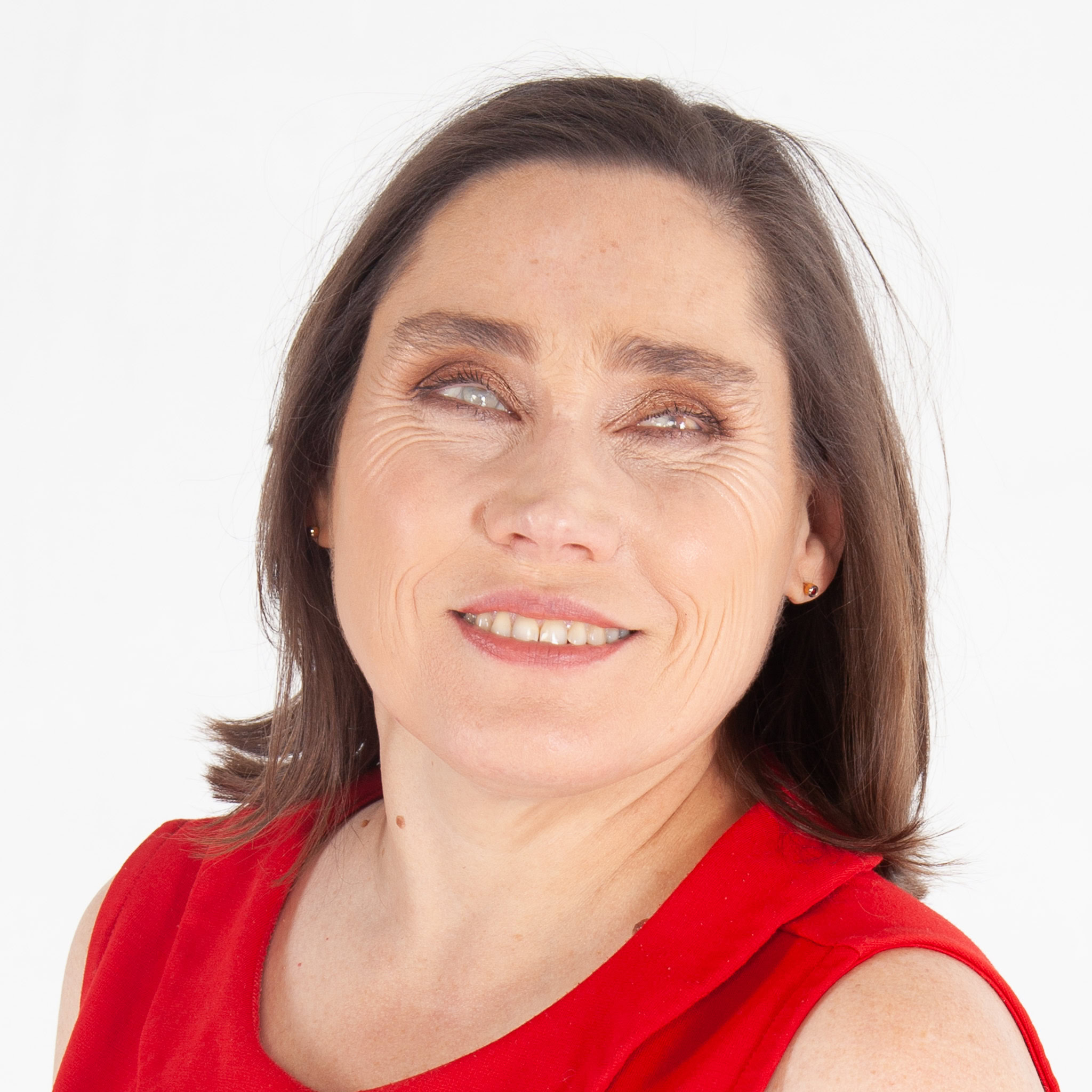
Lois Strachan has visited more than 20 countries on 4 continents. And yet, she is completely blind.
Whenever she travels, Lois taps into a multi-sensory experience of the world that is all too often neglected by those who travel with sight.
Connect with Lois:
Website: Lois Strachan
Podcast: A Different Way of Seeing Podcast
Facebook: @Loisstrachanspeaker
Youtube: @LoisStrachan
Brought to you by…
The Solo Female Travelers Podcast is sponsored by Solo Female Travelers Tours, our small, luxury, women-only tours that support female owned businesses around the world. Join us on a trip of a lifetime that helps make the travel industry more equitable.













Transcript:
Meg: Welcome to the Solo Female Travelers podcast. Our guest today is Lois Strathen, an author, speaker, podcaster, and disability advocate whose work challenges how we think about independence, presence, and what it really means to experience the world. Lois lost her sight in her early 20s, and since then, she’s built a life and career rooted in curiosity, creativity, and connection.
She’s written multiple books, including A Different Way of Seeing. She’s an in-demand speaker who works with organizations and audiences around the world on topics like disability, resilience, and inclusion. And she also hosts her own podcast, A Different Way of Seeing, where she shares stories and conversations about navigating the world in different ways. So Lois, we’re so happy to have you here. Before we dive in, we’d love for you to introduce yourself in your words. Where are you joining us from today, and how would you describe your relationship with travel from when you first started to how it’s evolved over time?
Lois: Hi, I’m joining you today from Cape Town in South Africa and gosh, my relationship to travel. Well, let me put it this way. When I was about six years old, I said to my parents one of my goals for my life was to go everywhere in the world and meet everyone in the world.
And even though, as I’ve grown older, I’ve come to realize that perhaps that was a little ambitious for a six year old to state that so determinately. I still love travel and not even my blindness has in any way diminished my love of travel or my ability to travel.
So a lot of what has happened in my life has shifted the way that I travel and how I experience new places, new cultures, but it has by no means diminished that enjoyment, that passion and that love.
Meg: That is definitely an ambitious goal to meet every person in the world. How far along have you gotten with that?
Lois: I don’t think I will struggle to keep going forwards with that goal and moving forwards and increasing the numbers through the rest of my life. So I don’t think I’m at any risk of ever achieving that, but I don’t believe it’s about the achievement. It’s about the journey, if I can use a hackneyed phrase.
Meg: It’s about the journey, right? Well, I’ve heard that it is always a good thing to set goals which can carry you throughout the rest of your life. So that was that was probably quite wise as a six year old version of you.
So let’s dive straight in. So much of travel culture is built around what we see in photos and even the terminology, right? Like viewpoints, must see lists, which we see on everywhere, every blog, even the word sightseeing. But your work as a disability advocate invites people to experience places in a much more comprehensive and much more holistic way. So I’d love to hear how do you think your travel experience differs from that of a sighted person?
Lois: Well, I think that the obvious starting point is to say that generally, and I’m very aware that I’m generalizing because we all experience travel differently, but I think that many sighted people rely most on the visual, what they can take in through their eyes.
Where in my case the tools that I use and the techniques that I use to travel are really far more dependent on my other senses and that can be hearing from something as obvious perhaps as getting a description from people I’m traveling with of what I am or would be looking at. Audio guides, that type of input. But it’s also about using my hearing to experience the place I’m in. Because you really can tell a lot through hearing it’s about using my sense of touch to explore the places that I’m in the the scent. And all of these are things that are available to people who are sighted as well.
But I think from my experience being sighted as a younger person, I remember how I traveled then and it was very much dependent on sight. But now it’s far more dependent on other things. So it’s a very different experience, but it’s simply different in the way that I build an image of the place I often talk about not sight seeing, which still kind of confuses me because one would think that it would be spelled site is I T E seeing not sight is I G H T seeing so you’re seeing seeing I only realized that recently, but it’s really more about sight experiencing. And I’m using everysingle frame of reference that I can build a multi sensory experience of every place that I visit. So it’s experiencing what I can hear what I can taste, what I can touch, what I can the ambiance of the place.
Meg: I love that. And I’ve also never thought about that until now. How you’ve just said that it should really should be site S I T E and not S I G H T because it really is just subliminally worked into us that we prioritize site S I G H T. And you’ve just described so much more of a travel experience, which honestly, I feel like sighted people, including myself, take for granted, take our site for granted.
A lot of the time and perhaps we don’t actually experience the full sensory experience that travel is and can be. When you think back on your favorite destinations, what kind of sensory details do you think stay with you the most? You just described some incredible options, but through, let’s say, sound, smell, texture, the rhythm of daily life.
Lois: It is so hard for me to unpick the experiences and the non-visual images that I have of a place because it is an amalgamation, a combination of all of those different senses. I think each one impacts on me in a different way and some places it is the scent that I recall best. I’m thinking particularly of walking through a very heavy plastic sheet that was covering the doorway to a spice shop in the spice souq in Dubai in the United Arab Emirates and just being assailed, overwhelmed by these amazing scents of the spices there.
Standing on the hillside of Stonehenge or on Salisbury Plain in the UK or you know that that’s just the feeling of the wind and the light rain admittedly that was there when we were exploring so it’s usually a combination but when I do recall certain places obviously certain things stand out for me more and each place is unique.
In the way that it combines to form a unique multi-sensory experience. They’re all my favorites in their own unique way. And that’s one of the beauties of journalism.
Meg: I know it’s hard. Also, I feel like if you’re saying the word Stonehenge, light rain should just be expected 100 % of the time. It is the UK.
Lois: Yeah, absolutely. It feels appropriate.
Meg: It’s just it is amazing hearing you speak because you’ve just transported me to these places right there with you. And when I’m trying to, often think of remembering my experiences as trying to paint a picture in my head. But I find that actually sight seems to be the most, the weakest of my senses, the one that I forget that easier, whereas smell is a much stronger sense in my memory and you’ve just described the souqs in Dubai.
So I do feel like that’s perhaps these senses stay with you more deeply than sight itself. Do you think experience in places in this way does change how deeply they stay with you over time?
Lois: I think it’s very simplify that to a simple yes or no. I think each one of us probably has different senses that do draw us back to that spot. And a lot of that will depend on our, I know they used to talk about learning styles, if we were auditory or, know, each individual is different and has different triggers. So, more than just saying, do you use sight or scent or taste or touch or hearing, you know, I think it’s, it’s different.
And you might find also have different senses that evoke them. When you think back, suppose the counter side, the other side of sight being such an immediate sense is that there isn’t really a need to remember what a place looks like.
Because you can just look at a photograph or do a search on the net and pull up another image of it. So there’s demand for a visual embedding of the sense, where I think that often those other senses are working away in the background and that that’s what embeds the memories in our mind, whether we’re sighted or not. So, interesting perspective to consider.
Meg: And you’ve written a lot too about how losing sight didn’t take away your ability to see the world. It just simply changed how you perceive and interpret it. And you’ve been to over 20 countries since you did lose your sight. So you have extensive travel experience. What do you think sighted travelers most often miss about being present in a place?
Lois: The thing they miss I for me it’s not missing the other senses or input from the other senses. But I think it’s just the awareness of what they are in fact taking in through their entire beings. You know, I mean, everybody travels in a different way and some people just go to a sites to take the shot of themselves there and to prove to other people on social media that they’ve been there, you know, other people go and they immerse themselves in the culture. So, you know, it really is even for.
I think looking at a binary, it’s this or this, is far too simplistic. But I think that the main thing that people probably miss is just the awareness of what they are actually open to through all of their senses being engaged in the activity.
Even amongst those of us who are visually impaired or blind, you know, we each experience travel in a different way. A number of people that I know don’t engage with travel because they are a little too cautious about doing so. And there are some very good reasons why that might be the case. But there are also people that I know who are traveling extraordinarily among us. You know, there’s one colleague I have who has traveled independently as a blind traveler to, I think probably, think it’s 130 or something countries now. And his stories of travel are exceptional. Now, I don’t have the courage to travel the way that he does. So it, it is it’s a unique experience, as I think for each person who’s non disabled, you know, travel is also a fairly unique experience. And there’s nothing wrong with that.
Meg: And it’s a completely different comparison with different challenges obviously, but I do feel that’s the same in a similar fashion within the sighted community too. There are some people who don’t have the confidence to travel and they haven’t, they’ve decided that that’s not for them, whereas there are others who obviously do.
So I do feel like just from my own experience that I’ve definitely taken a lot of the travel experience for granted in terms of I’ve not engaged in being fully present and I’m actively trying to be more present in my travels going forward because it is very you can very easily get caught up in trying to just be there to take a shot and like you said just proving to people on social media that you’ve been there.
It’s very, that is a slippery slope that one can very easily fall into. So how would you recommend or what would be your suggestion for someone who would like to intentionally practice a more multi-sensory presence when they’re traveling?
Lois: I would suggest that you absolutely sort of take in what you can, just revel in the sights and the experience of seeing all these wonderful extraordinary places and cultures. And then close your eyes and revel in what your other senses can also tell you, what does it feel like being where you are? What are you feeling on your skin? What are you hearing? What’s happening around you from an auditory perspective? What can you touch? What can you taste?
Now, of course, there may be some particular instances where some of those senses, it might not be appropriate. Not suggesting that people go to, I don’t know, the, an amphitheater, a ruin of an amphitheater in Rome and stick out their tongue and taste it. I’m suggesting that just be aware of what your other senses can add to this amazing visual wealth that you have, that your eyes are drinking it.
Meg: You’d probably be arrested and poisoned if you did that in Rome
I will say that from an auditory perspective, your voice is phenomenal. And when you said close your eyes, I nearly actively in the middle of the podcast just closed my eyes. So I will say you have a phenomenal voice.
So one thing that really stands out in your writing and definitely when I started after hearing about you and going down, reading through your blog posts. One thing that really stood out to me was how you push back on everyday assumptions. So like the idea that doing ordinary things independently should be seen as inspiring. And I know that you have a particular opinion on the word inspiring. What do you wish that people understood about independence and competence when it comes to visual impairment?
Lois: I think what I wish is that people realize that those of us living with disabilities are not either, we’re not living the triumph or tragedy stereotype. We are ordinary people living our lives. And the only thing that is different about us are the tools and the techniques that we use to live those lives.
So, I know in terms of independence, we can always do more than people think we can. I know in terms of competence that we are better at doing things than people think we are. And well, let me put it in a very concrete example. I have been congratulated by people because I can chop a tomato when I’m cooking.
When they gloss past the fact that I have several degrees and that I’ve headed up certain organizations and that’s kind of irrelevant to them but that fact that I can chop a tomato or coordinate my clothing that’s what impresses them and so I think that the inspiration side of it is sometimes a little bit misplaced that we’re not recognized for the work that we can do because people are too busy imagining it is harder to do the basic things because they can’t imagine how we do it. If that’s not a long complicated way of phrasing it.
Meg: No, and I think it is, you’ve described that really eloquently. I think it is because people, lack of understanding, and people can’t, for lack of a better word, see themselves in that situation. So they do default to making assumptions and making assumptions about the ordinary thing so that when you do something beyond ordinary because I do still feel that travel even for many women in the sighted community is still a beyond ordinary thing. So when they see somebody who they perhaps don’t understand your abilities, they make those assumptions.
So I’d be so interested to know how those assumptions also show up when you’re navigating new places on new cultures because I do assume that there are many, many questions that our audience would have around that too. Like you said, not necessarily just in the ordinary of chopping a tomato or coordinating clothing, but when you’re actually navigating new places, new cultures, new streets.
Lois: I think that the perceptions that other people have range. They really do. Very regularly when I’m traveling with my husband, we are just like any other couple. My husband happens to be sighted. So we’re just like any other couple. And my blindness doesn’t even figure into the response that people have. And I think that even when I’m on my own traveling around and engaging with the world. Okay, to be fair, I cannot see if people are looking at me with expressions of, know, pick whichever one you want, horror, incredulity, disbelief, inspirate, you know, whatever. I can’t see those people.
And to be honest, I don’t particularly miss the ability that not, you know, the fact that I can not be aware of them, but certainly when I’ve engaged. Well, yes, I very seldom have negative reactions when we are traveling.
Meg: That part’s probably not the worst.
Lois: Most often people are curious to know what the experience is like for me, how I go about doing it, or sometimes they want a little bit of detail about why I’m doing things. Every now and then things happen that you kind of notice as being unusual. As an example, going in Athens, we were climbing the Acropolis up to the Parthenon and I was given permission to reach out and touch either of or both of two of the ancient columns on the side of the pathway as you climb up the hill. And as I reached out to touch one and just explore it with my fingertips, another tourist next to me said, you’re not allowed to do that, you know. And she was very upset.
So it’s, but that’s also to be fair, there’s a very good reason why people are asked not to touch things. So she possibly at the time didn’t observe my blindness and thought I was just doing something that was prohibited. So she was right to challenge it.
And I do try to always understand that as well and look at the broader picture. As you notice, I really don’t mind about using sighted terms. And I try to look at the wider context in which people are responding. Obviously, in some cultures, the perception of visual impairment and what it means and the preferences of the way that people with visibility or disabilities are either encouraged to be in or in the home or in the world that can differ, that can have an impact. But generally, as I say, my experiences have been positive and people are curious about my experience rather than disbelieving or marginalizing and I’m really happy about that because as long as we can be curious about how other people live in this world and go around in the world, I think we’re doing a lot right.
Meg: It’s really fantastic to hear that you’ve met more been met with more curiosity and genuine curiosity. And my next question I’ll give some pretext and context that I did see a video of a speech you were giving where you mentioned that you were helped across the street by a woman which was very kind of her it just wasn’t the street you wanted to cross. So I feel like crossing a street is perhaps an assumption that a sighted person might make as help that you need whether you need it or not. So I’m interested to know what challenges you regularly face that companies and other sighted travelers might not actually be thinking of.
Lois: One of the biggest assumptions and the greatest challenges that many of us who live with disabilities face is the fact that often people feel that because we have a disability, or to frame it differently, may be perceived by them to be lacking in some way, in some ability, in some competence.
That they feel that they know better than us. So it means that they often act in a way that they believe is in our best interests when it is in fact often not and can be downright dangerous. Now that particular instance happened to be in my home city, but the same applies wherever you are in the world. You know, it’s the danger is that making assumptions that you know better because you are able-bodied or non-disabled can be a very dangerous assumption to make and it can lead down into a lot of actions, a lot of reactions, a lot of systems that are put in place. And that’s so it impacts on travelers, it impacts on travel organizations, travel venues, sites, accommodations.
That’s the awareness that I think is often lacking that and I also do understand that sometimes taking a step back and trying to see how your actions, your systems may be perceived, may be experienced by people of a range of different disabilities.
I know that’s hard when you don’t have personal experience of that disability yourself. And that’s why it’s really great that there are experts out in the world who specialize in those fields, in helping places and venues and accommodations to understand how they can make themselves more accommodating, more inclusive. And that’s a whole different topic of conversation.
Meg: And you sound genuinely happy to engage in curiosity if a curious traveler comes up to open a conversation with you. Just obviously not physically forcing you down the street that you don’t need or want to go down because you are making an assumption that you know better.
Lois: I will say I am human. There are times that on my travels I am simply exhausted and I’m just trying to get back to my place where I’m staying so that I can flake out on the bed and just relax and sleep for a bit. I might not be as open to curiosity or questions at those times.
But I would say that probably 95 to 98% of the time I am always happy to engage, educate, and just show people a different way of seeing. There’s a reason that that’s my tagline.
Meg: I do love that tagline. And honestly, you’ve just described all of us. I don’t think that anybody on a line of questioning when they’re exhausted, I think we would all have the same reaction.
Lois: I just going to say the risk with that is that somehow people always expect that because you have a disability that you’re going to be sweet and nice and kind. And sometimes that is just not possible. Just like any other person. I don’t know why we should be judged according to different standards because we have a disability. Yeah. But it can happen.
Meg: You’re human.
You’ve spoken a lot about the tension between accepting help and protecting your sense of independence. And travel does seem to amplify that dynamic because you’re often navigating unfamiliar places and systems. So when you’re traveling or you’re in a new environment, I’m interested to know how you personally decide when to accept help and when it’s important to figure out something on your own, even if that does take a bit longer.
Lois: I think a lot of it depends on the context. A lot depends on how busy the place is. A lot depends on where I am mentally, emotionally, physically at the time.
There are certain instances where I am going to ask for help. If I am rushing to catch a train or a plane, it would be against my own self-interest not to accept any help that I can get. If I am genuinely uncertain of what is happening or what is around me and I have my anxiety levels have risen to the point that I’m not comfortable to sit myself down and take out the digital devices that I might need or whatever other way it is that I’m finding to get the input that I require to understand my situation. Then, yeah, I don’t believe there’s anything wrong with accepting help. What I believe for me is wrong is immediately defaulting to help. Or people impose their support, their assistance on me when I genuinely don’t need it. And that of course is hard for them to know if you do or do not genuinely need help. So it really does depend. It’s got to be, I’ve got it, I will always take it on an individual basis. Where am I at that precise moment?
What are the tools and resources that are available to me? What might I miss that might be important to me or even important in keeping me safe in an environment?
So I’m aware that I am always, no, not always, but I’m often something of a curiosity out in the world that people might watch and go, huh, I didn’t know that a blind person had that access or could do that or could use a tool in that way, a phone, whatever it is. And I’m happy to do that and be that person. But I’m not going to insist on doing everything my own way. Just to prove that I can. And I’m also aware that usually I am traveling with other people as well. And I have a very personal feeling that it’s important to be aware of the people around me, so that I’m not causing problems by imposing my will at the expense of theirs
Meg: We love long complex answers, I’m actually personally very interested to know, so you mentioned the digital devices that you have access to. Your phone obviously is a great tool. How do the tools work for you in that sense? Are they voice activated type thing for the different apps that you use?
Lois: Okay, the starting point of that is to say that, particularly in travel, my phone is a very important part of my travel process. It is something I do have apps that can take a visual image and describe it to me.
I have apps that can take text and convert it into an audio format. And they’re all apps on my phone. I even recently found an app that can describe real time what is happening around me, which is amazing because that’s quite a new access to what tool in my box, as it were. So yes, my phone is a very important part of the way that I do things, but all smartphones have an inbuilt accessibility function on them. And Android phones, iPhones, they all have it. It’s just a question of turning it on and then learning the apps that are available to help. When I talk more broadly about disability, I say that often the problem comes down to access. Now for someone who is a wheelchair user or has some kind of mobility, impairment or condition, sometimes that is going to be physical access. Can they physically access a travel site, a travel destination, an accommodation?
But for those of us who are blind, we can pretty much walk around where we do, where we want to, depending on our skills in navigating, orientating ourselves in the space and what support we do or do not have. For us, the difficulty in access is around information.
And in that sense, the smartphones have been an incredible tool for us to take things that are not designed in such a way as to accommodate someone with a sight impairment and to make that access possible for us.
And it can be something as simple as going into a hotel room and using a certain app that will allow me to connect on video to a sighted volunteer who can tell me the thermostat in this room works in this way or the coffee machine works in this way and this one might be slightly mind blowing for many sighted people, the hot tap is on the left, the cold tap is on the right or whatever case may be. Or this is how you use the taps because I’ve even had that. It was in a hotel in, in France,
my goodness, I’ve forgotten the name of the, it’s the old, an old medieval town. And I had slipped and fallen down a, you know, slipped in the rain and fallen downhill. I seem to talk about traveling in rain a lot. It often is beautiful weather too, but, and my husband was very kindly rushing off to find a, a bandaid for me in the local pharmacy and I was in the meantime meant to be cleaning myself up except I couldn’t work out how to work the taps in the yeah so it becomes complicated.
Meg: Look, to be honest, I have, I’m sighted and some of the hotel taps I’ve been physically standing in front of and could see in front of me, I still couldn’t figure out. So I don’t blame you for that one bit.
Lois: Yeah, and it’s part of the fun of travel.
Meg: Exactly. Jumping back quickly to the imposed support, which I think is a really lovely and tactful way of putting it. I’m interested to know what respectful and empowering support does look like from strangers or from hotel staff or guides fellow travelers who do want to help. So what would be a respectful example as opposed to something that would be disempowering for you when you’re on the road?
Lois: I think the best advice I can give, if I can put it in that way, is to say, be open minded, be curious, and to ask if help is required, or what help, if any, is required. And then to respect the answer that you receive. Because often, someone who is offering help can get a little upset if their help is refused because they think they’re doing you a favor.
So yeah, it’s about being open minded, curious and offering, but not insisting n giving help. I think that’s probably the best place to go. I think the curiosity, the open mindedness that speaks to respect, speaks to an understanding that often we don’t understand the situation that another person is in and the open invitation to engage or not.
Meg: I love that you followed that up with please respect the answer because I do feel like people ask in a lot of scenarios and they’ve already made up their mind. So thank you for putting that so eloquently.
When you zoom out and look at your life between travel, creativity, independence, community, it feels like you’re constantly redefining what a full life looks like. So I’m really interested to know what a meaningful life looks like to you right now and how that might be different from what you once imagined your life would be.
Lois: Right now that is a very complex question for me to answer because I’m currently dealing with some medical issues and having to redefine everything that’s happening in my life at the moment. I’m not really certain what the impact is going to be in the future. So just as a brief overview, I am living with chronic kidney disease and I’m currently receiving dialysis three times a week. And I know travel is possible, even on dialysis. I have rather chosen not to engage on travel while receiving the dialysis treatments. So at the moment my life is in a little bit of an uncertain phase. And I think life is constantly evolving. And I think you phrased that so well in the question.
So what it’s like for me right now is almost a temporary pause button on a lot of the work that I’m doing, a lot of the things that I love, some, as I say, by choice, some by situation.
And I know that hopefully in the next three to six months after I’ve been the recipient of a kidney transplant and get back to a little more normality, my life may look totally different again. And that’s probably, I think, one of the lessons that I’ve learned through my life is there is constant change, and the ability to adapt to change and to be open to the new opportunities that change offers and to see the, never be scared to move forwards.
Which is probably an unexpected answer to the question that you asked, but I think it’s, it really is just the one constant in my life. Things change, be open to the opportunities that are often offered.
Meg: I really appreciate the honesty and I do feel like you genuinely do embody that more than any other person that I have met. I very impressed with the takeaway and the perspective, yes, to keep moving forward. So thank you for your honesty.
We do have a rapid fire set of questions that we like to ask each guest on the podcast. So feel free to just shoot and given the topic of the podcast of traveling with a visual impairment for this episode, I am interested to know, I guess, the first rapid fire question about window seat or aisle seat.
Lois: Strangely, window seat. But for the strangest reason, if I can give the reason as well, if I can just explain it.
Meg: I am actually very interested, so we’ll make an exception to the rapid fire because I feel like everyone would like to know.
Lois: Okay, so strangely enough, when you when I’m traveling in an airplane, or train, there’s a lot of background noise. It’s an enclosed space, and there is constantly noise. So I’m very aware of whatever is happening around me. And I have to be aware of whatever is happening around me. So if I’m in a window seat, then I am enclosed on more sides. So if the window is on my right, I know that I can ignore what’s happening on my right. The seat is behind me, I can ignore what’s happening behind me. So I only have to be paying attention. And if I’m in a plane, there’s or depending on the setup, I may even have a seat in front of me. So I can ignore that side, then I just have to be aware of that remaining side.
So it’s a highly practical reason and possibly a very boring reason, but that’s it. That’s why window rather than aisle.
Meg: I find that very interesting.
So that was a fantastic answer. Next question is what is the first thing you think of when you hear the word packing?
Lois: Lists.
Meg: Lists. Look, we’re checklist nerds here at Solo Female Travelers.
Lois: And that’s a positive thing. Yeah. I love lists.
Meg: Well, Lois, thank you so much for this conversation. Your perspective is such a powerful reminder that experiencing the world isn’t just about how many places you’ve been or how perfectly you can follow a travel checklist. It’s about how deeply you notice, how intentionally you move and how honestly you show up to your own experience.
If you want to explore more of Lois’s work, can find her writing, books and speaking at loisstrachan.com and you can listen to her podcast, A Different Way of Seeing, wherever you get your podcasts or at loisstrachan.com/podcast. And we’ll link everything in the show notes.
And if today’s conversation inspired you to explore the world more intentionally, whether that’s through slower travel, alternative ways of staying in places, or simply getting out of your comfort zone, we’d love to meet you in real life on one of our Solo Female Travelers Women Only Tours around the world. And you can find all those details at tours.solofemaletravelers.club.
So thank you so much Lois for being with us today, and thank you everyone for listening, and we’re looking forward to seeing you all next time.
—
And it’s time for this week’s embarrassing travel story. We’ll call it the lion. This one is from Anonymous and here is her story.
I was in a safari in Tanzania and we’d been driving for hours across the middle of nowhere when I suddenly needed to pee very badly. Normally you just go into the bushes, except five minutes earlier our guide had casually pointed out fresh lion tracks in the dirt. Like that was completely normal information to continue living with. So instead, I decided the safest option was to squat behind the safari truck on the side of the road. Important detail here. This was a large overland truck, not a discrete little vehicle. my entire lower half was essentially visible to anyone committed enough to walk three meters to the left. Anyway, here I am mid-squat fighting for my life with dignity already hanging by a thread, when one of the guys from the tour suddenly yells, Lion, I have never moved faster in my entire adult life.
I fully abandoned the process, panic ran toward the Jeep with my pants around my knees, and somehow boarded the vehicle in a single movement, fueled entirely by terror and adrenaline. I landed inside the truck breathless, traumatized, and with my underwear still around my ankles, while twelve people absolutely lost their minds laughing. There was no lion, just me, half naked in the Serengeti.
Oh my god. It sort of I feel like a similar thing happened to me, but it was more of like a joke and we knew it was a joke, so we all kind of laughed. Ha ha ha, what if a lion came? But this, this is next level.
Thank you so much for sharing your story with us. If you have an embarrassing travel story of your own, we’d love to hear it. You can submit yours on our website at www.solofemaletravelers.club