
In this episode of the Solo Female Travelers Podcast, Mar sits down with Fatima Haidari, Afghanistan’s first female tour guide, for a deeply personal conversation about courage, displacement, identity, and rebuilding a life after unimaginable loss.
Fatima’s story is also part of our own. When she first left Afghanistan, she worked with Solo Female Travelers during those early, uncertain moments of starting over. This conversation feels especially meaningful because we get to reconnect with her a few years later, hear where life has taken her, and witness the strength, clarity, and purpose she continues to carry forward.
Fatima shares what it was like growing up in rural Afghanistan, teaching herself to read by listening to lessons from outside a classroom, and the journey that eventually led her to become a tour guide, journalist, and women’s rights advocate.
She also speaks about the Taliban’s return to power in 2021, escaping Afghanistan on an evacuation flight, and the difficult reality of rebuilding her life from scratch in Italy while navigating grief, culture shock, trauma, and the weight of leaving home behind.
Together, Mar and Fatima talk about what life is like for women and girls in Afghanistan today, why Fatima continues to fight for education and women’s rights, and how her organization, Alefba, is helping girls keep learning despite the restrictions they face.
The conversation also explores the growing popularity of tourism in Afghanistan and the complicated questions that come with it. Can travel support local communities? Where is the line between cultural exchange and normalizing oppression? And what responsibility do travelers and content creators have when sharing stories from places facing serious human rights challenges?
This is an honest, thought-provoking conversation about resilience, survival, education, and the power of refusing to give up on a better future, for ourselves, for Afghanistan, and for women everywhere.
About Fatima:
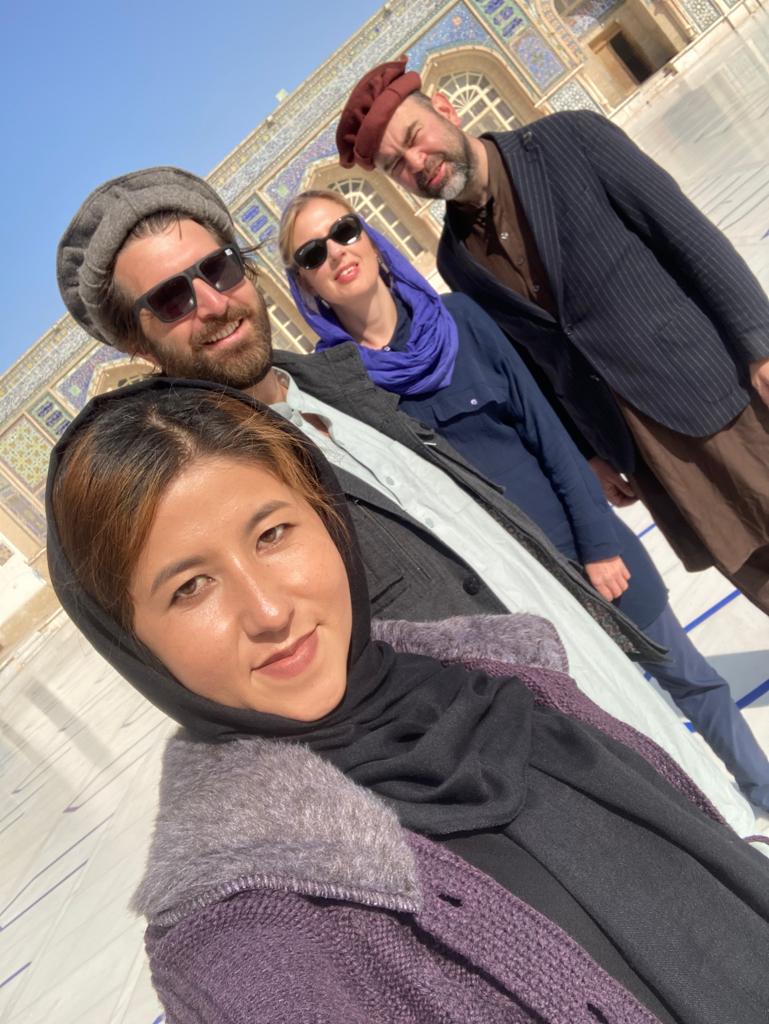
Fatima is from Afghanistan and was known as the first female tour guide in the country.
She was evacuated to Italy in 2021 following the Taliban’s takeover of Afghanistan.
She is currently the co-founder and president of a nonprofit organization called Alefba OdV, which advocates for and supports education for Afghan women. Fatima is also a student at Bocconi University in Milan.
Connect with Fatima:
Instagram: @fatimahaidari
Support her school for girls in Afghanistan: Alefba, instagram: @alefba_for_women
YouTube: @fatimahaidari
Brought to you by…
The Solo Female Travelers Podcast is sponsored by Solo Female Travelers Tours, our small, luxury, women-only tours that support female owned businesses around the world. Join us on a trip of a lifetime that helps make the travel industry more equitable.









Transcript:
Mar: Welcome to the Solo Female Travelers podcast. Today’s conversation is a really meaningful one for us because Fatima isn’t just a guest, she’s someone who was part of the Solo Female Travelers story early on during a pivotal moment in her life and also ours. I first met Fatima during the pandemic while she was still in Afghanistan and we invited her to give a virtual tour of her country to our online Facebook community. She had just become quite well known in the travel circles and beyond as the first female guide in the country and had been featured on CNN Travel. And we loved being taken around the country through her photos and stories.
A few months later, when she first relocated to Italy, we hired Fatima to help us manage the group and our social media channels. So she was a part of the team. And although this was a very short term internship until she started her studies, we’ve stayed connected over the years while her life has taken her in new directions. So this episode is part catching up, part life update, part conversation we’ve been feeling a responsibility to have.
Afghanistan has been coming up more and more in travel spaces lately with a narrative that positively frames the Taliban as a safekeeping government, even for women travelers. This has made me take a bit of a step back and reevaluate what happens when the reality of the travel experiences is so different from that of the locals and especially the women. And when the microphone is given to the visitors ahead of the locals who may not have access to the same reach. I have seen this in other countries and destinations, but nowhere does it feel as much a conundrum as it does in Afghanistan.
My personal relationship with the country also goes back well before I met Fatima. I had been wanting to visit the country ever since I moved to the Middle East in 2006. I had a job in strategy consulting in the telecoms industry. And my first client in 2006, when I was very young, was the telecoms operator in Afghanistan. And I will always remember how passionate the team was. Many of them had been raised in the US by parents who fled earlier in search of a better life.
And they were now in their 30s and 40s and had very well paid jobs at McKinsey, at Bain, at Goldman Sachs, at JP Morgan. And they all decided to go back to their ancestral land, which they had never lived in and contribute to the country’s development. At that time, telecommunications, and especially the mobile phone was about to revolutionize the world. They wanted to make sure that Afghanistan would benefit too. didn’t get to travel to Kabul during that project. All our meetings were in Dubai and they were the ones to fly in.
I will always remember the photos they showed and the love for their country and how eyes lit up when they talked about their high mountains and the turquoise lakes, a little bit like Fatima when she was talking about it our virtual tour. I have wanted to visit ever since, but the security situation has put the trip off for me until things become a bit more stable. And this time is unfortunately yet to come. Other people have different comfort levels than mine and tourism has been on the rise since the Taliban took over in the summer of 2021.
And to put things into perspective because it’s going to be relevant for today’s conversation. An estimated 10,000 people visited the country in 2025, despite all the travel advisories from every single country recommend against it. Many joined group tours through agencies specializing in these less popular countries, but many others also do so independently. And this popularity has raised a lot of questions for me. And I wanted to talk about this with somebody who really knows about this topic, which is Fatima, who used to be an Afghan tour guide before the Taliban took over and has remained very much an activist for women’s rights since then. Fatima, thank you so much for joining me today. It’s really good to see you again.
Fatima: Thank you, Mar. It’s also so nice to see you again and to talk to all of you because I somehow miss Solo Female Travelers. I really, really have nice memories. I even have the computer I got. And it’s that one because I am doing my whole university with this computer and every time I’m using it, I remember, yeah.
Mar: The computer that we bought for the for working, yes.
Fatima: Yes, yeah, it’s a gaming computer. It’s like super heavy, but I like it because it’s super fast and the memory is so fine. So it’s working so fine. Yeah, yeah, I’m using it right now because that’s somehow my everything.
Mar: Wow, I had forgotten about this. Amazing. So I know that you have told this story probably a hundred times. Maybe you’re a bit tired of telling it. But if you could give us a very brief explanation of, you know, like how you ended up changing the mountains of Afghanistan for a different life in Italy.
Fatima: Okay, so yeah, basically I was, it’s my childhood, like I was born in the central part of Afghanistan in a province which is called Ghor. And when I was like seven, I came to be like a shepherd, it was my first job. And then I think there listening to an old radio my father had, I just understood what education is like, I came to understand through like audio dramas or through journalists who are talking about education. But then I eventually understood education is something okay, the boys are doing but girls not in our village.
We didn’t have a school, the boys were studying next to this river and I took my sheep and like cows, there were a couple of cows and sheep. I took them next to this river and I was listening secretly to the teacher who was teaching to the boys. Like there was not a school they were studying like in the open area, in an open area under the shade of a tree. And then I was like listening to them and whatever the teacher was writing on the blackboard, I was trying to catch up and write that thing on the sands And I somehow did it like for two years and after the Red Cross organization came to the village and they they just asked people if you let your girls go to study we will help you with some conditional food programs and then I was one of those lucky girls because before that the people of the village they thought actually that girls are not made for education, but it’s just only boys that have to study because they only have a future.
Girls are, you know, that someone else is somehow, you get married and you go, that’s it. So better to prepare for that. But then my father moved to Herat when I was 10. And in Herat too, due to the economical situation, Herat is a big city, there were schools, but due to the economic situations, I couldn’t go to school for three years. So together with my mom, we made handicrafts and my mom was selling them to the local shops. And with that, I could continue my education alone for three years at home. And then we doubled making handicrafts in order for me to be able to go to school. And that’s how like I started going to school. And once I have done school, I actually doing so, I also learned English and I was hired as an English teacher.
And once I had finished school together with 10 of my friends. We had a small organization for women empowerment, obviously in our own town. It was very small. And then I started to study at the universities, journalism and mass communication. I was running like weekly, I was running a radio program that was called Winner Woman where I was collecting the stories of women who had difficulties and barriers, same as others, but they decided to change their life and they have built something and I wanted other women in the society to listen and to ask themselves a question that what is that that they want for themselves? I mean, obviously it’s good to be a good mother for a housewife, but as a woman, as a human being, what happens to me, like what are my dreams? And it’s not bad for me to pursue my own dreams. And a lot of women in Afghanistan have forgotten that or maybe never learned or maybe always kept quiet for that. And for me it was, if they wanted to start, it was never late. And it was 2020 when I started guiding tours and I eventually basically CNN contacted me that I was the first female tour guide of Afghanistan. And then I felt a little bit nervous. Actually when I shared my story, it was difficult to share in the sense that it might create challenges for me. But I shared it because I thought it’s a good opportunity to share my story with other women so that they can read.
I don’t know, ask themselves the same question. And I shared it, basically it made me somehow kind of a target for extremist groups because guiding tours were already difficult before that, since it was considered an unacceptable job for women in the society, especially if you had guests who were men. And after that, it became worse. So like the Security Council in Herat or in Afghanistan and then the company I was working for, they were all telling me that I’m a target, that I have to be careful, I have to dress in a way that doesn’t attract attention. I had to come home earlier in the evening or I couldn’t stay longer in the crowded streets and so. So in 2021 when Taliban took over the country, I basically didn’t see myself staying there for so many reasons. And safety is one of that and thanks to the support of some travelers who we have met in Afghanistan. In some even I didn’t know they did kind of fundraisers, gave my name to the evacuation flights to the embassy of like so many European countries. And then finally I got the chance to get out and to come here in Italy. And that’s how I end up here.
Mar: Right, so you were on one of the military evacuation flights for refugees.
Fatima: Like one of evacuation, one of the evacuation flight from Kabul to Kuwait and from Kuwait to Italy. was like all of the countries were trying to like get out their employees and stuff. So I was like part of one of those flights.
Mar: And this must have been a very stressful time, right? Because you were like, you ended up on the Italian flight, but you could have ended up on the flight of another country, right? Because you had a few options, but none of them were confirmed, right?
Fatima: It was a very stressful time in the sense that, you know, in Afghanistan, we have been growing up with the stories our parents told us about the Taliban because they took over Afghanistan in 1996. So those stories were scary. At the same time, we saw them like bombing schools, universities, mosques, protests. So to me, like I at the time I was in Kabul and I was super scared.
For the first time I was going to see them and honestly, it was there, I thought, okay, maybe this is the last day of my life, the day they were taking over Kabul. But also while going out, I was supposed to go to Spain first because a group of my Spanish friends were trying to help me go there. Since things were happening so fast, they asked me to go to Pakistan and exactly the day I had my flight to go to Pakistan.
The Taliban took over the country. I was so shocked that I forgot my flight for one whole afternoon. I was walking on the streets that were so crowded. Was like at times I was crying. I was thinking, you know, that the type of like I was I can say like it was like like a dead body who was still alive in her mind and still thinking like of why I didn’t say goodbye to my loved ones.
What happens to them and what if the Taliban kills me, how they’re going to kill me and then remembering all the things that they did to other people. And obviously it was it was very difficult. at the same time, for me, getting a seat in the plane was not a problem, because as I said, I was so privileged to have so many good friends who were trying to help me in so many ways. So they gave my name to the embassies of seven countries, which means my name was on seven flight lists. But the problem was that when we went to the airport, the Taliban were not allowing us to get inside the airport. And there you see all kind of stuff like you see people getting injured, you see people die, dying and you see a lot of people were fainting because they were not receiving oxygen in the crowd.
And there was this Taliban’s air gun shot and at times they were like shooting and I for the first time I have seen like them shooting like in front of my eyes I have never seen that before and that a lot of those people who were discovered and arrested and were beaten and people who lost their children or were like able to enter inside there for their children to enter they they stayed outside and or they went inside by their but their children were remained outside and people who like have fallen down from the plane.
I think it was very difficult to watch all those things because was only that airport but there was so much chaos and it was with so much like heavy meaning behind that because to me with that my country was falling down and all my dreams all I have accomplished in Afghanistan future of like a very dark future I expected to happen because we already knew who were taking over the country and I think it had so much of dark and heavy meaning, everything that was happening at the airport, like thinking of all the millions of people who would stay there, what happens to them and they are basically left with nothing, no guns or like weapons to fight and yeah so it took me almost like one week to stay at the airport and then eventually like we succeeded to get into there.
Mar: You were alone all this time, right?
Fatima: I was with a group of 25 people who they worked with, whether they were women in sports or people in tourism.
Mar: Because would you think that the fact that you had become relatively famous through the CNN article was both a blessing and a threat, right? Because it put a target on your back, but it also maybe helped you get on those lists and gave you visibility that made you more clearly, you know, somebody who needed to be evacuated.
Fatima: Honestly, meaningfully, yes, it helped me a lot. But also like even before Taliban in Afghanistan, it helped me a lot in the sense that I didn’t expect. But after that, a lot of there were a lot of people who wanted me to be their guide. So my job was like growing up and I was earning a lot. And I it’s always funny to me because before I started in it, my brothers didn’t want me to start because they didn’t think I would be able to do so. But then I was earning more than them in the family and it was super OK.
But at the same time, it also was a good opportunity for me to share my story. Before I was thinking with the women in Afghanistan, but later I realized a lot of other women, but also men were messaging me how my story inspired them and how it changed their perspective to see life, which made me so happy. It was a small contribution. And then, yeah, when it comes to leaving Afghanistan, think, even though it’s so difficult, I’m happy to leave, I’m happy that I left Afghanistan because I can do so many more things from here for me, but also for other girls in Afghanistan than I was there. And plus, with the type of person I am, I think I would have been, it would have been so dangerous for me to be in Afghanistan because it’s, you know that when people like, how can I say, when people like order me or to oppress me, I cannot stay quiet or I want to do something to change it.
Mar: You would have raised your voice and you would have spoken back and then it would have ended up in a bad way.
Fatima: So I honestly I’m happy to be here with all its like hardships.
Mar: And you went through truly like a life transition that most people will probably never experience, thankfully. When you left Afghanistan and you had to start completely somewhere new and you had never left the country before, right? And you were used to living with your family and it’s a very tightly knit relationship, right? And suddenly you’re somewhere else, completely different, in a different language with people you don’t know. I think that sometimes people underestimate how much that kind of move changes you as a person, right?
As I said, even though we don’t speak so often, I continue to follow you on social media. So been kind enough to share publicly a lot of the ups and downs, right? And these were moments at the beginning where you were a part of our team. So we used to speak very, very often back then. And when you think back at that time, at the first, six months since you arrived in Italy, what do you think was the hardest part of being in a completely different country?
Fatima: I think there were two phases that were so hard. I think the first phase was, the first six months for probably an even one year. But the thing was that I never understood what was happening to me in the first year because at least the first three months I was completely shocked and I was so traumatized. I understood that I come to Italy in Piacenza. I didn’t know a lot about Italy, how was Italy. I just heard the name of Italy and then that was it. But then when I came here, so for three months, all I was doing was crying at times and was like thinking back and I was feeling guilty. Like there was so much guilt of deciding to leave the country and leaving behind all the things I valued in life, but also I accomplished and I saw everything back in Afghanistan and that I was thinking of me as a traitor or I don’t know, but at the same time, I could never think of like, okay, I couldn’t see my future at that time.
But then I came to realize that I think one thing happened to me was that one day I went to a park close to. I was living at the time in a small city. I went to the park and in the park I was crying and then because I was so emotional and I was so heartbroken, I was crying so loud and then there was this man, gave me a bottle of water and actually it was the think my first impression of Italian people.
And then this other guy who was from Pakistan, he came to me and he gave me a little bit of money. So he thought maybe I don’t have money and I’m crying something. But I think that day I was changed in a way. I changed my perspective. Like I thought, OK, I shouldn’t continue like this. Nothing is going to happen. But also I lost my uncle in those moments. He was in Pakistan for a brain tumor and he was very well, but once Taliban took over, he was so pressured. His family was in Afghanistan and then he got worse, so he died. And he was the only uncle that lived close to us and we were super close to each other. So it was very difficult. But I thought that I have to like change my perspective. And I think the first thing I thought was to, of course, continue my education since I couldn’t finish my university.
And then that’s why I started applying for the university. But then I was a little bit okay. think once I started university the first year, I was fine. The second year, I kind of understood that I am kind of going toward, don’t know, I liked staying in my room, close my window. And then at times I had panic attacks, which I didn’t even understand what is that because my hands were closed. My body was shaking and then I was thinking of I don’t know if there is someone who wants to hurt me or something.
It happened also before but at this moment of the time it was happening so much more. So for almost one year I really couldn’t participate to my classes at the university and at the same time I was feeling guilty for not doing enough at the university since I had this opportunity, but millions of women out there in Afghanistan didn’t. And I was missing my loved ones and especially my mom. So it was like, I think the second, probably the second year was much more difficult. At the beginning, maybe I never understood what was happening. I was able to cry when I wanted, but then I was not crying anymore. All I was doing was staying home.
When I was going outside, I was feeling people are looking at me and they’re judging me or I’m looking weird or I’m a different person. And whenever my friends at the university were asking me to join them for something, I was not joining them. And I was so much like isolating myself from everything. And I even didn’t like to see light. And I didn’t like to see what’s happening outside this room, so I was always staying here. And then I was diagnosed with PTSD, and since the therapist told me it’s a complex PTSD, so thanks to her, I think thanks to university, because they were the one who supported me through this a lot.
They have an inclusion office where they take care of the students coming from such a background. And these therapies basically helped me somehow within three months to get much better. And I think I still like, there are times I’m not okay, but I’m much more stable compared to that time. Still I would say I’m adjusting to my new life here. At the same time, I think I am, in a sense, I’m very integrated well into the society, I can speak the language but I made a lot of friends, I know a lot of people, I like the food, I travel, whatever.
But from another perspective I am not in the sense that when I’m with my friends at the university for example, when they speak about the Tiramisu their grandma made for them or the vacation they did with their family in Sicily or I don’t know.
They plan to go to Zanzibar and a safari together or I don’t know about Christmas time. They don’t want to compare, but I think comparison is a very natural thing when it comes to those stuff. I just, at the time, I miss my family. I miss my mom. And then, okay, I lack those. I am lacking in those things. I really feel like I wish I would have valued all that stuff that I had before more now before not now but now that I value those stuff so much I don’t have any because I long for like I don’t know the tea I drank with my mom together and speak about all this stuff and the complaints I made and my mom was always listening and I think I now we lost that sense of friendship because we only talked to each other and then she’s like, I’m always okay and I’m always okay. We never talk about what’s wrong with us because we know that we don’t want to worry each other.
Mar: And you know, have friends and you were lucky to go to university, that you managed to get a scholarship, right? Because in the end, you arrive in Italy, the government helped you at the beginning, right? They gave you a place to stay and they gave you an allowance and like they covered your food. And so you had some help at the beginning. But in the end, you’re starting completely from scratch somewhere where you don’t know anybody in a language that you don’t speak without a job. And with your studies back in Afghanistan not finished and also not being able to convert them, right?
So you’re starting at university from a completely different place than everybody else, all the other students. Your English is not as good as the other students and the courses are in English and you don’t have all the context and background that everybody else has. And yet you are still, and we were talking about this before we started, you’re still just about to graduate in pretty much the same amount of time as everybody else. And this is truly impressive. And you didn’t take an easy subject, right? You’re studying politics and international law.
Fatima: It’s international politics and government. Yeah, I honestly, yes, I do think I did a lot of more things than the other did in the sense that I was lacking, as I said, I was lacking a lot of background knowledge in everything. Like the university I’m studying, even though it’s political science, it’s so quantitative.
And quantitatively I was zero. And at the same time also other subjects because in Afghanistan I did study school a little bit of history but it was more from Afghanistan and maybe a little bit of Asia. I studied nothing about Europe so in the class the professor like when he was talking about a subject or a person he was not explaining what that subject or person or who is that person. But he was giving him as an example or I don’t know what he did, for example. But then I was like, okay, who’s this politician or who’s this? I don’t know.
what is this subject and I had to, for example, the law class I had the first year, my professor was so impressed that I had all the new words of the law listed in a notebook with their meanings in English and with their definitions and with their persons. And he was like, this could be like a dictionary for another student who’s coming from Afghanistan. And with that I did a lot of like mathematics for example. We did a little bit of math in school but it was very basic and we had our teacher was so bad at it.
So we never learned mathematics except addition, subtraction, division, and multiplication. Here it was very advanced, so I had to start from the scratch and from that addition, multiplication, and then I almost have like four or five notebooks that I filled with the background. Things that I was lacking, I filled them until I had to like catch up on the lessons.
Mar: Do you remember some of the some of the very first shocks, like things that you were like shocked that you had never heard of? Because I remember when we were working together that one day I was talking to you about Uber and of course Uber doesn’t exist in Afghanistan. So you had no idea what I was talking about, right? Like ride hailing was not a topic that you had ever heard before. Right now, when you were saying about, you know, politicians and people that the professors were talking about, I’m sure there were many more of these moments when you’re like, I have no idea what this is.
Fatima: Honestly, yes, there were a lot of shocks. Yeah, except university, we saw outside university. think, you know that in Afghanistan, we are never taught told about LGBTQ. So before coming here, I never thought it existed that woman, for example, gets married with woman or man gets married with woman. So for the first event, like in Afghanistan, we don’t kiss on the lips. So when I came here, for the first time in my life, I saw that a man is running from that side and the other man is running from this side. And they, I thought they’re friends, but they started kissing each other.
And I was shocked and I was looking at that. And then I was with my Italian friend and he’s like, don’t look Fatima, don’t look. And I was like this close and they were, and I was watching at them and I was so shocked. And then I, why are they kissing another man. then.
And then, okay, I eventually realized that, this thing exists, but I never knew about it. So I just educated myself on that. Or the food, for example, we don’t have a lot of seafood since we don’t have sea. For the first time, we were three girls and they brought us an octopus and we saw the food and we all shouted, we threw the food away. And for five days, we couldn’t eat anything because we were thinking that there is strange things in the food.
But now I think I really love Italian food. I was thinking Afghan food is the best in the world. Now I think it’s Italian. Maybe Afghan goes second.
Mar: You just mentioned the food, the fact that you don’t eat so much seafood because, know, Herat is in the mountains, it’s quite far from the sea. What are some other nice memories that you think about all the time from your life in Afghanistan?
Fatima: I think the nicest memories I would think is, okay, the first thing is that I did a trip with my parents from the city, the Herat. We moved from the city to the village we were living before. With this road trip, we got to see, for example, Balmian. And I’m happy because I convinced my parents to do that trip.
So even though like our passport is so weak, I always wanted to travel but I couldn’t. I am happy that we made that memory together. I think another thing is, even being a shepherd in my childhood, even though it was very difficult because I was just seven, but at the same time, I really miss, I remember all the sheep and cows because our relationship was very deep in the sense that I was always talking to them. I was complaining about everything and they were listening. They were not like talking back to me.
I miss it and I truly value because I also feel like I don’t regret who I was in the past or even I don’t regret being born in Afghanistan or being born in my family or I don’t know doing whatever I did because I feel like whoever I am today is thanks to the person I was in the past. And I couldn’t imagine my journey to being like to be shaped differently except the part of I think Taliban, which think I like my other experiences.
Mar: And you know, from the very beginning, you mentioned that would not have done well if you stayed in Afghanistan or if you continued because you would always speak up and like raise. And from early age, when you were already a student, you started doing, you know, created an organization to empower women, to promote more freedoms for women.
And you have been doing the same since you arrived in Italy, right? You have been an activist for women and girls rights in Afghanistan. Since you came back, you give a lot of talks, you participate in book discussions, book presentations, discussions on International Women’s Day with the UN, with many organizations, right? For those who, and you know, there’s a lot of media about women’s rights and what’s happening to women in Afghanistan. So just to give a little bit of context of the actual reality on the ground for those who may be less familiar with what’s happening in Afghanistan.
What are the main challenges that women currently face in Afghanistan when it comes to their rights and freedoms? And how does that translate into daily life? Let’s make it tangible.
Fatima: This is a hard question, but it’s also very easy. Right now in Afghanistan, okay, probably the simplest sentence we could use to describe the situation of women is that the local Afghan women, I mean the Afghan women are basically present alive in their home. I think that’s it because they obviously have no, okay, no fundamental rights.
In the sense that imagine you are not allowed to go to school, to go to university, most of the job offices are banned for you and I think the Taliban when they arrived the first thing what they did was they demolished the Ministry of Women’s then to like replace it with a ministry which is called Promotion of Virtue, Prohibition of Evil.
And what they do is also to go around on the streets and see if a woman is dressed like the way they don’t want them to be dressed. So you don’t have the freedom to choose how you dress. A lot of public freedom is taken from you. For example, as a woman, don’t have, I think, the simplest pleasure of taking your children to a park.
You have to wait two hours for your children to play in the park because you are not allowed to go inside the park and you are not allowed to travel alone. And I think in the recent penal code, Taliban just codified that a man is allowed to beat his wife. So torture is allowed The man can beat his wife except that her bone shouldn’t be fractured.
If her bone is fractured and she can prove it that her husband did so, the husband might go to prison for 15 days. And instead, 15 days, instead if a woman, as a woman, I go to my parents house without the permission of my husband, I might go to prison for two to three years. So it’s also they introduce the man as the master of the woman.
And the woman as the slave, as someone who obeyed the man. So the problem is that it gets worse every day. before they were saying that they banned education, but it’s temporarily so that they could adjust the system and they could, I don’t know, bring changes, but now they announced it’s permanent. And honestly, it’s so dangerous because no number is small, but imagine Afghanistan there are like more than 30 31 million women living out there and It’s so humiliating when I came to Italy, I think at the beginning I I didn’t think I would do like this before that I was doing activism but I never thought of myself as an activist even here.
I never thought I would do like this much of activist but I just also realized that but even here in Italy the situation of women is not perfect because every month I read an article on Femicide a woman who’s like murdered by her husband and a lot of them someone was for example pregnant another one was like her husband killed her with I don’t know with seven knife attack yes stabbed her like 27 times and it’s like I was so surprised and so shocked.
So I just feel like the problem of women is like a world problem, a global problem. It’s not only the one in Afghanistan or in Italy. I feel like if one woman suffers in the world, we are not free. Like we are not free because we might have our personal freedom, but if somebody’s free there, it’s not. freedom for women. It’s not freedom, like a global freedom for women. So I just feel responsible, but also in the sense that I lived a story. I witnessed a lot of women around me being tortured and being abused, including my oldest sister. And then also like my friends. I have friends who have been forced into marriage.
I know for example, a girl from our relatives who got married, but because she was not, according to them, she was not a virgin because she didn’t blood her father, like somehow they wanted to, how can I say? Like they wanted to send this girl back, but not, you know, like in a quiet way but to let all the people of the town know that this girl was not a virgin. So her father, not for her, but to keep his honor, to pride. In the town, he went to kill this guy and then the bullet has gone from here. There is blood on his face and his mom see his mom has a heart attack and she dies. And the father of the girl goes to prison for eight months.
And the girl is living with this guy and the guy is beating her every day and I see her her face black every day and finally the mother goes to like because it was before Taliban the mother goes to make a complaint of how his son-in-law is beating her daughter and the son-in-law runs away with another woman and he doesn’t divorce this girl this girl’s comes back to her parents and obviously her parents is not very happy with her because she was not a virgin and she like destroyed their pride or honor in the town and plus this girl is nobody is going to get married with her because everybody think is she’s not divorced even though she divorced from like in this dance.
But nobody thinks so, but also they think she’s a disgraced woman. I think this is not only her story, but a lot of the story of a lot of other women like her. I see a 12 years old girl being raped by older men and then nobody blamed the men, but also to girls. So it’s the victim blaming, you know, that everything that happens, it’s not men’s problem. It’s women’s problem. And I think I’m sick of it.
So I just feel like my life has been shaped in such a way that now cannot stop to not do the activism. I feel like if by this I could change the life of even one person, I would be happy to do. And I think that’s why we also founded this organization. The name is actually Alefba and Alefba is the Persian word alphabet because it’s inspired from my childhood when I was practicing the alphabets on the sand because I didn’t have books or notebooks, but that was the beginning of a big change in my life.
And I think I want this to be like the beginning of another change for all the girls who lost schools in Afghanistan. And we are supporting a group of right now, 140 girls and women who are getting like English classes, a group of older women who had never the chance to get an education. They started from the scratch to learn.
And literacy and another one is tailoring for the women who don’t have a man in the family to support them and they don’t know how to like have an income to support their family so as a breadwinner in the family and we want to teach them these skills so that they could generate some income for themselves and I really hope to like make it bigger in the future because there are a lot of other girls who want to join because simply they don’t go to school.
And a lot of them, the classes mean so much to them in the sense that if they have nothing to do, their parents might want them to get married and they’re so young. And it did happen to girls that I used to teach them English. They got married being 15 or 16 and they have children, which is unbelievable.
So I am happy that they find it also a place for them. think it’s not just a classroom, it’s a way to resist what’s happening right now, but also to, I don’t know, run away from all the hardships they face at home and feeling of being suffocated at home.
But to come there to meet their friends to find friends to speak to I don’t know laugh to I sing and they they even sing sometimes they do other activities that help them mentally and but also dream together toward the future that seems very impossible, but to them like It’s not because they’re I think they’re doing a great job.
And they’re very young people and some of them speak better English than me now. So I just saw the change happening. And some of them got small jobs teaching to other girls in the neighborhood or I don’t know, having an idea of what they want to do. So I’m happy this is making a difference in their lives. And I really hope to be able to continue with this.
Mar: And what’s the name of the organization again?
Fatima: Alefba. It’s called like alphabet.
Mar: Alefba. And how do you manage to this? I assume that this is against the law because girls are not supposed to go to school. this has to be done under the radar and in a way that’s kept from public eyes.
Fatima: Yes, so right now in Afghanistan there are two types of schools going on. One is tolerated school, another one is secret. The secret one is completely secret and the tolerated one is the one that is registered with of Economic and Education. They basically pay tax but in reality they are like saying we are teaching to girls below the age of 12 they are like doing other activities such that allow a woman to be a good housewife like doing handicrafts or stuff or tailoring and then and obviously one part is still secret but it’s called tolerated because it’s registered and then I think another type is probably negotiated type of school because there are organize it happens more for with the foreign NGOs not the one of ours because it’s very small The bigger one are able to negotiate with the Taliban and pay like an amount and so the Taliban and love them do their activity
Mar: With all of this that we are talking about, there’s a lot of background to what’s happening. I wanted to give that context so that we could talk about the ethical parts of travel, right? Because this is the reality for women, right? But I wanted to talk about the ethical and practical implications of foreigners wanting to visit, especially because in the last two, three years, since the Taliban took over, you know, a couple of years passed and then you know, a lot more travel content has been coming out from Afghanistan, right? And I’m sure that you’ve seen it all, right? And it’s always framed through the lens of foreign visitors. It’s usually very simplified, right? They don’t go into this detail also because it’s probably dangerous, right? To actually raise these kinds of topics and talk about these conversations while you’re still there. And many of them portray the Taliban as helpful, as friendly, as open to tourism.
They even claim the content creators or the influencers came to be challenging stereotypes and showing what Afghanistan is really media headlines and the constant stream of bad news there is a lot of that and it’s hard to find happy stories about Afghanistan, right? They want to talk about the people, the culture, the traditions, and some of them, and I quote here, dispel myths about the dresscode or the travel restrictions, or show how safe the country is. The Taliban even last year published a very bizarre video for lack of a better word that was showing a mock kidnapping and machine guns. I don’t know if you’ve seen that video, is hard watch and wonder is going on there.
From afar, it feels like everything is very tone deaf and it’s dangerous to normalize oppression and human rights abuses under the guise of an open and hospitable tourism policy, even though the Taliban wouldn’t be the first government to use tourism as a tool to clean their reputation. Many other countries do that project an image of normalcy and freedom that simply does not exist for the local people. Beside the moral and ethical considerations, some of this content goes even further and frames what’s happening in Afghanistan as a kind of improvement. The Taliban brought back peace and quiet and like after so many years of conflict and instability, even suggesting that now there’s more peace, more freedom and foreign visitors basically dismiss the real risks of visiting a country that is very much under conflict.
That’s on every single do not travel list. And case and point, last year, three Spanish people were killed in Bamiyan when an attack. Spanish people and three Afghans were killed in an attack in Bamiyan, and they were part of a group trip. Now, content creators are still portraying this vision of Afghanistan that has received a fair amount of criticism for trivializing people suffering and legitimizing our government with a stark record in every single aspect of human rights. But these things are never black and white, and there are always many ways to see it.
I’m not one for boycotting a destination. Traveling is a political statement anyway, but there’s always two ways of seeing these kinds of situations. One of those who believe who is important to avoid countries that don’t align with their values, so as not to contribute to economies that oppress their citizens or persecute LGBTQI+ community or abuse women’s rights. And a lot of people say that in our group. And on the other hand, there’s those who distinguish the people from their government and believe that by isolating a nation, they are also isolating the citizens even more. I tend to be on this camp.
Cultural exchange and travel are some of the most powerful tours in making us more tolerant and open-minded and respectful of other ways of seeing the world and boycotting a place is just removing the opportunity to humanize the people and understand human part that is never featured in the media. I wanted to know which camp do you stand on? How do you view the country’s increase in popularity and the way the content creators portray this reality on the ground from your perspective of somebody in tourism, somebody had to go, somebody who is and a woman, of course.
Fatima: Yeah, thank you. OK, so I believe if we see security and freedom only of not being killed, yeah, maybe Afghanistan is safer right now just because the people who created the insecurity before, they are in charge of power, right? Or they have the power right now. So they are the government. So they have no reason to create insecurity for themselves. This is one point. The second point is that I also don’t believe that Afghanistan should be isolated in the sense that because if Afghanistan is isolated, nobody is there to understand what’s really happening. And they can do whatever they want to do and nobody is there to see them or to watch them or to understand what’s happening. Also in the sense that right now media is censored 100%. Nobody is able to talk what their mind or what they want to talk. So they have to speak inside the framework that Taliban provide for them. honestly, is no yes. So there is no media coverage about Afghanistan right now. I believe tourism is a good way to go there to support the local businesses. I come back to the to the other frame, but this frame, I believe is fine as far as its tourists. It’s tourism is not a narrative war.
Mar: Even international media, I assume.
Fatima: You know that if you go to Afghanistan, you want to see the people, want to support local businesses, you want to understand the culture, you want to see the beauty, you want to learn, it’s fine. It’s fine because I think that’s also my aim. I really hope that my country is going to be known more positively when it comes to the people and to the culture.
And also it’s fine if you go there, you understand how people are struggling and share their struggles or even positively what’s okay, how positive their lives are. But I am not fine with the type of tourism that changed into narrative wars, especially when it comes to influencers. So recently, as you said, I have also like, I have also witnessed a lot of influencers going to Afghanistan, taking a picture with Taliban with the gunshots or calling Taliban as their Talibro or how safe Afghanistan was for them after Taliban being in power or use this safety or what Taliban has shown them as a narrative war against the Western media.
I do believe that Western media is not always 100% accurate on what they reported from Afghanistan and I’m not a fan of them either but right now tourism shouldn’t be a narrative against the Western media because I do believe the reality the Taliban shows you it’s not the reality that local people are living with. The freedom you enjoy in Afghanistan both men and women Afghan people are not, especially when it comes to women. For example, as a tourist, can go to, I don’t know, lot of public places, attractions, yes, while local women cannot. And obviously, Taliban do like, do guarantee your security in the sense that they need you. They need you from two perspectives. One, to change, yes, their picture.
Mar: Even as a woman, right?
Fatima: To show the world that, we have been changed and we are good, so recognize us internationally. And then from another perspective, I think they need money. So tourism is a good source of money. But I do believe that positive tourism, the ones who really go to Afghanistan to just see the people and not take a selfie or to show how brave I am that I’ve gone there or how Western media is wrong for not telling us Afghanistan is not safe.
If you go there, in Afghanistan, not a lot of businesses like restaurants, like tour companies or even a local coffee shop or local businesses are not owned by Taliban. So you go, you support a lot of local businesses, which is good for the local businesses. You really don’t support that much the Taliban. Except if you go, for example, to the attractions. But even in the attractions, there people who are working and they are getting paid. So they’re local people. But I think the worst part, the worst type of traveling is to go there and to normalize Taliban because we, mean, the women who are in Afghanistan are living the reality of Taliban, their oppression, their rules and regulations, not the risk to go.
You don’t live there that long to really understand what’s going on. But also, one thing if you noticed this in the videos of those influencers who report really positively on the Taliban is that they never show women in their video. And they say it’s because those women don’t want that or really respect the culture. But in reality, it’s not that because if the woman didn’t want, they also didn’t want before the Taliban, there are women who are really enthusiastic to go to speak to tourists, to know about their culture, to take pictures with them, just because we don’t have a good passport to travel outside.
So when the foreigners come to our country, it’s so interesting to see. I have seen in the videos of a lot of them that they are they are like simply telling because they don’t want and we wanted to respect their culture it’s not our culture it’s what is imposed right now on us and i think yeah i don’t agree with that part but even you know that there was this influencer whenever I was writing a comment under the video related to the afghan woman’s issue she was attacking me telling me that you like she even told me that you Afghan women activists are stupid because Taliban is not bad.
The one who oppressed the woman are the men of your, of the Muslim men. First you have to change like the mind of your father. And then that’s it. I think, I do believe that not all of the Afghan men, but some of them, do oppress their family. with with Taliban being there, we are like exposed to double discrimination, to double oppression. And it’s so much harder because when it comes to my father, my father is just my father, for example, my father doesn’t oppress me, but if someone’s father oppresses, it’s just her father. But Taliban is a system, is the government, and it has a bigger, bigger impact.
When they codify such a rule that introduces women as a slave and a man is allowed to beat his wife, it’s not just inside a family, but it’s just inside a system. And a lot of people, especially the ones who are uneducated and think what is Taliban is saying is their religion, and they don’t really understand what religion is in reality.
They would accept that they think that’s the religion so they beat really their their wife so this is very dangerous I think and a lot of influencers they don’t care about this they might not believe this but this really is their reality and what if someone’s father is oppressive and that oppressive father has the support of the system and that’s far like worse.
Mar: Yeah, it just gives free rein to do whatever you want, right? It legitimizes any type of abuse or you just think that your wife is an object, your daughter is an object, you just use them for whatever it is that you need.
Fatima: Exactly. So I think if you go there as a tourist to be neutral and or to support the local businesses, I’m fine. But if you go there to whitewash what’s Taliban doing there and the reality that Taliban introduces to you, not the one you discovered among people, I don’t agree with that.
Mar: And with that in mind, with the fact that this is the situation on the ground, and of course, you’re an activist, you live overseas, you’re a woman as well. Do you think the rest of the population feel the same way as well? Or do you think they don’t really understand what’s going on because in the end they don’t have access to the internet. So they’re not seeing these videos. Do you think the local people are aware of what’s happening outside, what people think and what influencer is doing with the information that’s being shared?
Fatima: I think they have internet, except that internet is limited so they have to use VPN and stuff, they obviously know about it. I know that a lot of, for example, my friends, female friends, especially they are angry. Angry because they simply don’t have the freedom that, for example, foreign women and men are enjoying.
And I completely understand that because I think I am not angry if they’re enjoying. I’m angry for the part that Afghan women are not enjoying that freedom.
They are also angry because they don’t have that and it’s also to them it’s so ridiculous it’s so double standard and it’s so hypocritical that they are banned because the Taliban think this is their religion but when it comes to foreign people it is not and I think also it’s
I don’t know, it’s in a way humiliating separating you from, like you introducing you as undeserving and the other as deserving or winner as like versus loser. So a lot of them, they’re like angry, a lot of them angry in that sense, but in general, as I said, Afghan people are so welcoming toward the tourists
Mar: This is the thing, right? That when you go there, people are very welcoming. you you’re not sure if you’re helping or not. You think you’re helping, you’re supporting small businesses, so you are helping. what are other things that you think influencers that want to do good, that don’t want to, it’s not performative travel for them. It’s not performative content to create that they genuinely want to help in some way and just support as much as they can and perhaps talk about the reality that they see what would you like them to consider and to think about when they are going about collecting that content or presenting it online.
Fatima: I think what I want is just to make sure you’re not normalizing or whitewashing or supporting a group that oppresses its local people. Because at the end of the day, you definitely go there, you enjoy a lot of good things there, but you don’t live the reality that the locals are living.
Mar: So differentiate that your experience is very different from the locals. And this should be obvious, but especially for women, but it’s not. It seems that it’s not, right?
Fatima: Yes, It’s not. So I hope that they I hope that they even if they go and they enjoy a lot of freedom that Afghan women don’t do, but they do tell the truth at the end of the day, like they don’t introduce the freedom they enjoy as general in Afghanistan as if Afghan people are also enjoying that freedom because they are clearly not. And if you see all the people smiling at you, welcoming you, offering you a tea, that doesn’t mean that they are not oppressed. It’s just that they got used to that oppression and that it’s hard for them to live with that oppression.
But they try to like you would see a lot of a lot of women for example come to you and speak to you and and maybe smile but even right now if the reality is that a lot of tourists they are not allowed to go to speak with women because they are afraid if those women speak the truth and their mind and I think a lot of travelers when they go to afghanistan they know this and they experience this but only a few of them speak the truth
Mar: So, and talking about tours Fatima, I’ve also seen that there are a lot of group tours that come to Afghanistan, like most people travel in a group rather than independently. And there are also women tours, for women, by women. So how is this possible that women lead these tours? Because my understanding is that women cannot work, therefore they cannot be guides.
Fatima: Well yeah, thank you Mar. So basically the female tour guides in Afghanistan were first allowed to do tours because they were allowed to do tours with only female travelers or also a mix of women and men but basically they had to have a guardian. I think even this far it was okay because a lot of them didn’t have a job, so this was a good way for them to make an income for themselves. And it was a little bit empowering, but unfortunately, they recently banned it.
The Ministry of Promotion of Virtue and Prohibition of Evil, banned this group of women from guiding tours anymore just because. So these travelers promoted them somehow, like using them to promote their own tours, know, like on articles, social media, as like while not understanding that they whitewashed Taliban too, also like promoted their tours and how they have female tour guides. And unfortunately, after this ministry saw those publications, they banned this group of female tour guides from guiding tours.
So they are not anymore officially at least yes, officially they are not and even if they do, they do not, they would not be able to upload it anymore on their social media or stuff. I know that.
Mar: Providing awareness. So what happened is that this promotion and visibility actually backfired. It made the women that are doing, tours, it brought visibility to them. And then the Taliban saw that this was happening in a way that I guess was more prominent and they realized that they didn’t want that to be the narrative.
Fatima: Exactly. I think it was not just that, but also I think a lot of this promotion just to get other women to go to Afghanistan or other tourists to go to Afghanistan had like many other consequences. For example, I know this teacher who was teaching secretly taekwondo to a group of girls and these like female journalists who went there and made a documentary of Afghan women are capable of doing under the Taliban while also whitewashing Taliban a little bit. After the documentary was out, this ministry arrested the teacher and she was two weeks in the prison of Taliban and she’s released now but she cannot work. Her family had to write a promise letter where she wouldn’t do.
Again if they do that next time they would also arrest the family or I don’t know what they can do I don’t know yet but it would be not good so she imagine a lot of girls lost the opportunity to get an taekwondo classes and some of these female guides they may still work secretly because you see that still the tour organizers who promote their tours under the name of having female tour guides are still doing so. So they might have female guides, but in reality they cannot work formally and which along with that a lot of other female tour guides lost their jobs because before they advertise on their own social media, they could have more guests. A lot of them now don’t because nobody knows about them if they cannot work officially. So.
Mar: Are there other unintended consequences of promoting things in Afghanistan to the outside world that travelers may not be aware of? Because I assume that this doesn’t happen just to women, right? That there are also men that get in trouble because they are seen in a photo or in a video doing something that the Taliban does not approve of.
Fatima: Yeah, definitely. I think even when people who want to promote or want to share about Afghanistan, even their intention is good, for example, to support the people to be their voice, but I think the situation is so sensitive that they have to be very careful because let’s say a tour guide speaks, I don’t know, bad of Taliban and they they publish it. Obviously the tour guide is screwed. And I think it’s the other side, because basically in the Taliban, they’re still moderate people, but a lot of them are so extremists. So they don’t approve each other’s work. I know that the Ministry of Culture allowed these female tour guides to study, as to guide tours.
But as soon as these publications were out and they were a little bit famous, the Ministry of promotion of virtue and prohibition of evil like banned so the other ministry cannot say anything. And I think there is this ministry and their intelligence ministry that are after such people if they get to know them. So I think they should be very careful because for example Khadija was the woman who was arrested for teaching Taekwondo.
And then I think there are a lot of other stuff like that going on in Afghanistan. they understand and if you want to do like a publication to show how safe Afghanistan is. I think to promote what you’re doing, be careful because at the end of the day you are earning money but somebody is losing a lot of things and for them it’s not just money it’s like even not just a job it’s like I say the form of resistance but also to to make change happen in a situation that is so impossible and also for the girls to come there together to do something meaningful while they’re not allowed to so it’s much more than money
Mar: Yes, it has a lot more meaning than just the financial one for the women involved. And as a foreigner, you just don’t think of the implications because you’re not as aware about the local laws and the local expectations as you should be or as they are. And even the Afghan people featured in these videos, even if they are aware that they are being recorded, maybe they also don’t know what could happen, right?
Fatima: Exactly, because for example this Taekwondo, the teacher who was featured, but alongside her she was not the only one who was arrested, there were also male who was working alongside with her, they were all arrested. So it’s all thanks to that ridiculous documentary. Which got a lot of, in fact, it was, think, from in the Netherlands, which got a lot of publication for the consequences was very like hit hard the people who were there.
Mar: I wouldn’t like to end without actually giving people some ways to find proper reporting on the situation.
Forbes Women did an interview with a female journalist in Afghanistan reporting on all these women’s rights abuses and situation. I don’t know if you know who I’m referring to. She writes under a pseudonym, Forbes and Times, and she has an entire column just on women’s rights. So she would be one person to report on this at great risk to her own life, right? So she reports under a pseudonym. The interview was done with like a distorted voice. She was fully covered. You couldn’t see who she was, because every day she goes up and she puts her life at risk just to report on the truth. And she’s a local person. She’s not an international journalist. Are there other sources that you think are useful and truthful for people to find out more about what’s happening in the country?
Fatima: I think not really. I would also recommend Zan Times in case you want to understand what’s really happening, especially to women. Zan Times, think, is the best because they are women who are outside, but also, as you say, they have journalists except her. There are also other journalists who are inside Afghanistan, and they are supporting women journalists too. So I think it would be also very helpful for you to just go and have a click on their website and what’s happening otherwise I honestly I don’t understand that I don’t see a source that really reports 100 of the truth yes yeah.
Mar: Right, because international journalism is dangerous, right? Any journalist, the Taliban control everything, the media is censored. But there are other ways also for people to get to know more about Afghanistan, right? Because throughout all these years, even though you cannot be a guide in Afghanistan anymore, you have continued to give virtual tours of Afghanistan, right? And you continue to be a guide and that remains a source of income for you through your old employers, right? They offer virtual tours to Afghanistan where you are the guide.
Where can they find you if somebody wants to see Afghanistan through the photos?
Fatima: Yeah, I think if they want to join a virtual tour, I would be happy because it just makes me feel like I’m doing my job. They can simply write in the Google Fatima’s virtual tours from Herat or there is the website of Untamed Borders. Untamed Borders, I think it’s untamedborders.com.
Mar: Yes, I think so.
Fatima: Yes they could they could simply like go and find it there but if i think the easiest way is is usually to to write down like yeah Fatima my name my last name and a virtual tour beside it’s like it’s always the first link to pop up
Mar: And you have been doing this ever since the beginning,
Fatima: Yeah, I started it in January 2022 and I have been, it’s not that much probably, it’s like maybe once in a month or once in two months, twice in two months. But it’s good because I’m still able to speak about the beauty of the country but at the same time I share what’s happening to women which is creating a little bit of awareness and part of the contribution from the virtual tour goes to the same NGO that we have to support this group of girls in Afghanistan.
At the beginning, think I was only supporting a class of girls, and it was just my virtual tours. And basically the idea grew a little bit bigger, and it became like an association or organization here in Italy.
Mar: And we will put the link to those in the show notes so people can go and follow your website and support you because I know you are an NGO so you take donations from people who want to contribute.
Fatima: Right now we’re running a campaign to collect 20,000 euro for our 2027 project. So in case somebody wants to contribute, even a small contribution makes a lot of difference in Afghanistan. Thank you.
Mar: This is what you need for the whole year.
Fatima: The whole year 2027. Yeah, like in 2026, we were running on a budget of 10,000, but we collected it thankfully. And in 2026, just because there are a lot of women who want to join and we hope to increase the number, but also provide a little bit of better facilities. We hope to make it like 20.
Mar: Fantastic, fantastic. We’ll put the show notes, we’ll get the link from you for people who want to donate.
And before we wrap up, if there’s something else that you wish people ask you more often about Afghanistan and about your experience and that they haven’t asked.
Fatima: Thank you. I think a lot of people think that we have Afghan women in Afghanistan have given up, but they’re not. They’re resisting in any way they can simply by defying the dress code they’re advised to wear, but they go outside with colors, or the fact that they are living, not just surviving, they’re trying to live in this situation, or the fact that they just buy a book and read with themselves. It’s like a form of resistance. I don’t say this just because resisting is very easy or is their choice. It’s not because we all love to live a normal life and we shouldn’t be forced into resistance. But what I want you all know that is they are fighting and I think that they need a little bit of help or support to continue fighting for their way to freedom.
Mar: Fantastic. It’s a great message and a great reminder to finish our conversation today. But I have one last question for you. What’s something that you are excited about right now? You’re about to graduate, but what’s something that you’re very excited.
Fatima: I would say yes, the graduation is something I’m the most excited about because honestly, I had a lot of interruptions in my education. I did secret school and then for three years I was not able to go to school. I was on the third year of my university, only one year was left for me to be graduated and I was so excited for that and it was interrupted. I started again here and here even for one year almost I couldn’t go classes because of the mental health issue and I was so scared if I am not able to graduate so I think I’m very excited to graduate and to believe that I’m graduating.
Mar: Yeah, congratulations on that. think it’s remarkable achievement to start from somebody who really has no background and is a completely different country without even speaking the language for you to just graduating just about the same amount of time that everybody else did. I think it’s, yeah, it’s amazing. And what comes next?
Fatima: Thank you so much. I think, okay, so first I want to obviously do a master too. I don’t know, I think also education is a way for me to enjoy life, but also to know a lot more. And another, in the long term, I really hope to have like a social enterprise in tourism.
Okay, right now tourism is one thing I’m thinking of, but maybe there are other things. And I hope to involve more women into this, the women who come from the same background as me or who are a little bit disadvantaged in this society to join and to be empowered or to empower themselves.
Mar: Fantastic. I think this is a great goal. What will the Master be on? What will be the subject of your Masters?
Fatima: So I’m studying political science, but the master, I am thinking a little bit going toward the law. So I’m considering to study a course in global law in social enterprises, international organization and institutions. I applied for it, so I hope I get in.
Mar: Fantastic. Yeah, I think this would be a great compliment, right, if you want to continue a career in the international humanitarian world.
Congratulations, Fatima, and thank you so much for being willing. And thanks so much for being willing to have this conversation with me today. It was great to catch up with you as well and know that you’re doing so well and you’re about to graduate since we spoke just before you started last time.
And I know that we talked about your country, your past and what’s happening there, and that’s never easy or simple for you. And I appreciate you trusting me with your perspective. One of the things that we try to hold as a podcast is the idea that travel isn’t just about places on a map.
It’s about people, stories, power, and the stories usually get centered about the destination. So we wanted to remind people that this conversation is more about the people there. So behind every video, every bucket list, every photo, there’s the people who live there. And it’s sometimes very important to switch off the camera and talk to the people and not feel the need to talk, to tell everybody what you’re doing, but actually just like there in Afghanistan. What better to go there than just to talk to people and have tea with them, have some bread, right?
What else would we be sharing in Afghanistan with people besides tea?
Fatima: I think a lot of tea, a lot of food. One thing is that the people love having guests. So don’t hesitate if somebody invites you to join them for dinner or lunch because they love it. Thank you, Mar. I really appreciate it. And it was so, so nice for me to see you after a while.
Mar: Great. Well, thank you so much, Fatima. It was great chatting with you again.
—
And it’s time for this week’s embarrassing travel story. We’ll call it Close Call. This one is from Anonymous and here is his story.
During my first ever overseas trip in my late twenties, I decided to travel around South America. In the very first week of my planned six week trip, I was eating lunch at a cafe in Buenos Aires with my partner. I decided to place my bag with my purse and passport inside under my chair, with the strap looped around my leg for security.
By the time we had finished lunch, I had completely forgotten it was down there. I got up and left the cafe without it. The strap must have slipped down my leg and I hadn’t noticed. We were back at our hotel thirty minutes away when I realized my mistake. Speaking very little Spanish and not remembering the name of the cafe, I couldn’t call them. In a panic we raced back, and in broken English I tried to explain to the cafe staff what had happened. I was incredibly lucky because they understood why I was there, and a kind stranger had discovered my bag when they sat down and handed it to the staff.
So thankfully I was reunited with my passport and my purse with all the money still inside. I couldn’t believe what a silly mistake I had made and how lucky I was the rest of my trip hadn’t been ruined because I lost my passport. I still had four more countries on my itinerary. Needless to say, now when I travel, my bag never leaves my body. And my passport stays locked in the hotel safe.
Lots of lessons learned. I mean, it happens to everybody. Thank you so much for sharing your story with us. If you have an embarrassing travel story of your own, we’d love to hear it. You can submit yours on our website at www.solofemaletravelers.club.