
When most people think about traveling to Greece, they picture Santorini sunsets, Mykonos beach clubs, and crowded whitewashed streets packed with tourists.
But what if some of the best Greek islands are actually the ones you’ve never heard of?
In this episode of the Solo Female Travelers Podcast, Mar sits down with Stella, our Greece tour host and a travel industry expert who has spent more than 25 years working across the Greek islands as a wedding planner, tour leader, cruise director, and travel specialist.
Together, they talk about what tourism is really like in Greece today, the impact cruise ships have on small island communities, and why some of the most memorable experiences happen away from the country’s most famous destinations.
Stella shares her favorite alternative islands, including Folegandros, Sifnos, and Milos, and explains why they’re perfect for travelers looking for beautiful beaches, charming villages, incredible food, and a slower pace of life without the crowds of Santorini and Mykonos.
We also chat about island hopping, ferry travel, Greek hospitality, local food, why dinner starts surprisingly late, and why Greece might be even better outside of peak summer season.
If you’re planning a trip to Greece, dreaming of island hopping, or simply looking for a more authentic experience beyond the Instagram hotspots, this episode is full of practical tips and local insights from someone who knows these islands inside and out.
About Stella:
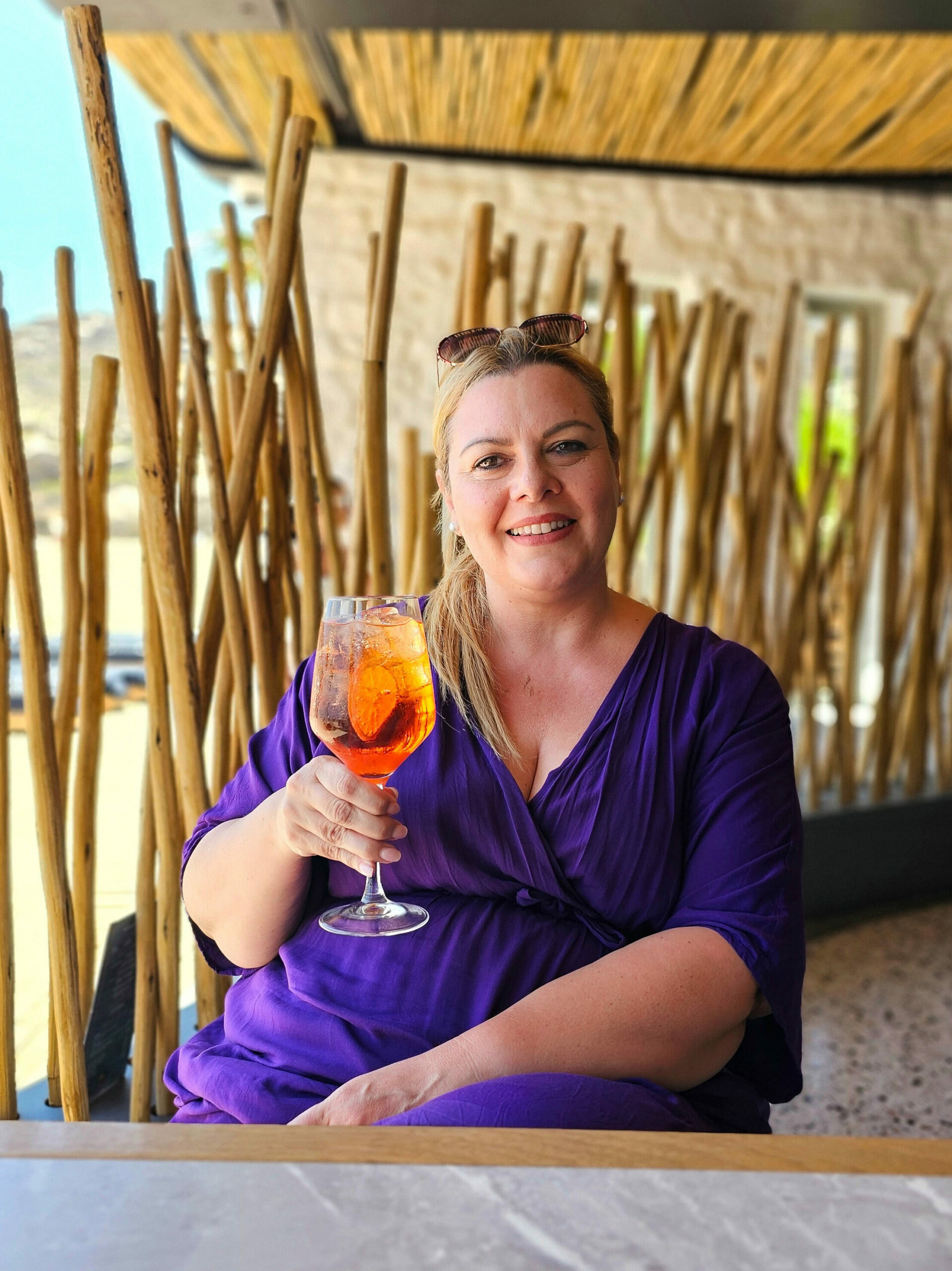
Stella is Greek, born and raised in Athens, and has been working as a Cruise Coordinator for almost 8 years in the Greek Islands, Cabo Verde, Senegal, the Canary Islands, Turkey, the Balkans and hopefully soon, in Tahiti. Prior to becoming a cruise coordinator, Stella was a travel writer, a wedding planner and an event manager.
Stella is also part of the SFT team and does logistics behind the scenes work for several tours.
During our cruises, she takes care of all the excursions, activities and entertainment on board and will make sure everything runs smoothly and everyone is having a good time with her friendliness and sense of humor.
You never have to remember anything because Stella will be there to remind you of everything. Her knowledge of the best places to eat, drink and have fun on the islands is unparalleled.
What she loves most about being a guide is the ability to travel and interact with different people from different places. She feels rich in experiences and happy with the knowledge she has acquired and the people she has met.
Brought to you by…
The Solo Female Travelers Podcast is sponsored by Solo Female Travelers Tours, our small, luxury, women-only tours that support female owned businesses around the world. Join us on a trip of a lifetime that helps make the travel industry more equitable.









Transcript:
Mar: Welcome to the Solo Female Travelers podcast. Today’s episode is about the Greek islands that Greek people vacation at and the alternatives to famous destinations like Santorini or Mykonos. We want to talk about how you can have a beautiful trip without contributing to mismanaged tourism, crowds, and ultimately a very stressful experience for everyone, especially those who live there. There are over 6,000 islands in Greece, so there is really something for everyone. And who better than today’s guest to talk about it. Stella is the super fun host of our Greek tours and also a member of the solo female travelers operations team.
She knows everything about traveling in Greece, lives in Athens and has been working and living across many of the Greek islands for more than 25 years, be it as a travel agent, as a wedding planner, tour leader or a guide. She has been to Mykonos and Santorini more times than she can remember. She even lived in Santorini as a wedding planner for seven years. So she knows the island very, well and has seen them both evolve dramatically over the years.
Most importantly for us today, Stella has visited most of the inhabited and uninhabited islands in Greece and can speak about the ones that are less famous. Everybody has this abstract idea of Greece, a dreamy, sun-filled destination with whitewashed buildings, blue water and delicious food. And when we asked about islands, Santorini and Mykonos always come to mind. But there is so much more to explore, especially if you don’t care about performative travel or taking pictures for the gram.
Today’s conversation isn’t the typical top five things to do or how to rush through islands the best way. We are getting away from that and talking about the impact mass tourism and cruise ships have on these islands that are often very limited in resources. We are also going to talk about alternative islands that are quieter and less changed by tourism than these, famous ones. But before we jump into that, Stella, could you tell me a little bit more about yourself and how your love affair with Greece and the travel industry began?
Stella: Of course, Greece is by default my favourite place in the world. It’s probably because my first love and my forever love, probably because I’m Greek, so I am completely biased, you should know that in advance.
Just to talk a little bit about myself. I have worked most of my adult life in the travel industry as a senior sales manager in travel agencies. By far the most important job I’ve done was the wedding planning because I like working with brides. I will never call my brides the bride-zillas because they’re my favorite people, you know, when you organize a wedding. These are the people you have to talk to.
I do have interesting stories to share about the families, their mothers, mother-in-laws and very, very interesting things. Mamma Mia Like, yes, exactly. This was a very nice story, the way. By the way, I also have a lot of dramas. I will not reveal the dramas right now. I think you come to agree with me in person.
Mar: Very Mamma Mia-like.
Stella: So this was my favorite job, very interesting because I was organizing weddings, not only in Santorini, when they were not as popular as in Crete, in different islands called Kos, Zante, many more. I cannot even remember right now, about 300 weddings per year. Yes, it’s a lot, I know.
But the happiest and most tiring time of my life. And then was doing operations for many, many years. I was writing traveling articles on behalf of travel agencies that were posted online for people to know what to visit. And I was also doing reviews on the best hotels and restaurants. So I got to experience that first hand, of course without any company at the time, but this is not an issue, you know, they would give me the best sweets with private jacuzzis. So I would have to try all of it. I know it’s very hard. My life is really hard. Yes, yes, I had to try this all by myself. I had to do this all by myself. Exactly. And then I would write reviews.
Mar: Of course, it’s a hard life. Somebody has to do it. All the bubbles and the champagne, the beautiful views and the sunset drinks, all of it.
Stella: And after that, I decided one day I wanted to become a tour director, a tour leader. So I started leading tours, doing the operations at the same time. And then I decided I want to hop on a cruise ship. So I became a cruise director without any experience at all. But now I am experienced.
Mar: So that’s 25 years of leading tours, leading cruise ship tours, guiding guests around the country, not just on the islands, organizing weddings, reviewing hotels, and working for tour companies, organizing logistics of tours. So basically, I think we can call you an expert on Greece, definitely. And you know, before we start on the more fun parts, I wanted this episode to focus a little bit on something that’s controversial and something that’s very obvious when you visit the Cycladic Islands and also other islands, but the Cycladic Islands is where Santorini and Mykonos is for those who are listening and may not know that. And these islands receive a lot of cruise ships. And it is often said that, you know, a cruise ship is a very good way to see these islands. But in a country like Greece, they have quite a big impact since some of these islands are very small, right? So seeing Greece through the cruise ship and from a cruise ship is something that’s often recommended and that lots of people do.
But from your point of view, what do you think the travelers in this case lose or gain from seeing Greece that way?
Stella: Look, there are always drawbacks and there are always, you know, the positive aspects to every issue. Of course, when you hop on a cruise ship, you are able to see many places, visit them, you know, sleep overnight and every day wake up in a different place, which is really nice to get a glimpse of everything. And then you decide which places you like more than then, you definitely have to come back. So you do not, you never get the full idea of the place that you’re visiting if you’re on a cruise ship, you have to wait in, usually you are tendered outside so you have to wait in long lines so you’re losing a lot of time on board or tendering instead of exploring. The meals are offered inside so you do not really have the opportunity to try the local food which is the best thing in Greece. The food is really and it’s excellent for me. Can you confirm Mar please?
Mar: I concur. I mean the food is amazing and every island has its own if you’re eating on a cruise ship you’re eating, you may probably be eating Greek themed food but you’re probably not eating the specialty that grandma cooks in that specific island.
Stella: Yes, and anyway, even if you don’t like the local food, if you go to a country, it’s best to try the local food and then decide on your own if you like it or not so you have your own opinion. But this is the biggest drawback is that you’re spending a lot of time tendering, waiting in lines in the sun, here July and August is really hot, so you will be standing in the sun. The cruise ship people do their best to keep you comfortable, give you water or give you in the shade, but it’s not always possible.
But you only get a glimpse of the places that you’re visiting. You do not have the full experience. For me, this is the biggest drawback. And then again, I don’t want to exclude, I’m not saying this is not a good way of traveling. Sometimes there are travelers that are older that are not very savvy on internet things. They cannot make their bookings online. They want someone else to do it. They have walking issues for example and they type of traveling so I do not want to condemn the cruise ship traveling, but if you want to get the best of every place you’re visiting traveling by cruise ship is not the best way to do it.
Mar: Yeah, and just to clarify, most of the cruise ships, because they are very large and these islands are very small, they have to anchor at sea, which is why they need to tender you. So you can’t just walk on and off the ship whenever you want. The cruise ships have to anchor in the middle of the sea. So you can’t just do it on your own. You need to be taking one of the tenders from the ship that will take you to shore and then back from shore. Of course, you’re talking about thousands of people in islands that are very tiny and have limited resources. So it’s not like you’re going to find hundreds of buses to take you around.
Sometimes people in cruise ships are numbered more than the people that live on these islands. So there’s more cruise ship passengers on a given day than inhabitants in a certain island. Like you say, then they don’t actually eat locally, so they miss out on the chance to try the local food. But on the flip side, of course, it’s a very quick and easy way. You unpack one and you see an island every day. And every day you wake up and you’re in a different place. And it’s a very good whistle stop version of seeing some of the group of islands.
Now I also want to talk about what this means from the point of view of the locals living on those islands because these are eminently tourist destinations but thinking about it from the point of view of the locals in Santorini, Mykonos and in the many other islands, how does that benefit and what’s the impact that the cruise ship has on the locals?
Stella: First of all, what I wanted to say is that I really need to clarify that the locals depend highly on tourism income actually comes from the visitors. So they really enjoy it when there are visitors on the islands. This is how they are able to work. This is where their income comes from. They rely heavily on tourism, which means you will not see, we’ve seen like the last couple of years there was tension in some of the countries. The locals didn’t want visitors because of the Airbnb and different issues. Here in Greece, we really welcome the visitors, although there might be issues, the same issues like with other countries.
We heavily depend on the people that come that visit the islands no matter if they’re from a cruise ship or from somewhere else. The issue with the cruise ships is that they basically do not buy, only go shopping, they buy the tourist things, the restaurants do not get any profit from the visitors that come from the cruise ships because as we said they always have their meals on board.
And although the guests, the visitors are welcome, they do not really spend a lot locally, they do not help the local economy. So the locals do not really, get anything. It’s just specific timings of the day that the islands are really extremely crowded, but these crowds do not help the local economy.
Mar: Right, so they’ll use the streets, they’ll use the resources, they’ll walk the paths and like they may generate trash, but ultimately they go back to the ship to eat or drink. And also very likely they have bought an excursion through the cruise ships. So if they have bought an excursion, then the local economy benefits from the driver or the guide. However, we are talking maybe about one person, one driver for 50 customers and one guide for 50 customers or 50 travelers. And so the impact is minimal.
As opposed to an independent traveler who is not coming on a cruise ship that therefore comes to the island, sleeps on the island, eats on the island every day, shops on the island and also contributes. The cruise ship passengers though also don’t use a lot of resources or do they? Because in the end they’re not using, they use the roads, they use the infrastructure but they’re not consuming water like somebody who stays on the island does.
Stella: Exactly, yes. Of course what we didn’t mention before is when they book, if the people on board do not book a tour, they have to do everything by themselves, okay? So of course the buses and the guides and everything, this helps the local economy. But the people buying the tours on board, they’re always given priority in order to see the island first, so the rest are left behind.
But of course the tours booked through the cruise ships definitely help the local economy, although lower rates are offered because of the number of people. 4,000 people can be inside the cruise ship, every cruise ship, up to 4,000 people, 2,000, 3,000. So this is a big crowd to be walking around and not buying anything, just moving around. Of course there are, they do spend money on using the cable car. They do help somehow. We cannot really say they do not help the economy at all, but it still is a great number of people walking around, not enjoying the local delicacies or local shopping.
Mar: Yeah, and you say the cable car because in Santorini to arrive on the island. Once the tender leaves you, you most likely need to take a cable car to go up or a bus if depending on which port you are left. It’s also I think that when we’re talking about buying tours on board the ships, versus buying or doing it independently or buying a tour locally, the difference is also what is called tourism linkage which means that the cruise company most likely in almost every case in Greece with very few exceptions is an international company.
It’s charging a premium over the cost of the tour and over the payment that they’re making to the local guides and the local tour companies as most companies do, as any tour operator internationally would do. And so the majority of the margin goes back to an international corporation that’s not even Greek. So if you are going on a cruise ship, there’s also a big difference between going on a cruise or on a large boat that is locally owned in Greece where the entirety of your investment stays in Greece somehow, even if not directly on the island versus buying a Carnival cruise or any other large international corporation where the majority of that spent goes back to the headquarters or to an international corporation overseas. That’s also important.
Now that we understand a little bit from the point of view of the user of the traveler, the problem is also that you are suddenly found yourself in the peak summer or it’s not even summer in the peak months, the busy months, May, June, September, July, August, all of these months, there could be more people on cruise ships than there are people on land.
And this is something that people can check online, right? There are websites where you can see the ports of call of every cruise so that if you’re traveling around Greece, can, if you have some flexibility, you can try to avoid going to certain Island when there are more cruiseships because like you said, some cruise ships will have 2-3,000 people, but if there’s five of them, that’s suddenly 10 to 15,000 people. So it’s impossible to avoid the crowds when you are the crowd, because there’s nothing you can do about it. You cannot change your schedule because you depend on the tenders and the schedule that the cruise ship gives you if the cruise arrives at 10 a.m. and departs at five, you will as early as will arrive maybe at 11 if you’re lucky and you will have to be back around four. Later you’ll have to come back. So your day is short and you will be on the island with everybody else arriving that day on those hours. So you’re part of the crowd yourself.
Stella: What we forgot to mention is that since last year all the islands, decided to start charging a fee because of the fact that the cruise ship people do not offer much to the local companies because they don’t contribute much. They have decided to charge a fee per person, which is not something usual for us here. It started last year in the middle of the season.
Mar: Correct. Yeah, they don’t contribute.
Stella: With very popular islands like Santorini and Mykonos, the fee is higher. And in other places, it’s it’s less like five euros, two euros, it depends per person. And you have to pay for this on board. So there is actually a fee paid from the people. And no matter if they’re taking a tour, if they’re doing shopping, in order to visit an island, you have to pay a fee.
Mar: Yeah, and this is similar to the fee that you would pay in hotels in most European destinations and elsewhere, where you’ll pay an overnight fee per day that you stay there. Ships were avoiding that because they’re staying on the ship. And this is a way to compensate for that and make cruise ships pay the same way that other cities or destinations like Barcelona charge cruise ships the same way that they charge hotel stays. So yes, thanks for reminding me of that. This started last year, like you say, and it seems to at least be contributing somehow to the economy beyond whatever spent the tourists may have.
Now, is the case, but these problems are particularly happening in islands that have cruise ships, that are cruise ship ports of call. But not all islands are ports of call. Many islands don’t have the infrastructure or the port space or the tenders to even have cruise ships. And they’re just not as interesting for the cruise companies and therefore are avoided. And this is the places that I wanted you to tell us more about today, because these are islands that will avoid these crowds and where you can have a very different experience.
And some of them are as beautiful, in my opinion, as Santorini or Mykonos, or perhaps even more, they could even be more interesting because they haven’t been changed in any way by tourism and have remained quite as they used to be, as what I imagine Greece may have been when you were a child, right? Like more, less for tourists and more just for the locals.
So today I wanted you to tell me about some of these islands that are also in the same group of islands as Santorini and Mykonos, so they’re also in the Cycladic. So they’ll have a similar architecture that you can now tell me a little bit more about as well. So they look similar in look and feel, of course every island is different, but are good alternatives for those who want a quieter vacation. So tell me what your suggestions are for today.
Stella: Okay, yes, of course when people think of Greece, the first islands that come up of course they are Santorini and Mykonos but you have to visit at least once just to check them off your list, but then the most beautiful places are the ones that are not crowded because then you get to absorb the beauty to see the view, to talk to the locals that sometimes do not even speak English but they always find a way with gestures to let you know what they’re thinking, they will always offer you treats and you know whenever we say you always tell your children not to accept gifts or candy from strangers here in Greece, it’s exactly the opposite. You have to accept the gifts or they’re upset with so take the candy from the strangers here here they mean to be to be friendly and hospitable. Hospitality is a big thing here, and even if they don’t speak English, they will do their best to communicate with you.
One of the best, my favorite islands that are actually close to Santorini, and there is a connection with Santorini, so someone can visit Santorini first and then another place is Folegandros. Folegandros is also a part of our own SFT cruise that we do here in June. It’s a place that doesn’t have a lot of inhabitants. It’s only eight hundred people.
It belongs in the same cluster of islands as you said before called the Cycladic Islands. It’s completely dry, do not expect the green place with many trees but the locals are very friendly. There’s a very small port so cruise ships cannot it there are more than five boats they cannot actually dock at the port. The port is so small that you don’t even realize it.
It’s the main port of the island. The beaches, of course, they’re wonderful. The water is wonderful, but they’re pebbly, so don’t expect the white sand beaches that you will find in the Caribbean Sea. This is not the Caribbean Sea. But the water is absolutely fantastic. There’s only one taxi on the island, so do not rely on the taxi service to take you around. You have to use a car.
If you’re a walker, you will walk a lot. You can always rent a donkey as well. you like donkey rides, you can have your own donkey and go around. donkeys are easier to find than taxis.
Mar: And there’s only one bus, right? Only one bus as well.
Stella: There are a couple of buses that belong to the same person and they have specific schedules. in high season, for example, if you want to go to the capital, the capital, just to give you an idea, is not close to the port. It’s 10 minutes away from the main port of Folegandros and you need a bus or you can walk there. takes about half an hour. It’s really uphill to walk there. yes, and of course there are no lights on the way. It’s not dangerous to walk around.
Mar: Very uphill.
Stella: All the places that we’re suggesting today are not dangerous. You can walk around. not supposed to worry. You know that somebody is going to hurt you or attack you or follow you. But you can walk it’s uphill and there are no lights. So you have to use the lights from your phone. Now we all have our mobiles, you know, and we can use them. Yes, of course.
Mar: Or a torch.
Stella: You have to take the bus, but after 1 a.m., let’s say at high season, July and August, after 1 a.m., there is no bus to take you around. So you still have to walk or find the only taxi driver on the island with his van to take you where you want to go. You can rent a scooter, can rent a car. Of course, this is the best way to do it. Greek driving is another level.
Mar: You can rent a scooter, I suppose.
Stella: Driving, you can only understand what I’m talking about when you’re here. I would call it crazy driving. So you might be surprised. And people also, they’re very expressive. So they might be talking to you cursing, know, through their windows and so this is to be expected. always mean well. People are generally friendly.
Mar: And Foligandros is really, really cute. Like I have to say that before I came to Greece for our scouting the first time, everybody was telling me, Foligandros, the Greek people were telling me Foligandros is so pretty, so beautiful. They were talking about it like it’s some sort of dreamy destination. And I was, I was wondering like, what does this place like, right? And then you get there and it’s so quaint. It’s like everything is so manicured, so well taken care of.
The streets are so clean with the painted stones on the floor, the beautiful pink bouganvillias here and there, and the whitewashed buildings always perfectly kept, the beautiful flowers everywhere. And it’s just so pretty. Every time that we’ve been there, almost every time there has been a wedding on the main square of some foreigner that discovered this place. And this last year in 2025, read about a five-star hotel that has opened there, because I imagined that before that there were more like lower key kind of accommodation options, isn’t it?
Stella: Yes, yes. You can always rent, but there are smaller apartments that you can rent. They never were Airbnb’s, you In the past years, we didn’t have Airbnb here. So the locals would rent the room or their, you know, their house. So you could stay as a local. They still do that, basically. There are not big hotels with big swimming pools. are a few, course, with swimming pools and everything.
But most of them, and what I would also suggest to someone coming by themselves for the first time, to rent a house from a local and stay there, live like a local, walk around the squares, crash the weddings where you are not invited, if they give you drinks to drink them. You will see many people hanging their clothes to dry outside. Who do not have dryers here for our clothes, so we hang them outside to air dry so you will see that. For me it’s not strange but the visitors you know it is something new. The houses are white because they’re whitewashed. In the past they used limestone because they could find it in abundance order to whitewash the houses and that’s why their white to reflect the sun because it’s too hot and also for disinfection the limestone was also used as a form of disinfection that’s why you also see the tree trunks white very often and the blue windows you know we like our windows blue people also like them so now it’s quite a trend, there’s no law obliging you to color your blinds blue you can use other colors as well so if I buy a house in Foligandros I will probably paint my windows red.
Mar: In Folegandros I remember seeing a lot of green and yellow as well. There was more diversity on the window blinds and the window frames.
Stella: Yes, yes, there are many. And also the domes of the churches which are blue, there are many that are blue in Santorini. In other islands you can see in Tinos my favorite dome is golden, Mykonos there is a red dome. There’s no law, you’re not obliging anyone to paint everything blue or white.
Mar: A red one. Yeah and in the main church in middle of town in Folegandros it’s actually white. The roof of the the dome of the church is white.
Stella: Yes, this is also very, very common.
Mar: And you know, if you want to live like a local, it’s important to tell people that that means getting up late and you know, the shops don’t open until what, like noon or what time would the shops open?
Stella: The shops open around 10 o’clock in the morning. Then usually they close in the middle of the day. This is for Folegandros. In places like Santorini and Mykonos they do not close. In high season the shops do not close in the middle of the day. But the usual timings for shops to be open is until 2, pm they close at 2.30 pm and then they open again at 5 or 5.30 or even after 6 because during the summer it’s really hot and people don’t really need their siesta, they can have a siesta. They usually go, they have lunch in the middle of the day, they have a little swim and then they return at the shops that stay open until very late at night, so after midnight. And this is the reason why they open a bit in the morning to accommodate everyone. And the capital is also crowded during the night, so it’s mostly empty in the morning because people go swimming, of course.
And then all the cute little bars, people that want to have drink or to have dinner, they go to the capital after six, after sunset. Sometimes it’s in August, for example, it’s daytime until nine p.m. If you want to eat like a Greek, you have to eat after nine p.m., 10 p.m. So the restaurants are open and the kitchens are open until 1 am in the morning, 2 am, then you can have your drinks until early morning, even 5 am in the morning. You can stay out, walk around safely, have your drinks and live like a a change. If you want make a reservation for dinner, if you go at 6 or 7, no one will be there, find a table that’s available for you.
Mar: Fantastic. So that’s for Folegandros. Now tell me what other island is nearby that is a good alternative or addition to Mykonosos Santorini.
Stella: I also have two favorite islands that are close by and they are also connected with Santorini, Sifnos and Milos I’m going to talk about, let’s talk about Sifnos first. Sifnos is famous for the ceramics. You arrive at the port, the port is really small, there are no cruise ships there usually. Port is not that big, there are ferry connections from other places and from Athens as well.
And from there you have to take a bus. There is a local bus. There are buses that belong to private companies that do some kind of transfer. So this is quite useful because you don’t definitely need to rent a car there. But again, the best way to see everything is renting a car or a scooter. And you know, it’s not very well lit at night.
But it’s the same like in Polygondros, you have to be careful, but you’re absolutely safe. The capital again is not close to the water. In the Cycladic Islands, the capitals were built in the past in places that were far away from the sea for protection because they used to have invasions from pirates. So in order to avoid the pirates, they would build the capitals at the highest of the island. The same goes for Sifnos as well. The capital is of course very picturesque with little shops, again white buildings, not similar to Foligandros exactly, so it has quite a different feel, it also comes alive at night. There’s an archaeological site, Venetian castle that is really nice to walk around.
When I say castle, please do not expect Disney castles or Scottish castles. Yes, Cinderella’s Prince Castle. But they’re very beautiful, Venetian remains of castles with walls, they’re fortified villages let’s say. Where you are with multiple doors, you can enter, you can take really beautiful pictures. Everything is white walls.
Mar: It’s not like the French castles.
Stella: The beaches are quite sandy. In the Sifnos you can find mostly sandy beaches, but there are also places where if you like snorkeling, for example, there are places with rocks where you can snorkel. And I love this island because it has many different villages with a different feel. Some are flatter, some have many steps. And if you’re a hiker, amazing hiking routes for hikers, Sifnos is amazing the best part is that it’s one of the most famous islands that have to do with our culinary tradition so they celebrate every September they have like a food festival and people groups from different Cycladic islands they go to a specific village called Artemonas.
They set up their kiosks there and they offer local products from their islands. There is local dancing with local costumes. It’s like a huge party that has to do with food. So if you like food and wine, they will wine you. This always takes place two, three days in September.
Mar: So you can have a little gastronomic tour of the Cycladic Islands just by staying in Sifnos.
Stella: Exactly, exactly, this is amazing. This is a beautiful island. It’s completely different. It’s what you expect of a Greek island, what you have in your mind as a Greek island.
Mar: Okay, and the ceramics, what kind of ceramics is it?
Stella: So about the ceramics, the ceramics are very famous, they use them there as decoration. They used to have in the past the men of the island, they used to stay in one specific place and they would do their ceramics and then they would sell them, they would use this as you know their main profession but now you will see them as decorations on all over the island on top of houses for example as use for lamps, souvenirs, cups that you can buy the best thing you can buy.
Mar: Like a vase for flowers?
Stella: Well but the pot yes for sure but the pots are very very famous they are pots that you can put inside the wood oven as well and cook cook and the food becomes fantastic in this pot so cups pots things for decoration and you will see them on the houses too so they’re everywhere everywhere.
Mar: So this is Sifnos How far is it from Santorini on a ferry?
Stella: Sifnos from Santorini depends on the ferries. There are different ferries that connect the islands. They differ in prices; the slowest ones are the less expensive ones. The fastest ones are the most expensive ones. But the prices are not very expensive.
From Santorini it’s about three to six hours. If you take the fast ferry it’s three hours. If you take the slow one it’s six hours I suggest. The prices range from 70 to 90 euros per person, which is not low price for Greek standards, it’s not very low. At least you do have the connection. You don’t have to go through Athens in order to visit another place.
Mar: Right, so this is Sifnos we talked about Folegandros what is the third one?
Stella: The third one is Milos, which is very close to Sifnos and there’s also a connection, so usually people combine them. It’s beautiful, it’s quite different because it’s a volcanic means that the roads all around are more white, full of limestone as well. But there is a lunar landscape that you can find at different places. So there is specific very famous beach that you might find on the internet it’s called Sarakiniko and it’s really like you’re walking on the moon it’s completely white with different strange rock formations you can also have a swim there it’s usually crowded it’s very popular. The food again they do have local dishes that are very tasty.
They make watermelon pie with sesame. Yes, it’s strange I know, but they’re very tasty if you like watermelon and sesame.
Mar: This sounds like the kind of suite you would take from a stranger or I would take from a stranger.
Stella: They a local old lady would definitely operate the room while you’re there.
Small picturesque alleys. They have a sand museum with the types of sand from all over the world. The local sand is magnetic. So if you go to the sand museum, there’s a person there that’s going to show you how it works as a magnet, the local sand from a specific beach. This is something strange as well. What else can I say about Milos There are connections with other islands. The best thing to do when you’re in Milos is to take a little boat and go around the island and swim everywhere, swimming off the boat in different places. There are caves, can enter the caves swimming. This is something wonderful to do. And this is a place that also is preferred by families, couples, travelers. It’s a beautiful place to visit, very beautiful.
Mar: So then how long would you say it makes sense to stay in each of these three islands? Because they’re very small, right? We’re talking about 800 inhabitants in Folegandros. Sifnos and Milos, if I’m not mistaken, have 4,000-5,000 inhabitants each.
Stella: Yes. 3,500 in Sifnos and around 5,500 in Milos. This is in winter.
You need at least two or three days to explore everything. I would say three basically to enjoy, to go swimming everywhere, to try the food, to walk around, visit the capital of course and the separate villages. I think three days are more than enough to enjoy everything.
If you don’t have three days, like two days would be enough. But one day is not really worth visiting for only for one day, because again, you get the cruise ship feel.
Mar: You’re like taking boxes and rushing around, just taking photos of places not really enjoy. And these are places that are good to enjoy to just sit on the square. People watch, chat to people, have some food. Like the life is a little bit slower on these islands than it is in Mykonos and Santorini, where there’s always people rushing, taking people up and down, driving. There’s time, there’s schedules and deadlines to be met from cruise ships and things like that. So it feels like there’s always somebody rushing somewhere in Santorini and Mykonos.
Whereas when you step in Folegandros it feels like just time goes slower there. Things people aren’t rushed They don’t have places to be really quickly. Maybe they open at five, maybe they open at five 30, maybe they open at six. Things a little bit more relaxed.
Stella: Yes, and you also have to come here with an open mind, not to throw away your watches and not to pay attention to time this much. You know, when they say they’re going to open at five and then they open at six, you shouldn’t be upset. You should come with an open mind here. Do not be extremely punctual.
Mar: Right, so this would be a great way to spend 10 days, right? You start in Athens, you spend a couple of days in Athens, there’s a lot of archaeological sites to visit and culture and food and like lots of different things to see in Athens, and then you fly over to these three islands don’t have airports, so your nearest airport would be Santorini, I guess.
Stella: Milos does have an airport actually, it has a more domestic airport. So you can fly to Milos if you want and then connect with the rest of the islands by ferry. Santorini has an international airport so you can also fly from abroad. You don’t even have to pass by Athens in different countries. So from the UK, for example, they have direct flights. It depends every year, it depends on the companies. The airlines basically.
Mykonos also has an international airport so you don’t have to fly through Athens and the rest that don’t have airports you can fly to the closest island and then take the ferry or if you want to do it like Greek you just fly in Athens and then you ferry hop everywhere.
Mar: There are overnight fairies that you can sleep on.
Stella: There are overnight ferries if you’re really far away or if you decide to take the slowest ferry and pay you can book a cabin, a cabin that you can share with other people that you don’t know. Usually they divide them in women’s cabins and men’s cabins, so you can book a bed or you can book a whole cabin to yourself or if you’re two people you can book a double cabin but there are cabins that you can with bathroom showers, they’re very organized. There are restaurants inside the ferries that travel at night. So this is a very good option.
You can also, if you have your own car, you can also travel by car. The ferries, usually some of them, not all of them, you can have your car with you. So if you’re traveling by car, your own car, mean, if you rent a car, usually rent a car to not allow taking the rented car with you on a ferry because there are accidents happening inside the ferries that they don’t want to cover it, know, insurance wise I mean.
Mar: So then you can also take a ferry from Athens all the way to Santorini or to Milos, right, or to Folegandros or all the others.
Stella: Of course, you can take a ferry from Athens to Santorini or in Mykonos and then connect with the other islands by ferry. Or you can take your private yacht and they can take you everywhere.
Mar: If you have your private yacht, then all problems solved. You can stay as long as you like. You don’t have, you can avoid the ferries. You can avoid the cruise ships. little bit like what we do on our trip. We do visit Santorini. We do visit Mykonos. We try to avoid the crowds as best as we can. We try to go to the other ports. We try to arrive before them, before the crowds. We stay overnight. Therefore we have a bit more time in Mykonos especially. So we do try to avoid the crowds a little bit as best as we can and I can imagine that if you’re on your own super yacht then you can absolutely avoid the crowds. So that’s another alternative that we didn’t consider.
We’ve talked about smaller islands but let’s say that somebody doesn’t want to island hop and just wants to go to one island and stay there. What island would you recommend that has a bit of everything?
Stella: My own favorite is Crete. It’s a very big island with four different prefectures and you can also visit in different seasons, not only in the summer. So if you wanted to do winter vacations in Greece, if you visit Crete, this is the best place to be basically. You can go there. There are several airports, but you can fly from Athens or you can take the overnight ferry because it takes a long time. Crete is at the southernmost part of Greece and Europe as well. Very close to Africa. You can see the Libyan sea is right underneath in the south is Libya, the Libyan sea. So it’s quite warmer because it’s in the south and so close to Africa. The climate is really good.
Mar: Is very close to Africa.
Stella: But it’s also really good, when I say really good, I mean it’s quite warm and you can swim many months, until from early March until the end of November even. So the water is quite warm. But even if you don’t like swimming, you can visit the archaeological sites, the museum, Knossos Palace is over there, which is very famous with the Minotaur.
The history is very interesting, the mythology around Crete, the archaeological museum in Heraklion, there are several museums one can visit in archaeological sites. The shopping is really good. There are four different places. The island is very big. First of all, population is 630,000 people.
Mar: How big is the island? It’s quite large.
Stella: Most crowded one of course is Heraklion, which is the capital. And if you start from the, you have to imagine that it’s a long island like this. And if you start from the east, the first prefecture is Lasithi and then moving towards the west, the capital is called Heraklion. It’s the most busy one. There are also many students around because there are universities.
Quite young crowds, many bars, many restaurants that stay, open until late, clubbing as well for those that are interested apart from the archaeological sites and everything else. And then the most popular prefectures are after Heraklion moving towards the west again, is Rethymno which is the center, the central area and Chania which is in the west. So these are the most popular ones.
Venetian ports, really nice shopping areas and apart from the if we want to talk about swimming a little bit Crete can offer white sand beaches, white sand that sometimes in some places is quite pink so not exactly white but pinkish let’s say or white mixed with broken seashells, really exotic like you’re in the Maldives, and then really high mountains with the snow during the winter. So the diversity is huge. The people are very friendly. They will be really upset if you don’t drink the drinks. They have a very nice alcohol drink there called Raki, which they offer.
Mar: Like in the Balkan countries.
Stella: Yes, exactly. They offer it to you, they make it there, so if you’re lucky to see how they make it in, this happens in winter usually, they will offer it to you and they will be upset if you don’t drink it. It doesn’t give you a headache the next day, but you might not remember everything the next food is fantastic, the dances, the local dances are wonderful, they’re different than the ones in the other islands. Of course every island, every location has its own dances linked to their local traditions. But Crete is a really unique place mostly because of its diversity. So the white sand beaches even with palm trees, the high mountains with snow, the friendly locals, the archaeological sites are amazing.
People when they’re really interested, they just go there to visit the archaeological sites. There are many, many things to do. You need at least one week in the car to see everything. Although there are the bus schedules and they’re very punctual. There are many, they’re very reliable, so you can rely on public transportation as well, book tours through local travel agencies.
Mar: So lots to see in Crete. And I know you love the island because you also lived there for a while, isn’t it?
Stella: Yes. I’ve lived there for one whole year, organizing weddings and showing people around. So yes, I really loved it. I loved it from before though. I really love Crete.
Mar: Great. So we’ve talked about the cruise ship situation. We’ve talked about three islands that are near Santorini, but that are good alternatives because not so many cruise ships, much more, let’s say the type of lifestyle that Greece may have in the places where tourists haven’t really changed the way of living. I wanted to finish with one question for you. What do you wish, we’ve talked about the traffic, we’ve talked about the punctuality, but what are some other expectations that you wish people would let go of before arriving in Greece?
Stella: I want people to come with an open mind and I want them to start visiting Greece even if not in the summer. I want them to see Greece as not only a summer destination. I think it’s wonderful to be here around Christmas time. We don’t have the Christmas markets other places have, but we offer concerts on every corner of the centre of Athens. Our nightlife is amazing. It’s a safe place.
And this is what I want people to see. I want them to see Greece in other seasons apart from the summer.
Mar: Yeah, also the summer is quite hot and it can be quite windy in some of the Cycladic Islands as well. I think this is something that people don’t think about. They think it’s going to be hot, it’s going to be crowded, but they don’t realize that it can also be very windy. So if you’re relying on ferries, that means that your ferry schedule may be changed or altered or, the ferries may be cancelled if the wind is bad. Also, if you’re on a cruise ship, the cruise ships maybe changing their stops if it’s very windy and in July I know it can be very windy.
Stella: Yes, this is very usual around July and August. are the most windy months. We do have specific types of winds coming from the north. They’re called the meltemi and these make everything more pleasant in terms of temperature, because it’s not when it’s 40 degrees and there’s a breeze, this is much better. You know that not having wind at all.
But if you’re on a boat or if you have a firm schedule where you want to go and everything this might change your plans that’s what I mean when I say come with an open mind if it’s windy your cruise ship will change the itinerary the ferry might be scheduled so you might you know lose something or you might reschedule you might have to reschedule so you really have to come with an open mind.
Mar: Yeah, very good. Well, thank you so much, Stella for sharing all of your knowledge and experience with us. At some point when we see each other next, you’re going to have to tell me all of the bride-zilla stories. And I know that many of the couples that you married have continued to come back to Greece and reached out to you and that you’ve met some of them. They’ve even told you when they got divorced, I think some of them as well, of course.
Stella: They do, this is the truth. They inform me, they send me photos of their children, they inform me when they get divorced then they also send me photos of their new partners. So I’m very proud of the relationships I’ve built with the couples, separately, the bride and groom, mostly the bride send me messages and I love them all.
Mar: I have to say that we’re really lucky to have you as a host of our Greek tour. You’ve already hosted six trips with us in Greece and this year there will be another one. Unfortunately it’s going to be the last one at least for now that we will be hosting in Greece. Next year we won’t be returning to the islands for a sailing but hopefully we can come back in the for those of you who are looking for a sailing adventure, we are hosting our 10-year anniversary island hopping trip on board the luxury super yacht in the Caribbean next February. This will be the entire SFT team will be there. So it’s a chance for you to meet us. This is a super yacht. So everything will be fantastic, unlimited food and drinks, gourmet food. And it will be an even more amazing experience. You can go check on our website, the trip. It’s a Caribbean sailing trip and you can see it on our website and come and meet us. I would love to see you in person. Thanks so much, Stella for chatting with me today.
Stella: Thank you, the pleasure is all mine.
–
And it’s time for this week’s embarrassing travel story. We’ll call it nothing to see here.
This one is from Anonymous and here’s her story. I went on a solo trip as a single mother and my parents were watching my son. I hid two things, my sex toys and my Red Bull. My sex toys because my father didn’t need to find those, and my Red Bull because I commonly received lectures from my mother about how people have heart attacks from drinking it. I live in a tropical location, so I put my sex toys in a box at the top of my cupboard underneath scarves and gloves.
Apparently, like father like daughter, we think in the same way. I got back from my trip and my mother pulled me aside. My father has a highly classified job, so hides his laptop when they leave the house. And I guess he thought the best hiding place for it would be in the same box at the top of my cupboard.
He apparently found the sex toys, asked my mother what they were, and she told him they were massagers. When I took my next solo trip, I simply kept them in the same drawer they’re always kept in. Threw a face washing towel over them and then added a note which said nothing to see here. Thank you so much for sharing your story with us. If you have an embarrassing travel story of your own, we’d love to hear it. You can submit it on our website at www.solofemaletravelers.club.