
In this episode of the Solo Female Travelers Podcast, Anastasia is joined by Kathleen Wong, USA Today travel reporter and author of The Conscious Traveler Hawaii: The Definitive Guide to Ethical Travel, to explore what it really means to visit Hawaii responsibly.
From understanding Native Hawaiian culture and history to supporting locally owned businesses, Kathleen shares practical ways travelers can experience the islands while respecting the communities that call them home. They discuss the meaning of aloha, the importance of caring for the land, and how tourism impacts Hawaii’s environment, economy, and residents.
The conversation also explores ethical cultural experiences, community-led tourism, and how visitors can make thoughtful decisions when traveling to areas recovering from natural disasters. Whether you’re planning your first trip to Hawaii or returning to your favorite island, this episode offers a fresh perspective on traveling with greater awareness and intention.
Plus, in our Weekly Travel Tip segment, Anastasia breaks down how free walking tours really work, why guides often pay to host them, and how to decide what to tip.
Links mentioned on this episode:
Connect with Solo Female Travelers:
- Book a tour
- Subscribe to our newsletter
- Subscribe on Substack
- Connect on Instagram
- View on YouTube
- Join our Facebook community
- Follow us on Facebook
About Kathleen:
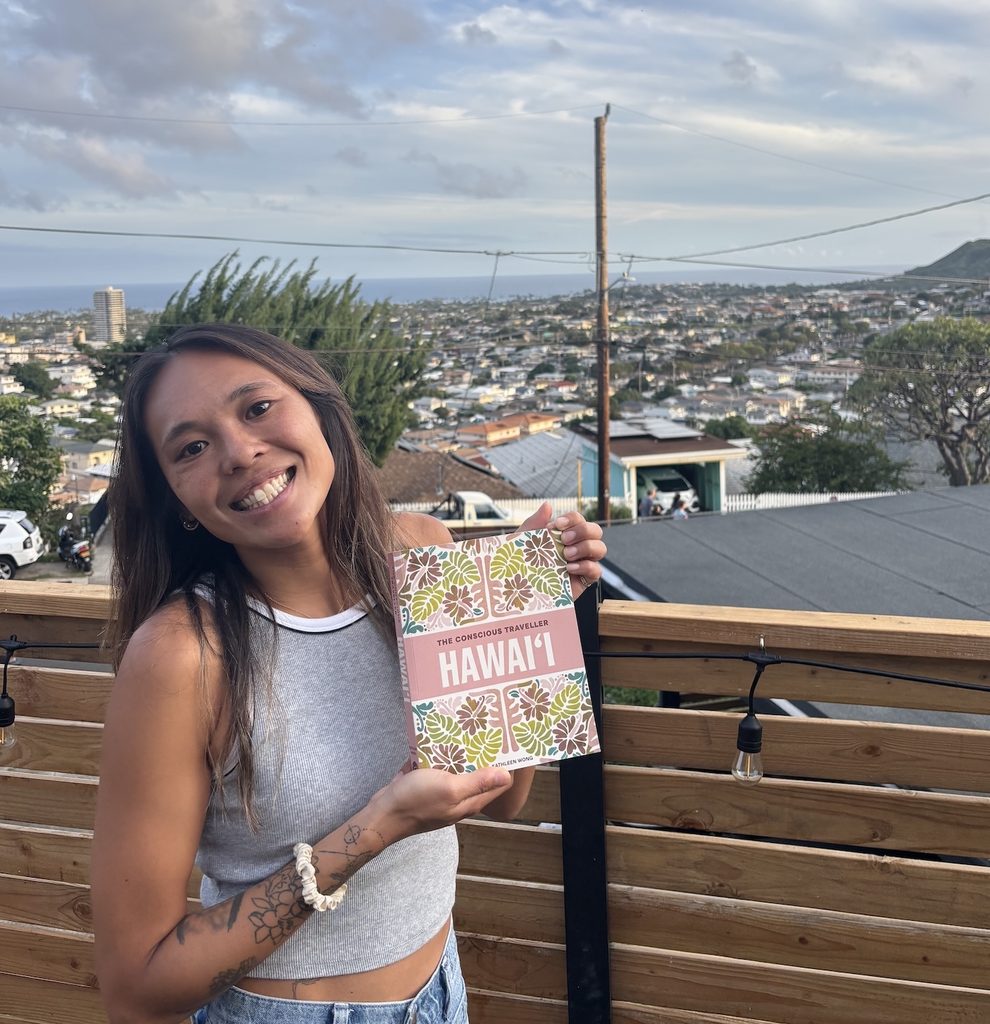
Based in Honolulu, Kathleen is currently a Consumer Travel Reporter at USA TODAY, where she covers travel news as well as anything Hawaii-related.
She is passionate about sustainable tourism especially at home. As a freelancer, Kathleen has written for publications such as the New York Times, National Geographic, Vice, Travel + Leisure and more.
In April, her responsible travel guidebook, “The Conscious Traveller Hawaiʻi: The Definitive Guide to Ethical Travel,” was published by Hardie Grant Books.
Brought to you by…
The Solo Female Travelers Podcast is sponsored by Solo Female Travelers Tours, our small, luxury, women-only tours that support female owned businesses around the world. Join us on a trip of a lifetime that helps make the travel industry more equitable.











Transcript:
Anastasia: Hello everyone, I’m Anastasia Novosyolova, one of the hosts of the Solo Female Travelers Podcast. Welcome to the show. Hawaii is one of those places people fall in love with very easily. For many, it’s somewhere they return to again and again, a trip you still talk about years later or a place you’ve always dreamed of visiting. I understand that attachment very well. I lived in Oʻahu for around seven years because of my military service. Two of my children were born there, and some of my family’s most meaningful memories are tied to the islands. I also know that my experience was that of a guest and a military family. Our guest today is Kathleen Wong, a consumer travel reporter at USA Today, who was raised in Oʻahu and lives in Honolulu.
She’s also the author of the recently published book, The Conscious Traveler Hawaii: The Definitive Guide to Ethical Travel. Kathleen said, My main goal is to educate some people who want to be a better traveler, want to do more good than cause harm. Today we’re going to chat about exactly that, how to visit the Hawaiian Islands in a more sustainable and thoughtful way. We’ll chat a bit about the book and learn a bit about the history and culture that makes Hawaii so special. We’ll also touch on some harder questions surrounding visiting parts of the islands still recovering from natural disasters and the risks mass tourism can bring. All right, Kathleen, welcome to the Solo Female Travelers podcast.
Can you introduce yourself in your own words a little bit and tell us what made you want to write The Conscious Traveler Hawaii?
Kathleen: Hi, yeah, thank you so much for having me. Your intro was great. I wasn’t born in Hawaii, but we moved here. My family moved here when I was a kid, so middle school and high school. And then I moved back after college. So most of my life here, I studied journalism and I’m a writer. And like you said, I’m a travel reporter for USA Today, and just growing up in Hawaii kind of gave me an interesting perspective on tourism of really wanting to highlight responsible tourism, thinking about the community that you’re visiting. And that just kind of kept rolling until Hardie Grant reached out about writing a travel guidebook to Hawaii, but it was going to be through an ethical lens.
And that just was right up my alley and felt like a lot of the reporting I was doing already. And so we kind of worked on this book of the four main Hawaiian islands and how people can kind of navigate being a better tourist ’cause it can be overwhelming and think you have to get it perfect but you don’t and so hopefully this is just a practical, helpful guide.
Anastasia: Yeah, for sure. So, anybody can visit the islands and have completely different trips. That you can say that for most places, but how did you decide how to organize your book? How’s it organized? Does it talk about places for people to visit if they want an active vacation or if they want to just slow down and relax?
Kathleen: Yeah, there’s such a range of trips you can have here. It’s definitely not just lying on the beach. It was a big question for me of how to organize things. And it ended up being by activity. So there’s like hikes, obviously beaches, but there’s, you know, places of culture, cultural significance that you can visit and that’ll be maybe like ʻIolani Palace or something like that. So there’s definitely a lot of things to do that aren’t super active and adventurous. So there’s farm tours, farmers markets if you’re into the ocean, there’s whale watching, snorkeling places to do that. So yeah, definitely kind of by activity. And then I tried to offer options on each island within that.
Anastasia: Yeah, that’s basically my next question. Cause when people ask me, you know, they’re like, you know the islands, we want to go to Hawaii, which island should I visit? And I’m like, Okay, well, which one are you considering and why? Because the islands are pretty different, you know? And how do you help a first time visitor decide which island is the best fit? Is that something you also talk about in the book a little bit?
Kathleen: Yeah, that is like one of the most asked questions and it does feel like a loaded question if you know the islands because it’s so hard to pick. Yeah, definitely I do provide a breakdown of each island and kind of what to expect, the vibe. I think my biggest advice for travelers is to kind of jot down like your dream trip. What do you want to do if you want to experience the beach, you know. Hawaii Island has a ton of adventure, but not a ton of white sandy beaches. So you might want to go to Maui. So I would say, yeah, kind of start with what you wanna do and then you can kind of research from there which island would be the best fit.
Anastasia: Yeah, even Hawaii Island specifically. I remember visiting for the first time and we wanted to go to the volcanoes, of course. But it was like staying on Hilo and staying on Kona side are completely different experiences. I mean, you couldn’t be more different, to be honest. I don’t know if it’s probably even more highlighted now as the years go by, ’cause Hilo is just so lovely and charming and small and the farmers market and all this stuff was just lovely. Not that Kona isn’t, but you know, Kona is bigger, like, whoa.
Kathleen: Yeah, definitely more developed. It’s so different. And Hilo just gets a ton of rain and Kona’s so sunny, like they couldn’t be more opposite.
Anastasia: Yeah. So now you said you weren’t born in Hawaii, but what do you think is one mistake that visitors make using the words Hawaiian local or kamaʻāina and resident? Now, people kind of just get confused and think it’s maybe they all mean the same thing. Can you just talk a little bit about the difference? And what do you call yourself?
Kathleen: Yeah, definitely. Yeah, I think some people may kind of think it’s like Californian, you know, it’s someone from California, so Hawaiian’s from Hawaii, but yeah, very different. Hawaiian is basically reserved for someone of, you know, native Hawaiian descent. So I would never call myself that. And yeah, kind of even there’s so much nuance, I think, like how long does it take to live here before you’re kamaʻāina or a local? Or is it just a state of mind when you adapt to the culture? So I would consider myself kamaʻāina just for how much I love living here and how long it’s been. But even though sometimes I’m like, what am I? But anyway, yeah, I think you know, I mean I’m sure you also feel the same way. It’s
Anastasia: Yeah, I know, I know. Yeah, I really did. Especially because my kids were born there and we lived there for so long, you know, they went to school there, we were part of the community. It’s like, am I, am I not? I don’t know.
Kathleen: Yeah, it is very different when you’re here. Yeah, and then I think a resident is someone who does live here. And so yeah, even in my reporting and writing, I would always say like residents or locals or the community just to have that respect for, you know, native Hawaiians.
Anastasia: Yeah, and speaking of language, it’s a powerful way to learn about the culture too. And it tells you a lot about what matters to the community and how they view the world, the interaction between people and their priorities. So most visitors will know some of the familiar Hawaiian words like Aloha, Mahalo, or Ohana, of course, because Lilo and Stitch Family means nobody gets left behind or forgotten. So I always try to learn at least some words in the local language wherever I visit, but it’s a little bit different in Hawaii too, because you know, what is Hawaiian language? Are we talking about pidgin or what is the word, And can you just talk a little bit about the language? And do you talk about that in the book?
I have a billion questions for you, clearly.
Kathleen: Yeah, definitely. Yeah, the Pidgin versus ʻōlelo Hawaiʻi is such an important distinction. Yeah, so Olelo Hawaii is a native Hawaiian language where I think it has thirteen characters. I did weave that throughout the book and I had a native Hawaiian consultant who works in hospitality. She’s super amazing and knowledgeable. Go through the book to make sure everything was appropriate. But I really wanted to educate people on, you know, Hawaiian place names if I could. Yeah, just on values that couldn’t be translated into English. And then yeah, like you said, pidgin is kind you know, built on I guess English and Hawaiian and, the different cultures that have come here, some slang And so that’s always fun to hear when you’re here. And to kind of Google what it
Anastasia: Yeah, you start talking like that without even thinking. You end your sentences with yeah, it’s the intonation too. It’s not even just the language, you know.
Kathleen: Yeah, it’s definitely yeah, the intonation, that’s such a good point.
Anastasia: I was also asking about some of the words. I know you said you intertwined some of them in the book, but can you talk about aloha a little bit and like what does that really mean?
Kathleen: Yeah. So I think a lot of people may believe that Aloha’s like hello and goodbye. But it definitely has a deeper meaning here. In Hawaiian it translates to breath of life. And it was a way they greeted each other by touching foreheads, so very intimate. And now I feel like you’ve heard of aloha spirit. It’s kind of like this intangible way of life here, I think a lot of people embody it’s like being generous and warm and hospitable without expecting anything back. You know, like you go to someone’s house and you always bring food or something like that. It’s this really beautiful warmth that I think a lot of people have here in the community. And a lot of people want to perpetuate that.
So I think tourists should come here and think of Aloha as more than just hello and goodbye and see if they can, embody that as well.
Anastasia: Very well said. Do you think that visitors should try to use Hawaiian words? I think generally when you go to a different place, it’s good to try to use some words. Are there specific ones that you think they should learn beyond and I know Hawaiian is hard to pronounce. You look at the street names and you’re like, you know, what am I supposed to say that? Or like the fish, you know. The Hawaiian state fish is what I’m talking about. Humuhumunukunukuāpuaʻa. You know, p people just cannot do it. So are there any words that you include in the book or that you think people should learn?
Kathleen: Yeah. I guess you don’t have to know the language as well as you need to know, you know, Spanish in Mexico. But I think it definitely gives you a deeper understanding. I would say maybe the most useful ones are well I guess we say mauka, but in researching it was actually mauka and makai, which are directions, you know, that people actually do use. So towards the mountains or towards the water, but yeah, you know that.
Anastasia: They do. If you ask for directions, people will say that and you’re like if you don’t know, you’re like, What?
Kathleen: Yeah, that wasn’t helpful. In the book I do mention some terms. I think maybe one thing that could help tourists is ahupuaʻa. And you’ll see them on signs actually. But it was like the way land was divided in ancient Hawaii and it was, their self sustaining communities. And, you know, I think that just is a really nice way if you’re exploring the island to imagine in your head yeah, this was part of this ahupuaʻa and just how it was way back in the day.
Anastasia: Yes, that’s great. One more language question because I love languages. Can you talk a little bit o about mālama ʻāina and the bigger meaning behind that?
Kathleen: Yeah, mālama ʻāina, you’ll definitely hear it on your visit here. I’m sure you heard it all the time, living here. And it basically means taking care of the land. And it’s also a way of life here. The idea being like if you take care of the land, it will take care of you. So I think in ancient times it was, you know, providing sustenance. But in modern times, I think maybe it’s not as direct as getting fish. But maybe it is. But I think it’s to take care of the land and respect, you know, the ocean and mother nature and wildlife so that it can continue to thrive, so we can continue to be here. Like it’s all connected. And for tourists, I think it’s to not forget that when you’re visiting here.
It’s not just a paradise or a playground, but to, you know, do your best to take care of the land and, you know, not leave a footprint so other people can enjoy it too.
Anastasia: Right. I think sometimes people forget and it’s a good thing for me too to think of this when I travel as well. But this is someone’s home. People live here. This is not just a destination. It’s not just a place where you come and do whatever you want and then leave, So anyway, speaking of that, it’s also good to learn a bit about the culture and history of a place. So many visitors think that Hawaii is just another US state and arrive knowing very little about the Hawaiian kingdom and the eighteen ninety three overthrow. Of the Queen Liliʻuokalani or about the native Hawaiian opposition to annexation. So that history really still shapes conversations about land sovereignty and the way locals feel about tourism.
What part of Hawaii history should every visitor understand before arriving?
Kathleen: Yeah, I think you kinda just nailed it with the overthrow. I feel like that’s one of the most pivotal moments in Hawaiian history that changed the course forever. And so I feel like visitors should definitely know that before coming here. In this kind of anecdote, I had a friend who came here with his family. They’re from the San Francisco Bay Area, and his brother had seen, now, a bunch of pickup trucks with like the Hawaiian flag, not the state flag, but the sovereignty flag on trucks and they were just so confused. And I’m sure you’ve seen that here too. A lot of people today like to oppose statehood. They support Hawaiian sovereignty.
And so I think when you kind of learn more about what happened, you’ll have kind of more respect and understanding when you see that’s there’s still impacts of that today with some people in the community. So yeah, just a very important and sad history.
Anastasia: definitely. Is there a good resource that you recommend? And also which places on the islands are a good place to visit and maybe understand or see it a little bit? It helps when you can not just imagine or read about it, but see some of these places too.
Kathleen: Yeah, definitely. I do list some books to read in my book, but I think maybe the best one is the Queen Story, which was written by Liliuokalani herself. Like her actual experience of being imprisoned and the overthrow. So super sad and like to hear it from her own words is just so impactful. And yes, I do list museums to visit on several islands, and I think ʻIolani Palace, obviously the most important site here on Oʻahu, is so important to visit. And you actually get to go into the room where she was imprisoned. It’s so poignant. And yeah, I think like you said, kind of puts the pieces together when you can see what it was like for her.
Anastasia: Yeah, I didn’t even know that she was in prison for like months, almost I don’t know, like a very long time. Yeah. Yeah.
Kathleen: Yeah, I think it was like eight months in just her room. Yeah. It’s crazy.
Anastasia: So let’s talk a little bit about tourism, because we know tourism can do both. It can contribute to the economy. And in Hawaii, I think it’s as much as forty percent, but it also puts pressure on the local community. So when I lived in Hawaii, I heard a lot about people who would grow up in Hawaii, or local, left for school somewhere, oftentimes like the West Coast, and then realized they couldn’t afford to come back for a job or just to live. And the 2020 census found that more native Hawaiians now live there. In the continental United States than in Hawaii itself. Have you seen this as well and what is pushing people who are born and raised in Hawaii away from the islands?
Kathleen: Yeah, I love that you included this question. And that’s such a sobering fact about native Hawaiians, more people living on the mainland where they’re from. And yes, definitely among my peers, myself, like housing is so expensive and groceries are so expensive. It’s, you know, the price of paradise, but yeah to have such limited land here, everything has to be imported. It’s tough to live here. I think a lot of young people go to college. What is it called? Brain drain, where, you know, they realize they make more on the mainland life. Things that are affordable are easier. And it’s so sad because they don’t come back. And so you lose a lot of people who are deeply rooted here and that definitely changes things.
But yeah, I would just say it’s so important for tourists to know that it’s not that easy for locals to continue living here. There’s so many challenges to affordability.
Anastasia: And then let’s also of course touch on the pandemic because now it basically stopped tourism overnight and the shutdown caused enormous economic pain but residents also saw that islands can look what they look like without traffic and overcrowding and a little bit less pressure on the beaches and trails. So I was looking at this and I saw that Hanauma Bay, which I love Hanauma Bay, who doesn’t? But it saw something like forty percent clearer waters. And more monk seals. I’ve never seen the monk seal at Hanauma Bay because there’s so many people, an increased population of fish and turtles coming back to the reef.
I mean, it’s it’s hard to, hard to see this because it’s and at one end it’s you know not great for the economy, on the other end the land is thriving. So did the tourism industry or the local government make any changes after COVID and or did it just go back to its normal model?
Kathleen: Yeah, that’s also such a good question. It was crazy during COVID, just how quiet everything was. Yeah, and giving nature that chance to like breathe where no one could have anticipated that. And yeah, it kind of speaks to your point of tourism can be helpful economically, but it’s definitely a balance. And I think that some changes were made from my reporting. I Saw that there are a lot more reservation systems. I don’t know if you’ve heard of that, four really popular sites with
Anastasia: Yeah, I haven’t too much, yeah. So I know Hanauma Bay was already on reservation before then, but what are some other ones?
Kathleen: yeah, so Diamond Head, see it, Hāʻena State Park on Kauai. So some of like the major parks. I guess it’s tough to say like how big of an impact that makes, but I think it’s a good start. And yeah, I know that they also implemented a green fee. I think it was last year on tourists that will help fund more sustainability projects. I think that there were some changes. I think there’s a long way to go, but I think that they are starting to really put the regenerative tourism into place, or at least start the ball rolling.
Anastasia: I know I was reading about this, and yeah, the Hawaiian tourism agencies are very focused on regenerative tourism and in doing their best for tourism to have a net positive effect on communities. But at the same time, a lot of US mainland and foreign businesses operate in Hawaii too. So the hotel chains, the restaurant chains, international brands. So a locally owned business, a native Hawaiian owned business, and a mainland company employing local workers can all market themselves as supporting the islands, but the money doesn’t move through the community. Community in the same way depending on who owns the place.
So you have any tips on how a traveler can find out who owns a hotel or a tour or a restaurant or a cultural experience and how to see who’s actually benefiting from money spent.
Kathleen: Yeah, it can be overwhelming. You want your money to do good, but people can take advantage of that concept and confuse people. I would say, in my book, I vetted all the businesses I mentioned, interviewed the owners to, actually get it accurately of who owns the business. So I think resources like that, yeah, taking that extra step of research to call or, read more about the tour company. Yeah, hotels are definitely tricky. There’s really not many locally owned places. There’s a few small, like bed and breakfast, I think, like on Maui and Kauai. Definitely leaning on doing your research and trying your best. You may not get it perfect, but where you know, it’s locally owned, supporting them for sure.
And then if you do get a hotel, I think, asking the front desk or the concierge, what companies or restaurants that they should support those people. If they’re local, you know, they know what’s locally owned and such.
Anastasia: Yeah, I think generally just l talking to people is good. If you can find people who you can tell are local, maybe. It’s probably still remembered like Waikiki, you know, you walk around and every single person has a tourist, I swear. You know, it’s like you gotta go elsewhere, you know, on the island
Kathleen: That’s true. Yes.
Anastasia: to find the locals.
Kathleen: That’s also a good tip. Yeah. Leave the touristy area.
Anastasia: So on that note also, so lūʻaus, for example, generally cultural sensitivity and education is important everywhere we travel to, but it’s definitely very relevant in a community that battles objectification and simplification of its traditions for mass consumption. A lūʻau sometimes may be one of the main ways that a visitor is exposed to Hawaiian culture, but it can also range from a community rooted experience to just entertainment. And designed to keep guests spending at a large resort. So myself, I’ve been to a lot of luau because they visit and they want to do it. And the one everyone’s like, I don’t know if it’s still the same, but it was like Germain’s luau, that was the one that everybody was like, you gotta go to that one.
But like now that I think back, I don’t actually know who ran it. Was it local or not? You know, how can a traveler tell, for example, if a lūʻau is a real Hawaiian cultural experience supporting local performers, or if it’s just a giant chain running this to make money?
Kathleen: Yeah, that one’s definitely tricky, I think, with Lua. They’re definitely geared toward entertainment. It’s hard to really know what’s authentic. I would say if it’s at your hotel, it’s like a big production, it looks very flashy. It may not be the most authentic. I would kind of look into reviews of that. But Yeah, there are definitely some that I really do love. So the old Lahaina Lūʻau has been around forever. They were impacted during the fires, but they’re open again, so definitely support them. I really like the one at the Polynesian Cultural Center. I mention it in my book. It’s about the queen herself, her life story. So it’s very unique and rooted in Hawaiian culture. So there’s really not one like that.
Yeah, kind of breaking away from the big companies and the hotels. So there’s on Hawaii Island this nonprofit called the Men of Paaa. I don’t know if you’ve heard of them, but they help men who were incarcerated reintegrate into society by teaching them skills of luau. So like, you know, cooking and helping them, helping to employ them. They also hold workshops at their property and feasts, and they also help run the Kona Beach Resort Lūʻau. So if you just do some research, you can kind of learn more about who’s behind the luau, what they do in their mission and that can kind of help separate it. But it’s tough.
Anastasia: Yes, It is for sure. But I like that you mentioned the Polynesian Cultural Center. So can we talk for a second about that? And just for someone who’s never been, just explain what that is and what you can learn there?
Kathleen: Yeah, it’s Been around for a long time. It’s on the north shore of Oʻahu, and it’s this huge property. It’s like Disneyland, but of the of Polynesia or in the Pacific. So it basically takes visitors into these like immersive villages, not just of Hawaii, but like I said, the Pacific. So there’s Fiji, Tahiti, and can kind of learn about each culture, how they’re Different, you may think Tahiti Hawaii these beautiful islands to visit. But they have a lot of similarities and differences, and you can kind of learn about that, how you know their history may overlap. It’s a really wonderful experience if you don’t have much experience with island cultures, to kind of learn more about them. And it’s very engaging.
Like you get to partake in cultural activities and hear from people who are from those places, what it’s like to have lived there.
Anastasia: Yeah, it’s just one of those things where people just think hula is the same as this dance, and but people don’t really know hula, Tahitian, the difference between all the dances, too. It’s similar, but it’s not the same. I also let’s pivot a little bit. You talk about volunteering in your book, and that is one way that visitors can kind of integrate with the culture and contribute as well. How can a traveler check that a project that they maybe saw online they want to support is community led and genuinely needs short term volunteers versus sometimes, some places are more like to feel good for yourself, but are they actually helping?
Kathleen: Yeah, I think.
Anastasia: maybe not.
Kathleen: Yeah, definitely. I know what you mean. Yeah, I think kind of checking out their social media, their website, their mission, you can kind of learn about the work that they do. Like, do they stay true to native Hawaiian values? Like are they stewarding the land, helping the community, kind of vetting them to make sure, what their work is and how impactful it is. And then as far as are you actually helping them, definitely reach out. A lot of the organizations I mention in my book, they do say that they have limited staff. So any hands, really does help. And lot of them have community work days where the public is invited to join, help, shepherd projects or they have schools come.
And so I think that’s one way if schools are going, like, you know, it definitely is a really good organization for the community.
Anastasia: so of course buy the book guys. But is there any specific ones that you can recommend on here? Like any projects that are your favorite specifically?
Kathleen: Yeah, I would say I think if you love the beach, a really good organization is the Surfrider Foundation. They’re across multiple islands. You can help with their cleanups and it’s super easy to join low commitment, but you’re doing something that’s really nice. And then I also recommend people I have a couple of organizations where you can volunteer in a loʻi, which is the taro patch. And you can just learn more about, the Hawaiian culture and history of this plant, which is so important and just it’s so hands-on and there’s really no experience like it.
Anastasia: I feel like I don’t know enough about taro myself. I know I mentioned that I spent a lot of time Oʻahu specifically. But it’s also interesting because for our team, solo female travelers, the three hosts, two of us got married in Hawaii. The third one is single, but me you know, I never know, maybe she’ll get married there too. I got married at Ubutan. Garden along the Hana Highway in Maui. We also, spent time afterwards there and we went to Haleakalā, of course, to watch the sunrise. These are all important memories for me. But all of this takes place in places where residents and natural resources absorb the effects of heavy visitation.
Maui specifically, Maui’s current destination plan calls for community led management along the Hana Highway. Don’t even know how much has changed since I’ve been there because it’s been a long time. But if I were planning those experiences and that trip today along the highway with all the waterfalls and all the places, what should I do differently before I go and while I’m there as well? What can I do?
Kathleen: Yeah, that’s such a good question. And I think, that two of you got married here in Hawaii speaks to how special and beautiful this place is. And I wouldn’t want people to give up those memories or dream trips. But I think kind of just taking that extra time to research and think about your impact is important. So yeah, you mentioned the Hana Highway. And it is such a beautiful experience. But a lot of the issue, the issue is that tourists drive it’s dangerous. They are not very considerate with stopping. They just stop wherever to take photos. And that upsets a lot of people. So I do mention like a company, a locally a native Hawaiian tour company, this tour guide is from Hana.
He was, born and raised and now he takes people along Hana Highway. So maybe doing something like that if you really want to do the Hana Highway, looking into like a local guide or company who can kind of not only offer you more, you know, insight and knowledge, but you’ll be doing it in a more responsible way. Instead of just blindly doing it yourself. But there are also some things I think you’ve heard of Stairway to Heaven, this hike that is very popular but has been illegal and it’s now being taken down, but it was disturbing a lot of residents in that neighborhood. People would go in the middle of the night.
So I would say if that is something you wanted to do, but you know it’s illegal and wrong and harmful and there’s no way to really do it appropriately, you should maybe. Not do that. So I think,
Anastasia: Do it.
Kathleen: yeah, using your judgment, seeing how you could do it in a way that’s not harmful is probably the first step.
Anastasia: Yeah, I would assume even some of the waterfalls that I may have gone on off of Hana Highway. I don’t even know if some of were real trails or not. There’s a lot of that in Hawaii in general, where maybe it’s not the best place necessarily to go there’s definitely a lot of research to do, And this makes me also think of I forget what the beach is called, but the beach where all the tourists stopped to see the turtles on Oʻahu on the North Shore, just past Haleʻiwa, know. That beach
Kathleen: yeah.
Anastasia: and I cannot imagine how mean, I know how I felt when I drove that wherever I was going and I would see the people stopping all along the road. It’s not safe. People are crossing. The beach is very small itself if you describe it, you know, it’s tiny. There’s like this much sand. And the turtles are just trying to lay there and relax. And all the tourists are literally on top of them. And it basically it, you know, I can say it made me kind of angry sometimes, you know. And honestly, it’s like you could just go to any beach. You could go to any beach pretty much and go swim, and you will probably see a turtle. Like you truly will.
Kathleen: That’s so true.
Anastasia: Even now I could probably do things differently if I come back again or when I talk about it to people. I try to say, Don’t go here. Don’t do that.
Kathleen: Yeah. That’s kind of a good point though. Maybe, put yourself in the residents’ shoes of what it could be like to see a horde of tourists, blocking traffic.
Anastasia: I know you also mentioned when I asked you what we should talk about, you said we should probably talk about the fires and the north shore flooding and just generally what all these things have been happening on the islands. And you know, it’s a hard one because these communities need clear roads, housing supplies, and privacy. But then the canceled trips that people maybe don’t take can also hurt the workers and small businesses that are trying to recover. So when official guidance and social media seems to conflict. How do you know whether to cancel a trip, to postpone it, or to come anyway and just maybe be more respectful and find where you can and can’t go?
Kathleen: Yeah, it’s such a timely topic. I really wanted to talk about it. And I feel like a lot of people don’t know what to do. And I empathize with that for sure. It’s tricky. I think a lot of times after those incidents, the tourism authority and officials are saying, like, it’s still open, come, but you’ll see a lot on social media, like, don’t come, we need to heal. So yeah, what do people do? I think Definitely staying in the conversation, kind of following people on social media to see how the conversation changes is really helpful. And then I think maybe calling the companies that have tours with or reservations with, ask them is this an okay time? When should I come? Can you keep me updated? And hear from those voices directly.
Because yeah, as it is, tourism is a big part of the economy. So I think that you do end up needing people to come and be mindful and responsible, but still want to help support businesses. But I would definitely hear from the businesses themselves to hear like what’s on the ground.
Anastasia: Yeah, that makes sense. Is there also any other way other than tourism that tourists can help with rebuilding efforts?
Kathleen: yeah, that’s such a good question. Yeah, I think what I saw after the wildfires and the flooding was, there’s some GoFundMe’s, there’s donations and organizations that you can donate to that will go, directly to the community and the impacted people to, you know, help them rebuild their homes and get back on their feet. So definitely research with that and you can make those donations from your home.
Anastasia: Have you been back to Lahaina, since the fires yourself? Just recently I’m curious how is it ’cause of course I’ve been to the main street of Lahaina and I’ve been there several times. I stayed there overnight too. What does it look like? What is it like the residents? How many businesses are not how many? Of course you’re not gonna know the exact number, but if you could imagine how many are back.
Kathleen: Yeah, I have been back a couple of times to report for USA Today how recovery has been. I think the last time was in actually maybe December. So wow, it’s almost been a year. But there’s been progress. Recovery has definitely been slow. Houses are slowly being rebuilt. There’s still a lot of last time I was there, a lot of empty lots and only residents were actually allowed in like Lahaina. Proper. So I didn’t even fully see what it looks like. But there are businesses on Front Street starting to reopen if they weren’t, you know, totally decimated. So it’s slowly reopening. I think the harbor has started operating some tours. So yeah, I think if you do go supporting the businesses that are open and you know do need help.
I think it’ll be a while before things look way maybe the way people remember it. And it may not even look the same. So but support helps definitely.
Anastasia: I mean the Maui is such a giant island too. There’s so many parts of it that you can see and you can definitely make it to Lahaina for a short trip. So I don’t want people to think that, I shouldn’t go to Maui because Lahaina is not available. There’s just so much more to it than that.
Kathleen: That’s actually I didn’t even mention that. But that is a good point too. After the fires, I think a lot of people just stayed away from Maui in general, but there were so many, yeah, parts up country or Wailea that needed people to visit. So yeah, that’s also such a good point.
Anastasia: Okay, well, on a lighter note, we can’t end conversation about Hawaii and Hawaiian Islands without talking a little bit more about food. I personally miss well, of course I miss poke. We get poke here, but it’s not the same. It’s not the same, you know? What is it? Foodland, Safeway? What’s the other one? Star Market? Like which one has the best poke? I don’t know. That’s a that’s a arguable question for locals and residents, I think.
But I also miss the Malasadas and even a little bit, I miss Zippy’s, I’m not gonna lie. So visitors, you know, maybe hear about Poke of course, or Poi, but the food tells, as you mentioned, a much bigger story about native Hawaiian culture and how it shaped locals’ lives. So is there something a first-time visitor should try beyond the resort menus and all the brunches that you can get along Waikiki, for example?
Kathleen: Yeah. So fun to talk about food here. I feel like when locals leave, you know, you can’t get the food that’s here in the islands and you just crave it so much. It’s so unique. Yeah, I would definitely say plate lunch is a really significant dish here. It’s kind of like the embodiment of how Hawaii has been a melting pot, for different cultures. So the cultures that came to work on the plantations. They brought, bits and pieces of their own food and that kind of meshed into this thing called a plate lunch, which is this hearty meal that provides a lot of energy and locals love it to this day. It’s like white rice, mac salad, and then some kind of protein. And it’s so filling but so good to like take to the beach.
And I feel like You can’t really get that anywhere else or it doesn’t have the same it doesn’t hit the same as here. So I definitely
Anastasia: It does not.
Kathleen: recommend people try it. And they’re usually from these like mom and pop old school shops. It’s simple but it’s so, you know, so good.
Anastasia: So and can you also talk a little bit about the difference between native Hawaiian food and like the broader things that people associate with the islands, maybe?
Kathleen: I would say there is a difference between the native Hawaiian food and then kind of the local food that come from the different cultures. And it is interesting kind of the nuances between that. Native Hawaiian food is maybe what you’d find at Aluau or there’s some native Hawaiian restaurants, and that’s you know, like Kalua Pig, that’s kind of the foods that the communities in ancient Hawaii ate or the foods that they brought over from Polynesia. And then I would say the local food, you know, has more influence from like China, Japan, what the immigrants who came to work on the plantations brought over. So more Asian influence.
Anastasia: well, we’ve talked a lot about a lot of different things and a lot of different choices that a visitor can make visiting the island, but can we end with something like the simplest version? So if every visitor changed just one thing about how they visit, how they show up to Hawaii, what would you want it to be?
Kathleen: Yeah, that’s such a good question. I would say I think we’ve kinda landed on it in this conversation a couple of times, but to me it would be to remember that this is, home to real people who have struggles, with affordability, who, don’t want people leaving trash by their house, you know, just to kind of remember that people live here, this is home, and to kinda respect it that way and not just view it as their dream trip to Hawaii so they get to, you know, do whatever they want or have all these crazy adventures without thinking about the rules or the impact. So yeah, I would just hope people are respectful towards that and want to support the people who live here. So it’s just a good reminder. I think to have on your visit.
Anastasia: Yes, for sure. Okay, and then with every interview we do a quick rapid fire round. So just a few questions and you can just answer them or you can also explain if you’d like. So ready? Okay. Early morning ocean or late afternoon hike.
Kathleen: definitely early morning ocean. I feel like it’s so refreshing to jump in the ocean first thing.
Anastasia: It is. And also it’s the best time to maybe see dolphins, just saying. Just putting it out there. Plate lunch or poke bowl?
Kathleen: Poke bowl any time of day.
Anastasia: Yes, any time of day, agreed. Breakfast, yes. One place a first time visitor should not skip when visiting Oʻahu, because I feel like Oʻahu is one of those places that most people visit for the first time, I think.
Kathleen: Definitely I would say ʻIolani Palace, it is so beautiful and just puts so much into context when you see how LE lived and just what they did there for the islands. It’s insane. You have to visit it. So beautiful.
Anastasia: and I’m gonna make you pick your favorite child. If someone is coming to the islands for the first time, which island should they first visit?
Kathleen: Ugh, that one’s hard. I’m actually I’m gonna say Maui. I think it has the beautiful beaches you want. It has the adventures with haleakala it has farms, it has pretty much everything that maybe a first-time visitor would want. It’s beautiful. Sorry. Oʻahu.
Anastasia: I know, Maui is my favorite child too. Yes. Okay, Kathleen, is there anything else that I didn’t ask you that you’d like to talk about before we wrap it up?
Kathleen: No, I don’t think so. Yeah, I appreciate your questions. I think it hit on such a wide range of things and I’m really excited.
Anastasia: thank you so much for chatting with me today, Kathleen. I always miss the island, but now talking to you, I feel like I need to make a trip happen. So hopefully for those listening it gave them some great starting points on planning a thoughtful and respectful trip Hawaii. We will definitely link to Kathleen’s book and her work and the current official travel and recovery guidance and all the other resources that we may have discussed in the show. So we’ll link all that in the show notes. And if you’d like to travel with us on a small group women-only tour, you can find this in our trips at solo at www.solofemale Travelers.club. Thank you so much for listening.
And if you enjoyed our conversation today, please leave us a review on Apple Podcasts or rate us on Spotify or send us a message or an email. Leave us a comment. Let us know what you thought. We read every single comment and message and we genuinely love hearing your feedback. Please also follow the podcast and share this episode with a friend. It helps more women find the show. And until next time, bye-bye, Kathleen.
Kathleen: BYE thank you.
–
And now it’s time for our weekly travel tip, where we talk about travel tips, trends, and the things we think travelers should know and be thinking about. This week we’re talking about something many of us have probably tried while traveling, free walking tours. And more specifically, how much should you actually tip on a tour that’s advertised as free? And we’ll start by saying that despite their name, these tours aren’t actually free. To understand how they work and what a fair tip might look like, we’ll look at the three sides of the story the platforms offering the tours, the guides delivering them, and the travelers joining. First, let’s start with the platforms.
Companies like Guru Walk allow travelers to book free walking tours without paying anything up front. You can reserve a spot, show up and enjoy the tour without ever entering your credit card details. But of course, running these platforms costs money. They have software to maintain advertising expenses, staff taxes, and sometimes even uniforms or other merchandising for guides. So how do they make money? As surprising as this may sound to the traveler, the guides pay the platform a finder’s fee for every traveler who books a place on their tour. So let’s look at how the guides make money.
Depending on the platform, a guide might pay around three to four euros per traveler booked, which means that for a group of ten people, they could be paying 30 to 40 euros just to deliver the tour. And in some cases, they pay that fee whether they actually show up or not. There’s also the opportunity cost to consider. Many guides are freelancers and by committing to a free tour, they may be turning down another job or a booking that comes with guaranteed payment. There’s another interesting distinction here. In some destinations, guides offering free tours may not have the licenses or qualifications required to sell official paid tours. These tip-based experiences can fall into a legally gray area, depending on local regulations.
That can also mean lower operating costs compared with officially licensed guides who pay insurance, professional memberships, taxes, and other business expenses. Now let’s consider the traveler. Most people understand that these tours aren’t really free and that a tip or donation is expected at the end. But there’s no fixed price, and many platforms explain that guests should tip based on the quality of the experience and their personal means. For example, a student traveling on a tight budget might not be able to leave the same amount as someone who’s professionally employed and has more disposable income. And that brings us to the big question: how much should you actually tip? There are a few things to consider.
What would a similar paid tour cost in the destination? This gives a benchmark that already takes into account local living costs and wages. If you can’t find something comparable, consider a reasonable hourly rate at the destination and multiply it by the duration of the tour. You should then revise the amount based on the quality of the experience. Was the guide knowledgeable and engaging? Did they make the tour enjoyable? Did you learn something new? And lastly, consider the number of people in the group because a guide taking five people around the city will generally earn less than one with 20 guests. And what about the guides who go above and beyond?
Maybe they shared recommendations for restaurants, helped you figure out your transportation, suggested places to visit afterward, or even sent everyone a list of tips and recommendations after the tour. Those little extras are worth recognizing too. What if you don’t want to play the guessing game but really enjoy the tour? Ask the guide directly what they would consider a good tip. And finally, here’s something important that doesn’t cost anything. If you’re traveling on a tight budget and genuinely can’t afford to leave a large tip, leave a thoughtful review mentioning your guide by name. Better yet, ask them which platform they’d prefer you to leave it on.
A positive review can help guides attract future bookings, build their reputation, and for those working toward becoming fully qualified guides, establish themselves professionally. So the bottom line is there’s no single amount that everyone should tip on a free walking tour. It depends on the destination, the quality of the tour, the guide’s effort, and your own budget. The important thing is to remember that while the tour may be free to book, someone is still putting in their time, knowledge, and effort to show you around their city. And they are even paying for the privilege of guiding you. We’re curious to hear your thoughts. Have you ever taken a free walking tour? And how much did you tip? And how did you decide on the amount?
Let us know in the comments. If you’d like more of Mar’s weekly travel tips, personal recommendations, and insights, she shares them on our newsletter. If you’re not already subscribed, you can sign up on the Solo Female Travelers website or through the link in the show notes. And that’s it for this week’s travel tip. See you next week.