
In this episode of the Solo Female Travelers Podcast, Meg is joined by Kelcie Miller-Anderson, environmental scientist, disability advocate, and creator of The Chronic Explorer, to explore the unseen challenges and incredible possibilities of traveling as a wheelchair user.
After being diagnosed with a rare disease in 2018, Kelcie’s relationship with travel changed dramatically. But rather than giving up exploring the world, she discovered how using a wheelchair could give her back her independence and open the door to new adventures. From swimming with whale sharks to adaptive skiing and exploring Oregon’s accessible beaches, she shares how travel continues to bring her joy and new experiences.
Together, Meg and Kelcie discuss the realities of accessible travel that many able-bodied travelers never consider. From researching hotel bathrooms and navigating airports to dealing with inaccessible transportation, unreliable accessibility information, and unsafe boarding procedures, Kelcie explains why traveling with a disability often requires extensive preparation and constant self-advocacy. She also shares how these challenges can become even more complicated when traveling solo.
The conversation also explores the importance of respecting wheelchair users’ independence, asking before offering assistance, and recognizing that accessibility isn’t one-size-fits-all. Kelcie highlights destinations making meaningful progress, including Oregon’s adaptive outdoor experiences and Switzerland’s accessible infrastructure, while offering practical advice for women who want to begin traveling independently with a disability.
Whether you use a wheelchair, travel with someone who has a disability, or simply want to become a more thoughtful traveler, this episode offers a powerful perspective on accessibility, dignity, and inclusion. Above all, it’s a reminder that a change in mobility doesn’t have to mean the end of travel. It can be the beginning of discovering the world in a whole new way.
Connect with Solo Female Travelers:
- Book a tour
- Subscribe to our newsletter
- Subscribe on Substack
- Connect on Instagram
- View on YouTube
- Join our Facebook community
- Follow us on Facebook
About Kelcie:
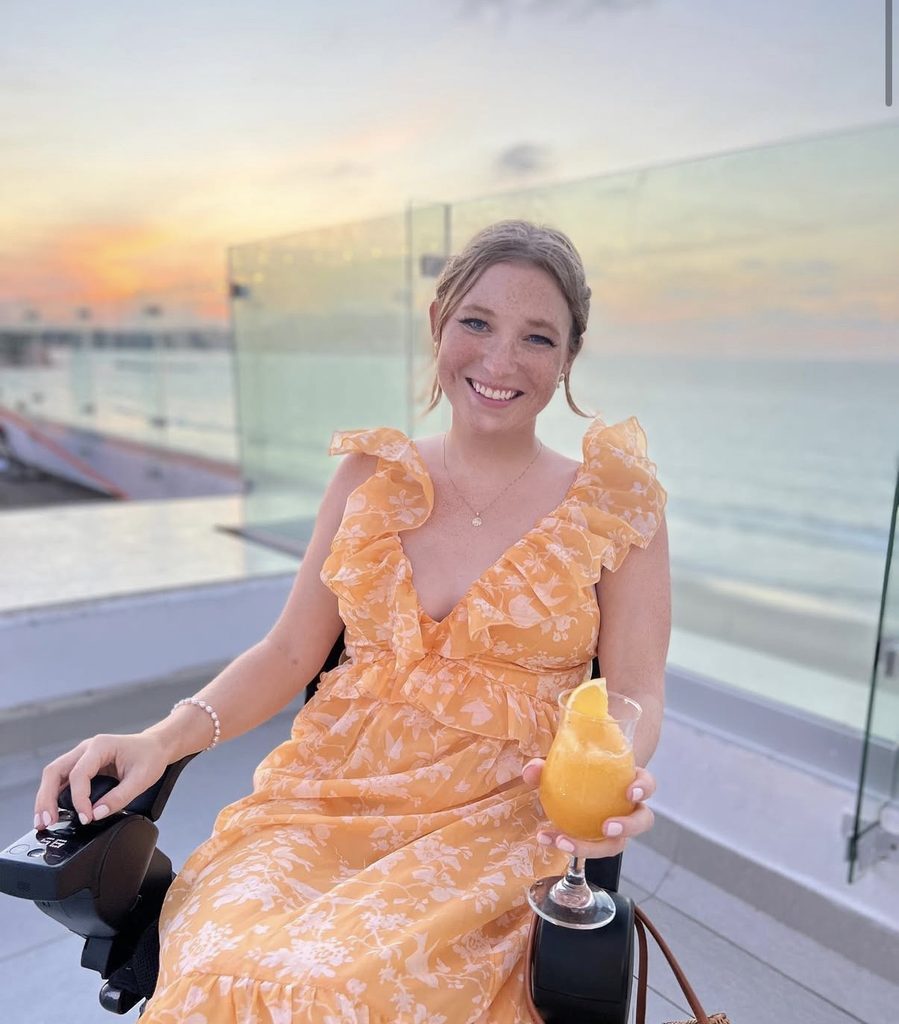
Kelcie Miller-Anderson is an innovator and social entrepreneur based in Calgary. She currently splits her time speaking to future leaders and on her environmental startup, MycoRemedy.
One of her very first words was “Why” and since the day she asked her first question she hasn’t stopped. She is passionately curious and loves to use science and innovation to solve big problems. An acclaimed innovator and social entrepreneur, Kelcie started her research into developing novel remediation methods for the Alberta Oil Sands at just 15 and by 21 she had founded her first company, MycoRemedy.
She is a dedicated environmentalist and fierce industry advocate, with her sights set on changing the way the world remediates. Kelcie has been recognized several times as an up and coming leader in both oil and gas and sustainability as well as receiving numerous awards for her work as an environmentalist, innovator, and scientist. She is one of Canada’s Top 20 Under 20, Next 36, and a Manning Youth Innovation award winner.
Passionate about creating change, she believes one of the best ways to create the largest impact is by empowering the next generation of changemakers. She aims to encourage the next generation to treat their age as an advantage and embrace their curious side.
Connect with Kelcie:
Brought to you by…
The Solo Female Travelers Podcast is sponsored by Solo Female Travelers Tours, our small, luxury, women-only tours that support female owned businesses around the world. Join us on a trip of a lifetime that helps make the travel industry more equitable.




















Transcript:
Meg: Hi everyone and welcome to the Solo Female Travelers Podcast. So my name is Meg Jerrard and I’m one of the podcast hosts. And today we’re talking about a side of travel that many of us don’t think about. When most of us book a flight, we might worry about whether our luggage arrives, when we book a hotel, we might check the location, the reviews, whether there’s Wi-Fi, maybe whether breakfast is included. But what happens when getting any one of those details wrong could actually mean that you can’t physically board the plane, or get into your room, use the bathroom, or even leave the hotel. So our guest today is Kelcie Miller-Anderson, who is a disabled environmental scientist and a social entrepreneur exploring the world with a new set of wheels. She is an environmental scientist who started a biotech company at 21 to commercialize the fungi-based remediation methods she started developing in her basement lab at 15, and she’s been an activist for climate action and the environment ever since her early teens. So her advocacy has expanded into disability rights and inclusion after she was diagnosed with a rare disease in 2018. And since then she’s traveled extensively, she’s tested different wheelchairs and adaptive equipment. She’s worked with destinations on accessibility and shared all of these experiences through The Chronic Explorer. Today we’re getting into the parts of wheelchair travel that most of us never see. So the planning, the airports, the bathrooms, the cobblestones, what happens with your wheelchair when you fly and what accessible actually means when you arrive. So Kelcie, welcome to the podcast. Thanks so much for being here with us today. I’d love for you to introduce yourself in your own words.
Kelcie: Awesome. Thank you so much for having me. I’m really excited to chat accessible travel because like you said, it’s something that unless you’re living it, a lot of people don’t talk about. And the reality is that, unless you become old enough to just die or unless you die suddenly, you are going to become old enough to likely become disabled in your lifetime. So something the disabled community says is that able-bodied people are really just pre-disabled. And so I think when talking about accessible travel, it’s important to acknowledge that accessibility benefits not just wheelchair users who are traveling and travelers with other disabilities, but the accessibility and the things we’re going to talk about also helps parents traveling with kids in strollers. It also helps seniors, maybe people with chronic illnesses who want to have a slower pace of travel. know, accessible travel really encompasses a lot of things. And think it’s exciting that the travel industry is really starting to catch on and realize that there’s a whole demographic of people who want to explore the world, but it hasn’t previously been possible. we’ve just been waiting and we’re ready and we’re… Yeah, we’re out here traveling. So I’m really excited to talk about, you know, some of the trips and things that I’ve been able to do in my last seven years as a wheelchair user that I’ve been traveling.
Meg: I feel like in literally just the first minute you’ve just dropped like a really like major perspective changing point I think that travelers and just anyone in general, right, issues don’t matter to us until we’re personally affected. So
Kelcie: Hmm
Meg: the fact that you’ve just phrased it as able-bodied travelers are just not in the position where they’re dealing with a disability yet, because it will
Kelcie: Yeah.
Meg: affect all of us in our lifetimes across the broad spectrum, right, of abilities. so I think that that just in the first minute is a really good way
Kelcie: Yeah.
Meg: to shift our perspectives on that. because for most people, travel planning begins with where do I want to go? Right. But I imagine for somebody like yourself who’s a wheelchair user, there are another like 20 questions that sit underneath that before you can even get to thinking about where you want to go. Can you take us through what happens
Kelcie: Yeah.
Meg: when you find somewhere you want to visit? Like what do you actually need to research before you can feel confident to book it?
Kelcie: There’s a lot of things that go into it. So I’ll talk for example, when I turned 30, I wanted to do a whole series of like 30 bucket list kind of adventures that I’d either never done before or things that I have done before but haven’t done since becoming a wheelchair user. And one of those big bucket list items for me was I wanted to swim with the whale sharks and I wanted to snorkel with them. And it’s possible to do it in Mexico. Mexico is also one of the places in the world that has really strong regulations, environmental regulations around swimming with the whale sharks, which is part of why Mexico was kind of the place I wanted to go and be in the Gulf of Mexico. And so that was kind of the trip. And that was like the starting point of this is what I want to do. How do I make it possible? And so first I started looking up, well, to be able to go on these trips, you have to stay on sort of like smaller islands. What’s the transport like there? Like, is there even accessible hotels on those islands? depending on the country you’re going to, a lot of that information like isn’t available online. So it becomes kind of a game of like trying to look at photos, looking at like reviews people have left on Expedia or TripAdvisor and using keyword search for wheelchair or elderly or stroller to try and gauge some of the accessibility, look at photos to see if I can see if there’s a lot of visible steps. And the ones that kind of get through that first level, well then I can start reaching out to the hotels and asking. Like, do you have accessibility? And on this island, it turned out that there was no true accessible rooms or hotels. But then it’s like, okay, well, what is accessible enough? Like, where are there barrier-free entry? where’s a hotel where there aren’t steps? Like, maybe they don’t have a full accessible bathroom, but can I make it work? So it’s trying to like gather enough information to like make that decision for myself. And then, once I kind of get through, okay, are we gonna be able to even stay here? What does that look like? Then I started looking at, okay, well, how do we go dive or swim with the whale I should have looked into that first.
Meg: It’s actually it’s again a really good kind of wake up call, I think, for able-bodied travelers because you can look at somebody who has a visible disability and you think that like the physical accessibility is gonna be your biggest barrier, right? But it sounds like information is actually probably one of the biggest problems in travel, which is the first barrier that you’re actually facing. do you often find that information is it sounds like from what you were just saying that you’re pretty much relying first on the information from travelers who have actually been there versus the companies themselves.
Kelcie: Yes.
Meg: have you found information is actually like not even incomplete, but is it incorrect even a lot of the time
Kelcie: it’s incorrect a lot of the time. Especially it’s self-reported by hotels or Airbnbs or any sort of accommodation, lot of times you’ll go on booking.com or Expedia and you’ll filter accessible rooms and a lot of places will mark themselves as accessible when they’re not at all because they’re just thinking, look I’ve… reach a wider audience or maybe they’re thinking I don’t have steps they just don’t know what it means and they click But a lot of times it’s super unreliable, especially if it is coming from the people who own the property. even if it is accessible, they don’t really always provide enough information because the thing is what’s accessible for one person isn’t accessible for everyone. And that’s why the information is so important. And I’m not talking about information just like step-free or not step-free, but more detailed information. I want photos and ideally measurements what the bathroom looks like. What’s the turning radius? Am I gonna get my wheelchair in there? there enough space in the room to move around in a wheelchair? What are the heights of the beds? Because for… Some wheelchair users, for example, someone who gets assistance to transfer out of bed, for the person transferring them, a higher bed might actually be easier. But then you get someone with a spinal cord injury who’s transferring from a manual chair and they’re transferring side to side, well, they actually need a lower bed. So it works for one disability doesn’t always work for others. So just providing that information of even like, is there space under the bed that you could put lift in? all of those little details. one really cool change that has happened is an organization called Wheel the World. And not only do they host group trips, which I’ve done one, they’re phenomenal. It’s such an incredible opportunity for disabled people to get their toes wet and get comfortable traveling. especially if they’ve never done it before or they’ve never left the country, that’s great. But one of the other things they do is they’ve actually started third party verifying accessibility in hotels. And so they actually send
Meg: That’s incredible.
Kelcie: out wheelchair users or people who are trained not just say, yes, this is accessible or no, this isn’t accessible, but to provide those measurements so that people can make those decisions for themselves. because again, like I said, it’s not one size fits all.
Meg: well, just with and not a correct comparison in any means, but even just as something as that we take for granted, like the Wi Fi, right? Even if I reach out to a hotel and ask them if they have Wi Fi, half the time they’ll tell me yes, but then you get there and you’re like, This is terrible, like I can’t get anything done. Yep. But for you, that
Kelcie: Like you can maybe read the news. Yeah.
Meg: actually affects your actual physical ability to be in that. vacation and to actually
Kelcie: Yeah.
Meg: physically do like everyday tasks like going to the bathroom or like getting into bed. so I assume that hotels, even
Kelcie: Yeah, definitely.
Meg: if you do reach out and ask them directly, I’m gonna make an assumption here that they probably like their version could be completely different
Kelcie: Yeah, well,
Meg: to your own.
Kelcie: and that’s the thing is like, there isn’t really any standards. There is more standards in the US because they have the ADA. So Americans are like used to kind of at least a certain level. But even that there’s no kind of like real stringent rules that are followed. And one of the things I find frustrating, like most frustrating in Canada, most of our hotels will have maybe like one accessible room. If they have more than one, usually they only offer one room type. So they might only offer an accessible room with a queen size bed. Well, I travel with a companion and I don’t always want it. Like if I was traveling with a caregiver that I was paying or employing, like I don’t want to share a bed with them. That’s not appropriate. There should be options of two doubles. We need to have that variety and assuming everybody, generally, they just put one queen or sometimes a king bed into accessible rooms, it’s harder to find double rooms connected rooms sometimes. That’s my favorite kind of accessible room. is when they’ve not only done a great accessible room, but they’ve opted to make it one of the rooms with the options for connecting. Because then that does bring the opportunity of if you have a caregiver who is an employee and not a friend, not a family member that you want to share a room with, they’re able to have their own room, but still provide that caregiving that you need and have that access so you can be safe. But unfortunately, there’s just not enough variety when it comes what’s available for wheelchair users.
Meg: And that’s fair too. Like even my family members some of my family members I’m would have an issue sharing her bed with. So when
Kelcie: Yeah.
Meg: it it does become a situation where it’s a stranger, like you said, it’s just not appropriate. I feel like there’s not enough awareness in that either or just proper thought throughout it,
Kelcie: Right? Because a lot of disabled people are going to travel with a caregiver. to not have the option of having two beds is not ideal.
Meg: Has it ever gotten to the point where you just kind of throw your hands up and you think this is becoming too difficult? I’m just gonna go somewhere else.
Kelcie: Yeah, definitely. or it’s like, this is becoming too difficult what will I give up in terms of my comfort accessibility wise to like improve comfort, like sharing a bed. me and my mom were just on a trip and that was the issue is there’s a new hotel was opened and they’ve newly renovated it or actually I it was newly built. And they did have an accessible room on every single floor and they were kind of like advertising this and priding themselves on it. But it turns out that the accessible rooms only had queen size bed. me and my mom, can easily share a king bed. But especially after a long day cramped on one of WestJet’s new super narrow planes, we don’t want to share a queen bed when we get there. So I had to make the decision of, okay, we want a room with a king bed, but that means that there’s not an accessible bathroom. It did work out at that hotel that it was one of the cases where the room met accessibility requirements without actually being designated an accessible room. They were able to bring me a bar system for over the toilet, a seat that goes over top and has handrails, which I’ve never seen a hotel have that before. So that was cool to see. they also were able to bring me a shower chair. they were able to meet the requirements I needed even in one of their main rooms, but that’s not something they advertise, which again this could be accessible to a lot more people and maybe more people would be coming here if you weren’t only advertising accessible rooms being with a queen bed because there was so much space in the rooms that wheelchair wise, it was no worry at all.
Meg: And does it change the way you travel, because I know you take many trips with your mum, but then you also take many trips solo, completely solo. Does it change the way you travel
Kelcie: Yeah.
Meg: and the way you view accessibility when you are travelling with someone, like a family member, versus
Kelcie: Mm-hmm.
Meg: when you are travelling entirely by yourself?
Kelcie: Yeah, if I’m entirely by myself, I need 100 % accessibility because I can’t take the same risks that I might take if I’m traveling with a companion or a family member. I might be okay, I’m probably okay to like try and walk into the bathroom if I have to or do some more risky transfers. I am able to walk a little But because I get paralysis that comes and goes. Unfortunately, can’t risk not having a fully accessible room if I’m by myself because it’s just, it’s not It’s a lot different and you’re willing to take more risks when you know somebody’s there help if something goes wrong. Because I don’t want to call the hotel staff to help me if I’ve fallen. in the bathroom or something like that. So yeah, definitely changes things because it’s like if I am by myself, I need that accessible room and it needs to actually be accessible. Yeah.
Meg: And it’s kind of a dignity thing too. something that you’ve written really stayed with me. and it was that safety and dignity can be completely disregarded. And I think you wrote that in the context of actually like the airports situation
Kelcie: Mm-hmm.
Meg: and like navigating airports and getting on the plane. and that you wrote that wheelchair users and their mobility aids can end up being treated more like baggage than people. And that comment that you made about dignity and safety, it really stuck with me because it’s something that we, again, able-bodied travelers, take for granted.
Kelcie: Mm-hmm.
Meg: so I’d love to kind of get your take on that airport experience because, like, you’ve written about almost being physically dropped from like an aisle chair, right? Being
Kelcie: Yeah.
Meg: while being carried up the stairs, denied pre-boarding because the staff couldn’t find you an aisle chair, having to board in front of the full view of other passengers, and what should be a private transfer. I think you described it as being like you felt like you were part of the pre-flight show. never really
Kelcie: Yeah.
Meg: something that we think about, or that sorry, able bodied travelers think about. So I’d love to for you to give us a bit more context about that. Can you walk us through like the physical process from arriving at the airport to give people a bit more of an understanding of what the process is, like what happens at security, how does an aisle chair work? That type of thing.
Kelcie: Yeah, it’s definitely a totally different experience to travel as a wheelchair user. And I think that’s why wheelchair users or people who haven’t traveled before with a disability nervous to do so because there’s not always enough information even about it online and what that process is going to look like. So, the amount of times that I have to go above and beyond and advocate for myself to even just get the minimum needs met. It’s a lot and it can be pretty overwhelming and unfortunately if you’re gonna have to travel as a wheelchair user, you need to know that going in accessibility wise, when I book my flight, I’m telling them I need an aisle chair. I’m calling them to confirm that they I need an aisle chair. when I check in, I can’t just check in online. I have to go to the check-in desk and again, confirm that they know I need an aisle chair and to get a tag for my wheelchair. So I guess I’d be the first difference is a lot of non-disabled people nowadays, especially if you’re traveling carry-on or if you’re bag dropping, you check in online and all you have to do is go print out your baggage tag. and go through security. That’s not the case as a wheelchair user, especially if you need disability assistance. And it works differently at all airports in terms of assistance, but you generally always have to go to the main check-in. The one nice thing is that they do let you use the priority lines. They do have priority first class disabilities, those types of things, which is nice because again, like I said, we don’t have an option. now it’s even more intensive depending on the airline and even depending on the employee, it changes every time, I swear, on what information they want about your wheelchair, about your battery capacity, like all of these things. And… Like I said, sometimes they ask for it, sometimes they don’t. Sometimes you have to show proof. They want to look at your battery, inspect it, all of these things. And you get a tag.
Meg: it’s probably like a properly trained thing. Like there’s obviously no standard and I’m assuming it just completely and entirely depends whether they’re properly trained.
Kelcie: yeah, totally. there is standards in regards to like, what, battery power you can take on and how batteries need to be stored and handled. But the thing is, a lot of the staff don’t know enough about the policies that recently, the reason they were filling out all these forms is they they thought that I had a dry cell battery that stays on my wheelchair and goes under the plane, that can’t be disconnected. Even though I told him, no, it’s a lithium ion and it comes on the plane with me. you don’t need to fill out that form. He was new and he was thinking all wheelchairs were the same, all wheelchairs just need that form. So it probably took us half an hour to go through this process. And like that’s just check-in, right? you think that like once you go through, check in and they’ve confirmed you need an aisle chair. they’ve put your chair into the system. They’ve, approved everything. Then you go through security. Security again, you’re allowed to go through a different separate line. I think sometimes see that people see that and they’re like, why do you get to skip the like big line? well, I get to skip the big line because my all of my medical things. will go to secondary inspection every single time. And I also have to be physically patted down. I don’t get to just walk through a scanner every time I fly. I essentially have to be groped by TSA. And usually you do have the option and I think this is important to know if you are a wheelchair user, will get a pat down and you do have the option going to a secondary, private area. But if you take that option, that’s probably going to add at least another half an hour to security. Whereas if you’re okay with being patted down in front of everyone going through security, it’s only going to take about five minutes. So that’s what I always opt for. Yeah, it’s a tough one like I’m lucky I personally don’t mind. grew up as a dancer and gymnast. I’m not sensitive to people touching my body, it’s kind of an unfair situation put people in that you don’t have a choice of if you want to pat down or you want to go through an x-ray machine, you have to get a pat down.
Meg: Well and it’s the choice, right? It’s the choice and the control over your own body again,
Kelcie: Yes.
Meg: able-bodied travelers take for granted. that
Kelcie: Yeah, I know.
Meg: in itself could be unsafe. Like that in itself riles people up and gets people frustrated when their bodily space is in like invaded essentially.
Kelcie: Yeah, and I mean, it’s like a full pat down your arms. mean, it’s it’s worse when I’m in the States, they are fully cup in the butt cheeks, like,
Meg: Damn.
Kelcie: they have to go they like the back of the hands will do the chest so it is like, and I get
Meg: Intrusive.
Kelcie: it, it’s a safety thing, but it is intrusive. And it is something that you don’t get to have an option with. If you are in the States, you can get TSA pre-check and then you don’t have to get a pat down. what I’ve heard from my American peers. I’m Canadian. I’m not eligible.
Meg: unfortunately, I guess that’s aside as intrusive as that is, that’s not really something that you can, I guess, complain about to change. But like if where
Kelcie: No.
Meg: something unsafe happens, like being dropped, is it easy enough to hold someone accountable or actually complain to the point where something’s done about it?
Kelcie: No. I was nearly dropped. We were flying into Puerto Vallarta, Mexico, and we were on one of the new Dreamliners and even though there was I think like eight wheelchair users on board, most were seniors who could walk. And then there was two wheelchair users who couldn’t walk myself and another gentleman. And so we get there and I’m like, why in the world would you have not told us beforehand? I think that was one of the things that frustrated me the most is you get on a flight and especially flying to an international airport like Puerto Vallarta, you assume that there are gates and that your needs are going to be met. You’re not assuming that, OK, I’m going to get there. And their safe way of getting me off the plane is two baggage handlers. They’re going to carry me down this like death trap of stairs. I’ve been to smaller airports before. I traveled all through Brazil to small airports in my wheelchair. And every single one of those airports had something called an ambulift which goes it’s like basically like a little truck. that you drive onto with your chair, it lifts up to meet the airplane door and you roll out that way. Then you transfer into an aisle chair. But no, we landed and they’re like, yep, okay, it’s stairs. And I’m great, how are you gonna get me down? like, well, can you walk? No, I
Meg: Yeah.
Kelcie: can’t walk. Can you butt scoot? No, and honestly, I wish I would have and we’ve said if we go back, that’s what we would do because it was so unsafe. It was just terrible. what made it worse is I was pretty small and petite at the time. So like it wasn’t as scary on the way down on the way up. going home is when I did almost get dropped in front of not only was it almost getting dropped, getting boarded on the plane, but there was an audience. They didn’t just take the pre-board people that needed to be carried onto the plane, there was three. They brought a whole busload of people because they didn’t want to have to send an extra bus. And they let all the people off the bus. So there’s like 40 people at the bottom of the airline stairs watching this happen. And they all see me almost getting. dropped and you can hear them everyone like let out a gasp. it’s like a spectacle of itself. And then they like give you an audience. And so that was a pretty terrible experience. And so we tried really hard to see to make change on that front, especially because it was a WestJet flight. And I just really feel that it’s on airlines that one, we had a minimum. If they knew that that is essentially 90 % of the time what the boarding and de-boarding process is going to look like at that airport, well, I personally don’t think they should be flying to an airport that can’t meet minimum safety regulations when it comes to accessibility. And that would be having an ambulift It wasn’t safe for me. It also wasn’t safe for the two people being forced to do that as their job. It’s not like they’re specially trained to be carrying wheelchair users and they fall and get hurt, it’s not like they’re going to be compensated. It’s not like they’re going to be getting probably time off for benefits or things like that. So it’s about more than just the disabled person.
Meg: But then again, if you’re travelling solo, you’re then in a survival situation before you’ve even really gotten off the plane and you’re there alone. Which adds another layer of
Kelcie: And if you travel, one of the things I’ve really found and is quite upsetting as a wheelchair user is the treatment I get when I travel with an able-bodied person versus when I travel solo. And it is completely different. it’s honestly, it’s really upsetting because, for example, Even though in that case we weren’t able to get them to do anything, even with video evidence my mom was there, we had two people saying that it happened, we had it on video. They still were like, well, we can give you some points. I’m well, that’s not really what I want. I want to make sure this isn’t going to happen to the next person who travels here. I want people to be able to know that they’re safely going to be able to get off the plane before they get on it. But unfortunately nothing came of it. But for example, twice when I’ve been traveling alone, once when I was coming home from New York, they got me in the aisle chair. They had me come up to pre-board and I got in the aisle chair and I’m sitting there literally right by the entrance of the plane. Well, they didn’t have the staff to board me. So they left me there sitting. in the little like by the door and like the plane door, the entrance, as the entire plane boarded. they’re like, we’ll get you on at the end. And so I had to sit there awkwardly, in the way in an aisle chair, unable to move while everybody boarded. And I’m trying to explain to the flight attendant that like, hey, this is illegal. You can’t do this. And his response to me was he looks at me and he said, this plane’s going to Canada. So it follows Canadian laws now. So US laws don’t apply here. I’m like, well,
Meg: Jesus.
Kelcie: hey, first of all, no, we’re in the US. If we were in Canada and had gone through US customs, you could say US laws only. But when you’re going back to Canada, you don’t go through Canadian customs till you get home.
Meg: But it’s sad that that’s the fallback It’s a dignity thing, it’s not a legal thing.
Kelcie: right. and then they started threatening me if you don’t drop it, we’re not gonna let you fly. And so it’s like, you’re sitting there vulnerable, I just wanna get on the plane, but if I speak up about my rights, they’re saying they’re not gonna let me fly. as an individual and you don’t have someone to like back you up, or verify your story, tends to be what they do. And unfortunately, I’ve learned one of the only ways to get people to be held accountable is unfortunately, you have to get out your phone and start filming them. And once they realize that, they’ll acknowledge what they’re doing is wrong. not even sometimes. I had someone… cover up their badge and was refusing to give me their badge number saying no, you can’t have it. it doesn’t matter. because they knew what they did was wrong.
Meg: Yeah. it’s sad that the level of moral accountability goes out the window when you’re alone because like you said, there’s no one to Yes.
Kelcie: Yes, like when there’s not an able-bodied person there. And I’ve been lucky and that’s the sentiment I would like portray to people is like, this sounds scary and yes, these things do happen. But I would say the positive of it is that in a lot of the situations, especially if I’m alone, but even if I’m still with an able-bodied person. the other people traveling will see what is happening and they tend to speak up. And that has been a really positive thing. we had once where the gate agents tried to start forcing people to board after they told me they’re like, no, we’re not boarding you, we’re not doing it. And they left me kind of just again sitting there. And the people who were at the front of the line to board just said, no, they’re like. we’ll wait, we’re not boarding until you figure out how to get her on the plane. And so that was a great kind of act of solidarity. And we kind of do need that when we’re traveling, especially alone. If you see a wheelchair user or someone getting yelled at or trying to advocate for their rights and not getting anywhere. Please try to ask if they need help or offer to just almost be there a secondary support witness to what is happening. Because a lot of times that’s enough to change the behavior gate agents it’s usually gate agents. I understand it’s their job to keep flights running on time and there’s penalties and things like that. My message to them would be there’s also huge penalties for breaking accessibility laws.
Meg: And I think I just wanted to jump in there because I feel like one of the key words, and I don’t want to forget it, that you just said when you were giving advice for how other travelers could like how able body travelers could step in and assist and help advocate for you, is the word ask. Because I feel like
Kelcie: Yes.
Meg: when and this isn’t just necessarily like at a gate, right? I feel like this can be broadly if you see a wheelchair user or a disabled traveller, even in the streets once they’ve gotten through the airport, they’ve gotten Through the hotel, they’re now exploring the destination. I feel like keyword ask is probably the most respectful way to assist someone.
Kelcie: yeah, it’s huge that you pick up on that, of like the ask. my travel experiences have been made so much better and so much easier and always really put this sense of warmth into my heart because I tend to meet amazing people wherever I go traveling who want to help. the first trip I ever took was to London, England, and we realized we got to the end of the block and there wasn’t a curb cut. And before we could even really start to assess of like, okay, like looking around of where are we going to go? How am I going to get down? There was people there offering to help lift me down the And that was phenomenal. And I find those people everywhere I travel. travelers are some of the kindest people in the world. And also, when you’re traveling, the locals tend to be incredibly kind and helpful too. But I would really like hone in on that ask piece because it’s so important to ask if the person actually does need help. Because a lot of times, like you might see a disabled person moving their bags or their chair in a certain way and it might look like they’re struggling. But we just might do things differently. And so we might have a specific way that we hold our luggage. And to you, it might look strange. And you might be like, they obviously need help. But actually, we’ve got it perfectly balanced. And if you take that bag, everything’s going to go wrong sort of thing. independence levels vary, too. And some wheelchair users are very open to help, and they want help. I tend to be one of those people. benefit from help opening doors and things like that and I am happy to have it. there’s also disabled people who are fiercely independent and they don’t need help and they don’t want it. So if you ask and they say no, respect that no. But I would say don’t be afraid to ask and offer help because yes, someone might say no, but a lot of times someone might actually appreciate that help. if I truly can’t do something, will ask for help. There’s a lot of times where I can do something, but it would be a lot easier if someone helped me or did it for me. And for me, lot of the times, if there’s not like buttons, doors are something that are tricky for me. And so if someone offers, I’m never gonna say no, I’m always gonna be so thankful, but I also generally won’t go out of my way to ask. So I think, there’s this nice balance when able-bodied people are like aware and they notice us and they do offer help and honestly just even acknowledging you as like another traveler and like seeing you, that’s kind of nice too.
Meg: And I picked up on the word ask because you hear and perhaps they’re extreme examples, but here’s stories of let’s say you’re wheeling yourself around Rome and then someone comes up and just decides that you need help crossing the street when you they didn’t ask
Kelcie: Mm-hmm.
Meg: you first and then you’re like, I actually didn’t need to cross that street and now you’ve just made my life ten times harder ’cause I’m on the other side of a road I don’t want to be on. please ask before you touch me.
Kelcie: Yeah, yeah, well, and that’s the thing too, it’s like people don’t realize that mobility aids, like a wheelchair, that’s considered part of somebody’s body. So you don’t touch it the same way you wouldn’t just grab somebody’s body and like move them, you don’t do that to a wheelchair user. But sometimes people like seem to think that’s okay. They’re like, there’s handles. and you’re in my way, I can’t get what I want. I’m just gonna move you out of the way. And it’s like, no, I’m not an object to be moved. just because I have handles on my back.
Meg: Well and I guess it’s like for able-bodied travellers, if you’re thinking, I think the experience of being on crutches is something that a reasonable amount of society has had at some point in their life, whether they were a child or an adult. And like, yeah, if you’re standing at an intersection on crutches, you would get pissed if someone came up to you and just physically picked you up by the crutches and moved you. not the same, but kind of the same, like in terms of conceptualizing.
Kelcie: Yeah. Yeah, yeah. I think just like even in general, right? It’s like if you’re a woman, especially like a female traveler, you’ve probably experienced unwanted advances or been in a bar and somebody decides it’s okay to like touch you to move you or sometimes in inappropriate areas. And that’s how intrusive it can feel to some wheelchair users. And also it can hurt us. one that happened to me when I was in Brazil is there was like this kind of like bumpy cobblestone, wasn’t like a great kind of piece of pavement. like holes and things like that too. I was trying to get myself through and I was doing fine, but because there was so many like different little crevices for my wheels to get stuck in. I was kind of like having to maneuver and like work hard. But I was doing it myself. My mom wasn’t even pushing me because the chair was going all over the place. And some man saw this and I think he automatically assumed I was struggling and he started pushing my chair and he got my hand stuck between this like kind of like castle-y wall and my chair and all the skin got ripped off of my hand. there was a language barrier so I couldn’t even explain what, you know, I was just like, thank you, but no. But then, my whole hand was torn up like things like that. another common one is people leaning on my chair elevators to rest on it or at crosswalks, like waiting, any kind of area where you’re waiting. like, would you just lean on a random stranger because it’s the same thing. don’t, don’t do it.
Meg: No, that’s fair. And I like that perspective because it again, it really puts it into a way where we’re able body travelers can conceptualize it. I definitely don’t want this episode to only sound like wheelchair travel is nothing but obstacles. Obviously, there are a lot of obstacles that
Kelcie: Yes.
Meg: we take for granted as able bodied travelers, but your content, if people do go onto your Instagram channel and to your blog, it shows you doing some pretty extraordinary things. And there are destinations and sites and experiences that have taken accessibility seriously and made sure that they are
Kelcie: Mm-hmm.
Meg: truly open to everyone. So I’d love to guess also make sure that we’re discussing some of the highlights.
Kelcie: I that is a great idea because that’s what I try to focus on too is the highlights and the possibilities that open up when you start to travel as disabled person. And I a lot of people get scared off because there are these kind of complicating factors and these things you have to consider. yes, it does probably take more of a mental toll, not just the planning, but also actually executing it to you in the moment there are you know more potential things that can go wrong and The way I like to look at it is like, okay. Here’s the things that can go wrong and like I pre think about what am I gonna do in those situations? So I can kind of just put it to the side But if I get somewhere and say my wheelchair is broken I can pull out the phone number of a wheelchair repair or a wheelchair rental in the city I’m in, in the country I’m in. And so I’ve prepared for those things that potentially could go wrong, even though 90 % of the time everything’s gonna be smooth sailing. And so I do think that that is important to note is be aware of the things that can happen and they are important to talk about. I used to shy away from talking about kind of any of the complications or the negatives because I really didn’t want to scare off people. I don’t want people to be afraid of trying traveling again a wheelchair user.
Meg: And like you got you got right down to the beach on a trip in Oregon because you have an off road chair too, which
Kelcie: Yeah.
Meg: again, if you go to Kelcie’s Instagram, it will completely change your perception of wheelchair travel because you’re really out there doing it, which is it’s incredible.
Kelcie: It’s phenomenal to see change in destinations who are now really seeking out the expertise of wheelchair travelers and people who are doing it ask how can we become as accessible as possible. they’re working with disabled people and they’re funding programs and they’re going all in on accessible travel. And Oregon, like you mentioned, is one of those places. It was actually Wheel the World one of their first certified accessible states. Which means that like they have a whole itinerary of, all across the state, different activities you can do I went up a tree, I tree climbing, which is crazy that you can do that as a wheelchair user. They also have, yeah, these epic off-road wheelchairs and they’re not just for the beach, they’re available I think at like over 20 beaches down the Oregon coast. But beyond that, they’ll also rent them, and they’re rent, you can rent them free of charge. Like it’s just to make Oregon accessible and like the destination truly available to everyone. they want everyone to be able to experience the beaches and experience the magic of traveling the Oregon coast. And again, not just the coast, all regions. And I’ve been kind of all over Oregon now. one of the coolest things, especially going into fall, is they actually have a family orchard that has been through this family since I think before Second World War. So like well over 100 years. And family has now installed Mobi-Mats. all through their orchard. And Mobi-Mats are these like roll out mats that they traditionally put on beaches and lakes so that wheelchair users can get access to the water over sand and rocks. But they were able to get funding through Travel Oregon in order to lay out these mats all through their orchard because a lot of times it’s rainy and muddy and wheelchair users, strollers, all of those things can’t go apple picking. And now I think it’s got to be the first in the world accessible Apple orchard. And like how incredible is that, that innovation and the thought behind it and that that’s all come out of like a state really striving to become an accessible destination and allow everyone to be involved in everything they have to offer.
Meg: it shows you that it can be done too.
Kelcie: Yeah, exactly. It’s like everyone thinks it’s so hard to be accessible and it’s really not. It just takes forethought. And I think one of the things in the past that made a lot of things inaccessible was just not consulting disabled people because then you’re doing things that you might think are accessible but actually not going to benefit anyone. So I think that’s one of the really cool things that a lot of these destinations are doing is they’re taking the time to like actually work with disabled people and specifically like disabled travelers who’ve been to hotels all over the world and can tell you the things they loved in certain places like what made a trip, more memorable or more special and most importantly, like what made it accessible and makes you want to come back. So yeah, there’s been an incredible change.
Meg: on kind of like the surfaces that this is a very random question that you’ve just kind of prompted
Kelcie: haha
Meg: in my brain because we’re talking about like the surfaces of the apple orchard and rolling across that, so very random question, a little off context. I find in travel writing, and because I’ve been in travel writing for a long time, we really romanticize cobblestones, right? Like we’re like, the the European centers were like cobblestones. Does that horrify you? Like what do you think when you hear the word cobblestone?
Kelcie: Yeah, I mean like a little horrifying for my back. I actually have a new, my new wheelchair has shocks. I’m like, okay, I’m ready to take this to like Europe and test it on some cobblestones and like see how the new shocks do. But I would actually say one of the surprising things about places with cobblestones, and this isn’t true like for everywhere, but actually a lot of places, something that you probably don’t notice as an able-bodied person is that in a lot of cobblestone streets, there’ll be kind of one narrow area where they’ve put different, like, flat stones in. a lot of cities, like, a really good example of this is in Belgium. And so they actually have an entire, route you can follow through the historic, like this is a medieval city, right? And they have a route that you can travel to see all of kind of the highlights that is a low kind of not a lot of cobblestones, low bump terrain, as smooth
Meg: Nice.
Kelcie: as possible where they’ve gone through and like on some of the roads have put smoother surfaces or they sand down and smooth the top of the cobblestones. So they tend to do it in one area, like it won’t be every street, but they have a guide of how you can kind of tour city in a way that is gonna be like the smoothest possible.
Meg: It’s very cool to hear about initiatives like that.
Kelcie: It’s really cool. think one of the things that like people forget is in these cities, there’s people living, right? all disabled people live all over the world. They don’t just not live somewhere because it’s not accessible. Unfortunately, will say like in inaccessible places, you see less wheelchair users out. For example, I tend to not see a lot of wheelchair users in my own city. My own city is not super accessible. Less than 40 % of stores and shops and restaurants I can get in as a wheelchair user. So that’s not a very high standard. We also have a lot of snow. Like if it’s winter, you can’t really navigate outside as a wheelchair user, not safely or easily. I don’t see a lot of other wheelchair users just out and about a lot.
Meg: But that obviously just means that they’re at home. Like it obviously doesn’t mean that they don’t exist.
Kelcie: exactly. No, it’s not a good thing. noticed it so starkly when I went to Switzerland just over two years ago and everywhere we went, like in all the little small towns and out and about, there was wheelchair users everywhere, out doing shopping, out doing everything and being so active in the community. And that’s because that community was accessible. And I mean, Switzerland’s a great example of like phenomenal, phenomenal accessibility and infrastructure. And they’re not making any excuses, right? Like these are towns and cities that are way older than any single building that we have in Canada, right? and they’re not making excuses that it can’t be accessible. remember went to a restaurant when we were in Zurich and I asked, I was like, where’s the washroom? And she’s like, it’s downstairs. And I was like, okay, I understand. She’s there, there’s a lift, there’s a stair lift. And I was like, really? And she’s like, of course, what do you mean? Of course there’s a stair lift so that you can use the bathroom. we’re from Canada and like, that wouldn’t be a thing there. And she’s like, well, what do you do? you just. don’t get to use the bathroom when you go out or you don’t go out. And she was just appalled. so different countries really have different standards. And I think a lot of people from North America, think assume that because there are more historic places that it’s not going to be accessible. And that’s because where I live, like I said, less than 40 % and a lot of those buildings. they get exempt from rules because they’re historic buildings, but they’re all less than a hundred years old. So I’m like, is this really historic
Meg: But then again, it shows you that it can be done from other countries.
Kelcie: exactly. they’re doing it incredible everywhere I’ve been in Europe, I will say London was a little challenging. some of the tubes and stuff, but then London actually every single black cab in London is wheelchair accessible. And so
Meg: That’s incredible.
Kelcie: that’s yeah, and like, I think a lot of people don’t realize that, but it’s every single black cab. is wheelchair accessible. So if you hail a cab in London, it’s wheelchair accessible. And the entire bus systems and stuff,
Meg: And I feel like when they get transport right, that gives you back more of the spontaneity that we again take for granted as able-bodied travelers. Like I take it for
Kelcie: Yes, like…
Meg: granted that I can go to a city, hey, I’ll look if I decide spontaneously that I’m gonna go over to a bar or I’m gonna go to a different part. obviously
Kelcie: Yeah.
Meg: the reality of disabled travel and wheelchair travel is that a lot of that spontaneity you need to properly plan and you don’t have a lot of spontaneity. So that would give some back.
Kelcie: Yeah, it definitely depends on the type of wheelchair. So for example, I’d say there’s three main types of wheelchairs, maybe four. We would add scooters as a fourth one, but people who use scooters generally tend to be a bit more ambulatory. So they can sometimes park their scooter and go into a store, things like that, park it, go on the boat cruise, whatever it may be. You have manual wheelchair users, which I’d say they have the most flexibility in terms of navigating inaccessible spaces their chairs usually weigh between 10 and 15 pounds. They can get them into any vehicle, any taxi cab. Again, it depends on the individual, but they have the ability to be bit more spontaneous with things. I’m also lucky because I use like a travel folding chair a style of chair that can like come apart into multiple pieces and be put in a trunk. For me, I make that choice to travel in that type of chair because it does enable me to not have to depend on just accessible transportation because unfortunately a lot of places sometimes accessible transportation just doesn’t even exist. And then that is the ultimate barrier if you have a full sized wheelchair and there’s not an accessible vehicle on the island. Well, can’t really go. Unfortunately.
Meg: So what would be some places that you would recommend for women who do use a wheelchair and want to start travelling solo?
Kelcie: Yeah, it’s hard to even decide. Oregon is a big one that was phenomenal, just the accessibility and also on the amount information available. would say you’ve never traveled before and you want to get your toes wet, start a weekend trip to a nearby city or even in your own city, staying at a hotel, kind of learning what you need to bring, because you’ll quickly realize you’re staying overnight with a disability, the things that are integral and are going to help you. a trip close to home first to kind get your toes wet and then start venturing out from there. If you want to do it on your own or with a friend, I going to Wheel the World and at some of the accessible destination reviews or the places they’ve certified accessible. I believe Colorado was the second state they did. mostly their certified accessible destinations right now are mostly in the states. But they also offer, like I mentioned at the start, they have group tours. And I think that that would be the most phenomenal way to get your toes wet as a solo disabled female traveler. because you can go on one of these trips, but you know that all of the accessible transport is already worked out. All of the hotel rooms are going to be guaranteed accessible. you will have an accessible room. No ifs, ands, or buts. it’s just nice to also be with people who like, they’ll have a host that speaks the language. And you’ll also get to meet other. people traveling who are wheelchair users and ask them and learn from them. Maybe meet someone you want to go on another trip with. Because I find for a lot of women people who want travel solo, first solo trip I did was on a G Adventures tour. And it was a really great way to learn how to backpack without having to just fully go in it at 18 by myself. And then after that, a lot more comfortable to take my own trips. So yeah, I think that that would be what I would recommend is like, you know, a trip close to home. There are some options of like group travel for wheelchair users, which I mean, I think is so cool. then also, looking at those places Curb Free with Cory Lee is another really great travel creator and he has an entire blog of all of the countries he’s been to and has really good detailed information about different hotels he uses a full-size power chair so he’s gonna have the highest level of accessibility so if you look at his blogs and you’re a manual wheelchair user you can start from there and then know that there’s actually going to be even more that’s accessible to you because you have a little bit more freedom with that manual chair.
Meg: I really like that the whole takeaway essentially is there is a woman listening who maybe her mobility has recently changed or maybe she’s facing new challenges in what she’s able to do, like the takeaway is that it doesn’t mean that your travel is over. It means that it might change and there are a lot more dynamic planning situations that you’re gonna find yourself
Kelcie: Mm-hmm.
Meg: but it’s not over. and I would definitely
Kelcie: No,
Meg: encourage everyone
Kelcie: not at all.
Meg: to go to Kelcie’s, yeah, to go to Kelcie’s sites and Instagram, to go to Corey’s, because it’s not, and you’re living proof of that. And I think that visualization is really powerful to see that somebody is actually out there. Yes, there are challenges, but I would actually really love to know as an ending point before I do have some quickfire questions, which we do on every podcast, but I guess I would love to end the podcast on a final question of asking you what has using a wheelchair allowed you to that you couldn’t do without it.
Kelcie: I mean, it’s opened up the entire world for me because I became a wheelchair user because of a rare disease. So I lost my mobility. I was at a place where I couldn’t even leave my house to go to the grocery store. I couldn’t walk enough. So when I finally got a wheelchair, it allowed me to start traveling again. It was this gift. But the biggest gift that being a wheelchair user has given me and becoming disabled has given me this kind of like new ability to get to experience everything for the first time again. So it’s all of those life firsts and all of those travel firsts that you’ve had and it was the most incredible feeling. As a wheelchair user, it’s like I get to do those things for the first time again, when I went. surfing for the first time as a wheelchair user or got to go sit skiing for the first time as a wheelchair user. I started skiing at 18 months old. I don’t remember learning how to ski. Now I get to have the memory of learning how to ski and experience it as an adult in this new body. And think that’s kind of cool if you can look at it, kind of shift the perspective of like This is giving me so many new opportunities and new way to experience things and look at life. Never mind an entire new community to be part of. it’s been pretty incredible.
Meg: Well that’s what I found particularly refreshing about your messages because yes, there is a whole side of wheelchair travel where there are challenges, you do need to advocate for yourself. There’s a lot of room for improvement and a lot of personal accountability that it needs to be taken by the industry. but
Kelcie: Mm-hmm.
Meg: at the same time, I love how, yes, you your perspective is also at the same time that this has opened up the world view. This is an opportunity. it’s not something that you see as negative in the sense that this is a gift, like you’re seeing it as a gift, which has opened up the world. And
Kelcie: Mm-hmm.
Meg: yeah, I really wanted to kind of hit that home in the podcast that yes, there are challenges, but we don’t want to only focus on the challenges
Kelcie: Yes.
Meg: because there’s also a completely positive, world shifting side to this.
Kelcie: Yeah, it’s incredible. And I think it’s hard because like I said, I used to never really talk about the negative I realized that unfortunately, we have to bring awareness to it if we’re going to change There’s some great advocates doing incredible work and incredible things, They have the approval. like safety approvals on devices to allow us to stay in our wheelchairs in aircrafts. And hopefully that is something that we’ll see by the end of the decade in newly built aircrafts. I would love to see that. I want the world to be accessible to all wheelchair users, not just those of us that can use, lightweight power chairs or manual wheelchairs. Like there is a segment of wheelchair users who struggle even more to fly right now because of the weight of their wheelchairs. some airlines or certain flights won’t accept them. And so I think that there’s going to be like a whole new era in disabled travel, in wheelchair travel where every kind of disability is welcome and it becomes a lot easier for everybody. And I hope it’s soon.
Meg: Fingers crossed, I also hope it’s soon.
Kelcie: Yeah, it’s changed a lot even in the seven years I’ve been a wheelchair user.
Meg: And it’s been really inspiring to see those changes because it is difficult. We do take it for granted as able bodied travelers. And I I do want to kind of also hit home what you said at the start that we’re able bodied until we’re not, and we shouldn’t think about it and it shouldn’t matter to us only when we find ourselves in a position where we’re no longer able bodied, like we should be caring about it now.
Kelcie: Yeah.
Meg: Because we are a community and we are a society at the end of the day. and it sounds like countries like Switzerland have gotten that really right because they’re creating a very accessible and equal opportunity community based system where everybody can enjoy,
Kelcie: Yeah.
Meg: which is fantastic. I would love to end the podcast on some rapid fire questions for you.
Kelcie: Okay.
Meg: so airport or train station?
Kelcie: Ooh. I’m from Canada, so we don’t really do trains here. So I’d have to say airport, even though like not always my favorite,
Meg: Kind of the same in Australia. We don’t really do trains here either.
Kelcie: Yeah.
Meg: old European city or modern North American city?
Kelcie: old European city. I’ll take the cobblestones because it’s just something we don’t get here in Canada.
Meg: Yeah. beach or mountains.
Kelcie: I think mountains. I always say I could never move away from Calgary because I need to be close to my mountains.
Meg: and most underrated accessible destination.
Kelcie: I don’t know. I will say I just went to Nova Scotia and I had a phenomenal time. it blew my mind in terms of accessibility, especially as a Canadian destination. It’s accessibility I have never seen in Canada. So I think that’s definitely underrated and it’s a cool part of Canada to visit too that I think a lot of people miss our East Coast because they come for the mountains and maybe make a stop in Vancouver, maybe Toronto, maybe Quebec, not a lot of people, even within Canada, go to the East Coast and it is worth it.
Meg: I actually also have to get there too.
Kelcie: Yeah, it’s like I’m like, need to go back. have to do Newfoundland and I have to do New Brunswick and then the Yukon and then I’ve done all of 13 Canadian provinces and territories. So yeah, I have a little bit more to do.
Meg: That sounds amazing. Thank you so much for being here with us today and taking the time. the one thing that I’ve really taken away from this conversation is just how a lot of accessible travel is just completely invisible to able bodied travelers. And yeah, it’s really
Kelcie: Mm-hmm.
Meg: easy to see a ramp, I think, and just think that somewhere’s accessible, but it’s much harder. Like we don’t see the hours of research and the questions that you put about bathrooms and transport and your wheelchair underneath an
Kelcie: Yeah.
Meg: aircraft, So I think maybe for me the biggest lesson is that accessibility isn’t about assuming what someone can or can’t do, but it’s about removing unnecessary barriers and giving people enough accurate information, like we talked about at the start.
Kelcie: Yeah, like let them choose for themselves.
Meg: yes, so thank you so much for listening and coming back to talk with us. everybody who is listening, you can follow Kelsey and her travels at The Chronic Explorer and we’ll put the links and resources in the show notes so that you
Kelcie: this initiative.
Meg: can connect with her. so yes, thank you so much and we’re looking forward to talking to you again soon.
Kelcie: Amazing. Thanks so much.
–
And it’s time for this week’s embarrassing travel story. We’ll call this one the voice memo. This one is from Elena and here’s her story. I was on a group tour in Italy with about twelve other women, and by day four I was having an amazing time, except for one woman who was driving me a little bit crazy. She was truly lovely, but she talked constantly and always had to share her opinion about every restaurant, every hotel, and every activity, And somehow needed to be the center of attention. One evening I was resting in my room catching up on texts and emails and saw that my bestie asked me how things were going. I decided to send her a voice note because I didn’t want to type it all out. I started out with general updates on the places we had seen, the villas and hotels and the beautiful towns we visited. But at the end I decided to mention the women and how I was a bit annoyed with one of them. I didn’t say anything horrible, but I wasn’t super nice either. I just wanted to vent a little bit. I hit send in the voice note and switched to checking my social media. A few minutes later I started seeing some WhatsApp notifications pop up, so I checked and saw a message that said wrong group maybe with several question marks. My heart dropped immediately. I quickly discovered my mistake. I sent the message not to my best friend, but to the whole group chat for our tour. I was able to unsend the message by clicking delete for everyone. But I wasn’t sure who had listened to the whole thing by then. There were no messages in the group about this the rest of the evening, and the conversation resumed about plans for dinner and the next day, but I was mortified. The next morning at breakfast I sat with a few of the women from the tour and we had our normal breakfast chat. One of the women said, By the way, I agree, and winked at me. I was confused at first, but then I realized what she was referencing. Well, it was nice to find out that I wasn’t the only person who had felt this way. I was still super embarrassed and my face said that much as I turned bright red. Later that day the culprit I complained about carried on exactly as she had before my message, so I can only assume that she didn’t see or hear it before I deleted it. I was still prepared to apologize in case it came up. Thank you so much for sharing your story with us, Elena. If you have an embarrassing travel story of your own, we’d love to hear it. You can submit yours on our website at www.solofemaletravelers.club.