
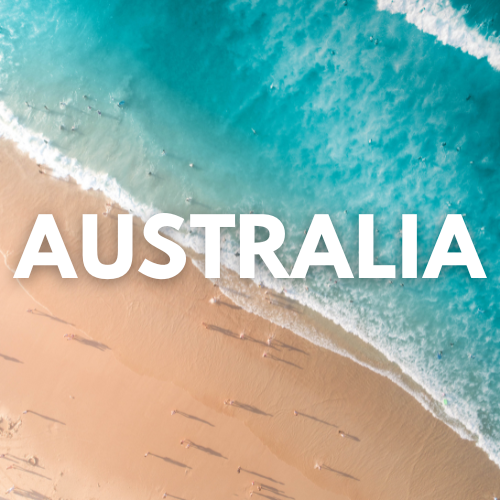
In this episode of the Solo Female Travelers Podcast, Mar is joined by her business partner and fellow co-founder Meg Jerrard to break down everything you need to know to plan a trip to Australia. Drawing on Meg’s experience growing up and living across Australia, as well as the many trips Mar has taken around the country, they explain why Australia is an incredible destination for solo female travelers, and why its enormous size makes planning ahead essential.
They cover how long you should spend in Australia, the best time to visit different regions, how to build a realistic two- or three-week itinerary, and when to fly, drive, take a train, or rely on public transportation. They also discuss Sydney, Uluru, Cairns and the Great Barrier Reef, Melbourne, Tasmania and Western Australia, along with road trips, wildlife, weather, school holidays, costs, food, packing essentials and some of the most common mistakes first-time visitors make.
Meg also shares why Australia is particularly easy to explore independently as a woman, how to travel more slowly and meaningfully, and why getting beyond the major cities can lead to some of the most memorable experiences. And, naturally, Mar and Meg settle some very important Australian debates involving dangerous wildlife, little penguins, Vegemite, coffee, thongs, and whether everything in Australia really is trying to kill you.
Brought to you by…
The Solo Female Travelers Podcast is sponsored by Solo Female Travelers Tours, our small, luxury, women-only tours that support female owned businesses around the world. Join us on a trip of a lifetime that helps make the travel industry more equitable.












Transcript:
Mar: Hello, everyone, and welcome back to the Solo Female Travelers Podcast. Today I’m excited because I’m joined by someone you already know and love, my business partner and fellow co-founder of Solo Female Travelers, Meg Jerrard. Meg has spent almost 20 years writing about travel and has helped thousands of women plan trips around the world, and perhaps most importantly, for today’s conversation, she’s Australian. She has lived in Canberra, Tasmania, and now far north Queensland, where she’s based in Cairns. She’s also the person who designed our Women Only Australia tour, spending months deciding not only where to take our guests, but also who they should meet and the communities we wanted to support along the way.
Today we’re talking about one of the destinations our community asks about every day. How do you actually plan a trip to Australia? How long do you need? What should you prioritize? What mistakes do first-time visitors make? And what should solo female travelers know before they arrive? There’s a lot to cover. So let’s get started.
Meg: Thanks so much, Mar. So yes, I am very excited about this episode because Australia is one of those places that so many people dream about visiting. But it is also one of the hardest destinations to plan. And people think because it’s one country, planning should be straightforward, but in reality, Australia is almost the same size as continental Europe.
So just for a bit of context, the distance from Cairns, where I live, to Perth is actually further than London to Moscow. So the biggest challenge isn’t deciding whether to visit Australia. I find that it’s deciding which Australia you want to experience, because every region feels completely different. We have tropical rainforests in the north, we have the world’s largest coral reef, we have ancient deserts, we have wine regions, and alpine mountains that get snow every winter. And yes, you did hear me correctly, we do get snow in some parts of Australia. We have cosmopolitan cities, we have tiny farming towns, there’s Tasmania, which is my hometown, and honestly that feels like another country altogether. We have indigenous cultures that have been here for over sixty five thousand years. So there’s no single Australian experience, but hopefully today we can help people understand exactly how to build a trip that actually matches the type of traveller that they are.
Mar: Yeah, Australia has always been very popular. But I feel like over the last few years we’ve seen even more women talking about wanting to visit. So why do you think Australia is having such a moment right now amongst solo female travellers in particular?
Meg: So I actually think there are a few reasons, and the first is safety. So we, as many of our listeners will know, we run a survey within our community every year. We’ve done so since 2020. And when women consistently tell us that feeling safe is one of the biggest factors that influence where they travel. Australia has a reputation as somewhere that people generally feel very comfortable traveling independently. English is the official language. The tourism infrastructure is excellent, healthcare here is great, public transport in the major cities is reliable. And that removes a lot of stress people sometimes feel when they plan their first big international trip. The second reason is nature. So I think after COVID, people really started looking for destinations where they could spend more time outdoors. And Australia offers that in abundance. So you’re snorkeling one day on the Great Barrier Reef, you could be walking through rainforests the next, watching kangaroos at sunrise. There are some kangaroos on my street. Seeing penguins come ashore, which I know Mar is your favorite part of our Australia tour.
Mar: Little Penguins
Meg: Yes, for anyone listening, Mar goes absolutely crazy over the little penguins in Melbourne. And granted, they are very, very cute.
Mar: So cute.
Meg: Yes, or just literally sitting on a beach with nobody else around. So one thing that stood out for me in Europe was that the beaches were packed. In Australia, we’re very blessed that we have huge swaths of coastline and you can very literally go to a beach with nobody else around. So I think it’s that feeling of space here that’s becoming increasingly rare around the world. And I do think social media has also played a role. People see the beaches in Sydney, they see the turquoise water in Western Australia, they see the colourful reefs around Cairns, they see the iconic wildlife and the road trips and it all looks incredible.
I will say though that social media does give people an extremely misleading impression, because those thirty second reels that push everything all together, they make Australia look compact. But it’s not. People pretty much think that they can spend three days in Sydney, drive up to Uluru, pop up to Cairns and then finish off in Melbourne, but then I’ve found that they open Google Maps and that the actual reality really hits. Because this is a massive country, you really do need proper planning and you really do need proper time.
Mar: Yeah, and this makes me think back to the many trips I’ve taken to Australia as a solo traveller, in fact. I’ve been to the Perth and Western Australia region several times since Singapore is only four hours away from Perth, whereas it’s probably eight hours from Sydney or something like that. Something really, really far from other parts of Australia, but quite close to Southeast Asia. Even you and Cairns are only six hours from Singapore. So the northern part of Australia is quite close to Asia, versus the southern part being very far. So even when people look at maps and they look at the distances from Asia, which is relatively close. It’s still nine hours from Singapore to Sydney. So that’s like really, really far. So people I don’t think realize the distances. When I was taking my solo trips to Australia, I did Western Australia a few times. I spent New Year’s in Sydney. I had also been to the Great Barrier, even to Uluru on other trips. I’ve been to Adelaide and the South on other trips. So I’ve been to Australia a few times. And like you say, it’s nature, it’s culture. but it’s also understanding that it’s pretty far, even if you live, let’s say nearby in Asia, which appears to be quite close to the map. So this is a very good point for someone who’s never visited before. How would you describe Australia beyond the social media reels of beaches, the kangaroos that are super cute and the koalas and the penguins and the opera house?
Meg: Well, everything is obviously super cute. but I think you just got the gist that Australia is a country of contrasts, right? So everything changes depending on where you are. One week you can be wearing a swimsuit and the next week you will need a puffer jacket. And I stop and put emphasis on will there because people don’t believe me. People have this perception that Australia is just hot the whole year round, but no, Australia is a country of varying climates, varying ecosystems. In fact, our Australia is our only SFT tour where we go through three different time zones in one tour. Very literally, nobody really believes that when we say it, but we have to move our clocks three times during our Australia tour, and we don’t have to do that anywhere else in the world. So people are often surprised by just how relaxed Australians are too. We’re really friendly, we love to chat to strangers. We often walk around in public with bare feet, which I know throws a lot of people off too, but we are very relaxed. If you’re standing and looking confused at a bus stop, there’s a good chance that someone will actually walk up to you and ask if you need help. I find that surprises a lot of visitors who come from cultures where speaking to strangers is a bit more standoffish. And I also think people are surprised by how multicultural Australia is, and that’s something that I really wanted to highlight when I was putting together our Australia tour. So sometimes people imagine Australia as this one culture, but in reality, you can walk through Sydney and Melbourne and you’ll hear dozens of languages. The food also reflects that too. So you can eat exceptional Vietnamese food, Greek food, Italian, Japanese, Indian, Middle Eastern, some of the best coffee you’ll ever drink. Obviously I’m biased, but Australia isn’t isolated culturally. It’s incredibly diverse because we’ve had a lot of different chapters in our history of waves of immigration from across the world. So you’ll really get that when you come here, you’ll realize how much of a melting pot and a multicultural destination it really is.
Mar: Yeah, and we’ve already mentioned a few of the misconceptions that people have when they visit, but what do you think is the biggest one?
Meg: I mean, without a shadow of a doubt, it’s that everything is trying to kill you. For some reason, everybody thinks that everything in Australia is trying to kill you. And if I had a dollar for every time someone asked me whether they should worry about snakes or spiders, I would probably retire. Though granted, there is one specific story that stands out in my mind, Mar, when we were in a meeting and we’re talking and then your face has just suddenly completely changed in horror and I was like, Whoa. What? What’s what’s wrong? there’s this giant Huntsman spider crawling across the wall behind me on my video call. I was like, that’s just Charlie. So yes, we name the spiders. He kills mosquitoes, so I like him. I keep him around. But yes, Australia has venomous animals, yes, they exist, but Australians don’t spend every day dodging snakes on the way to work. I’m 38 years old. I’m still alive. None of the guests on our Australia tours have had wildlife run-ins. Despite there being very persistent conversations about whether they would rather come face to face with a snake or a shark. So I’ve spent years hiking. I’ve lived in the rainforest, I’ve camped, I’ve travelled through the outback. The wildlife encounters I remember aren’t the most dangerous ones, they’re actually the ones seeing cute wild koalas sleeping in the gum trees, which we do on our tour, by the way. Or watching kangaroos grazing at sunrise, swimming alongside sea turtles, seeing cassawaris in the rainforest. Cassawaris are actually quite dangerous, so you shouldn’t approach them. But Australia’s wildlife is incredible. It deserves respect. It shouldn’t stop anyone from visiting. Not everything in Australia is trying to kill you.
Mar: I think though that this part is a little bit biased from someone who has actually grown accustomed to it. That you dismiss things that outsiders may feel more like whoa moments. Like my god, Meg, there is a massive spider behind you. It’s just another regular day in Australia for you. But in the seven years that you and I work together, you’ve had massive poisonous spiders live in your house, this Huntsman, and attend our weekly meetings. Animals eat through your roof in Tasmania. I think you forgot to mention that. While I was in your garden, the presence of crocodiles closed the beaches next to your house, and also both you and Alex have been bitten by spiders. During our trip, we also had to avoid being in the Great Barrier Reef area during the killer jellyfish season. There are such things as killer jellyfish, meaning that weird animal floating about and like can kill you. So just so you know, there are animals that could kill you. Just the chance of this being the case is quite low. The real risk I have experienced is driving at night in the rural parts of the country when kangaroos can jump in front of your car and total it. This happened to me in Western Australia while driving in the Margaret River region at night. And I remember in Tasmania seeing roadkill along the roads is an everyday thing. Like every morning I saw so many dead animals. It’s also true that many of these accidents that happen to tourists are because they exercise poor judgment. Like, please don’t get too close to a kangaroo who will punch you. They are not as friendly as they look, but I think that you do have a bit of a bias because you grew up with this. So you think it’s normal
Meg: Look, and like for anyone listening, as with anything, the truth is probably somewhere in the middle, right? Like it’s not as exaggerated as Mara’s making out. However, yes, on the first inaugural Australia tour that we did run, I had spent the whole first six, seven days before we got to Cairns telling everyone that the dangerous wildlife was overblown. You’re not gonna see anything that’s gonna hurt you. And then the beach in front of our hotel had a big sign out the front of it saying closed because of a crocodile sighting in the ocean. So that didn’t help my case at all.
I do like to give the perspective to specifically North AmeriCairns who are concerned because I’ve also lived in North America and I do like to flip the script a little because I’m like, well, you have cougars that I see news articles about cougars like just grabbing people off the Hollywood Trail and you have like panthers and black bears and you have like anaconda snakes in Florida in the Everglades and all of these type of animals
Mar: And caimans, right?
Meg: grizzly bears. Yeah, caimans. So like I do like to flip the switch that actually North America has just as many deadly animals.
Mar: Yeah. We just don’t have them in Aust in Europe, right? So in Europe there’s really nothing that can kill me. There’s basically no animal that can kill me. The few birds that we have and the few animals that could be dangerous are so scared of humans and they live in so far away regions that spotting one is pretty impossible. So the most that can happen to you here is that you get mosquito bites, you know, or that you find a cockroach or like, you know, we don’t have anything that can kill you, not even remotely. So yeah. So in Australia just the chance of that happening is a bit higher.
Meg: But and I will say for the point of a planning podcast of planning your trip to Australia, don’t let the fear of overblown fear of everything wanting to kill you stop you from planning a trip here because it doesn’t I promise you that we’re not actively going out of our way with all the wildlife. There is actually also a tiny snail that has a poison dart. I’ve never come across that in my life though, so I’m still wondering if that’s a myth, but apparently that’s real.
Mar: And there are poisonous frogs as well, right? And toads.
Meg: There are, yes. Yeah, I don’t particularly like cane toads. There have been a few in my pool, which we have to scoop out. I feel like we should not put an overemphasis on this section though, so let’s move on.
Mar: But we have talked about some things that are important related to the animals, like when to visit Australia. Because we’ve talked about the fact that it’s, you know, it’s huge, the size is and the weather matters, but also there’s other seasonal aspects to consider that makes this a very pretty difficult decision. And this is why for our tours, we actually have a very small window of opportunity to have our tours between September and October, just because of all these things, considering the weather, the seasons, events that may happen and other things that are important to bear in mind that people may not actually consider. So when is the best time to visit Australia?
Meg: So there’s not. That’s basically the answer. There’s not. There’s not a best time to visit Australia. but there is a best time depending on where you’re going. So we’ve mentioned it already, but Australia is so big that we have multiple climate zones. When it’s beautiful in Cairns, it might be unbearably hot in the Red Centre. When Tasmania is enjoying perfect hiking weather, the tropical north could be in the middle of its wet season. And that’s why I always tell people to stop asking when is the best month to visit Australia. And instead, it’s important to ask what’s the best month to visit the part of Australia that I want to see. So, for example, where I live in Cairns, winter is actually our peak season. Between May and October, we have these really beautiful, warm, sunny days. There’s low humidity, there’s almost no rain. I say almost because it’s supposed to be the dry season right now, but it’s been raining today. But if you’re heading to Melbourne or Tasmania during winter, you are 100% going to want a warm jacket. You’re probably honestly going to want two because it is freaking cold, if I can say that on a podcast. Spring and autumn are probably the easiest seasons if you are trying to combine multiple regions because the temperatures are generally comfortable across most of the country. Summer can also be fantastic, and most people think they have this vision in their head that they want to experience Australia during summer. But people need to understand how hot parts of Australia can be and also how crowded it gets, because people do flock here in summer. Honestly, temperatures get above 40 degrees Celsius both in the interior but also along the coast. And personally I’m not good with that. That’s way too hot for me, so planning around the climate really does make a huge difference to how much you can enjoy the trip. Like you just said, Mar we’ve specifically chosen September and October as the shoulder season for visiting the four parts of the countries that most travelers want to see. We start our tour in Sydney, we visit the Outback, we then visit Cairns, and then end in Melbourne.
This time of year means that it’s really cool in Sydney. It’s also cool outside of the bush fly season in the outback, because I’ve been to the outback in fly season, and trust me, that’s not something that you ever want to experience in your life. Yeah, it’s not great. It’s still very reasonably dry in Cairns come September, October, and it’s also outside the jellyfish season, which Mar mentioned before. Jellyfish season is something that we take into consideration because we want people to come to Australia and be able to swim in the barrier reef without fear of jellyfish or things that sting you in the water. So we specifically planned that outside of that season. Jellyfish very prominently come into the waters from November. So these are all things to consider, depending on the region you’re going to. And yes, come September, October, it is pretty chilly in Melbourne, but it’s not bitterly cold like it is in winter, and it’s not excruciatingly hot like it is in summer. So personally, I decided that that was a sweet spot for the classic Australia tour experience that we offer. You might personally want something different. You might come to Australia wanting our snowfields. If that’s the case, great, go for gold, but yes, so plan if you’re choosing when to visit, instead kind of make that a bit more specific of a question and ask yourself when is the best time to visit for the Australia I want to experience.
Mar: And this is precisely why I have been to Australia so many times, because obviously the best time to go to Western Australia is not the best time to go to the Great Barrier Reef or to Uluru or to Sydney. And I have been to Sydney in the summer, at the peak of summer, summer being New Year’s Eve in Sydney and in Melbourne and in Tasmania, and the weather was beautiful, but it was super, super, super expensive and super crowded, right? So with that in mind, what are other things that people need to consider when deciding when to come beyond the weather?
Meg: Yes, and like that’s a very good point. And it’s something that you and I take into account when we think about the right time for our tours too. So for instance, we’ve just launched our 2027 Australia tour in our normal October timeframe and we’ve actually just had to move the dates because the Rugby World Cup is playing in Australia at the same time. We always aim to finish our tours before public holidays and in October we’ve realized that for instance the King’s birthday is a holiday, is a public holiday in Australia. That brings prices up, that brings crowds up. When we planned our trip out, we’ve tried to put it in periods outside of domestic school holidays, so Australian school holidays in different states, because for instance, Queensland is the northern state, one of the northern states in Australia. Queensland school holidays mean that Queenslanders go south to New South Wales, and that’s at a different time of year to New South Wales school holidays where they all come north to Queensland. So we’ve tried to plan our tours at a time which skips all the domestic tourism crowds, skips all the international tourism crowds, avoids public holidays, avoids big events like the Rugby World Cup, and it can become quite logistical, kind of like an FBI style, like set up with all these little columns of when is jellyfish season, when are the public holidays, when are the school holidays, how can we avoid all of that? Then there’s New Year’s Eve being extremely crowded in Sydney because of the iconic fireworks on the Sydney Harbour Bridge. December and January are peak summer seasons, we try to avoid that altogether. Sporting events like the Australian Open in Melbourne in January, all of this pushes crowds and prices up unless you’re actually specifically coming for that event. So obviously, if it’s been your dream to come and see the Australian Open in Melbourne, great. but if you’re not coming for that specific event, then it’s best to avoid it at that time. So it is definitely worthwhile just putting a little bit of research into what’s happening in the regions you’re visiting at the time as well.
Mar: Yeah, and the prices can obviously probably indicate to you if something is happening, right? If you see that the destination is really expensive, you start to wonder why it is so expensive? Is something happening at that time, right? Which is what we notice with the Rugby World Cup in Sydney.
So anyway, I’d like to next talk about the hardest part of planning a trip to Australia, which is not even like when to come, but how much people actually need, how to deal with the Australia’s enormous distances and how to build an itinerary that doesn’t leave you spending half of your holiday in airports. You mentioned that one of the biggest mistakes people make is underestimating Australia’s size. And I think that’s probably where most people struggle when they start planning. So if somebody came to you and said, Meg I want to see Australia, what’s the first thing that you ask them?
Meg: I think people are gonna start getting a theme here, which is a good thing. But I’d probably ask them what type of traveller they are, because Australia isn’t somewhere you can do. So Australia isn’t like a European country where you can comfortably move every couple of days and feel like you’ve seen the most of it. Australia is somewhere you experience. So before I recommend going anywhere, I like to ask questions like Do you love nature or cities? Do you want beaches or do you want mountains? Do you want wildlife or do you want food? Do you want adventure or do you want relaxation? Do you want luxury lodges or do you want road trips? So once you know what excites you, planning becomes much easier, and you can get all of this in Australia and more. The biggest mistake I see people make is trying to see everything because they don’t know if they’ll ever come back. But ironically, I find that people actually end up spending so much time traveling between places that they don’t really experience any of them.
So first, set how much time that you actually have. And then decide what you want to achieve in that time and what your interests are at this stage of your life. Because, like Mar, you said, you’ve been back to Australia a number of times. It’s very likely that your interests might change over time. And you might be interested in the future in something different than you’re interested in now. And that means that you’ll be able to see more or a different side of the country in the future. But trying to see as much as possible and trying to jam-pack everything in, I’ve found, doesn’t really leave you with an in depth rich experience that Australia should provide. You do spend most of your time in airports or transiting or just really stressed because you’re trying to put everything into a small space of time and this is a massive country.
Mar: It is indeed very big. And some of my trips have been as short as four days, some of them have been as long as two weeks. I also visited Sydney for work when I worked at Google. So I know how many times I’ve been to Australia, but probably many. Probably close to ten. So yes, it’s definitely if you if I was only to go once, I’d want to spend a significant amount of time in it. And depending on the time of year, I choose to visit certain parts, I guess, and that leads perfectly into my next question, which is how much time. somebody actually needs for a trip, for a first trip to Australia.
Meg: I mean, I’ve been here for 38 years and I haven’t seen the whole country, so how much time have you got? I think Australia is one of those destinations though where yes, the more time you’ve got is gonna make a huge difference. and because it is so far away from everywhere, most people don’t wanna come for a short trip and we hear this from our guests too. They do tend to devote at least two weeks though, which is great. However, if someone lives in Asia or only has a week, I definitely encourage them to stay in just the one city or region. You could spend an incredible week exploring tropical North Queensland, Western Australia, or Tasmania. But I think you’d do a very poor job of seeing them both, or seeing them all if you tried to do multiple things in a short period of time. So trying to fit multiple regions into seven days though means that you’d be I’d say you’d be packing your bags, you’d be heading to airports, you’d be checking into hotels. Fourteen days is probably where Australia really starts to open up. This is also the time frame that I chose for our tour because it’s enough time to experience different parts of the country without feeling rushed. Even though you only get to see them on the surface level, this can definitely help you decide where you’d want to return next to visit in more depth. And yes, then if someone has three weeks or more, then you can really begin to appreciate just how diverse Australia is. Personally, I would always choose depth over distance. I’d rather spend three meaningful days somewhere than just tick off another destination simply because it’s famous. And there are like the flights in Australia are long. Like you said earlier, for me to visit my family in Canberra, I say to someone, I’m flying home for Christmas. It’s within the same country, sure, but it still takes me two connecting flights and like at least seven hours of flying. So yes, you can’t just really pop up to Uluru for a day without a full day of flying there and back at that point.
Mar: Yes, you’d be spending the you know, your flight plus the going to the airport, plus the going to the hotel, plus the checking in, plus this and that, you’d be wasting a lot of time to go there. But let’s imagine somebody has two weeks. How would you spend these two weeks?
Meg: So, like we’ve said, it does depend on your interests, but let’s just say that you wanted a classic introduction to Australia. I’d actually recommend exactly what we designed for our Australia tour. And that’s not because it’s our itinerary, not because I’m biased, I probably am, but I do genuinely think it’s what offers first-time visitors the best introduction to Australia. So we start in Sydney, we spend four days exploring the city, the surroundings, and we also include a full day in the Blue Mountains National Park. We then fly to Uluru for two nights for a taste of the Outback. We then fly to Cairns for two nights, where we spend a full day out on the Great Barrier Reef. We’ve got this fabulous beachfront hotel to enjoy the tropics. And while you can absolutely spend a full week in this region, this is where I live, this is what we’ve done to maximize time. And we finish by flying to Melbourne for coffee culture, urban life, street art, wineries, Mars little penguins. It’s really where we get our wildlife fix, so kangaroos koalas. Mar said when we were designing this Australia tour, she’s like, I don’t care what else you do, you have to put in the penguins.
Mar: The penguins are a must.
Meg: Yeah, so I structured this route really specifically also to take advantage of direct flights and the best flight times because you can absolutely spend a whole day on multiple flights just getting from Sydney to Melbourne if you needed to or if you chose the wrong flight route. But we’ve very specifically chosen the route of Sydney to Uluru to Cairns to Melbourne, because they have direct flights for all flight routes, and they’re at the best time of day where you maximize your day of checking out, flying, checking into hotels. So we’ve chosen it very strategically.
So I really think that this itinerary captures four very different sides of Australia. definitely encourage anybody listening to check out our itinerary. Even if you don’t plan to join our tour itself, we always publish our day-by-day itineraries in very thorough detail so that anybody can use it as a starting point for inspiration for planning your own trip. that goes for all of our destinations, not just Australia.
Mar: And our tour is twelve days, but if we had two more days, we’d probably add them in Cairns, right?
Meg: Hundred percent.
Mar: And then you could go to do some rainforest hiking and you could spend maybe another day at the Great Barrier Reef. I know that this is always the place where people wish we spent more time, primarily also because the hotel that we stay at is super fabulous and it’s in front of the sea and it’s like a very beautiful adults-only wellness resort. So I know that this is also a reason why everybody wants to spend more time there. But I know that from our itinerary, if there was something that we thought about and that we thought maybe could be added for an extra experience that’s very Australian is maybe a rainforest hiking day, which would be beautiful because that’s the one thing that’s also very typical of that part of Australia and of big parts of Australia and that is not on our tour currently. So if you had 14 days, you could probably do our tour and then add maybe two more days in Cairns.
Meg: And I know that a couple of guests who have been on previous Australia tours with us have started in Cairns for some extra time scuba diving because they have very specific defined interests. They wanted to scuba dive and spend more time on the reef, and then they flew to Sydney, met the tour, and did our tour, so you can definitely add on your specific interests before or after.
Mar: Yeah, and let’s imagine you had three weeks. Where would you spend that extra week?
Meg: I mean, if you had three weeks, you could use our two-week trip itinerary as your base trip. And then you could, like you’ve just recommended, add more time in the Queensland area, or you could add another region. Tasmania is the heart-shaped island down the bottom. That’s where I’m from. the Northern Territory, or you could add Western Australia. So we do visit the Northern Territory on our tour, that’s Uluru is part of the Northern Territory, but we don’t touch anything in the Darwin region or Western Australia. These are all very three different places to Sydney, to Melbourne, to Uluru, to the Great Barrier Reef Triangle that we do. In Western Australia, you’ve got the city of Perth. This is the world’s most isolated city, fun fact you have incredible wild beaches, there’s a stunning wine region called Margaret River that you’ve probably heard of before. You can head further north and you can swim with whale sharks, which is something that’s on my bucket list still. I still haven’t done that, so that’s something on my bucket list I’d love to do in the Northern Territory. You’ve got stunning landscapes, you’ve got rivers, indigenous culture is here, and this is all packed into a really remote and really wonderful region. and yes, Tasmania. So Tasm, we were actually thinking about doing a post-tour extension to Tasmania as part of our trip. Think New Zealand. Tasmania is very much a wild, isolated, rugged place. It’s the tiny island at the bottom of Australia. It’s a paradise for nature and wildlife lovers. Hobart’s your starting point. And then you can go on a road trip to explore the bays, beaches, nature, all sorts of animals.
Mar: All sorts of animals like the Tasmanian devil.
Meg: Yes, we do have the Tasmanian devil as well. And you can see them throughout sanctuaries, throughout Tasmania, as it’s very rare to see them in the wild. I’ll have to check if they’re still an endangered species, but they are a very rare species to see in the wild. And there are a number of sanctuaries throughout Tasmania where you can have guaranteed sightings of the Tasmanian devil.
Mar: Is it a friendly animal or is it like not a friendly animal? I know like cartoonishly they always portray him as like both
Meg: I mean the babies are cute, but the sound that they make, we used to live in the country in Tasmania and there were definitely devils in the area because we could hear them at night. The sound they make is horrendous. So yeah, the sound they make is quite ferocious. but definitely head to a sanctuary. There are a number of sanctuaries around Tasmania. It’s a really good road trip destination as well, so you can very easily hire a car and kind of do a little road trip around the loop of the island.
Mar: Yeah, I did that in between Sydney and Melbourne during New Year’s on that same trip. So I did New Year’s in Sydney, then flew to Tasmania, did Tasmania on a road trip and then flew to Melbourne. for like and it was open. This is why I know that during the open in Melbourne, it is excruciatingly hot. Like the tennis players’ sneakers were melting on the asphalt and it was super crowded. So yeah, I basically hit the worst season of all places. You know, it’s extremely crowded during New Year’s in Sydney. Then Tasmania was quite busy because of school holidays and then Melbourne for the open. It was like a triad of bad planning. I mean, I wanted to be there for that time of year, but yeah.
Meg: Well I because we do have such a huge country, domestic tourism is such a big part of the Australian experience. Like people who travel Australia a lot, and especially family based tourism. So families travel to Australia before they go overseas. So domestic tourism, if you hit the school holidays, Australians are travelling Australia and it’s just as crowded as international tourism.
Mar: Yeah, because I mean it’s not like you can go easily anywhere, right? I mean, Asia is relatively close, but that still is nine hours or eight hours from the southern part of Australia, from Sydney or Melbourne, right? So you’re probably more likely staying within the country or maybe going to some of the Pacific Islands that are much closer than Asia. It’s definitely not that easy to go to Europe, right? When people go to Europe, they go for a very long time.
Meg: And it’s definitely not something that people think about when they’re planning when to travel either. Because like I don’t go, I don’t plan a trip to Spain and I don’t Google when are Spain school holidays? Like that’s not something I think to do, but it is actually a very big part of Australian travel culture. And the thing is that Australian states all have different school holidays too. So for instance, when I was planning our Australia tour, I did. I had to Google during the Queensland school holidays, because I know that Queensland’s that means Queenslanders are traveling down to Sydney, and we want to avoid that tourism boost. And then when New South Wales school holidays, ’cause they start like a week later, after Queensland finishes, so there’s a kind of looping window where you need to try and line that up.
Mar: Yeah, and also even the public holidays are not the same. Some states have different public holidays to others.
Meg: Correct. It would be lovely if Australia just got ourselves in line with each other and got a bit more consistent. It would make my life so much easier.
Mar: Right, all the same public holidays, all the same time zone, everything the same, please for next time. This is our request for Australia, please and thank you.
Meg: That’d be great.
Mar: And then continue with our road trips because this is a very big part of the Australians image, right? Renting a car and getting around. Do you think that people actually should rent a car? Is that a great way to see the country?
Meg: Like it really depends where you are. Australia is probably one of the easiest countries in the world to drive, I’d say, because the roads here are generally excellent. I say generally, but we do have a pothole issue. People here drive by and road works, you’ll find roadworks everywhere. People here drive on the left. that obviously feels familiar to Australians, but it can take some adjustment for other people. Outside the major cities, traffic is pretty light. But this is the important part. Distances here are enormous. So people think they can look at a map and they’re like, it’s only six hundred K’s. That’s an entire day’s driving. So it’s not like Europe. We don’t have another village every 20 minutes. You need to think about fuel, you need to think about water, you need to think about food, mobile reception, especially in regional Australia, because there aren’t villages every 20 minutes here. If you’re driving, for instance, from Adelaide to Uluru, which I have done, you could be driving for days and there may not be a stop. Or there may not be a village in between.
So yes, I absolutely recommend driving in places like Tasmania. Tasmania is a fantastic place to drive. Western Australia, the Great Ocean Road, parts of Queensland, but I wouldn’t recommend someone drive from Sydney to Cairns, for instance, unless you very specifically want a road trip and you very specifically know how to plan for it, because that’s over 24 hours of driving. I’ve done it. When we moved from Tasmania to Cairns, we actually drove from Tasmania to Cairns. So we drove from one end of the country to the other. It’s incredible, but you do really need to love the road, you need to love being in the car and you need to be comfortable enough, especially if you’re solo, knowing how to manage roadside issues, car issues, that type of thing, especially if you’re doing it in summer when it’s excruciatingly hot. So yes, like driving in the Red Centre, for instance, you’re unlikely to see another soul for hours. hours and hours of driving, safety being self-sufficient for days is key. The biggest hazard we do have here is wildlife. Like you said, Mar, roadkill is a very big issue, even in the cities, because wildlife I would say is probably the biggest road hazard for people driving. And if you’re coming from another country and you’re not used to driving with wildlife who are surrounding the roads, that can take people by surprise and be a hazard as well.
Mar: Yeah, I remember driving in the Margaret River area and yeah, we had to drive at thirty kilometers an hour at night because at any given point a kangaroo would jump in front of the car and it was constant. So we had to have all eyes open and look everywhere, to make sure that no kangaroo would jump in front of the car. Because if they do, that’s it, end of the story for the car, most likely nothing will happen to you. The kangaroo may or may not die because they’re huge animals, they’re solid, but your car will be destroyed. So you really have to be quite careful at night on small rural roads.
Meg: I find it’s one of the first things that shocks people that come to Australia because I had an American friend who was visiting from North America. She came to visit me in Canberra and she was really, really excited to see a kangaroo. I was like, that’s great. I can show you at least four on the way from the airport home. Unfortunately, they were on the side of the road from traffic accidents the previous night. And like people just don’t realise that they are a very, very serious Road hazard, if you are on a road trip through Australia, you do need to drive incredibly carefully and be incredibly conscious of the fact that you are sharing the road with wildlife, even in the cities.
Mar: Yes, that is absolutely true. But besides driving, there’s also other ways of covering long distances in Australia. And one of my favorite ones is train travel. There are actually some very cool train trips in Australia. Are they practical? What do you think?
Meg: I mean, yes, there are trains. These are wonderful experiences. I wouldn’t say that they’re really transport. There are trains like The Ghan, the Indian Pacific, and these are really iconic journeys, but these are holidays in themselves. So people usually take these because they want the specific experience, not because they’re actually the quickest way to get somewhere. If your goal is simply moving between destinations, I’d probably recommend domestic flights as the most practical and most efficient way to get somewhere. Australia has excellent domestic flight networks. You can really easily jump onto the major carriers, Qantas, Virgin Australia, Jetstar. Those are pretty much the main three. Flights are frequent, they’re reliable. Domestic flights can be surprisingly affordable if you book them in advance. We do have bus networks in Australia which you can use to get between cities too. It is an option that I’ve used to travel between cities when the driving time is less than eight hours. That’s just a personal preference because I don’t want to be on a bus for more than that time. You can check coach operators like Murrays Coaches. They offer city to city services. But I would personally recommend if you’re a first-time visitor and you’re not on a super tight budget, I would recommend domestic flights.
Mar: So we’ve talked about flights and buses and trains. and if somebody doesn’t want to drive, can they still have an amazing trip? Or is that sort of like a mandatory skill?
Meg: Yeah, no, absolutely. Of course you can have an amazing trip. You don’t need to drive. The thing I always remind people of is that not every destination does require a car. So Sydney is incredibly easy to use without one. Public transport’s excellent ferries are almost tourist attractions in themselves. You can reach the beaches by bus, you can walk between many attractions. There’s also Uber. Even here in Cairns, visitors don’t really need a car because reef trips, they’ll collect you from your hotel. And there are plenty of organized day tours into the rainforest. Where cars do become more useful, it’s somewhere like Tasmania or in Western Australia. And that’s when having your own flexibility really actually enhances the experience. But if you’re visiting the cities, if you’re visiting Melbourne, Sydney, visiting a place where you have day tours and your operator picks you up, you really don’t need a car. so I’d recommend matching your transport to your destination as the key takeaway here.
Mar: Okay. And how easy is it in Australia for somebody traveling independently? Let’s say you just come on your own, you’re not on a group trip.
Meg: Yeah, very. I think Australia is one of the easiest countries in the world to travel solo. And yes, bias, obviously, I’m Australian, but particularly for women, English is spoken everywhere, tourism’s really well established, we’re all very, very approachable, we’re very friendly, we don’t bite. There’s a really strong outdoor culture here, so I think you’ll naturally find yourself chatting to people when you’re out on walking trails or on snorkeling trips or in the cafes. Of course, the same common sense applies anywhere, right? Like don’t leave your valuables unattended, know how you’re getting home after a night out, trust your instincts.
Overall, I think Australia feels very accessible, and I think Australians are pretty relaxed socially. Nobody really thinks twice about dining alone or going to the beach alone or joining a tour alone. Traveling alone isn’t unusual here, and actually it’s something that we do culturally as Australians in other parts of the world already. So it’s pretty normal in our eyes. One thing that people comment to me on when I’m in Europe or when I’m in North America is how many Australians they always see out there. That’s because it is part of our culture to travel, it’s part of our culture to travel solo. It’s very normal here in Australia for a woman to travel solo abroad. So we don’t think twice about it if we see a woman traveling solo here. So I’d say it’s a very safe country to visit even as your first solo trip, just because we are very welcoming and it is normalized, you’re not gonna stick out or stand out.
Mar: Now let’s talk about your favorite places in Australia, the ones that you take anyone visiting.
Meg: Ooh, it’s like picking a favourite child.
Mar: I know.
Meg: Definitely Sydney Harbour, because I think no matter how many times I visit, just that sailing underneath the harbour bridge, seeing the opera house, it really never gets old. The Great Barrier Reef absolutely deserves the hype too. So people ask all the time if climate change means that it’s still worth visiting. My answer’s always yes. Seeing even part of this ecosystem is really, really moving, and it’s one of the natural wonders of the world for a reason. Daintree Rainforest, Tasmania, Kangaroo Island, Ningaloo Reef, the Kimberley, Australia, honestly, like there’s so many extraordinary places here that don’t receive the same international attention. But honestly, my favorite experience, I think, isn’t even famous. It’s just sitting outside a little country bakery in a tiny Australian town, getting a vanilla slice. They’re so good. With a coffee and just yeah, seriously, Australian bakeries, vanilla slice, that’s the go-to.
Mar: Vanilla slice is what a pound cake, like a cake of sorts? Why didn’t you give me any when I came?
Meg: Yeah, so good. It’s so good. I mean come and visit again.
Mar: We’ll have Australian slices, vanilla slices.
Meg: Or just getting coffee on the beach and walking on the beach. That’s Australia too. It’s actually what I did this morning before work. I go and get a coffee, walk the beach. There’s usually no one there. It’s phenomenal.
Mar: And what do you think visitors often overlook?
Meg: Regional Australia, definitely without a doubt. So international visitors obviously tend to focus on Sydney, Melbourne, maybe Brisbane. but so much of Australia’s personality actually exists outside of these big cities. So we still have small farming communities, family-run wineries, local markets, country pubs, artisan food, indigenous cultural experiences. You can get day tours to these regions. For instance, the Blue Mountains is an extremely easy day trip from Sydney. It has wonderful small towns to experience. And we do this on our tour as well. We stopped in a little town called Leura. Or you can get your own public buses to these regions. If you decide you want to rent a car and spend a few days really immersing yourself, that’s an option too. These little towns are often the moments that people do remember years later. And these are the things that we actually cared about the most when we created our itinerary. We really want to introduce you to real Australian women because when you’re on our tour, we know that destinations become memorable through the people that you meet.
Mar: Yeah, I love that because I think that’s exactly what we try to do everywhere we go, not just show people somewhere beautiful, but help them genuinely connect with it. And anyone who knows our tours knows that supporting local women and communities is something we care deeply about. What do you think that’s especially important in Australia?
Meg: Australia, ultimately, like we have so many small communities that all rely on tourism and particularly once you leave the major cities. So you might stop at a tiny cafe owned by one family and you might visit an artist whose work is inspired by the local landscape and buy their handmade products. or you might join a locally owned wildlife tour. And those choices, they genuinely matter once you get outside the cities because they help the communities thrive. They also make your trip firm or memorable. So like years later you’re probably not gonna remember the chain cafe where you bought lunch, but you are gonna remember the woman who taught you how to make jewelry that’s inspired by the reef, or the indigenous guide who shared their stories that have been passed down through generations. So I think those human connections become the best memories.
Mar: And I think what people don’t realise about Australia also is that it’s a very sparsely populated country, as we talked about, right? Twenty million people more or less. Isn’t that the case? And then eighty percent of them live on the coast and in the big cities, right? So once you leave the big cities, there’s very few people living there. So it’s truly very sparsely populated outside of the cities.
Meg: I’m gonna do a quick fact check on us. How many people live in Australia? Thank you, Google. twenty-eight million. There you go.
Mar: Twenty eight million in a country the size of Europe.
Meg: As of twenty twenty since we’re doing this live, twenty eight million five hundred and sixty six thousand is the latest statistic. Fun fact
Mar: Imagine that’s like you know, I think that Europe has more than three hundred and fifty million people living in it. So compare twenty-eight million with three hundred and fifty or maybe even more, depending on how you calculate Europe and the European Union versus none, etc. So that we’re talking about a huge expanse of land with very few people, the majority of which live around the big cities and around the southeastern part of the country, right? Like an eastern part of the country, like most people live basically around the eastern coastal parts of the country. So once you leave the cities, there’s almost nobody living there. And that’s why you can go for hours and hours and hours and hours driving and finding not another soul. But you’ve traveled to more than 100 countries and what do you think Australia offers that nowhere else quite does except for the little penguins.
Meg: Yeah, space. Pretty much space. So yes, like we’ve just talked about scale, but it’s not just physical space. I feel like it’s emotional space too. So there’s something about standing in Australia that genuinely makes you feel small. So whether you’re standing on the edge of the Great Barrier Reef, or you’re looking across the Outback, or you’re walking through this rainforest, right, that’s survived since the dinosaurs, or you’re watching a thousand stars in a completely dark sky. Like Australia has this incredible ability, I think, to make you slow down. And it is very difficult to explain, but I feel like people often come here expecting excitement, but instead they leave talking about how peaceful they felt. And I think Australia really reminds us that not every moment of travel has to be so busy. Sometimes the most memorable moments are the quiet ones.
Mar: Yes, absolutely. And you know, we cannot talk about a destination in a country without talking about its food. And people sometimes joke that Australia doesn’t really have its own cuisine. I know that you and I have joked about this. And when we designed the tour, we had this discussion about what kind of restaurants and meals we wanted to take people to enjoy because we weren’t sure about what was clearly Australia and what wasn’t. And you that I strongly believe gastronomy and food in general tells a lot about the place. So it was important for us to showcase what is genuinely Australian and not just international. which is hard, you know, even in the large cities where there’s so much international influence. So is it fair to say that Australia doesn’t have a unique gastronomy and what is actually considered Australian food? And I know I’m opening a can of worms here, but I’ll let you answer this question anyway.
Meg: Okay, so is it fair to say Australia does not have good food? No, not at all. We do have our own cuisine. We have our own cultural food. It’s just influenced by many cultures. So yes, we have our own cuisine. So for instance, I had vegemite toast for breakfast and I just ate Tasmanian salmon for dinner.
Mar: People will vomit at the idea of Vegemite, but you know.
Meg: Nope, love Vegemite, stand by it. We even had an Australian woman come on our Greece tour and she brought a little jar of Vegemite with her.
Mar: My god. I love Tim Tams though. I do like Tim Tam.
Meg: Yes, exactly, Tim Tam. So our coffee culture, phenomenal. Yes. I know that we can sound like a little bit of that Australians are smug or a bit of a coffee snob. But once you spend time here you’ll completely understand why. And once you come on our tour, I let people decide between Sydney and Melbourne’s coffee culture of rivalry themselves. But we are super lucky in Australia. We have fresh produce, we have fresh seafood, tropical fruit, we’ve got local cheeses, there’s excellent wine regions, and because we are so multicultural, we have Asian influences, we have Mediterranean influences, there are indigenous ingredients. I really think Australia’s food scene actually really reflects modern Australia pretty perfectly. Like it’s multicultural, it’s creative, it’s fresh, it’s very relaxed. One thing I would probably encourage people to do is to eat seasonally. So come here and visit farmers markets. Try local seafood, order the tropical fruit even if you’ve never heard of it. Don’t spend your entire holiday here looking for familiar food. Actually try local produce because that’s part of experiencing Australia too. And you can actually find these gems by going onto local council or local city websites once you’ve planned out your key destinations and you can find out what’s on. So for instance, Cairns Regional Council, where I live, their website has an amazingly comprehensive page like what’s on section. And that lists public events, your farmers’ markets.
Most cities in Australia are actually really good with keeping their information up to date. So if you do go to the big cities, don’t forget to enjoy the foreign cuisine too, because that’s part of Australia. Like we do an hour tour when we go on a food tour in Chinatown, to learn more about the migration and cultural influence of the many Asians who moved to Australia and who’ve contributed to its culture.
Mar: Yes, I think in the end, all of that multicultural influence in Sydney and in Melbourne is quite visible, right? You have Chinatown and other neighborhoods that are important. And then even when we go to Uluru, right, we try a lot of indigenous foods. In one of the meals we have some green ants added as a topping to one of the indigenous menu.
Meg: We do. Yes. I remember this distinct moment where I walked over and asked the group of our guests what they thought of the green ants, and one of the women just laughed like I was joking. like, no, like, what did you think of the green ants? And then she’s looked down and realized with this horror has just come over her face that she’s realized that all those little green specks on your tart are actually green ants. because they are.
Mar: Yeah, it was wonderful. Let’s switch gears now and talk about packing, you know, because these are questions that we get asked constantly. So what are some of the essentials that people need to bring to Australia?
Meg: Yeah, so like I think the biggest tip here is don’t pack for Australia. Pack for the specific region you’re visiting. Australia isn’t one climate, I know we’ve said this, but we’ll keep saying it. People think that it’s just hot here all the time, but if your trip includes Cairns and Tasmania, you’re probably gonna need to pack both sandals and a warm jacket. And if you’re visiting Tasmania in winter, you’re probably gonna need an extremely warm jacket. Layers are your best friend, comfortable walking shoes, a reusable water bottle, sun protection. Australia’s sun is incredibly strong and even people who don’t normally burn can burn surprisingly quickly. So I would bring a hat, wear SPF clothing, and apply sunscreen constantly. There is a saying in Australia, it’s called Slip, Slop, Slap, even on a cloudy day. So I would also pack a light rain jacket. It is. It’s a government advertising campaign. Slip slop slap for your sunscreen. Yeah, always pack a light rain jacket too, don’t assume that everywhere is sunny. And we have some very interesting government advertising campaigns. They’re pretty good.
Mar: I don’t even know what you’re sleeping or slapping or slapping.
Meg: The sunscreen, you slip slop and slap like all of that. If anybody’s watching the YouTube video right now I’m like slip slopping and slapping my fake sunscreen on myself.
Mar: I don’t understand the slipping and slopping. Slopping? Yes, but slopping? What are you slopping?
Meg: I don’t know, I’ve just said I don’t know, I’ve just said it since I was a child. Slip slop slap. Means put your sunscreen
Mar: Put it everywhere, put it all the time.
Meg: Yeah, put it everywhere, every four hours, reapply. if you’re visiting tropical North Queensland, super important, insect repellent, far more useful than worrying about snakes. Put your insect repellent on instead of worrying about snakes. We do have a really detailed packing list though for our spring tour. we can link it in the comments of this show or for anybody who wants to visit our website. So in our main menu bar under the about tab, there’s a tab called packing and travel guides, and that includes both a packing list and a travel guide for Australia.
Mar: And even for Uluru, if you’re going during the fly season, you have to buy one of those fantastic net hats.
Meg: Planet. Yeah.
Mar: I mean, this is amazing. It’s a great invention. It’s basically a hat that has a net over it. So you look like a person that works with bees, basically, but it’s just for the fly so that they don’t get into your eyes and nose.
Meg: Which you need. I did the Northern Territory one year in March and oof, the flies, I ended up with a full body fly net and I didn’t even care how I looked. And I was made fun of by the people I was with, but very, very quickly and soon they left their like little sarcastic comments behind and they were in the full scale body fly nets too.
Mar: Well, if the flies are starting to get into your nose and your eyes and you’re like, oof, that’s like a no. Yeah, no.
Meg: Yeah, no, it’s a no from me. No from me, Mar.
Mar: It is a no for both of us. And then let’s talk about something that’s a bit boring but also quite important and that you and I talk about quite often, which is, you know, you often mention to me the cost of living crisis in Australia and I get shocked by the prices of some of the things when I talk to you. And it’s something that people usually wonder is Australia expensive?
Meg: Yeah, like the short answer is that it can be. So Australia isn’t a cheap destination for most travelers coming from a developed economy. and it’s therefore quite expensive if you live somewhere that’s less economically developed, especially when you add up accommodation, domestic flights, tours, food. I also think that the mismatched expectations come from people often comparing Australia to Southeast Asia just because it’s nearby, but that’s not really the right comparison. Australia has higher wages, so we have higher operating costs. With different expectations, we generally have a higher cost of living. Australia is more comparable to the expensive countries in North America and Western Europe when it comes to costs. The good news though is that many of Australia’s best experiences, right? They’re free. So I like walking coastal trails, watching sunsets, swimming at beaches, and national parks. Some national parks, obviously, though you do need a pass. Wildlife spotting, picnics, overlooking incredible scenery, walking through the cities to see the main sites. These are all free experiences, and some of my favorite travel days in Australia have cost almost nothing. But it can really cost as much or as little as you want to make it. So like are you camping? Are you hosteling? Are you in hotels? This all affects how expensive your trip’s going to be. We have options pretty much for most budgets.
On the other hand, day trips, excursions, participating in some of the cultural experiences, these can all be extremely pricey. So in Uluru, for example, some of the experiences we included in our tour cost between two to three hundred USD per person. and if you want to include more than one, the cost of that does add up quickly. So set your budget and then I would say set your expectations of what Australia, what version of Australia you want to experience is based on that budget.
Mar: Absolutely. And before we wrap up, we have to ask about solo female travel. So what advice would you give women visiting Australia on their own?
Meg: Honestly, I’d tell them to enjoy it. So Australia is one of these countries where traveling solo here, it’s really normal. People are really welcoming if you’re staying in hostels, if you’re joining day tours, or even if you’re just sitting in cafes, taking part in conversations, talking to locals, they happen really naturally. Of course, common sense, it’s always going to apply. Don’t leave your drinks unattended, know how you’re getting home. exactly the same advice I’d give almost anywhere, but safety concerns will vary from city to city, obviously, and from place to place too for instance, if you’re driving. Please do look up road hazards to be aware of. If you have an outdoor heavy itinerary, please make sure that you research and pack water and sun protection every day. Things like dehydration, heat stroke here are really, real dangerous. And I’d say that these are more dangerous than violent crime is. Water safety is also a massive one if you plan to swim here. So please make sure that you read the safety information at each beach or research it before you go to each region of the country, whether that means swimming between lifeguard flags at Bondi Beach in Sydney. Or if you’re going into the water in the far north Queensland where signs specifically say that a beach is closed. This is for a reason. Usually it’s because dangerous wildlife sightings have been found there. Overall, I think Australia is a really wonderful destination for building your confidence. So it’s really adventurous without I think being intimidating. and there’s a fair amount of solo travelers around that you’ll almost always meet someone, especially if you stay in social hostels or especially if you join join day trips and Group activities.
Mar: And if listeners remember just one thing from today’s episode, what’s the biggest planning mistake you tell them to avoid?
Meg: Trying to see too much every single time. Australia rewards slower travel, so please do spend longer somewhere. Talk to locals, wake up early, watch the sunrise, stay an extra night. I think instead of asking how many places can I fit into two weeks, ask yourself, how can I make these two weeks unforgettable? I feel like if you do that, you’ll come home with far richer memories.
Mar: And I love ending these episodes with this question. What mindset should people bring when they visit Australia?
Meg: Ooh, good question. curiosity. So Australia is incredibly easy to photograph, but honestly, it’s better when you put your phone away. So ask questions, learn about the indigenous history here, visit local businesses, chat with your guide, order something you’ve never eaten before, or watch the stars, listen to birds you’ve never heard of. There are a lot of them. travel slowly so that you can notice things.
Mar: All right. Rapid fire Meg Are you ready?
Meg: Yep, bring it.
Mar: Okay. Beach sunrise or outback sunset?
Meg: Outback sunset, I’m not a morning person.
Mar: Great Barrier Reef or Daintree Forest.
Meg: Well, I’d say the reef if you’ve never seen it before, but Daintree if you’re coming back.
Mar: You say you’re not a morning or an early morning person, but you’re up at like six every day, so I’m not sure how that works.
Meg: Up at like five every day. I don’t want to be. Like being up early in the morning because you have a child is like being a runner because a bear is chasing you. It literally means just because I’m awake doesn’t mean I’m a morning person.
Mar: Okay, and to stay awake. Flat white or long black?
Meg: Neither. I’m gonna go for a latte on the beach.
Mar: Aw, thongs or hiking boots.
Meg: Both. Although I know this is rapid fire, can I just say for anyone who is extremely confused right now, in Australia we call beach sandals thongs. So we’re not talking about pairing your G string with a pair of hiking boots, please don’t do that, you will get arrested.
Mar: And on that note, public service announcement from me: nudism and topless bathing is not legal in Australia. For that, you will have to come to Spain.
Meg: No. Yep. Mar was very concerned, like Mar was very shocked by this when I told her because I was in Spain recently and there are no nude beaches in Spain. What did you say? There are no topless beaches in Spain. There are just beaches.
Mar: Topless.
Meg: Yeah, they’re just beaches. You can go topless at every beach in Spain. Yeah, you can’t do that in Australia. You’ll get arrested.
Mar: I thought you were joking when you said that. Like I didn’t think you were when you said like no there it’s illegal. like, What? What?
Meg: I have to have a budget line for Mar so that I can bail her out.
Mar: Okay, so next one, kangaroo or koala.
Meg: Hm, koalas. I aspire to their commitment to sleep for twenty hours a day. is true I do.
Mar: And then finally the Vegemite question mark.
Meg: Yes. Just a yes. But if somebody only if someone in Australia makes it for you, please don’t spread it like peanut butter, because then obviously you’re not gonna like it.
Mar: Because you need to put a very, very, very, very, very thin layer of it.
Meg: I mean I put it on thick, but yes, if you’re trying it for the first time, put it on thin. Put a thin layer on. Don’t spoon feed it. It’s not Nutella.
Mar: Ew I cannot even get past the smell, yeah no. And then one Australian experience every visitor should have.
Meg: Sunrise, I say that after saying I’m not a morning person, but sunrise, somewhere quiet. Could be on the beach, could be in the rainforest, could be in the outback, but you do need to watch a sunrise because we do it pretty well.
Mar: Do you know Hugh Jackman Man?
Meg: No. I get asked this all the time. But no, not everyone in Australia is related. It would be very cool if I did. People ask if I know Hugh Jackman Man or Nicole Kidman. no, we’re not all related.
Mar: This is like when I worked at Google and somebody said, I have a friend who works at Google. I was like, right, we are a hundred thousand employees. I absolutely know your friend out of a hundred thousand. That is fantastic. Anyway, do you call everyone mate?
Meg: Like only if I forget their actual name. If I call you mate, it’s ’cause I don’t know your name. It’s a pretty good failsafe though, because people here actually do use
Mar: It’s like sweetie or honey or like darling.
Meg: Friend, hey friend. Hey mate. How are you going, mate?
Mar: G’day. That’s also a good day.
Meg: G’day. Yeah, I don’t say good day. I say hey.
Mar: Also mate doesn’t sound like something you say. I don’t know that I’ve ever heard you say mate.
Meg: No, it’s not. But on that note, G’day, thank you, mate, for being here today. Thanks for listening, mate.
Mar: So thanks, Meg, for sharing all of your knowledge and passion for your country with us today. It was great to talk to you in person one more time, as we do every week, and sometimes even more than that.
What I love most about this conversation is that while Australia is famous for its landscapes and the wildlife, you have also reminded us that it’s really the people, the stories in the community that makes it a memorable trip. It’s easy to build an itinerary around famous landmarks like the Sydney Opera House or the Great Barrier Reef, but it’s much more rewarding to build one around meaningful experiences. And if today’s episode has inspired you to start planning your own Australian adventure, you’ll find plenty of free resources on our website, including destination guides, packing lists, and practical planning advice from Meg and I that we have shared with anybody and that we share with our guests coming on the Australia Tour.
And if you’d like to experience Australia alongside an incredible group of women, we’d love to welcome you on our Women-Only Australia Tour, where we will snorkel the Great Barrier Reef, hike around Uluru. Discover Sydney’s iconic harbour and most importantly, meet the local people who make this country so special. And most importantly, Meg hosts this trip herself.
Thank you so much for listening, and as always, thank you for being part of the Solo Female Travelers community. We’ll see you in the next episode. See you soon, Meg.
Meg: Bye.
–
And it’s time for this week’s embarrassing travel story. We’ll call this one Early Checkout. This one is from Anonymous and here is her story.
I was traveling solo in Spain and met a guy at a bar and he ended up going back to my hotel. We won’t get into the details, but he did spend the night. The next morning I woke up, looked at the clock, and immediately panicked because I had a train to catch. I dressed as quickly as possible, threw my things in the suitcase, didn’t even brush my teeth. Somehow my new friend managed to sleep through all of that. I finally got everything packed, left a very short note saying thanks and bye, and ran out the door.
I came to the reception to check out and the woman at the counter looked at me a little confused and said, Are you not staying one more night? As per your reservation? I’m confused. She’s confused. I look at my watch and realize that I was trying to check out a day early. And my train was not today, but tomorrow. So yes, you know what happened next. I had to take my suitcase back upstairs and knock on my own hotel room door because I didn’t want to startle my new friend. And then I had to explain to the guy what happened. He honestly thought I wanted to get away from him and just made up the whole story. So no matter what I said, he ended up leaving a few minutes later. I was pretty traumatized by the whole situation, but couldn’t do much but laugh and then go have some breakfast solo.
Thank you so much for sharing your story with us, Miss Anonymous. If you have an embarrassing travel story of your own, we’d love to hear it. You can submit yours on our website at www.solofemaletravelers.club.