
In this episode of the Solo Female Travelers Podcast, Mar and Meg Jerrard explore a question that sounds simple but is surprisingly personal: is group travel right for you? Rather than trying to convince everyone to join a tour, they unpack the different types of group travel and why the right choice depends on your personality, expectations, travel style, and stage of life.
They talk honestly about the trade-offs between group and independent travel, from freedom and flexibility to the mental load of planning, cost, access to unique experiences, and the compromises that come with traveling alongside other people. They also discuss what makes someone a great group traveler, including self-awareness, patience, curiosity, kindness, personal responsibility, and the ability to handle things when travel inevitably doesn’t go according to plan. Along the way, they share stories from their own tours, including weather disruptions, delayed ferries, unexpected itinerary changes, and the ways a positive group dynamic can turn an inconvenience into a memorable experience.
If you’re wondering whether a small group tour, independent trip, or another style of travel is the best fit for you, this conversation will help you think about what you actually need from a trip—and what you’re willing to compromise on to get it.
Solo Female Travelers
- Book a tour
- Subscribe to our newsletter
- Subscribe on Substack
- Connect on Instagram
- View on YouTube
- Join our Facebook community
- Follow us on Facebook
Brought to you by…
The Solo Female Travelers Podcast is sponsored by Solo Female Travelers Tours, our small, luxury, women-only tours that support female owned businesses around the world. Join us on a trip of a lifetime that helps make the travel industry more equitable.


















Transcript:
Meg: Welcome back to the Solo Female Travelers Podcast. I’m Meg.
Mar: And I’m Mar, and today we’re talking about a question that sounds quite simple, but is actually much more complicated than people realize is group travel for you?
Meg: And we don’t just mean whether you like the idea of joining a tour, we mean whether the reality of traveling with a group suits your personality, suits your expectations, and also the way you respond when things don’t go exactly as planned. Because group travel can be extraordinary, it can give you access to experiences that you would struggle to organize independently, it can remove that mental load of planning it, and it can make certain destinations feel safer and a lot more accessible. It can also introduce you to women who become lifelong friends, but it does also require compromise, patience, and flexibility. And it does also require an understanding that you’re not traveling alone. So your behavior, your attitude, your expectations, this all affects the experience of everybody around you.
Mar: And as you all know, we ran small group tours for women. And perhaps you think that this episode is going to be an hour of us convincing you that group travel is the best way to see the world and that you should book with us. But actually this is the complete opposite.
Meg: Yeah, no, it’s not gonna be that. So strap in.
Mar: We don’t believe that group travel is for everyone actually. And we don’t think that it’s right for everyone at all times either. We don’t also think that independent travel is right for everyone. And we would much rather have someone listening to this episode decide that group travel is not for them and book a tour independently or make sure that they are booking a tour with the right expectations. And that may sound a bit strange coming from founders of a tour company, but the reality is that the right group tour matters and if we have the wrong person in it, that actually makes a difference from everybody else. And maybe you remember an episode like episode sixteen, a few a few weeks back where I was discussing my analogy about trousers and skirts. So if you don’t know what I’m talking about, if you don’t know what I’m talking about.
Meg: My god, the trousers and the skirt. You don’t you don’t know I don’t know if anyone knew what you were talking about, me included. Did they? Okay, I mean I missed that.
Mar: My god, so many people commented on that episode w about my trousers and yeah, about my trousers and skirt analogy. I know you all love it. Go and listen to episode 16 so that you know what I’m talking about. But we basically don’t want you to go on a group tour and realize halfway through that this is not for you and that you would know you would rather be on your own. It would not be the first time that I hear that. and you know, it’s not the first time I would hear a guest telling us I’m not a group travel person and I prefer to travel on my own. And that’s completely fine. It’s actually amazing that you know yourself enough to realize that you’re not a group travel person instead of insisting that you want to travel on a group tour. Because traveling with a group is a compromise, it’s flexibility, and it’s not being able to do everything that you want at all times. And that ends up being at odds with the group dynamic. And if it’s not the right experience for you, it’s also not the right experience for everybody else. And we care very deeply about the atmosphere on our tours, as all other tube companies do as well. So we also don’t want to have someone on them who would rather be on their own. You wouldn’t be happy. and this unhappiness is going to spill over onto others and onto the way that you treat the other women in the group and the women that you meet along the way, and also into the whole atmosphere of the trip. And you know what they say about Apple spoiling the whole bunch. So this is also very true about the mood of a person in a group environment.
So this episode is not intended to sell you a tour. It is intended to help you make an honest decision and ask yourself if a group trip is for you or not, and what you need to be aware of with regards to the group dynamics. Hopefully, by the time we finish this episode, we want you to understand not only the benefits of group travel, which there are many, but also the compromises that it asks from you, and then you can decide whether this is right for you or not.
Meg: And I do think though, first that we should begin by acknowledging that group travel does cover a really broad range of experiences, right? So, like a coach tour with 50 people following someone holding an umbrella, that’s group travel. It’s not our version, but it’s still group travel. A cruise with thousands of passengers, technically also still group travel. Again, not our style, but it is still group travel. A private tour with your family, it’s group travel. A small group of 10 to 12 women who don’t know each other at the very beginning of the trip, that’s also group travel. So all of those experiences, they have very little in common to be honest beyond the fact that you’re actually traveling alongside other people.
So I found that when someone says I don’t like group tours, it’s usually worth asking what kind of group tours they’ve experienced because maybe they were rushed through six countries in ten days. If you’ve rushed through six countries in ten days, leave us a comment and let us know. Maybe you spent most of the trip waiting for fifty people to get back into a coach and honestly that sucks. Maybe you just had no free time or the itinerary was designed around like famous tourist attractions and there was no actual genuine connection. or maybe you just didn’t even get off the bus and you pretty much saw the landmarks from a window. This is a particular type of group travel, right? But it’s not the only type. At the other end of the spectrum you can find our tours, for instance, and other small group companies. So our tours have no more than 14 guests because we want them to feel personal. We want guests to know each other, we want people to be able to sit around one table, have conversations, and interact properly with the local guides and hosts.
Mar: Yeah, but even if you are in a small group like ours, you’re still in a group, you still have a schedule, you still have other personalities to consider, you still cannot make every decision based exclusively on what you feel like doing at that moment. And that is why this question is so personal. It isn’t simple, do I like meeting people? You can be highly sociable and still hate group travel because you dislike schedules. Or you can be an introvert and love group travel because it removes the stress of organizing everything and allows you to connect with people in a structured way without having to initiate conversations. And you can be an experienced independent traveler and still enjoy a group tour in a destination where the logistics are difficult or at a time when you are just saturated at work. And you can be joining your first group trip without a partner or friend and discover that you are very much capable and independent and more independent than you thought. There isn’t one personality type that is automatically suited to group travel. And we have seen this in you know in all the guests that tell us that they aren’t group travel people. And after the first group tour, they book another one and another one and another one because they realize that they like our type of tours or just not the ones with like fifty people in a bus and like rushing around.
Meg: We have a secret competition going behind the scenes. I think the person with the most group tours booked is ten. They’re hitting ten group tours.
Mar: With us, yeah.
Meg: Yeah. Just you going and another one and another one and another one and another one.
Mar: yeah, and you know, I’ve had guests telling me I’m not really a group travel person halfway through the experience, and then by the end of it they told me, Well, you know what? I think that for this and this trip I would like to book again and then I find them in another group tour, you know, just in the end the expectations and behaviors are what make a difference here.
Meg: And I also think there’s a tendency too to treat travel styles as identities. And personally, I can’t stand this, right? Because people say I’m an independent traveller as though they have to plan every single trip independently for the rest of their lives and in this superior tone too. So it’s as if traveling with others makes you less of a traveler. Or they say I’m a group traveller as though they should never book a flight and explore somewhere by themselves. And then they spend a weekend away after a work trip and realize that they love exploring cities on their own. The truth is that you don’t have to choose one style forever and you don’t have to be fitted into a box.
So both of us have traveled independently for many, many years before we started running tours. We love independent travel. I love traveling with my family for some trips. I love traveling solo for others, and I do love group tours. We do understand the satisfaction of building your own itinerary, finding your own accommodation, navigating local transport, changing your plans because you discovered something unexpected. And we also love the flexibility, right, of being able to work whenever we prefer and then explore for the rest of the day. There are destinations where I would still choose to travel independently. There are other destinations where I would much rather join a group and have local support.
Mar: Your preferred travel style may also change depending on the stage of life that you are in. Perhaps you used to enjoy spending weeks researching every hotel and bus route and now you have a demanding job, children, elderly parents, or other responsibilities. And you still want to travel, but you just don’t have the mental capacity to manage yet another project. Maybe you love independent city breaks but would prefer to join a group for a safari or an expedition or a hiking trip. Or a trip to a country where transportation is more complicated. And maybe you usually travel with a partner, but they don’t want to visit the place at the top of your list, or your holidays don’t overlap when the weather is at their best. And maybe your friends keep saying, one day, one day, one day, and you have realized that one day may never come unless you go without them.
So we just don’t think that the question is necessarily, am I a group traveler? The better question would be, would group travel suit me for this particular trip at this particular point in my life. Actually, have you ever been on a group trip, Meg? I think you have, right? When you were younger.
Meg: I mean a few times, but mostly when I was younger and I did the whole European Contiki bus tour thing. My version of cultural travel back then when I was eighteen years old was drinking with locals. so there’s actually many other destinations I don’t actually remember.
I don’t think you’ve been on a single group trip though, have you been on a group trip beyond ours?
Mar: I mean, we launched solo female travelers and our group tours without me having actually ever been on a group trip, but until recently. And then I was very much that person that, you know, was super saturated with work and with planning other people’s trips. And then I decided to book my own because I wanted to go to Togo and Benin and I didn’t feel like organizing the trip on my own. I knew that if I wanted to, if I really put time and effort into it, I could become an expert on the destination. But I also realized that you know. I was very saturated from planning other people’s trips and I would enjoy a holiday that was structured but flexible with a local guide and with a group of people who also like to get off the beaten path. And so I decided to book a tour and it was my first group trip and this was maybe four years ago.
Meg: I mean, it makes sense. I know that most guests tell us the same thing, right? Like they’re busy at work, they’re mentally exhausted, they don’t want their holiday to be another chore. In fact, we have many guests who no longer even look at the itinerary. They just book it because they know our travel style. I would appreciate it if everybody did read the itinerary. but they know what our tours are about and they know that they’re gonna have a great time. They don’t need to spend the mental bandwidth to just look at the details and itinerary. They essentially just book it because they know that they like to travel with us.
Mar: I know, and I hear them and I’m like, wow, like so many, so many guests have told me. Like I actually when I asked them what are you most excited about, and they’re like, everything. I don’t know. I didn’t read the itinerary. I know that because you planned it, it was gonna be great. So I just booked it. And I don’t know what we’re doing this week. And so if some of you are listening and you have done this with any tour or with ours, leave us a comment and tell us if you ever booked a tour because you trust the company, that you trusted the organizer, you just didn’t even look at the itinerary. You knew that you wanted to go to Ecuador and then you knew it was gonna be great. And you look at the itinerary the week before because you need to pack and so need to know where you’re going.
Meg: So let’s move on to one of the most common concerns that people do have about group travel, because I know it’s important, and that’s losing freedom. And it’s legit. So when you do travel independently, you do. You have the freedom of choice. You choose where to stay, you choose where to wake up, you choose how long you spend in a museum, you choose whether you want a three-hour lunch or whether you’d rather buy something from a supermarket and keep on exploring. You can even choose if you’d want to change plans, cancel it altogether, or take a day off. and if you arrive somewhere and love it, right, you might decide to stay another three days. I’ve done that before and the freedom is liberating. If you dislike it, you can leave. That kind of freedom is one of the greatest pleasures, I think, of independent travel. But it comes with responsibility, of course, because every choice is made by you. You need to research the options, you need to compare reviews, you need to make bookings, you need to check opening hours, work out transportation, confirm addresses, solve problems when something goes wrong. Because we all love travel, but things do go wrong. Many people I think fall into the trap all the time. Many people I think fall into the trap of underestimating the mental load that’s involved with all of that. Planning is super fun. We’re type A personality people. We’re Excel spreadsheet nerds. We have a million tabs open. But it’s exhausting.
Mar: Love at spreadsheets.
Meg: Mar, I think you have like a hundred and twenty browser tabs open at any one time.
Mar: I have four windows with as many tabs as I can have. And so yeah, I have so many. you can spend months before the trip with forty browser tabs open, wondering whether the hotel is better than the other one or whether this location is better than the other one. You can spend your dinner like I do, researching what to do tomorrow instead of enjoying the evening you’re having today or even at breakfast time. And you can arrive at a train station and realize that the timetable that you found online is outdated. You can choose a restaurant based on reviews and discover that it has become pretty popular on social media and it’s now completely different from what you expected. And none of these things are necessarily going to be ruining a trip. They are part of independent travel, but they are work.
And I know because I do this all day long as my work. Group travel gives you a different kind of freedom. It gives you the freedom from making every decision. You wake up knowing that someone else has already confirmed the driver, that the guide knows the route, that the restaurant is expecting you and is a special one because somebody else chose it for a reason, that the tickets have been booked. Someone has checked whether the attraction is open. Someone has also worked out the most efficient way to move from place A to place B because I feel like this is something that takes quite a lot of time. The order in which you should be visiting the places is something that I put a lot of effort and thought into. You know, if we want to be somewhere at sunset or at sunrise or when it’s less full or when it’s less hot or when, you know, the light comes through in a certain way. In our case, I work out all of these little things.
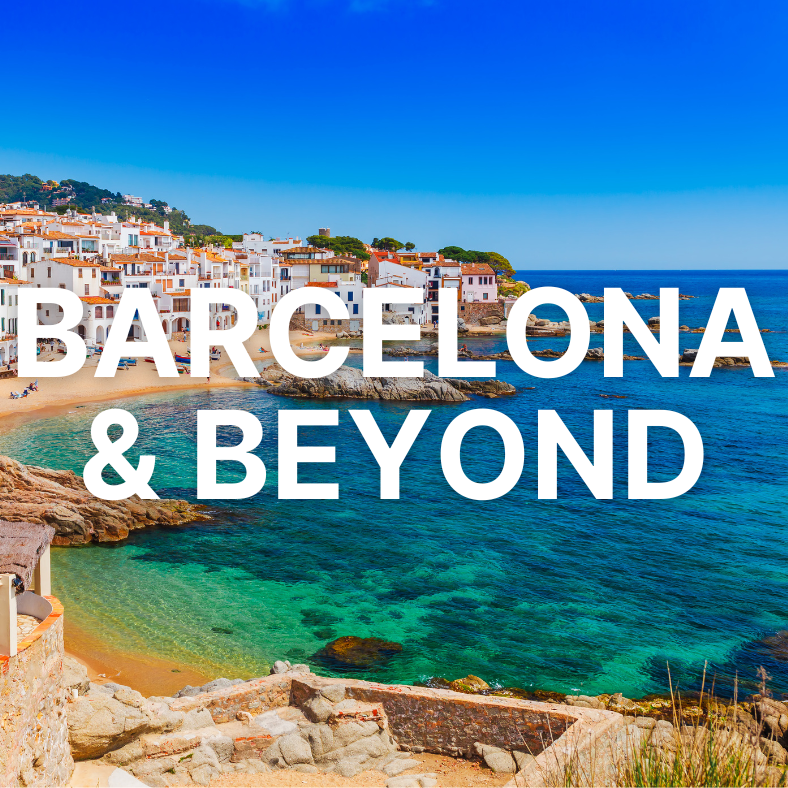
For example, we visit Sagrada Familia at a certain time because that’s when the light comes through at that time. We visit, you know, the pyramids when they open at like the first thing so that we are the first ones in, you know? And when you’re traveling in a group, you don’t have to negotiate with every taxi driver, work out which platform the train leaves from, or determine whether a neighborhood feels safe after dark. You don’t get stuck in crowds and you don’t waste time getting around. You can be present because someone else is carrying much of that mental load, right? And in that case it’s us or it’s the guide. And for many women, that is incredibly free.
Meg: And I think that distinction’s one of the most important parts of this entire conversation, because independent travel offers the freedom to decide, but group travel offers the freedom from deciding neither is more authentic, neither is more impressive, they just meet different needs. So we often hear people say, I could plan that itinerary myself for less. Of course you can. Great. My response is always great, feel free. Please do go onto our website, please do feel free to use our itinerary to build your own.
We’re super transparent about where we stay, about what we do. We don’t hide the names of hotels or pretend the places we travel to are inaccessible without us. You absolutely could go on and use our itineraries as inspiration and try and recreate it. We welcome you to. But what you’re paying for with a group tour, it’s not a secret list of destinations or attractions. You’re actually paying for the work behind the itinerary. You’re paying for someone to identify the right route, test the experiences, build relationships with local partners, coordinate the timings, and solve your problems. You’re also paying someone to help if something goes wrong, or if something happens. So someone who takes you to the pharmacy or to the doctor if you need it. I think Mar between you and you and I, we’ve taken many women on our group tours to the pharmacy and kind of escorted them to different places.
Mar: Yeah.
Meg: You’re also getting access to experiences that might not be available through an online booking platform. So, like a family might welcome our small group into their home because they know and trust our local partner, or an artisan might open a studio for us, a female guide might introduce us to women whose stories are rarely included in conventional tourism. And those relationships take a long time to build. They can’t really always be replicated by finding the same places online and just rocking up at the door. In all the cases, you’re still exchanging one kind of freedom for another. So you’re giving up some control over your individual decisions.
But the departure may be at eight in the morning, even if you’d prefer nine. The restaurant, it might not be the one that you would personally have chosen. You might spend an hour at a site where you would have spent two. Or two hours where you would have spent one. And that’s pretty much the exchange. So when you’re thinking about whether group travel is right for you, you need to decide whether the freedom you gain is worth the freedom you give up.
Mar: And I think that what independent travel also misses is some of the experiences that are not actual tourist activities that are bookable or available. Many of the moments on our tours when we visit someone’s house or someone’s studio or a temple are not packaged for consumption by the regular traveler. And this is something that I put a lot of effort into. It’s also pretty obvious in the language that I use when someone says, I can book and plan all of this on my own. You absolutely can book and plan a trip to this country on your own, but you are booking with a group tour company like ours. You’re also not going to be able to book the same trip on your own. It simply isn’t available to independent travelers. So you can absolutely go to the same place and have a similar trip, but it’s not going to be the same. And I realize that this is not the case with most group tour companies. They tend to visit popular places and participate in typical made-for-the-tourist experiences. And so you can replicate that on your own, but we don’t. We have a lot of local friends in each country who don’t offer tours or experiences to the general public.
And you cannot just show up at a Japanese nunnery and ask them to share a meditation Buddha image copying session with you. They just don’t offer this as a bookable experience. They offer it to us as a cultural exchange and a way for them to share their beliefs, not as a tourist attraction. Another example also from Japan is the Noh mask maker who makes masks for a living. She does not offer tours or visits to foreigners traveling to Japan. She only does this for us. We also now have her brother doing a short demo for us of a Noh performance, and this is extremely unique because a Noh performance is only done once. It’s not rehearsed, the actors show up on the day and they perform only once. That show will only be done once. And it’s never done for a tourist. If you want to attend, you have to attend a three to four hour session or like a performance, which is really long and it’s quite tough because it’s not a lot of spoken and definitely not English. They are improvised. So having the privilege of seeing a short one is incredible. And it’s only possible because of the relationship that we have built and the cultural exchange and respect that our previous guests have shown them, and vice versa. It’s a two-way conversation, it’s an exchange. It’s not a moment of consumption by the traveler.
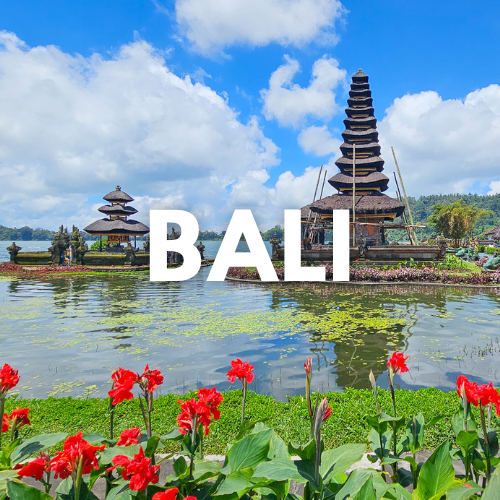
The same goes for the beach barbecue that we have in North Bali. You can stay at the same hotel and ask them for it, but you can’t book this just for one person. You need a minimum number of people for them. And that’s also important. Some experiences are only available to groups because they need a minimum number. I’m now planning my trip to Uzbekistan and Kyrgyzstan, and some of the many activities that we will participate in as a group are not available for one person. Or they are, but you would have to pay for a minimum number of people. Maybe you have to pay for ten people. And then of course it becomes really expensive. It’s just not worth it for them to do it just for one person. They’re not gonna demonstrate how to build an entire yard home just for one person. So this is also the case with some of the cooking experiences. You can absolutely book a cooking class mostly anywhere these days. And many have set times and days, and you can join. You can just book for one person. But most of the cooking experiences that we offer on our tours are only for private groups. They aren’t open to the general public.
And I’m not saying that the ones open to the general public are bad at all, but the experience is just different. It is working on a schedule. It cannot be personalized. It cannot go over the time. It cannot include a singer who comes just for our group. It’s just a different kind of experience. You book it at 5 PM on a Friday and then you just join a group. And by 8, they need to be done. I have participated in many myself, so I know. So many of the best moments of our group tours are like this. They cannot be replicated. They cannot be booked independently because they are friends of ours who open their doors just for us. So they have their own business that’s just not in tourism. And they open the doors to their homes or businesses to show what they do to us. They don’t live off tourism, they live off their craft, whatever that is. And it’s important to know that not all tour companies do this because I know they don’t.
It’s very difficult to organize tours like this with artisan chefs or nuns or artists or performers whose main job is not in the tourism industry. They have lives to attend to, and tours are not their priority. So we need to work around their schedule rather than them working around ours, and so most large tour companies are never going to accept that. They need a tour that is repeatable. They need all of them to be the same. It needs to be packageable. So they need to be able to guarantee that the same quality and experience is gonna be the same on every tour. Ours isn’t repeatable and we are okay with it. We offer something different. But you still don’t have the same flexibility that you would if you did what you wanted and you were on your own.
Meg: And I think those are really great examples to illustrate what we’re trying to say about freedom. So I think the next favorite topic when comparing group travel and independent travel is money, right? Money, money, money, money, money.
Mar: Money, money, money, money.
Meg: Money, money, because people do that. That’s the one I was going for. That’s the reality.
Mar: We’re making money fly.
Meg: We are for anybody. I forget that this is a podcast and I make hand gestures on the screen for recording. But if you heard the clapping, that was us making money fly. But they do. People assume that independent travel is always cheaper than group travel. And yes, sometimes it is. But I’ve found personally that comparison it’s rarely as straightforward as people think. Because you can compare an independently planned trip, staying in hotels, taking public buses, choosing free activities, and you can compare that with a small group tour that uses private transport, expert guides, distinctive accommodation, multiple included experiences. And of course, your independent trip is gonna cost less. But you’re not comparing the same product, right? It’s like comparing the cost of buying instant noodles at a supermarket with eating at a restaurant. I mean, both are food. It doesn’t make them equivalent experiences though.
So to compare costs properly, you really need to look at what’s actually included. So what standard of accommodation are you using? Is the location comparable? Are they using public transport or private transfers? Are the visits guided? Are guided visits included? Are the guides general guides or are they specialists? How many meals and activities are included? Would you realistically book all of those experiences if you were traveling alone? Are you traveling at the same type of year? And I think most importantly, can the costs be shared? So for instance, a private boat, a vehicle, or a specialist guide might be really expensive for one person, but that’s much more reasonable when you divide it across a group. There are also destinations where trying to recreate the same standard and range of experiences independently could cost more though.
Mar: And there is also another cost that people usually don’t think about and that it’s much harder to calculate, and that’s your time. How much is your time worth, right? People sometimes say, I found a hotel for less online, and that may be true. But how long did it take you to find it? How many reviews did you read? Did you check whether the rooms had elevators, air conditioning, or private bathrooms? What about all the things that are not written in a review or that are not in the photos? Because sometimes what I have found in hotels is that you don’t know what you don’t know, right? So you didn’t think to ask or think about something. And then when you get there and it’s like, okay, I didn’t think about that.
Did you verify the location? Did you contact them about your dietary needs? Did you compare the cancellation policies? Did you confirm that the photographs were recent? Because sometimes the photos have nothing to do with reality. A tour price includes months and months and sometimes years of work. It includes scouting trips, local expertise, relationships and contingency plans. It also means that we have l you know somebody on the ground who knows when something is outdated or when a restaurant is out of fashion or a or a hotel is like now needing a renovation and this is why we make changes to our tours, right? It also includes a team that is responding when a flight is delayed, where your luggage is lost or that can react quickly when a road closes, or a partner has an emergency. It includes choices that may not be the cheapest available because price is not the only consideration.
For example, we want our guides to be properly paid. We compensate artisans or horses for their time, and we want the local women who make an experience meaningful to benefit financially from our visit. We’re not interested in driving the price down by squeezing local partners. That’s just not why we started this company. And we will never change our values or in believing that tourism should be an economic force for good. That is part of the cost and part of the value. But I also want to be honest about something. There are independent travelers who would not book the same number of included activities. They might arrive in a city, walk around, visit one museum, and it’s somewhere casual. They may have a wonderful time and that trip will probably cost less. It would be misleading for us to insist that everyone saves money by joining a tour. What good travel can offer is access, convenience, depth, and shared cost. Whether that represents value to you depends on what kind of trip you want.
Meg: And I think people should also consider what they genuinely want to do while they’re traveling alone, rather than comparing a tour with some imaginary version of independent travel where everything just works perfectly. So, do you book the private guide or do you decide it’s too expensive for one person? Do you take the cooking class or do you feel awkward if you’re joining it alone? Do you hire a boat or do you skip it because you can’t justify the cost? Do you eat in the restaurant you really want to try? Or do you choose somewhere more casual because sitting there alone feels uncomfortable? Independent travel can be incredibly rich. We both love it. But sometimes we make different choices when there’s nobody to share the experience or the expense with. And that doesn’t mean that group travel is automatically better. It just means that the real comparison should be based on what you genuinely do and not what you theoretically could do.
Mar: Yeah, and we’ve talked a lot about financial costs, but that’s actually not the real price of good travel. The real price is compromise. That’s the part people need to think about most, honestly. When you travel alone, most decisions can revolve around you. When you travel in a group, they cannot. You might prefer to walk quickly, but someone else may need a steadier pace. You may be ready to leave breakfast in 20 minutes, but the scheduled departure is in an hour. Maybe you want to skip breakfast. You may want to spend longer photographing something while everyone else is waiting to continue. You may love the restaurant while another person would have chosen something different. You may want to be silent in the vehicle while other guys are talking and laughing, or maybe even dancing or singing.
Mar: And you may be very punctual and frustrated when someone is regularly a few minutes late. Or perhaps you’re the person who assumes five minutes doesn’t matter without noticing that twelve people are sitting on a bus waiting for you every morning. These sound like small things, but small things repeated over a week or two can have a significant effect on a group.
Meg: And group travel asks you to think beyond your personal preferences, right? Like it’s not just about you. It asks you to consider what’s fair to everyone. And that doesn’t mean that your needs don’t matter, and it doesn’t mean that you should stay silent if something’s wrong, but it does mean understanding the difference between a need and a preference. And your freedom ends when that of the rest of the groups begins. So what I mean by that is a genuine dietary restriction is a need, but wanting every meal to match exactly what you usually eat at home, that’s a preference, right? Needing physical support. That’s a legitimate consideration that should be discussed before making a booking. But expecting an entire itinerary to be redesigned around one person after arrival, that’s entirely different.
So requesting help because you’re unwell, that’s totally reasonable. But expecting the guide to act as your personal assistant while also caring for the rest of the group isn’t. And we’ll always try to support genuine needs, but no small group tour can provide 14 completely individual holidays at the same time. Or if it could, the price would be totally insane.
Mar: Yeah, then you would be having individual trips in a group with other friends. and I think that this is where self-awareness becomes so important, right? Most of us like to believe that we are flexible and we say things like, I’m very easy going. But the better question is, what happens when you don’t get your preferred outcome? What happens when the room is smaller than you expected and your two massive suitcases and yours and your roommate don’t fit?
Meg: I feel attacked.
Mar: I think that we need an entire episode about Meg’s packing tips. What happens when the Wi-Fi isn’t reliable or it doesn’t reach your room? This can cause a lot of stress for a lot of people. Or when your lunch is later than you would normally eat, and when the weather changes an activity and then you cannot go to a certain place because it’s raining or you have to do it while getting wet. What happens when another guest needs more assistance than you do? And what happens when you’re tired, hot, or hungry? This is like you know something that you always try to avoid on our tours, right? Like people getting hungry, hungry with A, you know, like angry and hungry at the same time. What happens when a guest is always asking questions and always wanting to know more? Like do you roll your eyes? You know?
Flexibility is easy when everything is going well. But the real test of flexibility is how you respond when something is inconvenient to you. Do you become curious and ask what the alternative is? And can you accept that the inconvenience that couldn’t be avoided and you just move on and without letting that disrupt your whole day or even the trip. Can you laugh and make lemonade? You know, like can you assume that the guide is doing her best and you know to separate the disappointing moment from the entire holiday? Or can you put the group’s needs before yours? And most importantly, can you take ownership of your discomfort, your personal needs and wants and prepare so that they don’t become someone else’s, you know? this is like a typical situation, I’m in a bus and other people are laughing and you know, all I want is a silent moment, you can complain and ask them to stop, or you can get your noise cancelling earplugs, you know, you put them on and then problem solve, you know, like this is the difference between complaining and making other people take care of your issue or of your needs, rather than you taking ownership and changing them yourself.
Meg: And we’re not saying that guests should never raise concerns or should accept genuinely poor service. That’s absolutely the opposite of what every tour company wants. Most guides and companies do want guests to tell them when something’s wrong immediately, right? So they can address it straight away rather than just letting it simmer or telling other guests who can do nothing about it, rather than telling the guide who actually can. But there is a difference between constructive communication and wanting issues to be resolved and allowing your frustration to roll over into an uncontrollable, and to dominate the atmosphere, right? So there’s also a difference between expecting a company to fulfill what it promised and expecting travel to operate like a controlled environment because it’s just not.
You can plan incredibly carefully, you can still encounter storms, road closures, illness, industrial action. What else did we had? Mechanical problems, human emergencies. A guide might have a family crisis, the restaurant might close because of one, a hotel might make a mistake, a government might change a permit process, You can also never control the rest of the group, right? So you can’t guarantee that you’re gonna get along. And no amount of planning can remove every variable from travel. But what matters is how the people involved respond to it, what matters is how you react to it, because this will determine whether the group travels for you or not. And it’ll determine whether you have a good time.
Mar: And we have plenty of these examples, like the time that the storm cut off the roads in Iceland.
Meg: Ugh, yes, I remember that. It happened over like two consecutive years on the same day, plus or minus. So we stopped scheduling trips in the second week of the month because it seems like that’s when the weather turns and just becomes the most crazy.
Mar: Yeah, I know. It was so weird. After the second year consecutively, I was like, okay, like we’re not doing tours on the second week anymore, because clearly this is the week when the weather changes and things become really crazy. And I will never forget how stressful it was to find a hotel for fifteen people for the next day when everybody in the entire country was also trying to do the same. We also had to redo the entire itinerary when a rock fell down the mountain in the Amalfi Coast and it cut the roads and there’s only one road going along the coast. So, you know, we had to go around in the mountains.
And you know, it was taking a very long time, and we didn’t even know how long it was gonna take them to restore traffic. We had tours happen during heat waves, unfortunately, more often than we should. We had rain expected on a beach club day and torrential rain in the middle of the dry season in Bali that cut roads and flooding and caused flooding, and even religious processions for a funeral, cutting roads and leaving us in a traffic jam for over an hour. We have had guides having a parent fall really ill and them having to miss the farewell dinner and bad weather cancelling the ferry to sky, meaning that we had to change the schedule for the day with less than twenty-four hours notice. We even had a full power outage in the whole country, in Cuba, the day the tour was supposed to start, with guests landing that day. We’ve had all sorts of things happen, guests needing urgent care and small changes being made to the itinerary to cater to them.
Meg: And this brings me to another important point, how the group dynamic is part of the product, because on a small group tour, people are part of the experience. You’re spending breakfast, transfers, activities, and dinner together. So you hear each other’s stories and you watch each other try new things. You might support someone through a difficult hike, or celebrate a birthday. We have plenty of birthdays on our group tours. It’s really special. You get to hear my singing voice with all the happy birthdays that we have.
Mar: This is a good time to take a break and maybe you can demonstrate that. I’m putting you on the spot right here. You’re singing. You’re singing.
Meg: Happy birthday my singing or happy birthday. Do we do the sexy voice? Happy birthday to you. Happy birthday. This went in a weird direction.
Yes, you might help someone celebrate a birthday. You might encourage a woman who’s doing something she never believed she could do. And we see that every day. And that’s the type of closeness that creates incredible friendships. We’ve seen women meet on our tours and travel together again, visit each other across countries. We often see guests returning for the second, third, fourth, fifth, sometimes even sixth trips with women who they met on their first trips, right? That sense of community is one of the greatest benefits of group travel. It doesn’t happen automatically and it does rely on people being willing to make room for another one. So we can’t guarantee that you’re gonna come on a group trip and make friends. That’s not part of our promise or guarantee. But we do need you to be willing. and open to making friendships and to forming those connections.
Mar: Yeah, and you don’t have to be friends with everyone, honestly. We can guarantee that you’ll become friends with anyone either. But you don’t even need to have the same political views or family structures or careers or backgrounds or personalities to get along with somebody. You do have to have one thing, and that thing is respect. You need to accept that a travel group will include people who are different from you.
For example, our tours are a mix of ages and nationalities and levels of travel experience. There are different levels of confidence, different cultures, religions, identities, very different ways of seeing the world. And that diversity is one of the most valuable parts of travelling together, in my opinion, but only when people are willing to listen.
Meg: For sure. And we genuinely do believe that travel is an antidote to hate, to fear, to bigotry, because it puts human beings in front of us. It’s really easy to make assumptions about a country, a culture, or a group of people from a distance and from behind a computer screen. But it’s so much harder when you sit with someone, when you hear her story, and when you understand the context of their life. Travel only challenges prejudice, though, when we’re actually open to being challenged.
So if you arrive believing that your own way is the only way and is the correct way, then travel’s it’s only gonna become a backdrop for confirming what you already think. Every tour company and every guide wants their guests to come with an open heart and an open mind, us included, and that doesn’t mean that you have to agree with everything you hear, doesn’t mean you have to abandon your own beliefs, but it does mean listening respectfully, recognizing that you’re a visitor, also being curious before you being critical.
It also means understanding that local customs aren’t required to mirror the expectations that you have at home. And this also applies within the group. Like you might travel with a woman whose life is completely different than yours. She might express herself differently, she might have experiences that you just don’t understand. So instead of being critical, ask thoughtful questions. Listen. You can accept that not every conversation needs to end with an agreement, but kindness for us is non-negotiable in a group tour. It’s absolutely non-negotiable. We can’t promise that every personality will naturally click, but we do expect that everybody contributes to an environment where other women feel safe, included, and respected.
Mar: And the atmosphere is quite fragile in a group. One person who complains constantly can shift the mood of an entire day, and one person who is repeatedly late can create resentment amongst the others more on time. One person who speaks dismissively to a guide can make everyone feel uncomfortable. And someone who is rolling their eyes at another guest who always has something to us brings negative energy. We all know what an energy vampire negativity can be.
Meg: And the opposite of that, also totally true. So the person who laughs, right, when the rain starts. That can change an entire mood. Someone who plays music and starts dancing when everybody’s delayed for a bus takes the attention away from the waiting. I think the members of our Greece tour recently, while we were waiting for a delayed ferry, got a karaoke version of Mamma Mia from me.
Locals who were also waiting for the ferry were looking at me, going, What on earth is this woman on? Well I’m just like,
Mar: So is this a moment for you to sing Mamma Mia as well? Today’s Singing Meg podcast, we have to rename it.
Meg: I literally stood in a public ferry terminal with our group of 40 women in Greece going, You are the dancing queen, young and free, only seventeen. And all of the local Greek who were waiting there were looking at me like I was the strangest person on earth. But it was fun. People laughed, people were distracted from the fact that the ferry was delayed. The woman who notices that someone else is nervous and sits behind her can also change her entire trip. Or someone who says, This wasn’t what I expected, but you know what? Let’s make the most of it. That turns a trip disruption into a shared memory. And that energy moves throughout groups. You don’t need to be the loudest, you don’t need to be the funniest, you don’t need to be the best singer. You just need to you just need to understand that you’re participating in a shared experience, right? Like a traveler who can always see the positive side of everything, you can make others see it too.
Mar: Yeah, exactly. And humor is one of the greatest resources that the group can have. Some of the stories people tell for years begin with something going wrong. For instance, the meal that took forever but led to an unforgettable conversation, or the rainstorm that had everyone laughing in the hot tap. I’ve seen that. The unexpected detour that you took to a waterfall without other tourists around because you couldn’t do what you were supposed to do. Or in the moment, you know, like these things are an inconvenience and they are rarely enjoyable, but a willingness to go with the flow can prevent an inconvenience from becoming the only memory of the day. The aim isn’t forced positivity. You don’t have to pretend that you are delighted when you’re disappointed, but it’s the ability to say, hey, this isn’t what we planned. What can we make of it?
Meg: And we’ve been talking a lot about personalities and approaches in a group trip. While many people are probably thinking this is not for me, I’m an introvert, I just want to be left alone. I don’t want to participate in group dynamics. That’s totally okay, but you don’t need to be an extrovert to enjoy group travel. So I did really want to address this part of considering whether group travel is right for you. don’t need to entertain the group, don’t need to talk at every meal, you don’t need to become best friends with everyone. Many introverts we found actually do enjoy group travel because of the social structure. The social structure removes some of the pressure of meeting people. So you arrive knowing that everybody’s chosen the same destination, the same experience. There are already natural conversation topics and you have activities to share. And we’ve found that relationships develop over time rather than requiring you to walk into a bar and introduce yourself to strangers. And especially on our itineraries, you do also have time for yourself.
So our tours include free time because we do know that people need space. We do know that people need time to customize their experience and recharge. So for instance, you might go for a walk alone, you might book a spa treatment, you might decide to rest in your room or explore independently for a while. That’s totally fine because joining group travel doesn’t mean spending every second together like a marriage. Doesn’t mean spending every second together. You can also choose to skip group activities or have room service if you want to.
Mar: Yeah, but it does mean that being a group trip does mean that you have to participate in the activities. If you avoid every shared meal and skip the activities and do not engage with anyone, then a small group tour may not offer much value to you. It can also become quite rude to the local women providing the experience if you’re constantly skipping them or not paying attention. In this case, you would most definitely be better suited creating something independent, just for you. And the goal is balance, right? You can protect your energy and still show interest in the people around you. You can say, I’m going to have a quiet evening tonight without making the group feel rejected. You can listen more than you speak, and you can be quiet on the bus. You can connect deeply with one or two people rather than everyone equally, and there’s no single correct way to be social.
Being an extrovert does not automatically make someone a good group traveler either. An extrovert also needs to make space. She needs to notice when someone else is trying to speak. She needs to avoid dominating every conversation. She needs to recognize that not everyone wants constant interaction. So she needs to respect the introverts or the people who are in the middle. Good group travel is not about being outgoing. I’d say it’s much more about being socially aware.
Meg: And I think another misconception is that booking a tour removes all the personal responsibility too. But it doesn’t. It removes a lot of the planning, sure. But you are still responsible for yourself. So you need to read the information provided. You need to understand the activity level. You do need to bring the required clothing and equipment. You need to arrange appropriate insurance. You need to manage your passport, your visa, your entry requirements. do need to disclose relevant dietary requirements or mobility needs before booking so that they can be assessed properly. You need to arrive on time. You need to look after your belongings. And you really need to be honest, and this is hopefully the point of this episode. You really need to be honest about whether the itinerary is suitable for you. A tour guide can support you, but she can’t make your shoes appropriate for a hike, right? If you chose not to follow the packing guidance. We can’t create a visa at the airport, though I did actually achieve that when I got it recently.
Mar: I know what you’re about to say.
Meg: When I was denied boarding from Cairns to the UK, the first time I’ve been denied boarding in my life, I was traveling from Cairns to Greece for our recent Greece tour.
Mar: Never too late for that to happen.
Meg: It is not. and I got to the airport and was denied boarding because I was transiting through the UK and didn’t have a UK visa. I argued that I’m not leaving, I’m not entering the UK, so I don’t need a visa. I’m simply landing, spending seven hours and then getting on my flight to Athens. However, I was landing in Gatwick and then I was departing from Heathrow, so I did indeed need to collect my bags, enter the UK, and go on a fabulous bus tour between the airports. So I’ve gone back to the back of the airport with my tail between my legs, frantically pulled up my app, tried to organize my UK visa, and fortunately it came through within five minutes. I nearly cried real grown woman tears at the woman at the counter. But yes, then so I did. I did actually magically make a visa appear at the airport. But we can’t guarantee that’s gonna happen every single time. and so I WhatsApped Mar that had happened.
Mar: Thank God you didn’t tell me in the moment before you managed to get your visa and then I would have also been so stressed.
Meg: But I’m landing, there was Wi Fi on the plane, and I start getting all these ping notifications saying about like commenting on how I didn’t get my visa and how people are so glad. like, how? How?
I haven’t even landed yet. How did people find out so quickly? And Mara had already included it in the newsletter that day before I’d even landed. I like good news travels fast.
Mar: Thank God you got that visa. I don’t even want to think about what would have happened if you didn’t get it.
Meg: I would have cried.
Mar: But anyway, going back to the personal responsibility, please get your visas. Our teams also cannot safely accommodate a serious dietary requirement that was not disclosed until the first meal. And that’s a big one. A lot of planning and preparation goes into choosing menus, so it’s not appropriate, kind nor often possible, to change an entire menu because you have changed your dietary requirements mid tour. This is not about blaming travellers, it’s about a partnership, right? We provide detailed information because preparation matters.
Meg: And I think personal responsibility, it’s important to note that it also includes emotional preparation. So please do ask yourself what you tend to be like when you’re tired or how you like handling spaces, how do you respond to different personalities? Do you communicate directly or do you stay silent until that frustration builds? Can you ask for what you need without demanding it and without demanding that everyone else adapts? Are you able to receive an answer that you might not like? So can you be told no? Because sometimes the answer will be no. No, the group can’t leave later. No, the restaurant can’t create an entirely separate menu without any notice. No, the restaurant doesn’t have Diet Coke. No, the guide can’t add an unscheduled two-hour stop. No, sorry, a room upgrade, it’s not available. And no, we can’t stop every 20 minutes for a bathroom break. A company saying no, that doesn’t automatically mean it doesn’t care. Sometimes saying no is just necessary, right? To protect safety, fairness, or to protect the experience of everyone else who books who booked it and expects it. A responsible group traveler understands that boundaries are part of good service.
Mar: And let’s be very direct here. Who may not enjoy group travel? You may not enjoy it if you need complete control over your schedule. I think that we’ve been talking about it for a while now, so it’s kind of clear, right? But for instance, if you want to decide every morning what the day will involve and a set itinerary may feel restrictive, then group travel is probably not for you. And certainly, for example, like in our Croatian sailing trip, right? Like the itineraries and schedule may change up until the very morning based on things like the weather or the port authorities. You may not enjoy it if waiting for other people makes you disproportionately angry.
There will be moments when someone takes longer, asks questions or needs assistance. And you may not enjoy it if you dislike eating at a predetermined time and at predetermined restaurants. Maybe you prefer to stop at a bakery and buy a sandwich. You may not enjoy group travel if you require a significant amount of personal space and do not want regular interaction with others. Because while you can skip some activities and meals, you cannot just skip the group for the entire time, right? They came too. You may not enjoy it if your expectations are based on every detail happening exactly as written, because as we said, there are lots of things that can happen, right? You may not enjoy group travel if you want the freedom to change your schedule based on how you feel every morning. You may not enjoy our specific tours if supporting local businesses, engaging with unfamiliar cultures or participating in hands-on activities are not meaningful to you. And that’s fine. This is all fine.
Meg: And I yeah. I was gonna say the same thing. I was just gonna jump in and say that doesn’t make you a bad person, it doesn’t make you a bad traveller, it just means that a different style of travel might suit you better. And that’s why we’re recording this podcast.
Mar: For sure. And you may prefer independent travel because planning is one of your favorite parts of the experience. Some people genuinely love building an itinerary. I know I do, and that’s why I love my job. This is what I do for a living every single day. Some people like me genuinely do enjoy comparing routes and finding accommodation and discovering restaurants. They feel energized rather than burdened by the research. That’s you, you may miss having control over those decisions. Or you may prefer independent travel if you like moving slowly. Our itineraries are thoughtfully designed, but they are active. Are relatively quick. We want to show guests the destination. If your ideal holiday is spending five days in one neighborhood with no set plans, a tour may feel too structured.
Or you may prefer a private tour if you have very specific interests or needs that require individual tailoring and that are not what the general public likes. You may prefer traveling alone if solitude is central to what you want from the trip. Some people, some women in particular, want to travel on their own because they want time on their own to be with themselves. I also love independent travel because I work when I travel. So if I am by myself, I can organize my day as I please. I work early in the morning and go exploring most of the day, then I return in the evening for more work and a room service or grab and go dinner. Somebody else may not like to wake up early, or maybe they like to wake up early and go and do things and not work.
Meg: I think what it ultimately comes down to is that there’s no right or wrong way to travel. Group travel isn’t a more evolved version of independent travel, and independent travel it’s not a more courageous option than group travel. They’re just both tools. Choose the one that serves the experience that you want.
Mar: Yeah. And we want to finish with a series of questions here for everyone listening. Maybe this is what’s gonna help you choose, right? This is not a scoring system. There are no right or wrong answers. There’s no points for the winner. But take a piece of paper and answer them honestly as you’re listening.
Meg: And please don’t answer them as the version of yourself that you would like to be. Please do answer them as the traveler that you actually are, because this is meant to genuinely help you. So go on, get a pen or paper or open the notes app on your phone.
In the meantime, if you haven’t done so yet, please consider leaving us a review. We really love reading them and they really help others discover the podcast, as you know. So shout out to Danny for the review. Thank you so much.
Dani said, podcast has changed the way I think about travel. I’m happy to hear honest and inspiring stories of women and how travel adds to their lives. Thank you. Thank you, Danny. I’d also like to say hi to Denise for her comment on the pet sitting episode number six. She said, Okay, this is fascinating. Thank you for the idea and something to look into, both as a homeowner and with pups and a traveler. Thank you so much, Denise.
So if you do leave us a review on Apple Podcasts or a comment on Spotify or YouTube, we’ll also read it out loud on the podcast.
So who has their pen and paper and are ready to answer the following questions honestly? First, how important is it for you to control your daily schedule? Would you feel relieved waking up to a planned day, or would you feel restricted that you can’t choose what you want to do?
Mar: And remember, don’t lie to yourself. Don’t say, I’m an easy traveler, but then you realize that you need to be up at eight and at eight thirty you need to be having breakfast and at nine you need to be leaving. So be honest with your answers. Question number two Are you on a budget when you travel or do you just like to feel like you got good value for money?
Meg: Question number three. Do you like to participate in activities and experiences when you travel, or just observe, admire, and visit places and landmarks?
Mar: Number four, do you like to stay at nice hotels but would rather have someone to share the cost with because they are expensive?
Meg: Number five, do you like planning everything yourself or is your time valuable and you would prefer to let someone else do it for you?
Mar: Question number six, how do you respond when plans change? Can you feel disappointed and still move forward, or does a change tend to affect your mood for the rest of the day? Or are you someone who likes to change plans constantly depending on how she feels?
Meg: Question seven. How comfortable are you with compromise? Can you accept a restaurant, hotel or activity that is not exactly what you would have chosen? And are you happy with the majority deciding when plans need to be made or changed, or do you want things done your way?
Mar: I think we’re on question eight. How do you behave when you are tired, hungry or uncomfortable? That person of you will probably appear at some point during a trip. And what about when others are tired, hungry or uncomfortable? How do you feel then?
Meg: I’ve lost count of which question we’re at, but question next question.
Mar: Question number nine.
Meg: Question nine. Can you distinguish between a genuine need and a personal preference? And can you communicate both of them respectfully?
Mar: Number ten. Are you willing to be on time because other people are waiting? Not five minutes after the meeting time, but actually at the meeting time.
Meg: Question eleven. Can you share attention? Can you accept that the guide is responsible for everyone and not only you?
Mar: Number twelve, are you curious about people whose lives and beliefs differ from yours? And can you listen without immediately judging or correcting them?
Meg: Do you like to visit all the popular places and see the famous Instagram spots?
Mar: Number thirteen, are you willing to participate, to try the activity, to taste the food, to speak to the local host, and to occasionally feel a little bit awkward?
Meg: Number fourteen, do you want a connection? Not necessarily constant conversation, but the experience of sharing meaningful moments with other women.
Mar: Number fifteen. Can you take responsibility for your own preparation? Reading the information, packing appropriately, arranging insurance and being honest about your abilities? Or do you like to control every single detail yourself?
Meg: Question 16. Can you tolerate eating alone or even do you enjoy it? Or do you really dislike it and you feel uncomfortable when you have to dine solo?
Mar: Question seventeen Do you live alone normally and hence know how to take care of yourself if you get sick or need medical attention? Or is it your worst nightmare to get sick alone in a foreign country?
Meg: And perhaps the most important question, when something does go wrong, because something always does go wrong, do you want someone else to solve it for you, or are you happy with solving issues yourself? And please do take a moment with that one, because travel will test you, it always does.
Mar: So now that you have all your answers, independent travel is amazing. Both Meg and I have done it for more than 20 years. It lets you control every detail and you have the freedom to do what you want, when you want, with whoever you want. And this is one of the main reasons women say they love to travel solo. You can even change plans at the last minute. You can wake up at five to see the sunrise or at noon if you had a late night. And it is the travel style I favor the most because it allows me to work and travel. I am also an extrovert. I can easily strike up conversations with someone at the destination. And of course I am a very experienced solo traveler. I know how to handle challenging situations, I know how to take care of myself and how to resolve anything that life throws at me.
On the other hand, group travel can offer extraordinary things. It can offer access, it can offer ease, it can offer friendship, the confidence and the freedom to experience a destination without carrying every single logistical decision yourself. It also offers a local friend to take care of you should anything happen, a company at every meal and a group of potential new best friends. But it does ask for something in exchange from you. It asks for flexibility, for patience, for compromise, for curiosity, and for kindness. And most importantly, as we just said, personal responsibility.
Meg: And we’re incredibly proud of the service that we do provide. We care about the small details. We work really hard to create meaningful itineraries and to support our guests. We choose local women and smaller businesses because we believe that travel should create opportunity not simply extract from a destination. But our philosophy and travel style, we know that it’s not gonna suit everybody. We accept that. We would rather be really honest about who we are than trying to appeal to every possible traveler. We want women on our tours who arrive with open hearts and arrive with open minds. We want women who respect other people’s points of view, women who understand that local doesn’t always mean perfectly polished. We want women who can participate, who can adapt, who can make the most of the unexpected, and women who can recognize that they’re part of the atmosphere. They’re not just customers observing it.
Mar: And if that sounds like you, small group travel may give you some of the most meaningful experiences of your life. And you may arrive not knowing anyone and live with friends across the world. You may visit places you would have never found independently. may discover that you are braver, more adaptable and more capable than you realized.
Meg: And if that doesn’t sound like you, that’s valuable information too. Perhaps independent travel or perhaps a private guide, a cruise, or a slower, more flexible itinerary would be just a better match. The goal isn’t to choose the travel style that other people consider the best, right? The goal is to choose the travel style that allows you to enjoy the destination and it allows you to show up as the best version of yourself.
Mar: So, is group travel for you? Only you can answer that, but hopefully after this conversation between Meg and I, you know what the question really is asking.
Meg: So thank you so much for listening to the Solo Female Travelers podcast. Don’t forget to leave us a review. We do love reading them. Each and every single one of them makes our day, we’ll continue to read them in each episode. Please do also tell us in the comments. Is group travel for you? We’ll see you next week.
Mar: See you next week.
–
And it’s time for this week’s embarrassing travel story. We’ll call this one Fairy Smut. This one is from anonymous and here’s her story.
I was on a quiet train and decided to listen to my book which happened to be the latest in one of the Fairy Smut series that I had been reading. If you know you know. I put on my earbuds, pressed play and couldn’t hear anything so I kept turning up the volume thinking it must just be down. These headphones have a noise cancelling feature, so I really couldn’t hear much at all. When I turned the volume all the way to 100, I finally realized that the sound wasn’t coming through my earbuds, but it was actually playing out loud on my phone.
Of course, it had to be in a particularly descriptive scene, if you know what I mean. I grabbed my phone, turned it off as fast as I could. And people didn’t seem to react much, so I thought, okay, embarrassing, but not the worst. However, later when it was time to get off the train, I was standing by the bunch of other people. And a nice gentleman behind me winked and said, nice book, did you finish it? And then he grinned at me. I said no and turned away very quickly. And I’m truly not sure if he knew what I was reading or he just wanted to be funny, but it definitely made me want to disappear off the face of the earth at that moment. I did enjoy the book by the way, and I would highly recommend it, but maybe listen at home or when you’re sure your headphones are actually connected.
Thank you so much for sharing your story with us, Ms. Anonymous. If you have an embarrassing travel story of your own, we’d love to hear it. You can submit yours on our website at www.solafemaletravellers.club