
In this episode of the Solo Female Travelers Podcast, Mar is joined by Marinel de Jesus, a former civil rights attorney turned mountain nomad, filmmaker, tourism equity advocate, and founder of Equity Global Treks and the Porter Voice Collective. Marinel shares her journey from practicing law in Washington, DC, to building a life around hiking, community-led tourism, and advocating for the workers who make some of the world’s most famous treks possible.
Together, Mar and Marinel take a closer look at the realities behind trekking in places like Peru and Nepal, including porter working conditions, wages, overloading, cultural identity, tourism leakage, and the power dynamics between local workers and tour companies. They also discuss the additional barriers women face as guides, and how Marinel’s Himalayan Women Trail Leaders initiative is helping women in Nepal develop not only guiding skills but also leadership and self-advocacy.
The conversation offers travelers practical reasons to ask harder questions before booking a trek and to think beyond the experience they see as tourists. Women who love hiking, trekking, solo travel, or community-led tourism will come away with a better understanding of how their travel choices can support greater equity for the people behind the journey.
About Marinel:
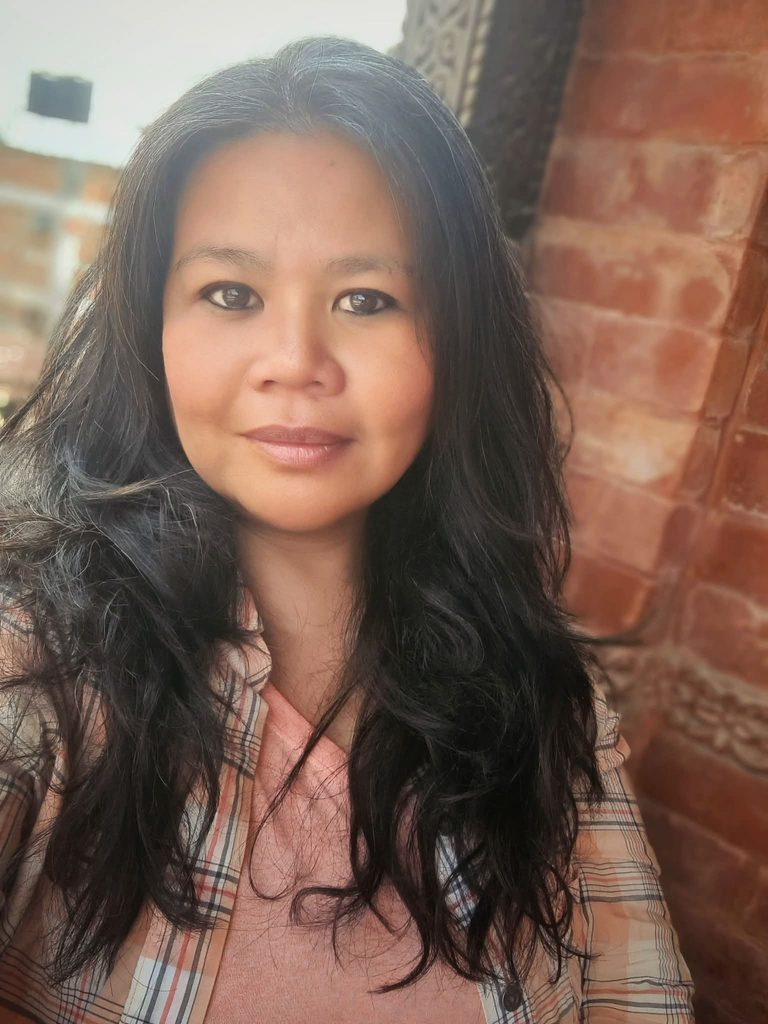
Marinel M. de Jesus, Esq. is a Filipina American and a former human rights lawyer turned social entrepreneur, writer, and global advocate for equity and decolonization in the tourism industry. She is the founder of Equity Global Treks and The Porter Voice Collective, a nonprofit dedicated to advancing the rights, dignity, and leadership of porters and other historically marginalized tourism workers.
Her work examines how colonialism, patriarchy, and unequal power structures continue to shape the global tourism industry, particularly in mountain and adventure tourism. Through advocacy, research, storytelling, and workforce development initiatives, she works to shift tourism away from extractive models and toward systems that center local voices, equitable labor practices, and community leadership.
She is also the co-founder of the Himalayan Women Trail Leaders Initiative, which supports Nepali women in developing pathways to professional trekking-guide leadership. Drawing on her background in human rights law and years of working within the global trekking industry, Marinel challenges travelers and tourism professionals to reconsider who holds power, who benefits, and whose voices are heard in tourism. At the heart of her work is a commitment to building a more equitable and decolonized tourism industry in which local communities are not simply participants, but leaders and decision-makers.
Links mentioned in this podcast:
Brought to you by…
The Solo Female Travelers Podcast is sponsored by Solo Female Travelers Tours, our small, luxury, women-only tours that support female owned businesses around the world. Join us on a trip of a lifetime that helps make the travel industry more equitable.














Transcript:
Mar: Hello everyone, I am Mar Pagès, one of the hosts of the Solo Female Travelers podcast. Welcome to the show.
Our guest today is Marinel de Jesus, a former civil rights attorney who became a mountain nomad, a filmmaker, tourist equity advocate and many other things that she will tell us more about today. She’s the founder of Equity Global Treks and the Porter Voice Collective among other initiatives. She was also the director and executive producer of KM82, the Porter Voices of Peru’s Camino Inca Trail.
Marinel’s work looks behind some of the world’s most celebrated treks to understand the lives of the porters, the guides, the cooks, and all the other workers who make them possible. She’s also an advocate for true community-led tourism and has started many other initiatives in Nepal and Mongolia, including a nomad camp. And today I would like to talk about the realities that travelers don’t see, the choices that porters and guides who make all these iconic tracks happen actually have or not have, and the barriers that women face in this industry because they are, another set of challenges that women have on top of the ones that men have. We’ll also look at decolonization and tourism leakage, who gets to design and profit from these experiences and how much of what travelers spend actually stay with the local communities and how all of us can make better decisions before booking a trek or even a tour.
Marinel, welcome to the Solo Female Travelers podcast.
Marinel: Thanks, Mar Thanks for inviting me. I’m excited to be here and talk about these important topics.
Mar: Very important indeed. And some people take up hiking as a hobby, but you started taking friends to Kilimanjaro, to Nepal, to Peru, and you were still a lawyer at that time. And that suspiciously sounds like a second unpaid career. Can you please introduce yourself and tell us a little bit about your story and your personal journey from the courts of DC to the mountains of the world?
Marinel: Yeah, so I actually am Filipina. I was born in the Philippines, moved to America. So I’m an immigrant to the US. And I as an immigrant, it’s a typical life trajectory. I was gonna study hard and then get a job and become a lawyer in my career in my world. So I ended up moving to Washington DC, had a successful career as a prosecutor, worked for a long time, and then by the fifteenth year, I kind of made the decision. It’s been kind of like a brewing thing. It’s not just like overnight. So for a few years before that, I really felt drawn to hiking and fell in love with it and then realized that I didn’t really want to take the next step of being a judge after 15 years of being a prosecutor.
So in all honesty, I was kind of choosing between becoming a judge or becoming a hiker. So I mean it sounds insane, but it is true when I look back, it’s like that’s hilarious. But then I thought, what do I do with hiking? You know, like what is that exactly? So, because I have to make money, I have to live. So, but then my friends were seeing a lot of things along the way because I used to organize a lot of treks through meetup.com. And that was just a hobby, but it turned out to be my training ground because as a hobby, I went to Peru and brought them to the Inca Trail. That was my first time at Inca Trail. 30 people came from Washington, DC with me.
And people said, wow, you can organize. I think you have some skills here. And I was laughing because it’s like, no, I’m not gonna quit my job to organize trips. And then they were right. At the end of it, I just basically thought to myself, maybe I should start a travel company. That’s the way to hike, that’s the way to lead trips. And I did in 2016 as a part-time kind of project. And then 2017, my mother passed away. And that was actually the turning point. All the fears I had went away. I guess you face mortality and become real. Like the question of what do you want to do with your life? You’re unhappy and you know it, and you know you can die, you’ve seen it happen. So what are you gonna do with your life?
And so for some reason I went to the funeral. After that, I was very clear I wasn’t coming back to my office. I was never going back. And so that’s when I realized I gotta start planning how to get rid of my house, how to get rid of a lot of things. And then it was a lot of work to leave America. I eventually got rid of my house and possessions except for my cats, so I moved them to Peru. So they were the only ones that I took with me from my prior life. And that was even a journey like trying to figure out what to do with your pets because I almost gave them up too. So true story. So it’s tough, you know, shifting when you have all these commitments. And but I didn’t give up. And they lived in Peru, and that’s where they, they did pass away a few years ago. But they definitely spent a lot, you know, the last few years with me in Peru. And Peru was my starting point. And that’s how I got introduced into the Quechua community. And then eventually the KM82 film that you mentioned, because I became friends with the Porter Federation president. I was introduced to him and then I just asked questions, had tea, and then learned so much about what they’re doing and the problems they’re facing.
And eventually you build trust, you know, like just kind of like because I’m listening there, you know, I’m like sitting with him. I live with him in the same community. So it eventually evolved into this kind of thing. They just want to tell their stories and I didn’t know what to do with it because it was so important to share this story. I realized I should create something. And the Porter Voice Collective was born in 2019. And my only goal was to kind of like research and interview and maybe put them on the platform. And then the film came up and I said, Maybe we need to do a film because how far can I go with writing a blog? No one really reads blogs. It’s hard to market things on the internet these days with blogs. But if I do a film, maybe it’s more compelling. And I did. And that’s how KM 82 was born. I just wanted to interview them, capture them on film as much as possible, and just tell the stories because I often go to a company and talk about this and they deny that it exists, the problem, because they always: eeverything is fine. That’s not true. Our porters are happy. So they’re always dismissive.
And as a lawyer, I’m always thinking, you don’t believe it? I’ll give you evidence. So that’s kind of how I like to use the film as my proof to prove a case and to win that case. But obviously it’s a tough case to win, and I’m gonna be honest. Even though I do have the proof and the evidence and maybe at this point people know more about it. Nothing is being done really. Proactively. But I went as far as just gathering the data and research and information that people are always denying. So if anyone wants to deny, you have KM82 to share. So that’s sort of like the background of the origin story of my life as a nomad and quitting my job and becoming you know, entrepreneur and now running a nonprofit.
Mar: And there’s many other things that have happened along the way. And after that, which I will ask you after, because just before we started the recording, I was marveling at, I have no idea how you get so many things done, because I have only just one of the 10 things that you’re running and that’s more than enough work. But for someone who has never trekked the Inca Trail, can you briefly introduce it and explain what it involves and how the porters are such an essential part of the experience, even though they are often invisible?
Marinel: Yes, so the Porter’s work on the Camino Inca, which is a four day trek. It’s a classic trail that’s been known for decades. I think it’s been fifty years or more now, fifty years old on a tour itinerary. It started out with I think a discovery, as always, by someone from the West, a male person, who came over to the region and realized there’s the Machu Picchu ruins, right? That area, the citadel. And then in order to do that though, he had to hire people to do the labor to carry gear. Because you know, back then I think they also had maybe mules, but they needed people to guide him.
So that’s kind of how the guiding and portering started on that trail. And from there, obviously people started realizing, there’s tourism here, there’s money here, we can create an experience. And then that’s when Camino Inca was developed with the government and you know private companies coming in, foreigners coming in, and then it became a mark it became a marketing thing for everyone. It’s like, okay, we’re gonna now market Machu Picchu, plus the Inca Trail. So they all discovered that there are so many trails. Inca Trail, the four-day one, is not the only Inca Trail. The Inca Trail runs through all over Peru and even beyond. In fact, there are some trails that haven’t been discovered yet. So when we talk about the Inca Trail, it’s immense. It’s not just a four-day classic trail that is touristy. So porters came out of it because of the fact that once the government came in and now they want to, they realize they want to preserve the ruins because it’s gorgeous, it’s beautiful, it’s historic. Plus, the steps to get there are made of like stones, like stone steps. They want to preserve that. So in order to do that, they want to avoid having mules and animals on the trail. And that’s when they thought, okay, well, the humans will carry the bags. And so that’s when the portering started. And that became a very effective way of getting tourists to come without doing the work or carrying their own bags. And to this day, yeah, it’s still the system that’s still working for the companies.
Mar: I was researching to understand how many people undertake this trail every year and I saw between 25 and 30 thousand are some of the statistics that are being mentioned and that there are some rules as to how many people can be on the trail every day, something around 500, is that correct?
Marinel: Yeah, five hundred including porters, everyone, guides. So the tourist number would be less, but it is five hundred a day, yeah.
Mar: And typically, how many porters do you need if you have 10 tourists?
Marinel: Actually, I think it’s a lot. I mean, for one to two people, maybe you’ll at least get six, seven, eight porters because they have to carry tents. You know, they have to carry all the food and then imagine if there’s ten people, right? That’s a huge group. So it’s kinda almost the same. I would say kind of the same system as in Kilimanjaro actually.
Mar: Right. So if you have 10 guests, you will end up having 60, 70 porters and guides and, you know, chefs and stuff. It’s about, yeah, it’s about six to seven per person, more or less. And I assume that, you know, the Inca Trail, the Inca Trail has become a very, very popular place in recent years. Right. So I imagine that with all of this rising popularity, things have also changed. Do you think they have changed for the better or for the worse?
Marinel: That’s a good question. I mean, it depends on what context, right? I mean there’s the preservation, conservation aspect of the place, right? It’s always a controversy, controlling the crowd, for example, or preserving the environment and preserving the cultural heritage. I mean I can only maybe speak regarding the porters because the other part I’m not really as an expert on it now these days. But I think like for the porters, as far as I’m concerned, I know they have the law, there are laws for porters, they do have regulations on how many they can carry. The payment even in 2022 they amended the laws for better wages, better conditions. There’s even a condition on overtime. There were improvements.
So if you ask me, have there been improvements in terms of porter laws? As far as I know, yes, because I was told in 2022, and I did get the copy of that law actually. Alberta or someone did share that in and then I saw that okay, I saw the numbers have changed in terms of salary and all other things. But the problem is it hasn’t been enforced, it’s not being implemented. So I don’t know how you can say it’s improved. In fact, maybe it’s just the same or even worse. And from what I’ve heard after that happened, the 2022 was enacted. I talked to some companies and companies’ attitude is like, yeah, that happened, but you know, yeah, it’s not really happening, you know.
So yeah, like there’s it’s not like they’re saying, yeah, you know, we now we did this and that. So what I heard is that the companies kind of got together to try to figure out a strategy to fight it. That’s kinda like the impression I got. And I think they’re successful. ‘Cause as far as I know, it hasn’t been really enforced. And the government, I mean, there hasn’t been any enforcement on their end. They created the law, but it’s just yeah, it’s just there.
Mar: And can you walk us through what a porter actually does? Because the hikers are hiking up and then the porters will whisk through and they’ll bring all of the stuff. And then magically when you arrive as a tourist, as a trekker, when you arrive at camp, everything is set up. What does that mean and what goes on behind the scenes that the tourist doesn’t see?
Marinel: Well, basically they’re the ones who are taking care of all the things to make your stay comfortable, to have your hike to make it easy for you to climb mountains. They carry everything. They’re basically carry loads. That’s the duty of a porter. But besides that, they basically set up the tent, set up the gear, the dining area, they help the cook. They’re usually running up the mountains and trying to get there sooner than you so that they can set up the place before you get there. And also they take care of clients when people get sick. They walk you out if that’s necessary, or they can sweep. They can even be at the back of the group and trying to make sure if there’s a slow person, the guide may need some help from the porter. They do a lot of different things, but mainly taking care of the clients, really. They’re almost like your parents or someone who’s your caretaker trying to make sure you’re fine. So obviously imagine if you’re doing Everest climbs, right? The Sherpa community who are like high altitude porters. That’s a very difficult job taking care of people at high altitude. So the job description is pretty much the same. Carrying a lot of things, but also doing other things to make everything better for a client and that’s why they’re so essential to everyone.
Mar: Right, so they’ll be packing up the camp and everything once the hikers leave and then they’ll rush past and they’ll set everything up, they’ll clean, they’ll fetch water I guess, there are portable toilets I guess also that they’re carrying or are these existing in the…
Marinel: Yeah, that’s also part of it. Depends. Yeah, in Nepal in Nepal tea house, but you know, for example in Peru, it’s definitely like Kilimanjaro, you have porters, you know, toilet tents. Yeah. So they carry that.
Mar: Yeah, and there’s somebody who needs to carry the toilet and all the water that is needed for everyone. And technically, like you say, there’s regulation to how much they can carry, right? 20 kilos for the men, 15 kilos for the women. And then they carry their own personal things, I suppose. And then they’re supposed to be given food and a place to sleep and a tent to sleep and proper food that will be nutritious and obviously energetic considering you’re hiking up. What is the altitude of the Inca trails?
Marinel: The Inca Trail itself is actually the highest point is about, I wanna say above three thousand, sort of like three five. So it’s not very high.
Mar: Meters.
Marinel: Yeah, meters, yeah. So okay, actually let me think about it for a second. Maybe it’s even more than that. I think it’s above four thousand meters. So that’s the highest point of a woman’s past. And then the rest is just like, you know, hovering around between twenty five hundred to like three thirty five hundred meters.
Mar: So there are rules to how much they can carry, to the fact that they have to be given food and a place to sleep. I believe also their clothing is regulated, right? They are not allowed to wear their traditional clothing. I think I heard that in the KM82.
Marinel: Yes, so that’s the yeah, so that’s the thing that bothers me a lot because not only did they make them carry and do this menial work that’s not even worth the pay, they actually tried to erase their culture and identity as well by forcing them to wear uniforms with the branding of the company on the shirt.
Mar: Right. And then I think that to me the worst part is that once they reach the top they cannot even enter Machu Picchu.
Marinel: Yes.
Mar: How is that?
Marinel: Because there’s a limit to the numbers of people who can enter Machu Picchu.
Mar: So they stop at the gate.
Marinel: Yes, they don’t want them to take up that space, right? Because that is money, profit. So anyone who enters Machu Picchu should be a paying client or the and the guide, right?
So the sad thing is we did the filming and we followed their lives with Alberto and the other porters. And actually before you enter Machu Picchu, you have to go down the mountain all the way to the train station early in the morning. And they’re usually rushing down because they don’t want to miss the train. There are things people don’t even know how dangerous it is, because I went down there. Like in the dark, and I’m like, I can’t believe they’re rushing because you gotta catch the train, and that’s the only way to go. And they’re just so used to it.
But I thought it was just ridiculous, like how insanely they didn’t really think about that in terms of their safety. The whole idea of borders in Peru, they’re just a replacement to be honest. It’s like an animal. You see in the film, right? When someone says they’re just like pack animals. And actually that’s a very good way to compare how they are.
Mar: Yes, a few of the porters mentioned that they’re just like pack animals. And of course, carrying all this weight. I mean, if there are limits in Kilimanjaro, there is a weighing station before you enter the park and the weight is being weighed. And, you know, we do it on every tour and we very much follow the rules. Right. But how can it happen that you are carrying more? Is that not weighed? Do people look the other way? What’s happening with accountability?
Marinel: There’s a trick. There’s a technique for the companies to get away with it. So at the beginning you’ll see a scale. It’s very much visible. Everyone goes to this entry point where there’s a scale and they will weigh it. So it has to be whatever the limit is. And then they start walking up the mountain. And then they’re gonna have like some of the excess baggage will be carried by mules. There’s another way to carry those things, another trail away from the tourists. And then once they get to a certain point, on I think on the second day or maybe the end of the day, they will transfer those baggage from the mule to the porter. So then they increase the number of the load. not visible to the tourists. It’s like another path behind the mountain somewhere, that’s how they get away with that overloading. Because after that point of the fur scale in the beginning, there’s no more there’s no more scale.
Mar: Right. Nobody else is checking that. And then, of course, at that point, also there’s water, there’s food, there’s variations because things move up and down and this and that. But I mean, to me, like when people tell me in Kilimanjaro, like, your trips are so expensive. I have found somebody that does it for half. Immediately, my thought is, I know how much things cost. I know what the fees are. I know how much you need to pay people.
If this person is charging you this, they are not paying the porters. They are not paying the guides. They are relying on these people. Leaving off the tips that they will get and paying for their own food and for their own tent and for their own everything, because clearly this does not even cover the costs. So I find that, of course, this is not transparent to a tourist because a tourist does not know what the minimum wages are, does not know what the park fees are, does not know all of these costs that are fixed and that you cannot circumvent. And they don’t question this. They just think you’re charging me double, so you must be pocketing the difference, which is completely the opposite. I am sure that this is also the case on the Inca Trail. So I would like for the two of us together, maybe we can work a bottoms up of what would be a minimum cost that an Inca Trail would have to cost for it to pay the people what they need to pay and for the porters to be the number that is required based on the weight limits.
I don’t know if we are able to do this, but maybe we can get a rough estimate. Let’s assume we have 10 people, 10 guests, and we said we will need 60 porters. What is the average wage of a porter according to the law? What should they earn?
Marinel: Well, now I believe it’s in soles. So I gotta yeah, that’s the only thing I gotta deal with the math.
Mar: Let’s see what the exchange rate of a sol is. How many soles are there?
Marinel: I would say like per day. I guess I’m trying to remember what happened when I was there. I think when we did the KM82 it’s a variation, but it’s very low. Like per day it’s only maybe like five dollars a day or something like that. Less than ten dollars.
Mar: That’s what I was expecting it would be like the law.
Marinel: Yeah, like really low.
Mar: But I also heard you say that many companies don’t even pay that. They also expect the porters and the guides to get tips and that’s what their salary would be.
Marinel: There’s a certain company I heard about that’s what they do. Of course I’m not gonna name them because you know that’s making myself into trouble, but they’re very notorious. They are in Nepal and they do it in other places where the porters were told, Yeah, you know, you’re getting a lot of tips, don’t worry about it. So yeah.
Mar: Right. And this happens in Kilimanjaro as well, right? On Kilimanjaro, guides, many companies will tell them, you just need to get tips at the end and this is your salary. And this happens a lot there as well. That’s why when somebody tells me, I found this hike that is like half of your price, I know they’re not paying people, right? And on the Inca Trail, are there taxes like park fees that you need to pay to enter it?
Marinel: Yes, they’re kind of the same as Kilimanjaro. They’re park fees, taxes you pay the government, insurance and things like that. So it’s the same setup when it comes to tracking these kinds of things with terms of regulations and fees, yeah.
Mar: And then you obviously need to bring enough food for the porters and for the guides, right? And then you also need to bring a tent for them to sleep in. That’s, I assume, a requirement by the law as well.
Marinel: Yes, like I think the law is vague though. I think it’s more like an appropriate sleeping condition or something like that. It doesn’t specify their private tent or whatever. And the thing with Inca Trail, that’s a problem is we got reports on the ground that they sleep in dining tents so they don’t have to carry extra tents or the company doesn’t want to give them tents. So they just sleep in the dining tents, which I mean it’s just really not appropriate because they’re all in there like sardines, you know, they don’t have their own.
Mar: And on the floor.
Marinel: yeah, on the floor and some and most often there’s really no like a plastic. They just use something, whatever they can find to cover the ground. Yeah. And because it was so bad sometimes because of the rain, people slept in the toilets. We got film footage of that, we put in the KM82 to where this was happening. At least I you know that at the time of filming that was a thing, but I can’t really say that has changed, but
Mar: Right, so there are park fees and entry fees to Machu Picchu as well. There will be the porters’ food and their lodging. There will be the cost of the porters’ salaries and the guides, and I assume a guide is being paid more than a porter, right? So all of these, I know you highlight all of these in the KM82, you highlight all of these things.
So I think that, and these are numbers that people can Google because this is stated in the law. So you can calculate how much should be the minimum that you need to pay for that to actually at least cover the cost. And then of course, people, you know that there’s a margin that needs to be paid to the local company who organizes everything and so on. So I know that you’ve mentioned a few times things that you recorded during your documentary. And I also know, because at some point the documentary ends and it says that you were asked to stop. You had to stop because there were threats to your safety and your team’s safety. I also know that you mentioned in the documentary that speaking publicly could cost the porters future work. How did you manage to film the documentary and earn their trust? And how did you protect them? And did you think this was going to happen or did you not consider that this could happen?
Marinel: I mean I established a relationship early on because of the conversations. I spent time with Alberto and his family and followed him around and tried to understand what’s going on and he’s always kind of like trying to get as much help as possible. So he was hoping that I could be there to support them, the porters, and I told him I could try to do the film because if we have the film you can show that to the politicians. Tell the government here, there’s a film about us, you know. So that was one of the motivations we had together, like a shared goal. And I told him, Alberto, at least you can have a film and you can show it to whoever you think can help.
Because of that, I think we committed to the project. and then obviously because I’m always there, I invest my time. I didn’t make any money out of this. I raise funds for the film and in the end I even put my own money to finish the post production. But it’s a matter of just the relationship building, like being there for, just to meet the family and hang out and be there all kind of like be clear about what you’re doing, what your intentions are, and to be able to listen to their stories and to his concerns and to kind of like work together on how to address the issues.
Eventually, I did realize that it’s actually I knew there were risks that some people may be unhappy or they would just try to talk badly about us, I didn’t think it was that bad, to be honest. I was a prosecutor for a long time. I had people get mad at me, but I’ve never had it this bad. So to me, it was like a piece of cake being a lawyer in DC. This was a different kind of advocacy where I didn’t realize it there were no laws or rules and you can do whatever you want if you’re angry at someone. And so we had different reactions from people. Like one would be, I wanna help you. I’m a good company. I wanna support you. I like what you’re doing. So they wanna be on our good side, sort of try to be an ally. So, you know, so that’s how they kind of try to preserve their reputation. It’s like, we wanna work with this group. There’s the one that’s sort of like They don’t know what to do with us. They’re dismissive and they just dismiss our project and they spread rumors. You know, that’s very common in the community.
They would lie about it and talk badly about me, and then people believe it. I mean, really, I mean, that’s another thing that I was like, wow, you know, they don’t verify anything. But if they know the person and the person is someone they kind of look up to, or maybe because they’re a tour operator and you’re working for him, you just follow along. You follow where the money is and people are so gullible. And then the third part, the worst case scenario is we want to shut you up. So those are the ones that got really scary where you know, I got a message on my phone saying if you come to Cusco, they’re gonna lynch you. I mean that was like yeah. So I’m like, Wow, you know, okay.
And then friends who say you know that’s all talk it’s really it was a chaos like there were one on one hand they’re saying that’s just how we do it when we’re angry we say things like that when we don’t mean it but then this is Latin America a lot of journalists who do like human rights work they do get killed so it’s on the other hand it’s really true that there is a risk right so for Alberto and myself what I learned from this process if you’re an advocate you assume the risk that they are assuming as well. Like if Alberto faces risk, I also did. And it makes sense because I’m part of that world with him. And I’m supporting him with the same sort of agenda.
And I think that’s my advice for activists is like if you’re gonna do something, you gotta make sure you’re signing up for that risk too. Because that is the real allyship. That’s what I call allyship. So Alberto and I were both attacked. And we basically were just a team trying to like try to shut down our critics as much as we could. But we both know he already knows there’s a risk. He’s the president of the Porter Federation. Before I met him, he was already being bribed or being harassed. So when I got there, I’m the one who’s almost kind of like, my god, you know, I’m more shocked, and he’s more looking at me like this is normal.
Mar: This is my day today.
Marinel: Yeah, so in a way, I was the one who had to learn to adapt. And how we I don’t think I really feel like in terms of Alberto, I think he was very he’s a leader in the community. So in a way that kind of gives him a little bit of protection, I guess. So to me, it’s more like me that I’m worried. He was worried about me because I’m not from there and I’m a foreigner.
So I wasn’t sure who’s protecting who, to be honest, but I know that the embassy didn’t help me. I’m gonna be honest, you know, there was nothing there. So I was on my own. And then I got saved because I had to go to Mongolia to do another project there with a women-led migration. That was after that lynching threat, and then the COVID happened and it shut down the world. And then I ended up being in Mongolia for two hundred and ninety-four days. That saved my life.
Mar: So you left for other reasons and then obviously that was, But the documentary had to stop at some point, you just decided.
Marinel: Well, when it was getting hot, right? It was getting heated. Like there was this kind of momentum. At first it was just like, did you hear about this? Did you hear about that? And then once we did the hit to cut the filming and Inca Trail, and I think they realized these guys are just not stopping, the threats became harsher. And then at some point, I guess we were lucky because at the time that it got really bad, we got most of the filming done. We could have done more, but at that point we decided it’s not even worth it, let’s work with what we got. So yeah. So we were lucky.
Mar: Yeah, you had a lot of evidence already, but you told me about three types of companies and none of them was actually a supporting one. Was there no company that you found that genuinely was following the rules and was ethical and was caring about the porters? Not a single one?
Marinel: My view on this issue is systemic. So if I give you one name of a company. Personally, I’m not that excited, you know, like yay, you know. But then what I want personally as an activist, I want the industry to come together and fix this problem that they created. I don’t want to, I know a lot of people ask me who’s the good company, who’s the bad company. I really am not interested in that because if I give you a list of good companies, it doesn’t really change the system.
Like not to the way that it should change and no one is taking accountability. So I can name one company, then they get all the clients. So what? Then there’s more profit for them. But then even that, I would tell you there would be one company that does good in one way, in one part, but on the other end of it, they may be doing something wrong. So my experience with the companies also, maybe the wage is good, but then maybe the food is bad. Or maybe they’re treating them badly in a different kind of way. That’s what I learned on the ground. So that’s why I don’t even have a recommendation.
For example, they’re not even fighting for that, for that uniform policy. Sure, you give them good money, you give them good gear, whatever, you have some sort of like other services for them to support them. But why aren’t you fighting for them regarding this uniform and their culture and identity? That’s the way I think. I’m gonna recommend the company and say that’s an amazing company? In my view, they gotta do more. So these are systemic issues, right? The uniform issue is a systemic issue. Now, if I see a company fighting for all those bad things, like holistically, truly an advocate, then I will tell you that’s a good company. But I’m honest. Honestly, no one is doing that. They’ll do a little bit and pieces. To pacify the masses. If there’s any controversy about the wish, they’ll increase it. But it’s all damage control.
The companies are all about profit and they will protect their profit to the day they die. You know, like it’s mafia in Peru to be honest. It’s really dangerous to challenge the bottom line of their profits. That’s why I got threats. That’s how bad it is. You know the fact that I got threatened talking about this, that tells you how toxic the tourism industry is.
Mar: Right, I mean, I’ve never heard of an activist being threatened so publicly and so widely. I haven’t heard of it in other places, not to this level. I’m sure it happens. It’s just like perhaps not that visible in a way that they know is being filmed. So they know that it’s going to have visibility.
Marinel: Yeah, well I mean they were anonymous though. I don’t know who it is. It was a random text. Obviously they don’t want to identify themselves, otherwise I would be telling people about it because I have that text message. They even filed some paperwork to get me out of the country. I don’t even know what kind of paperwork that is. But there’s no basis for it because I’m not violating any law. It’s really about shutting you down and scaring you. That’s just like the icing on you know, like a piece of it.
Actually my enemies were men. I’m the only woman. So I’m one person. I didn’t imagine how my enemies were like a bunch of men, and it’s a combination of tour operator owners and their porters and their guides that have been brainwashed to think that what I’m doing is to make money off of this. So they come up with some sort of rumor about it, you know, and they brainwash everyone to go against our project. But when I realized who my enemies were it was this led by a specific company. I’m not gonna tell anybody who it is, but they mobilized and they planned it because they want me to shut up. They don’t want this thing to come out. So being a woman is very critical in this whole dynamic. And that’s why I work with the women guides in Nepal that push me towards women and gender equity.
Mar: Yeah, because of course they also saw you like, you know, you are a woman on top of that. How can a woman come and tell me what to do? Right. Like there’s this extra layer on top of that, you’re a foreigner. On top of that, you’re a woman. Like who are you to tell me what I need to do and how good or bad I am managing my own business. Right. But this is also linked to a little bit to a conversation that we had in a recent episode with Dr. Vincie Ho. I don’t know if you’re familiar with her. We talked about decolonizing travel. I know that you’re also very passionate about this topic.
And I also know that being Filipino originally, born in the Philippines as well. You’ve also mentioned a few times that you came from a country that was colonized for 400 years by Spain. So I’m sure that colonial background also has some influence and you’ve seen it yourself, right? Like you’ve seen the vestiges, the impact, the effects of that. And then this power imbalance that you see in the Porter world, in the guides world, in countries in the global south by companies in the global north who are the ones who are sending customers, right? There’s always the philosophy and the take of like, we’re providing jobs. And you know, if that person doesn’t want this job, well, they could, they just don’t, they shouldn’t take it, right? They should just not do the work if they don’t want to do the work, right?
But that also talks about a certain power imbalance, right? I mean, what are the alternatives for porters or guides in the Inca Trail? And do they really want to do the work? You actually, I’ve listened to one of the podcasts where you were talking about the fact that many of these porters would rather not do this work if they could choose. Which made me reflect quite a lot because our company was created to create opportunities for women in tourism because women don’t have as many opportunities as men. And of course, it’s the same philosophy of providing job opportunities. And it made me stop and think, are we doing the same thing? But can you tell me a little bit more about this? Are porters really not interested? What would be their alternatives? Can they really refuse work? And what is the misunderstanding in this whole philosophy of like, I’m coming here and I’m giving you my money and you should be grateful for it.
Marinel: Yeah, you know that concept that you shared about if they’re not happy about it, why can’t they just quit if it’s really that bad? I think that’s coming from a very privileged standpoint because that comes from a place where you have choices, right? And you even probably have a system that works for you where your human rights are respected. And that’s like America, for example, right? I think if you because I lived in the US and I lived in the Philippines, I will tell you this concept that we just talked about. That’s the concept that is the norm in the Philippines. I’ve had friends and family members who are stuck in a job that they hate, but they don’t quit. That’s actually normal. The reason is because you have no privilege. You have no choices. You have no power. The dynamics don’t go by your favor.
So I think for us who live in America, it’s easier for us to cast judgment on that decision and say, I don’t understand. If you’re not happy, leave. That’s a typical American Western standpoint. And then, but you know, as a Filipina, that to me, with my family in the Philippines, that’s not something we think. When people are having a hard time with their jobs, we stick through it because there’s not a lot of options. So it’s very much location based. It very much is based on the economics of the country and the place you live in, whether you have privilege or not. So I wanna clarify that point that we need to not say you know, don’t ever like to make judgments like that on other people’s situation, especially if it’s not the same country as yours, because there are power dynamics that you just never are familiar with. You never live with it. That’s one thing. That’s a very harmful comment to say about the Peru, Peru porters, Nepali porters, and based on our research, this is the idea of like, do they have a choice? Sure, you can say they do, but really in reality, when there’s lack of jobs, lack of training, lack of resources, there really is no choice.
So the realistic answer to it is that no, there isn’t. Because there’s no other way around it. If I quit this job, there’s nothing lined up. And it’s gonna take me years to find another job to feed my family. So the porters who work in Nepal, Peru, Tanzania, they’re like in it because it’s a survival. They are left with no choice, and that’s why they’re doing it. Having said that, when I talked to Alberto and the porters, I asked them. I already knew that wasn’t a choice. I understand all that concept and everything, but I wanted to know: would you want your children to even continue with this job if there’s any other option? And he said, No, of course not. Of course not. No one really wants this job. And he shared with me their vision, like for him, for example. What he wants is for tourists to come to his community and they can create their own tourism. We have to look back at the history of the Inca Trail.
Whose idea was it to use people to carry bags? The porters didn’t sign up for that. The Quechua people didn’t. It was actually some white man. Look at the history, that white man who claims he discovered Machu Picchu. It’s that guy. And so it’s his idea. And then we ran with it. And 50 years later, we’re still doing it. So, my position on the Inca Trail is we need to reverse this. We need to revisit this ideology. Why can’t we start over and just like and ask the porters or the Quechua people what they want in terms of involvement with the Inca Trail? Because I bet you they were not gonna say and tell you, I wanna be a porter that’s the job that I want. You know, it’s ideal. It’s not, that’s not the reality on the ground. It was an idea given to them. And the idea of like they should be happy because we give them jobs. Sure, that’s that’s Some sort of validity because a job is a good thing, but if the culture of the job and the condition of the job is inhumane humane and it’s a place where workers lose their dignity, do you really feel good giving those jobs to them when that’s the kind of condition they’re in?
The hardest part of KM82 for me that I still live with is I know with the KM82 and whatever I do as an advocate, I can maybe help them get more money as wages, maybe the conditions would get better. But a lot of the porters in Peru have been working for years, 20, 30 years. Those people that I met that we interviewed, they always look down when we talk to them. They have this demeanor that I couldn’t figure out, but it was the same for most of them, like 99%. And I realized they lost their dignity working 20, 30 years as a porter. And when I realized that, that they’ve lost dignity when they talk to me about their job, I thought to myself, no matter what I do as an advocate, that’s one thing I can never give back to these people, the ones that have been working forever. I can never give back their dignity. It’s gone. That’s the thing that I am very frustrated with, what the system has done to them. And sometimes it’s irreparable. We can give them all the money, you know, but not the dignity.
Mar: Right. And but you know, there’s perhaps there is a distinction between the work itself not being something that people aspire to do. Although many, I know in Tanzania at least, were looking forward to getting a porter’s job or a guiding job because the alternative is not a job at all. Right. And for women, the alternative is staying in the village and taking care of your children, getting married. And that’s it. And so some of them would want that job versus no job at all.
But the problem is when that job comes with no dignity, no rules, no minimum guarantees that the job has dignity and it meets a minimum requirement that you can do that job in a way that doesn’t harm you physically, right? I remember listening to many of the porters in the KM82 saying that, you know, they can no longer move their arm or they can no longer walk and they have like pain that’s forever because instead of carrying 15, 20 kilos, they were carrying 35 or 40, right? So they were not following the rules.
So if all of this continues like this and porters don’t want to be porters and they are working hard so that their children don’t have to be porters and therefore they move over like away or like they take other jobs or they create tourism in businesses or like at some point the porter work is gonna end, right? And then who is gonna carry all the things up, right? How will the Inca Trail as a tourist attraction end unless there are porters, they are essential to the experience.
Marinel: They are. So my position on that, there is a conversation and an idea where why are we having people carry other people’s stuff. I’m a backpacker. I carry my own stuff. I actually go trekking one week carrying all the food and items in my tent. So my position on it, it can be done. Maybe the Inca Trail is meant for people. If porters are gone, it will just be for those who want to carry their own backpack. They’re the backpackers kind. Not the ones who want to employ someone to do the labor. So yeah, I support that. You know, in Nepal, there are people who are doing that. They’re carrying their own pack. And I support that because you’re not putting it on others and creating this system that’s exploitative, right? So there are people who take that position that I’m never going to hire a porter for that reason. I’m never going to play that game with the system. And I respect that because I’m a backpacker too and I would carry my own stuff. So If there are no more porters that’s one solution. And I’m an avid fan of that because I think there are certain limits, you know. Not everyone has access to mountains. It’s a different kind of travel. Let’s be honest. But I think what’s happening these days is that I’m like, look at Everest Base Camp, it has become so luxurious. It opened up to people who don’t even have climbing experience. That’s dangerous because certain mountains are meant for just people who have skills. And that’s okay. You know, if you can’t do that, then just come to Machu Picchu and see Machu Picchu. You know, it’s a park, there’s an entrance, you can go there by bus. But the Inca Trail itself, you know, maybe that’s just meant for people who have skills. And that’s fine. Because, we also have to respect the mountain and we have to not lose the integrity of that type of travel. Like now, Everest Base Camp is like they have espresso machines at the camp. You know, I mean, what kind of people are you attracting if you have an espresso machine, a cook sofa and a luxurious bed? You know? And these are the people who don’t carry anything. So yeah, I mean, so we need to kind of be honest and real and just accept certain limitations, and I think that’s fine.
Mar: We’ve been talking a lot about the Inca Trail in Peru, but you have projects in many other parts of the world. Now you’re also working in Nepal in particular, right? You’ve also interviewed and have projects in Tanzania, like we talked about. You have projects in Mongolia. Do you see the same challenges faced by porters, cooks, guides everywhere?
Marinel: Yes, that’s why I’m in those places because as a lawyer I’m interested in the systems and the comparative law. To me, I’m very interested in comparing case studies. And so I was curious about Peru, but then I realized I gotta look at other places to compare what’s going on. And it’s so similar that I have to say some of the big companies that are players in Peru are also in Tanzania and Nepal. And I’m not gonna name who they are, but they’re big. And they conquer all regions. So this is what to me that’s fascinating because what they do in Peru is what they’re also doing in Nepal. And then the level of complaints and the type of complaints from porters from different places are the same. You know, I even talked to someone here in Nepal yesterday about it who’s working on the issues of porters here, and I told them about the Peru porters. I said that sounds exactly like the same thing we’re hearing.
Mar: Perhaps these big international companies that exported the same practices from Peru into Kilimanjaro, into Nepal, into other places.
Marinel: Yeah, sure. It’s their business model, right? Why I mean, obviously it’s hiking, it’s trekking, it’s supported trekking, so it’s the same system and elements to it.
Mar: And with all of this is how you started the Porter Voice Collective, right? Tell me more about it.
Marinel: Well, it started with the Quechua community working with the KM82 film in 2019. So it was because we wanted to do the research and then we did the film as the first project. And then it’s just recently last year that we finally created a board, a group of board members. And there’s now five of us on the board. And we basically wanted to do other things, storytelling. We use the media to tell stories of the porter life. And the guides are now part of it as well. And the reason is because I realized you can’t separate the two. A lot of them start out as porters and they become guides. And so when the porters, right? So a guide who was a porter for a long time, she or he had the experience of being a porter. So it’s kind of weird to kind of just say, yeah, we just want to focus on porters, but then when they shift to being a guide, you forget about them. So it’s like to me it’s like whatever, it’s very connected. That’s kind of like the advancement that happens with porters. But also, having said that, guides also face inequality, especially women. The males, yeah, they have their own set of challenges, there can also be like underpayment and all that. But women are having more difficulty because of patriarchy. The element of gender.
Mar: Yeah, it’s quite difficult. see it in Tanzania because as I was telling you before, we started the recording and as you know, we have been offering safaris and Kilimanjaro hikes in Tanzania together with our local partner, Glory, who also started the Women’s Guides Foundation in Tanzania. And she’s been working for quite a few years to train more porters, more guides. We have trainee guides and trainee porters on our hikes because the problem for women is that great, you get the guidance certification, which already costs a lot of money and we help fund and our guests have helped fund. For new guides but then who’s gonna hire you when you have no experience? And on top of that, you’re a woman, which means that if they are hiring a woman in an all male team, they need to provide separate accommodation for that woman.
They’re not gonna bring a separate tent and separate equipment just for the one or two or three women who they have in a group of 50 or 60. So it’s like the glass ceiling is so much bigger and so much thicker and so much harder for women because they have all the same problems as the men. And on top of that, they have to fight the patriarchy. They have to fight men telling them that they cannot do this job, that they cannot carry this weight, even though they’re carrying loads of buckets of water and wood and the children on their backs on a day to day basis while the men are in the bar drinking beer, at least in Tanzania. So all of this is like an extra thing, right? And in the Porters Voice Collective, I know that you’re also now. You’re right now in Nepal as we are talking, you’re in Kathmandu, right? And you are just starting another round of training for more women to become guides in Nepal, right? So tell me how this initiative started and what progress have you made on this?
Marinel: Yeah, I started because I am an avid long distance hiker and I wanted to walk on the Great Himalaya Trail in Nepal, which is a seventeen hundred kilometer high altitude trek. And there are like more yeah, it includes Everest Base Camp, for example. It’s a high altitude trek, a dream trek for avid trekkers like me. And when I started researching, I asked around if I could get a female guide to walk a hundred days or more. And the answer was no. No, we don’t have a woman guide for you. Here’s a man, go with so and so. And to me, I was like, what? Like, because you know they have female guides in Everest Base Camp now, right? Lang Tang, it’s now common.
That’s when I realized there’s a problem. Like, wow, you know. So basically if I have a dream trek that I want to do a hundred days in the Himalayas, I have to settle with being with a man for a hundred days. And as a woman, I don’t know this guy, you know, most men I’ve worked with as guides are amazing, don’t get me wrong. But a hundred days, you know, as a woman Yeah, right?
Mar: It’s three and a half months with a guy.
Marinel: Exactly. So to me, I mean I wanna be with a woman, I wanna trek with a woman because I’m a woman. And why do I not have that option? You know, that’s kind of to me that doesn’t make sense. And the reason is because women are long distance hikers. I’m a long distance hiker, so if I can do it, a Nepali woman can for sure, especially the Sherpa woman that I know who lives in the mountains, this piece of cake.
Mar: She probably does it on her day-to-day basis. Every day she’s hiking at least five to 10 kilometers on their day-to-day chores.
Marinel: I know every day, exactly, right? So to me, I’m like, this is insane. I don’t want to do this with a man. It took me almost a year. I found Ming Mar Doma Sherpa. She walked with me for over a hundred days. She was the only one I could find. And when we finished the track, we looked at each other and we go, What should we do about this? What’s next step? Because I learned so much from walking with her and her insecurity as a guide, the challenges.
And I told her, Mingmar, I think we need to just make more of you. You know, because the industry keeps telling us, no, female tourists are getting a bad bargain out of this. We’re always being given a man. And like we need to have more women. And that’s how it started. We pitched the project at the social entrepreneurship competition hosted by a number of organizations in Europe, and we won. We won the competition. So it was validated by a lot of tourism organizations. And from there we then figured out a way to get funding for the first round of our training. We then got the Porter Voice Collective to get the 501(c)(3) status and we got board members and then we finally launched in February of this year. And it was amazing because what I learned out of this is that women are not meant to just be guides. They are meant to be leaders of their community. You have to be a leader on and off the trail. And that’s what we’re trying to cultivate. It isn’t just a guide training, it’s actually leadership training. When we do our training, we don’t just tell them how to be a guide, like maps and navigation, or first aid. The most important component of our project is the leadership. And from the first pilot program, the main theme that they got out of it is use your voice to speak up. They actually finally understood the importance of self-advocacy.
So when you look at the Nepali guide training in Nepal here, they don’t teach you advocacy. They don’t teach you to be a leader, they just teach you to be a guide who follows rules. And that’s what’s different for us. Is that we’re cultivating a group of women who will now be independent and speak for what’s right and be advocates for equality and equity, which is workforce equity, which is the mission of the Porter Voice Collective. The women love it. I think they felt heard for the first time, felt seen. It was very emotional. They talk about their personal struggles with patriarchy in Nepal, and they didn’t realize there could ever be a space where they could just be themselves and say, I’ve had it. I’m tired of it. And it was really, I mean, I’m inspired. It’s just for me, I needed that too to hear other women say that they’re struggling.
And so now we’re going for the second training and we now have a leadership group of women from our first cohort who stepped up to be part of the leadership team who are now presenting training programs for different sessions. They’re like presenting topics. So it’s a pathway, it’s a career pathway. It’s not just a guide training that happens once and then we’re done. Nepal is very patriarchal. So the way they teach women, it’s also kind of patriarchal, you know, like, okay, woman, you want to be a guide, we’ll give you the tools, but that’s all you’re gonna do. You’re not gonna be speaking up against us, you know, like it’s kind of like putting you in a box, right? That’s kind of like what we learn. It’s not the kind of leadership that they really need. Because being a guide, you have to be a strong leader. You really do. It’s a tough job.
And with Porters being exploited in Nepal still, we always think that the only one of the ways we can solve the problem of porter issue in Nepal is to cultivate women leaders. Because women leaders actually, when they speak here, a lot of people do listen. There’s some sort of prominence for women’s voices when they are part of a community and they say something, they’re kind of given a bit more respect. So a lot of the women they want to teach, they wanna instruct, they wanna present. So I think our goal is to basically have them become leaders and one day be the ones to empower the porters in one way or another. So yeah, I mean it’s a big boom.
Mar: And guiding is a job that people want to do. Like women, they want to do the guiding work. This is a job that’s respected.
Marinel: Yeah. Yeah, it’s a choice. Yes. So they have more sort of privilege and power. It’s hard to find a leader in a Porter community. Peru is very different because they have a system, but in Nepal there’s no Porter Federation. So it’s hard to find a leader who will mobilize porters. But for female guides they can be invested in it because it’s a way for them to lead the community. They can be part of our organization as part of our training to represent our organization and go to these communities and talk about safety with the porters. And because porters are part of your team. So you have to also take care of them.
Mar: What is the career path for a guide? Like do they then start their own company? Can you hire a guide directly? Like, you know, on the Inca Trail, you need to hire a company who hires the team, right? But in Nepal, can you hire a guide directly? Can you make your own team? Do they work as independent contractors? Do they work for companies? And if they work for companies, do they struggle with this leadership and with this speaking up that maybe the tour companies don’t want them to do?
Marinel: So there are different scenarios. One is a freelancer. You are basically your own boss. You basically find tour companies and build relationships with tour companies so they know you. And then you luckily maybe get a job, a contract, not a contract even, but just like a trip. They’ll give you a trip, do this. If you do well, they keep hiring you, right? For that trip. So that’s a freelancer. In that kind of situation, you basically have the power to say no. You know or yes to any kind of work.
There’s also people who work for big companies who have a contract with them and they are very much controlled by the company, like how they deal with clients, they have to write reports, right? So that’s the one where honestly we were just talking to one of the women actually and she said there’s no way for them to really speak up. It’s their boss, right? It’s their employer. And because they have a contract and they can’t work with anyone else, they’re not freelancers. They’re almost at the mercy of the boss, or the employer. So if there’s a client complaining, then obviously they gotta deal with that and you know, basically try to make the best to kind of like appease the employer, right? So there’s less power in that kind of scenario, there’s less opportunity to voice, to use your voice because you’re gonna lose your job if you speak up, right?
So I think for us, we really wanna support the freelancers because I think they’re the ones who are gonna change the industry because they have more ability to speak up. Because to them, if they’re very good and they got qualifications and we train them and we give them certifications and different things in advance, maybe they don’t have to worry about not getting hired. And then they’ll be more inclined to speak up because they’re more like, well, it doesn’t really matter because I am valuable, right? So like I got a lot of skills, I could get another job. So if there’s someone who’s not equitable, we wanna give them the opportunity to speak up and not be afraid, right? To lose the job. but the ones that are stuck with a contract, that’s a tougher situation where I don’t think they can really be an effective advocate for change because their job is, it’s risky. They might lose it. So those are kind of like the scenarios for a lot of women.
Mar: Also, like word of mouth, right? If you’re a freelance guide, you have a good experience. The first thing that your friends who are wanting to go to Nepal are going to ask you is like, who was your guide? Can I hire her? Was she a good one? So this word of mouth works very well when you’re a good guide. You can have your own portfolio of clients directly from word of mouth. And so far in these two cohorts that you’ve had, how many women did you have in February this year and how many women are going to start now?
Marinel: So we don’t wanna make it too big because we also wanna, limit it because of the attention and focus on the women. For us, the first one was about twenty-one, twenty-one women for the pilot.
And then yeah, it’s a pretty good number because it’s we didn’t have a we don’t have a big space anyway to begin with, be too caught too cramped. But this coming session, we have already twenty-four applicants. After the first week of publishing the announcement, announcing the training. So we might get more, but in all honesty, we may just limit it to twenty five or thirty. I mean, even that is pushing it. So ours is not about numbers, it’s more about the quality of the women. And our goal is really to make sure the people who join the first time should return, continue returning for the benefit of being sort of this is a continuous kind of professional development, right? So honestly we don’t really want too many right now because it’s a lot and we want to get to know them as well.
Mar: I mean, it is a challenge as well for women because they may suddenly have children or get married and maybe they can no longer guide or they can they are not allowed by their family or by their new husband to guide again, right? So then the investment is lost, right? Sometimes this is the challenge that women face in some countries. I see this in other countries, not just in the hiking industry or in the outdoors industry. Sometimes a guide that will do multi day tours with us suddenly gets married and the husband doesn’t want her to be away from home. She just turns to day tours instead, you know, because then she can go back home every night.
Marinel: Yeah. So our hope is that they’re gonna have a mind shift about that where, you know, being a trekking guide, you can continue doing it even though you’re married. Because I know women like that who love hiking, who love the mountains and they still get to do it, right? So it’s possible, but you have to commit to it to really say, I wanna do this and find the right people to support you and not have someone who’s gonna make you shrink and to stop your dreams right. So it’s a lot of work, you know. Obviously it’s up to the women what they wanna make out of the training. Like you can go as far as us leading the 1700 kilometer to create more Mingmars where there’s like three or four or five women we can say, you can hire her and she will walk from east to west. Over seventeen hundred kilometers.
Mar: That’s an amazing trek.
Marinel: So to me that would be an achievement for us, both Mingmar and I, because we were saying maybe in five years we’ll have five women who can do the GHT because GHT is the longest high altitude trek in the world. and you and which means it’s not for all the women that we’re training, right? It’s for those women who love the mountains like we do. So it’s a specific kind of woman. And there are women out there who really love the mountains in Nepal..
Mar: And, I’m going to invite anybody who is listening to us to go and listen to the new podcast that you have launched, the Porter Voices podcast, which interviews Nepali guides and it’s them telling their own story. I listened to the first episode, which is a three-part episode with Durga. I listened to it yesterday and it was very nice to hear her tell her story. This is a story that I have heard in Tanzania, which is more familiar to me as a destination. I’m sure that many others will have similar stories of customers not being happy with the level of English, poor companies not being happy or not paying well, or the society telling you this is not a job that you should be doing, this is not a job that you can do.
So I invite everybody to go and listen to the Porter Voice Collective podcast. And I wanted to also end on a high note, because sometimes when I have these conversations about unethical, harmful practices from tour companies, I also have the fear that people listening, travelers, people don’t want to do harm, right? They don’t want the vacation to do harm to anyone. But sometimes you don’t know what you don’t know and you also don’t know what questions to ask and you don’t know where to go and look for the right answers either, right? Like I’m asking you, what is a good, are there good tour companies in the Inca Trail and you’re telling me there’s not one perfect one either, right? So that’s a bit discouraging. I would like to end on two things. One is, can you please tell me all of your projects that you are running? Because we’ve mentioned quite a few, but I know there’s more and we didn’t even have time to talk about Mongolia. And can you also tell me of some organizations, charities and community led initiatives that you think are doing a good job that you’re familiar with that people can go and check themselves?
Marinel: Yeah, so for my end, well we have the training obviously with the Himalayan women trail leaders. We have trips coming up also because I have a trekking company. I know it’s very difficult to hear that, yeah, there’s not a lot of companies, but I always tell some people who want to support our work that if you want to help, there are ways you can donate and be a sponsor for our podcast or donate to Porter Voice Collective. But some people support us by joining our Himalayan women trail leaders treks because when they join, they don’t have to think about the inequity issues because we’re very much on top of it. My organization basically follows the equity mission. And so the women are being paid well and the porters are being, we make sure that they’re treated well. So that’s another solution. Like if you don’t want to like, you know, kind of like research everything, some of my clients will just say, you know what, I just want to support you because I know I’ve already read what you’re doing. So let me just join your trip. So then they don’t have to think about anything else, right? But some people like to read, listen to the podcast, and that’s very disheartening to hear. And then that’s kind of one thing that makes it easy for people who want to go on a tour.
The other project that we have is the Mongolia camp. It’s a 30-day program with the Eagle Hunters English camp. You teach English for 30 days, but also immerse yourself in culture. And that’s very much community led. My co-creator is someone from Mongolia who actually created the program with me and picked the students and the home stays and it’s their vision and how they want to run it. So it’s going on fourth year now, this coming next year, It’s been a success. It won an award as well in tourism and was backed up with other supporters as well. There have been grants that we receive also for that project. So yeah, that’s another thing that you could do if you want to do something that’s really community led. And that was made because 30 days, yes, yes.
Mar: So that’s 30 days living with the community in Mongolia and helping teach English.
Marinel: Yes, exactly. And you basically become part of the community. Honestly, people will never forget you. And it’s very limited. We only accept like six people at the most, usually, maybe eight if we want to push it. But it’s really very intimate, and people will really get to know you as a volunteer and someone who’s investing in the education of the kids. Everyone wants to learn English, and it’s so special for the kids to hear from a foreigner who’s really there every day teaching them.
Mar: So we have equity global treks for the tours. We have the Himalayan Women Trail leadership training. We have the Porter Voice Collective. What is the name of the Mongolian camp?
Marinel: Cosbege English and Cosbege English and a Matic culture camp.
Mar: Okay, then there’s the KM82 documentary that people can watch. It’s on your website as well. Other initiatives that you’re involved in?
Marinel: I hope not. I think that’s enough.
Mar: This is why at the beginning I was like, how do you manage all of these things? I don’t know. I have only one of those five and that’s already my full-time job. And for donations, like I know that people can go to your website and they can make a donation if they want to contribute.
To give an idea, how much does it cost to train one woman in the Himalayan Trail leadership training that you’re giving now? What would be if somebody wants to make a donation that would contribute to the entire cost of a training of one woman? How much would that be? Approximately.
Marinel: Okay. Yeah, so I can give you an example. We’re looking for partners to teach first aid, like advanced first aid. So the first aid training for three days, for example, can start at around I think 10,000 rupees or you know, 8,000, 9,000, 10,000. So that’s like the lower end. But if you want to have more training, it would be maybe up to 20,000 or even 80,000, which is a 10-day advanced training. so I think the rupees conversion is I think it’s one dollar is one hundred fifty.
Mar: So 10 000 rupees is 65 dollars
Marinel: That’s it. Yeah. And that’s for like a group training. So one slot for that training for a woman for three days of first aid is sixty five dollars, yeah. So it’s not even that much.
Mar: So if somebody donates like $100, $200, they’re already significantly contributing to the training of this cohort that you have now starting in August. And that would mean another 20, 25, 30 women joining the hiking world as guides in Nepal. Great.
Marinel: Yes. So it’s not much.
Mar: Wow, well, I mean, I know that I could be talking to you forever. We’ve briefly mentioned this before we started the recording that I was thinking out loud this morning and thinking maybe we could partner with you and offer one of these hikes in Nepal with the women that are being hired now as training guides alongside others, Mingmar or one of your more experienced guides. So that because as we said, the problem is that it’s not getting the training. The problem is that then who is going to hire you and getting the on-the-job experience. That’s what’s really tough. We saw that in Tanzania too.
So if anybody who’s listening would like us to do that, please comment, leave a comment on YouTube, on Spotify, on Apple, and let us know that you would be interested because maybe we’ll take this up with Marinel and we’ll think about how to make this happen in the future.
I know Marinel now that I could be talking to you forever. So thank you so much for joining us and thank you for all the work that you do. I think that you have built a Trekking business around taking people to beautiful places and you could have left it there. But then, you started to ask questions as a good lawyer and you couldn’t stop there, and started to look for evidence and with your legal background and your platform, you started to advocate for people that make all these strikes happen.
So thank you for all the years that you spent building all of this and the trust with porters and guides. I know that what you’re doing in Nepal is going to be great. And that means more women guides that can help female hikers explore the country on their own. I hope that everybody who is listening to us today can have more hard questions to ask next time they book a hiking or a trekking tour with any other company. And they should start observing how the porters and the guides are being treated and raising those questions. Because I think that what we sometimes forget is that money talks. And I know this because like you, we’ve also raised some questions in Tanzania with some of the big companies that will go unnamed and challenge them and call them out online saying that, aren’t you having women guides? Why aren’t you having female porters on Kilimanjaro? And as a result of that, they suddenly have The Kilimanjaro Queens, the guides on the mountain taking guests up that now are actually a feature that they promote and sell. I don’t care that they are doing it for money and for business, at least they’re hiring women. But what we sometimes forget is that money talks. And if you raise questions, you bring feedback, you post things online and you start making noise, eventually companies will listen. So the consumers are the ones that really have the power here.
So we’re going to put all the links to all of Marinel’s work in the show notes so that people can go and watch the Porter Voices of Peru’s Camino Inca Trail documentary and all the other initiatives that you’re having.
Thank you so much, Marinel, for your time and for sharing your perspective with us. Yeah, and if you enjoyed the podcast, leave us a review, leave us a comment, let us know anything. We’ll read them in all the podcast episodes. And go and listen to Marinel’s podcast, the Porter’s Voice Collective podcast. It’s very nice to hear the first episode with Durga and all the other ones that are coming back. Thank you, Marinel. Thank you once again.
Marinel: Thank you so much for having me. It was a pleasure talking about this with someone who’s an ally in the industry. I really like the fact that you emphasize for the people to ask questions. I think the change starts with asking questions and getting some answers. And I can’t agree more that as tourists we should have the responsibility to be curious. Curiosity is part of travel and we should definitely practice it more. So thanks for you know, for reminding everyone.
Mar: Absolutely. Bye.